Artwork
Saint Augustine's Vision of Saints Jerome and John the Baptist
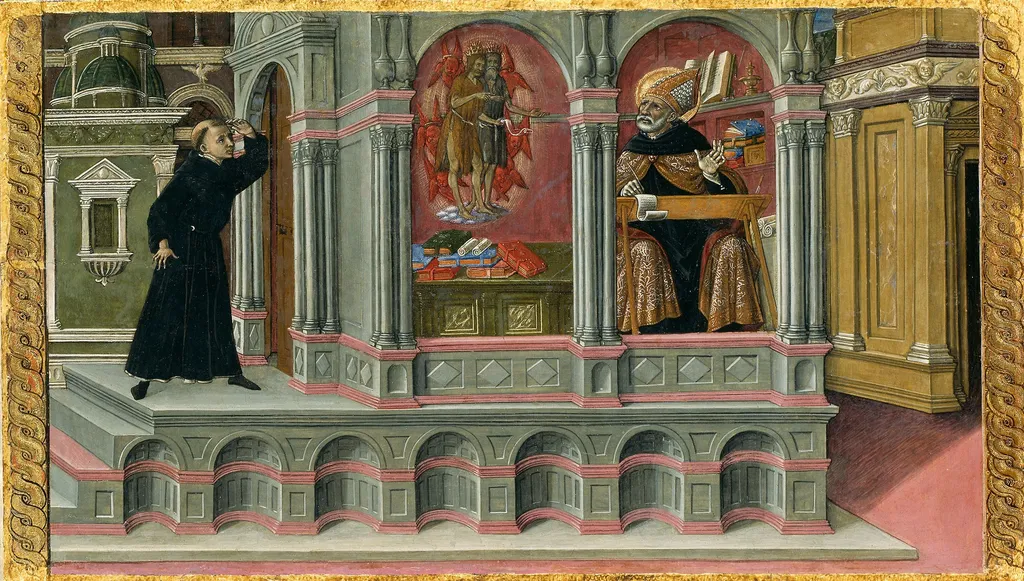
Saint Augustine's Vision of Saints Jerome and John the Baptist is an unspecified painting by the Sienese School artist Matteo di Giovanni. It dates from 1488 and is held in the collection of the Art Institute of Chicago.
About this work
Subject & Meaning
The composition centers on the interaction between Augustine and the two saints, reflecting the artist's interpretation of this hagiographic event.
The painting depicts a religious vision in which Saint Augustine of Hippo is shown in the presence of Saints Jerome and John the Baptist. Created by Matteo di Giovanni in 1476, the work illustrates a spiritual moment where these three significant Christian figures converge. The composition centers on the interaction between Augustine and the two saints, reflecting the artist's interpretation of this hagiographic event.
As a piece of religious art, the subject matter emphasizes the sanctity and theological connection between these historical church figures.
History & Provenance
The altarpiece depicting Saint Augustine in the presence of Saints Jerome and John the Baptist was created by Matteo di Giovanni in 1476 for a church in Siena. It remained in its original location until the early 19th century when it entered the collection of a private patron before being acquired by the Art Institute of Chicago. The work has been part of the museum's permanent collection since its acquisition, maintaining its religious significance and artistic importance.
Saint Augustine's Vision of Saints Jerome and John the Baptist, painted by Matteo di Giovanni in 1476, is held in the collection of the Art Institute of Chicago in Chicago, United States of America. The work is identified in Wikidata as part of the museum's holdings, with its location recorded as the Art Institute of Chicago. No specific inventory or accession number is provided in the available sources, and no exhibition history is documented.
Overview
Matteo di Giovanni’s 1488 oil on panel presents a visionary encounter among three holy figures within an imagined architectural setting. The composition is anchored by a black‑clad monk on a balcony, gesturing upward toward a luminous tableau above an ornate altar. The work resides in the collection of the Art Institute of Chicago, where it is displayed as a late‑Quattrocento example of devotional narrative painting.
Technique & Style
Matteo employs a balanced use of chiaroscuro to model the figures against the gilded altar and the polished stone walls, creating depth within the artificial interior. The red‑and‑gold altar and the arch‑framed windows display a decorative richness typical of Siena’s late Gothic tradition, while the precise rendering of fabrics and facial expressions reflects the artist’s skill in narrative clarity.
Context
The work reflects the period’s emphasis on visionary experiences as a didactic tool within Christian art. By uniting Augustine, a pre‑eminent Church Father, with Jerome, the translator of the Vulgate, and John the Baptist, the forerunner of Christ, Matteo creates a theological triad that underscores the continuity of scriptural interpretation and prophetic anticipation in late‑fourteenth‑century devotional practice.
Artist & collection

Artist
A 15th-century Italian painter from the Renaissance era, Matteo di Giovanni’s altarpieces glow with soft golds and deep reds.

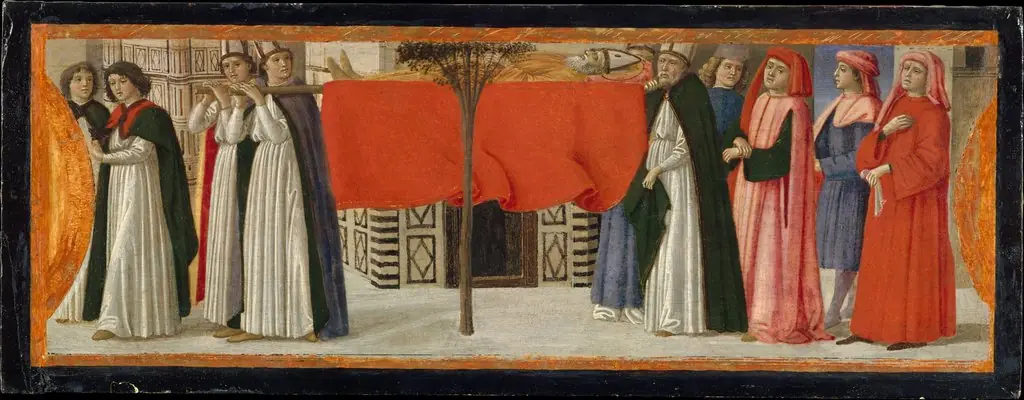 The Burial of Saint Zenobius
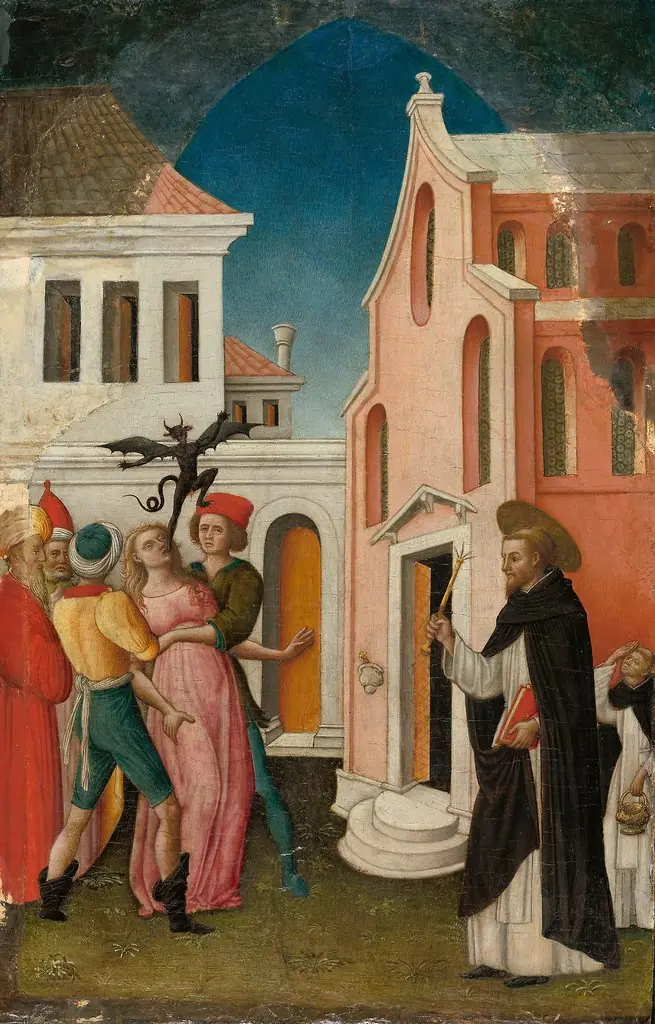 Saint Peter Martyr Exorcizing a Woman Possessed by a Devil
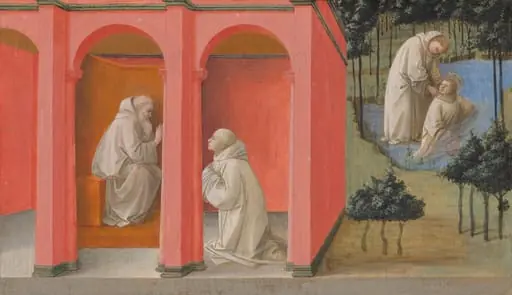 Saint Benedict Orders Saint Maurus to the Rescue of Saint Placidus
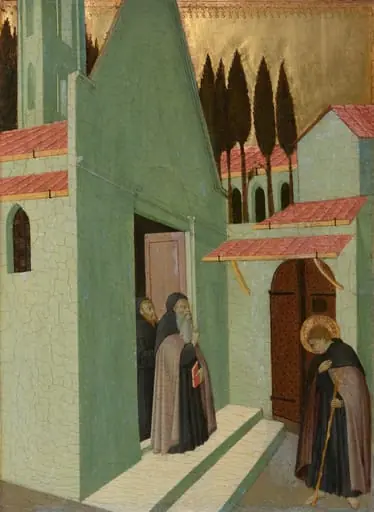 Saint Anthony Leaving His Monastery
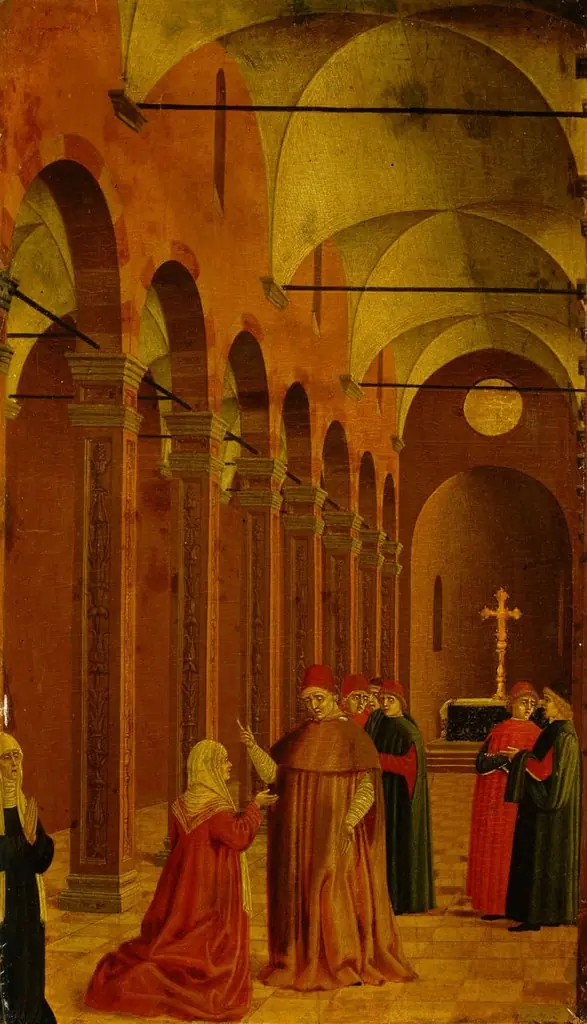 Szene aus dem Leben des Hl. Vinzenz Ferrer: Die Mutter des Heiligen fragt den Bischof von Valencia nach dem Sinn der wunderbaren Zeichen, die die Geburt ihres Kindes ankündigen
![The Papacy Offered to Saint Gregory the Great [?], by Fra Angelico](https://artifactworldgallery.com/img/fra-angelico--the-papacy-offered-to-saint-gregory-the-great--6c28505dc47c9093-w320.webp) The Papacy Offered to Saint Gregory the Great [?]
The Papacy Offered to Saint Gregory the Great [?] St. Stephen and St. Bruno
 Saint Catherine of Siena Dictating Her Dialogues