Artwork
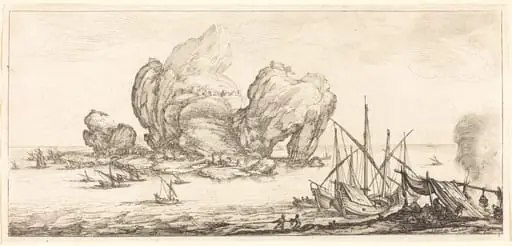
Cliff on the Seashore
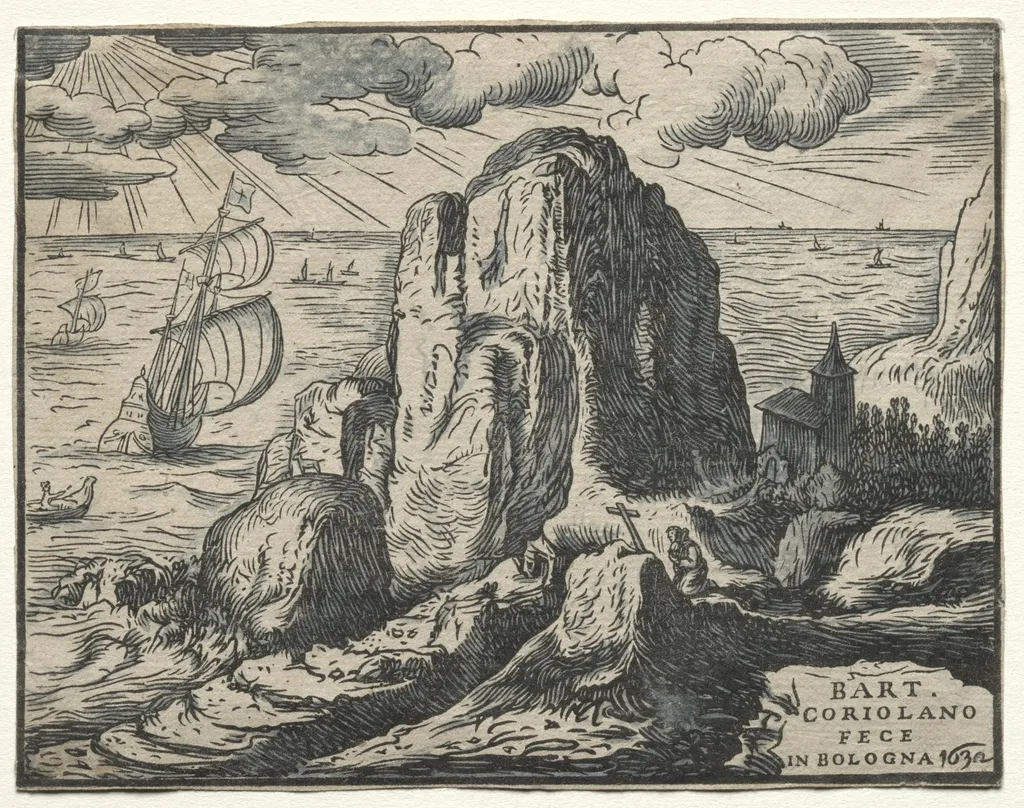
Cliff on the Seashore is a print by the Baroque artist Bartolommeo Coriolano. It dates from 1630 and is held in the collection of the Cleveland Museum of Art.
- Accession no.
- 1953.263
- Credit line
- Dudley P. Allen Fund
About this work
Overview
In the background, a church spire rises above the churning waves, providing a vertical counterpoint to the horizontal expanse of the sea.
Cliff on the Seashore is a chiaroscuro woodcut executed by the Italian artist Bartolommeo Coriolano in 1630. The work depicts a dramatic coastal scene where a rugged cliff face dominates the foreground, jutting into a turbulent sea. Waves crash violently against the jagged rocks below, while a small boat navigates the rough waters in the distance.
The composition is defined by the interplay of light and shadow, characteristic of the chiaroscuro technique, which Coriolano mastered through his woodcut prints. Dark, heavy clouds loom overhead, enhancing the sense of impending storm. A solitary figure clings precariously to the cliff's edge, gripping a rope, emphasizing human vulnerability against nature's force.
In the background, a church spire rises above the churning waves, providing a vertical counterpoint to the horizontal expanse of the sea. Created during the height of Coriolano's career as a printmaker, this piece exemplifies his skill in translating painterly effects into the medium of woodcut, capturing atmospheric drama and emotional intensity without the use of color beyond the tonal variations of the block printing.
Subject & Meaning
The image juxtaposes human vulnerability against the power of nature, suggesting themes of peril and salvation. The lone figure’s grip on the rope conveys desperation, whereas the faint church spire hints at spiritual refuge or divine oversight amid the chaos of the stormy sea.
Technique & Style
Coriolano employs strong, decisive lines and pronounced chiaroscuro to heighten drama. The print’s rough, grainy texture reinforces the turbulent atmosphere, while deep shadows carve the cliff’s contours and amplify the sense of movement in the crashing waves, reflecting the emotive intensity characteristic of early Baroque printmaking.
History & Provenance
Created in the early seventeenth century, the work entered the collection of the Cleveland Museum of Art, where it remains on view. Its provenance traces back to the artist’s workshop in Bologna, and the piece exemplifies Coriolano’s reputation for dramatic, narrative prints during the Baroque period.
Own this work as a print
Artist & collection

Artist
Bartolommeo Coriolano was an Italian printmaker during the Baroque period, mainly in colour woodcuts.

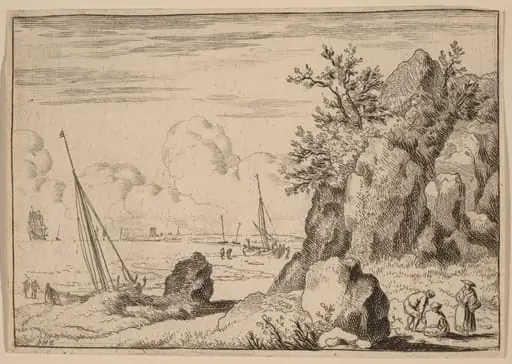 Seascape with Three Figures to the Right
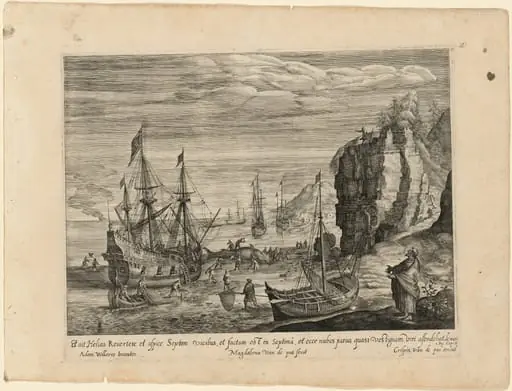 A Beach with Fishermen Cutting Up a Whale and the Prophet Elijah
 The Large Rock
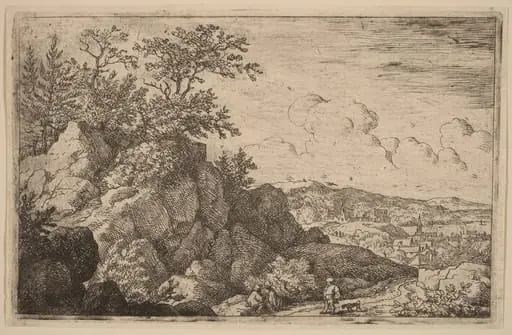 Peasant with His Dog
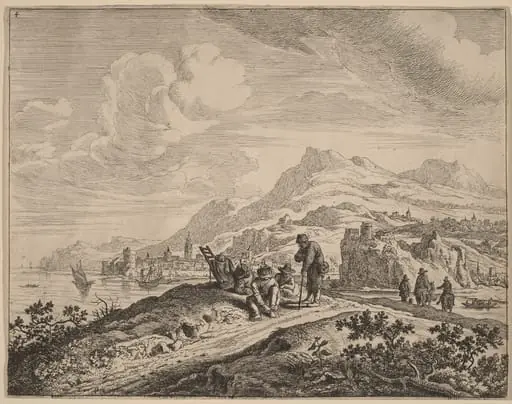 View of the River Rhine
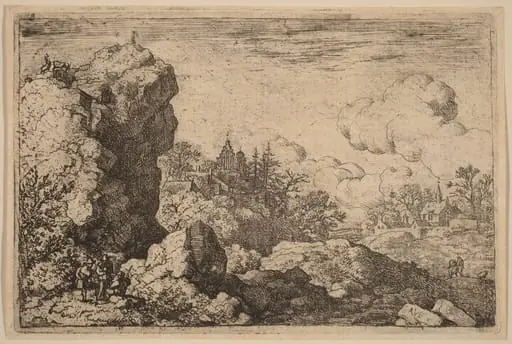 Three Travelers at the Foot of a High Rock
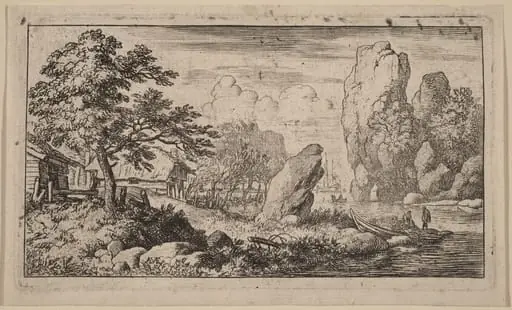 Pointed Boulder at the Bank of a River
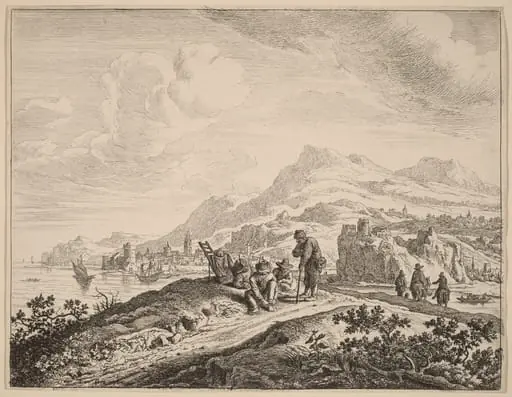 View of the River Rhine
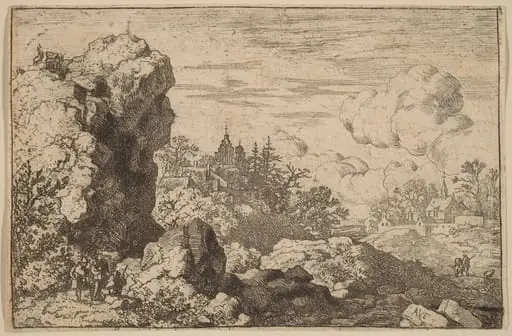 Three Travelers at the Foot of a High Rock
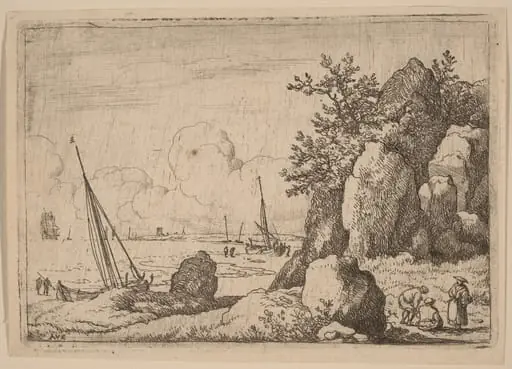 Seascape with Three Figures to the Right