Artwork
Coat of Arms of Sebald Beham
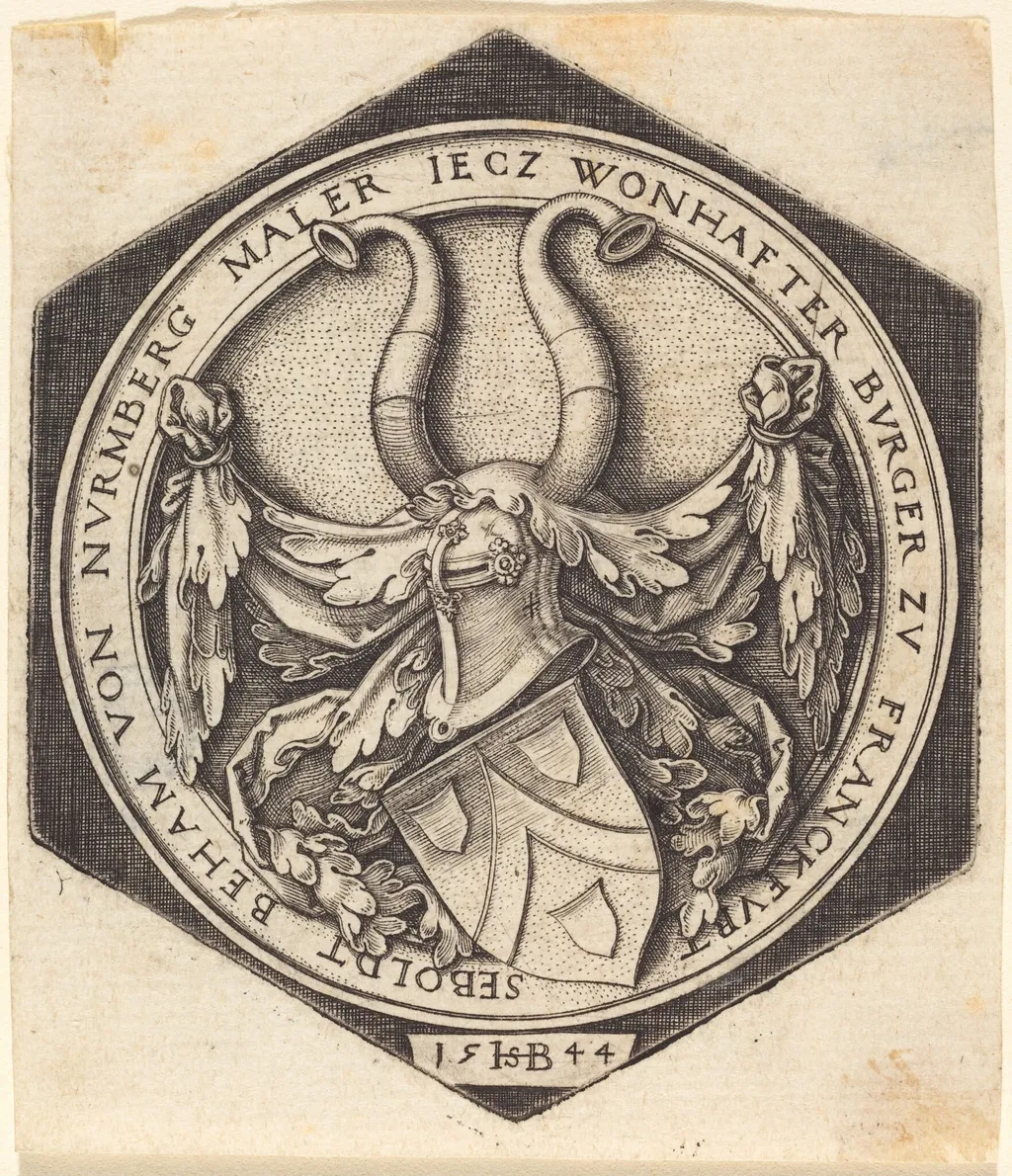
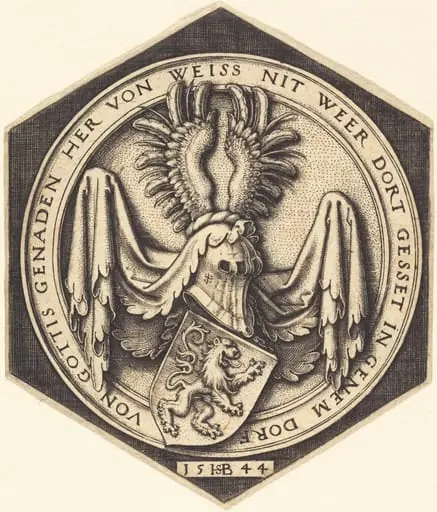
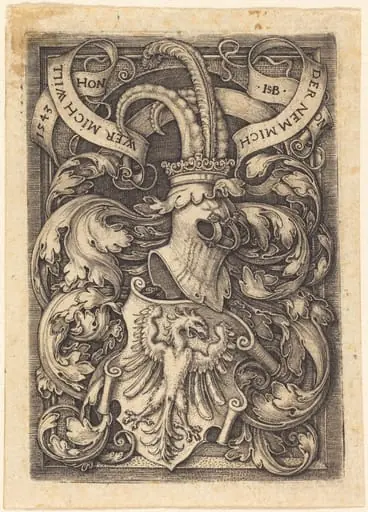
Coat of Arms of Sebald Beham is an ink print by the Renaissance artist Sebald Beham. It dates from 1544 and is held in the collection of the National Gallery of Art.
About this work
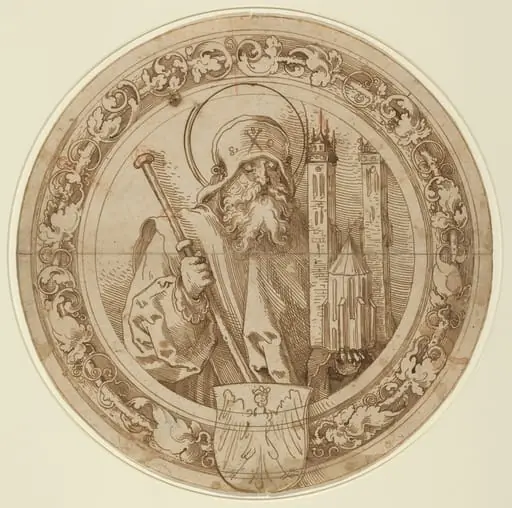
At the center is a shield with a feathered bird on top, surrounded by decorative leaves and scrolls.
This image shows a detailed coat of arms inside a circular frame. At the center is a shield with a feathered bird on top, surrounded by decorative leaves and scrolls. The edges have text in Latin and the year "1544" at the bottom.
The artist used fine lines and shading to create depth, a technique called cross-hatching. This style was common in Renaissance engravings.
Next, check out engraving to see how artists like this made precise prints.
Overview
The Coat of Arms of Sebald Beham is an engraving created by the German artist Sebald Beham in 1544. It exemplifies his skill in detailed printmaking.
Subject & Meaning
The engraving features a coat of arms within a circular frame, comprising a shield topped with a feathered bird, surrounded by ornate foliage and scrollwork. The periphery includes Latin text and the date '1544'.
Technique & Style
Beham employed fine lines and shading, achieved through cross-hatching, to create a sense of depth in the engraving. This technique was characteristic of Renaissance engravings.
History & Provenance
Sebald Beham was a member of the 'Little Masters,' a group known for intricate, small-scale prints. He worked in Nuremberg and later Frankfurt, showcasing his expertise in heraldic imagery and detailed linework.
Own this work as a print
Artist & collection
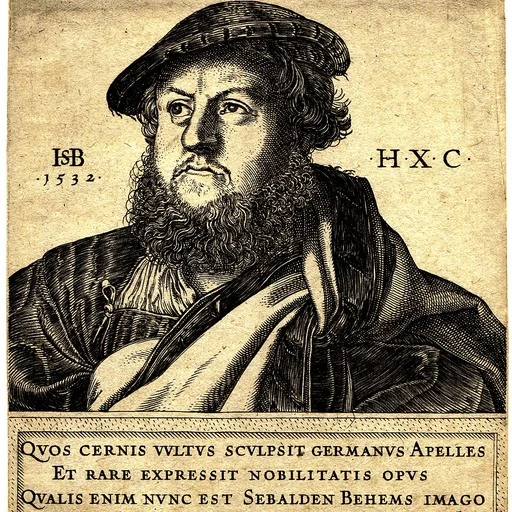
Artist
Sebald Beham (1500–1550) was a German painter and printmaker, mainly known for his very small engravings.