Artwork
Genius with Alphabet
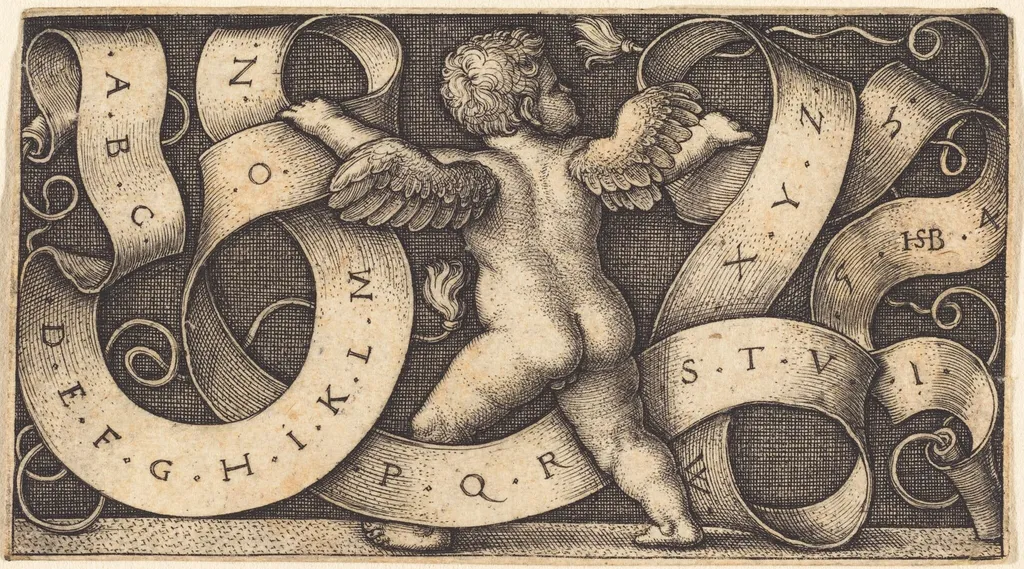
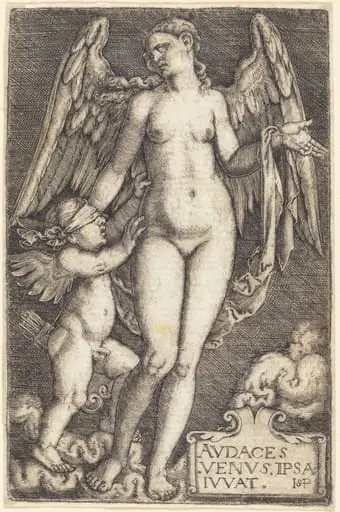
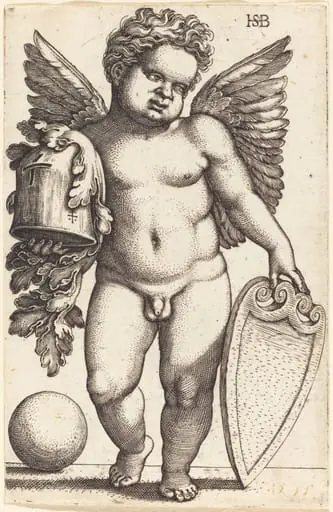
Genius with Alphabet is an ink print by the Renaissance artist Sebald Beham. It dates from 1542 and is held in the collection of the National Gallery of Art.
About this work
Overview
Beham, active in Nuremberg and later Frankfurt, produced hundreds of prints, many no larger than a hand.
Created in 1542 by Sebald Beham, Genius with Alphabet is a small-scale engraving that exemplifies the precision and technical control characteristic of the German Little Masters. Beham, active in Nuremberg and later Frankfurt, produced hundreds of prints, many no larger than a hand. This work, like others in his oeuvre, demonstrates his ability to render complex imagery within a confined space using fine, controlled lines and meticulous cross-hatching.
Subject & Meaning
The central figure is a winged, curly-haired being holding a scroll inscribed with letters, surrounded by concentric rings of alphabetic and symbolic characters. Though not definitively identified, the figure likely represents a personification of knowledge or divine inspiration, blending classical and medieval allegorical traditions. The letters may allude to the transmission of learning, with the figure serving as a conduit between the earthly and the intellectual realm.
Technique & Style
Beham employed engraving to achieve extraordinary detail, using fine, intersecting lines to model form and suggest depth. The dark, swirling background contrasts with the illuminated figure, enhancing its presence. The letters and circular motifs are rendered with geometric clarity, while subtle tonal gradations give volume to the wings and drapery. The composition is tightly organized, reflecting Beham’s skill in balancing complexity with visual harmony.
History & Provenance
The print was produced during Beham’s mature period, after his expulsion from Nuremberg for religious dissent and before his relocation to Frankfurt. It circulated among collectors and scholars who valued small, intellectual prints. No definitive early ownership records survive, but similar engravings by Beham appear in European collections from the late 16th century onward, indicating its continued appreciation among connoisseurs.
Context
In early 16th-century Germany, printmaking flourished as a medium for disseminating humanist ideas. Beham’s work responded to a growing interest in classical antiquity and symbolic systems, including alphabets as metaphors for order and divine wisdom. His small engravings catered to private collectors, contrasting with larger religious or political prints, and reflected a shift toward intimate, intellectual subjects in Northern Renaissance art.
Legacy
Beham’s Genius with Alphabet remains a representative example of the Little Masters’ contribution to print culture. His influence extended to later engravers who adopted his compact compositions and fine-line techniques. Though less widely known than Dürer, Beham’s work helped sustain the tradition of detailed, miniature printmaking in Germany, preserving a visual language of learning and allegory for future generations.
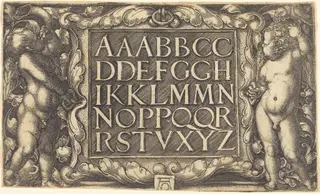
Artist & collection
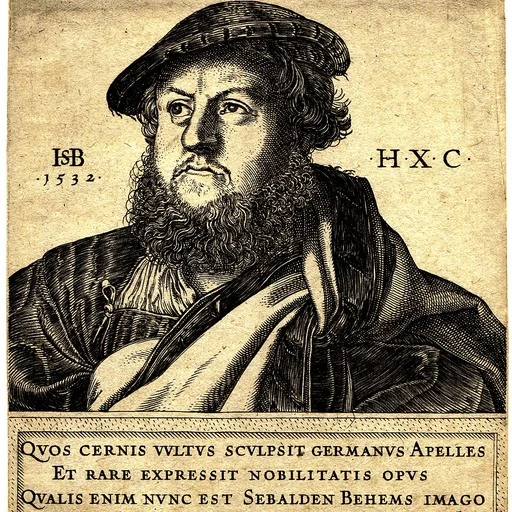
Artist
Sebald Beham (1500–1550) was a German painter and printmaker, mainly known for his very small engravings.