Artwork
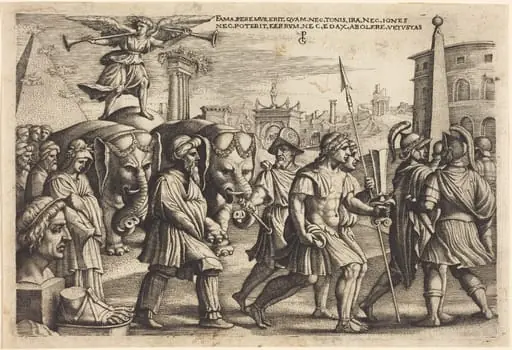
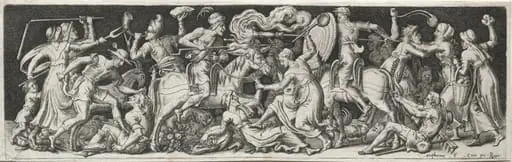
Triumphal Procession of the Noble Glorious Women

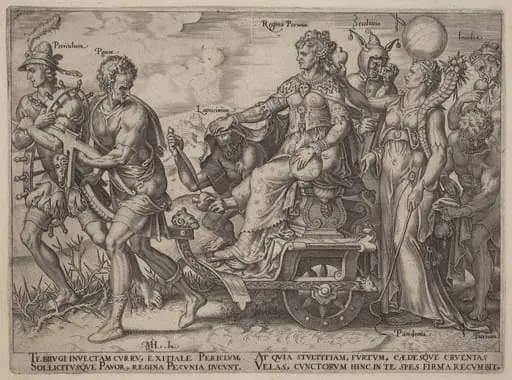
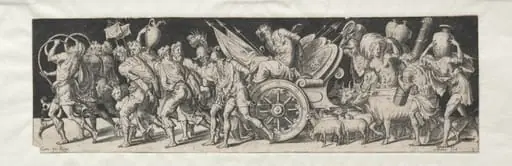
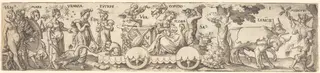
Triumphal Procession of the Noble Glorious Women is an ink print by the Renaissance artist Sebald Beham. It dates from 1549 and is held in the collection of the National Gallery of Art.
About this work
Overview
Sebald Beham’s 1549 engraving, Triumphal Procession of the Noble Glorious Women, presents a festive line of female figures moving toward the right. Each figure is rendered in fine detail, holding varied objects such as a torch, vase, or spear, and dressed in a range of robes and structured garments. The background is textured with a subtle grid, enhancing the sense of movement and celebration.
Subject & Meaning
The composition celebrates women as embodiments of virtue and triumph, a theme common in Renaissance allegory. By arranging the figures in a procession, Beham suggests a collective elevation of feminine ideals, while the assorted accessories hint at specific symbolic roles, light, purity, and martial strength, within the broader narrative of noble glory.
Technique & Style
Executed in the meticulous line work characteristic of the German “Little Masters,” the engraving displays Beham’s skill in rendering intricate textures on a small scale. Fine hatching creates depth in the garments and background grid, while the crisp delineation of each figure’s pose demonstrates the artist’s command of the burin and his influence from Albrecht Dürer’s print tradition.
History & Provenance
Created during the later phase of Beham’s prolific career, the print belongs to a body of work that includes hundreds of engravings and thousands of woodcuts. Though specific ownership records are scarce, the piece circulated among collectors of Renaissance prints, reflecting the demand for finely detailed, portable artworks in 16th‑century Germany.

Artist & collection
Artist
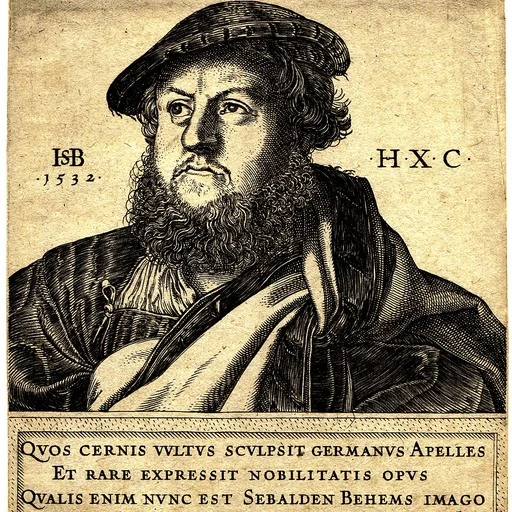
Sebald Beham (1500–1550) was a German painter and printmaker, mainly known for his very small engravings.