Artwork
Spring
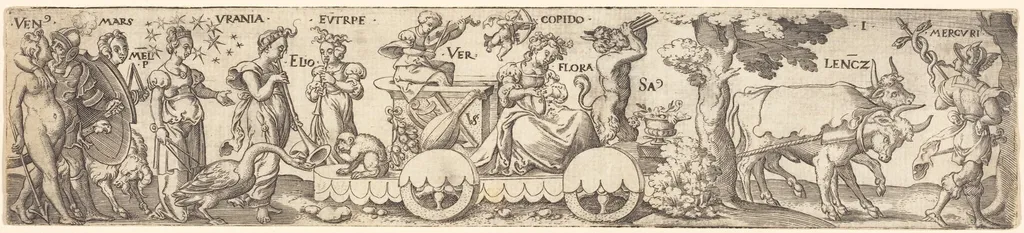
Spring is an ink print by the Renaissance artist Virgil Solis. It dates from 1538 and is held in the collection of the National Gallery of Art.
- Inscription
- Inscribed:lower center, on carriage, in plate: VS [entwined as artist's monogram]; upper right, in plate: .I. / LENCZ; above figures (from left to right), in plate: VEN' MARS MELP VRANIA ELIO EVTERPE VER COPIDO FLORA SA' MERCVRI
About this work
Overview
The composition is framed by a cloudy sky and a profusion of flora and fauna, all rendered with the crisp linear quality characteristic of Solis’s work.
Virgil Solis, a German draughtsman active in the first half of the sixteenth century, produced the engraving titled Spring in 1538. Executed in the traditional copper‑plate technique, the print presents a densely populated allegorical scene populated by figures identified as classical deities. The composition is framed by a cloudy sky and a profusion of flora and fauna, all rendered with the crisp linear quality characteristic of Solis’s work.
Subject & Meaning
The central motif of the print is a gathering of mythological figures, Venus, Mars, Mercury and others, each associated with particular virtues or seasonal attributes. A woman seated on a half‑moon, surrounded by blossoms and animals, evokes the renewal of nature, while the armored male with spear and the lyre‑playing winged figure suggest the interplay of war, love and music in the springtime cycle.
Technique & Style
Solis employed the engraving process, incising fine, intersecting lines into a copper plate to achieve delicate shading and texture. The resulting tonal gradations create a sense of depth among the crowded figures and the surrounding landscape. The precision of the line work, combined with intricate hatching, reflects the Northern Renaissance emphasis on detail and the artist’s skill in rendering complex compositions on a relatively small surface.
History & Provenance
Born in Nuremberg in 1514 into a family of artists, Solis worked primarily in his native city, producing book illustrations, decorative prints, and independent engravings such as Spring. While the original plate’s ownership history is not fully documented, the print circulated among collectors of the period, appearing in several seventeenth‑century inventories of German prints.
Context
Spring belongs to a broader tradition of allegorical prints that celebrated the seasons through classical iconography, a popular genre in the German lands during the Reformation era. Solis’s choice of mythological labels aligns with contemporary humanist interests, using familiar deities to convey moral and natural themes within a visually rich, didactic framework.
Artist & collection

Artist
Virgil Solis or Virgilius Solis (1514 – 1 August 1562), a member of a prolific family of artists, was a German draughtsman and printmaker in engraving, etching and woodcut who worked in his native city of Nuremberg.

 Triumphal Procession
 Triumphal Procession of Putti
 Entry of Monseigneur Henry de Lorraine, Marquis de Moy, under the Name of Pirandre
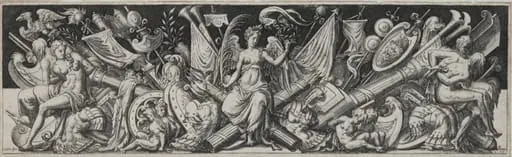 Combats and Triumphs No. 3
![The Triumphal Chariot of Maximilian I (The Great Triumphal Car) [plate 2 of 8], by Albrecht Dürer](https://artifactworldgallery.com/img/albrecht-durer--the-triumphal-chariot-of-maximilian-i-the-great-triumphal-ca--7466f3f42f71a1a4-w320.webp) The Triumphal Chariot of Maximilian I (The Great Triumphal Car) [plate 2 of 8]
The Triumphal Chariot of Maximilian I (The Great Triumphal Car) [plate 2 of 8]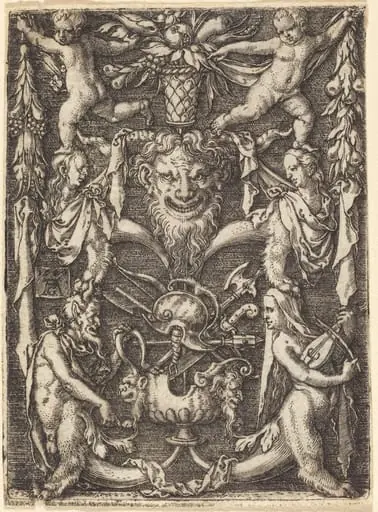 Ornament with Mask
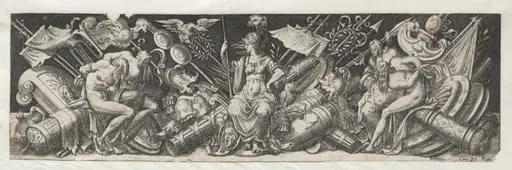 Combats and Triumphs No. 1
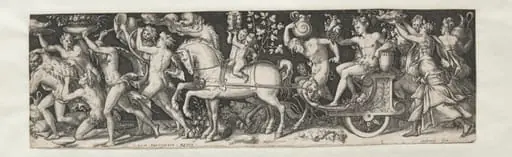 Combats and Triumphs No. 5: The Triumph of Bacchus
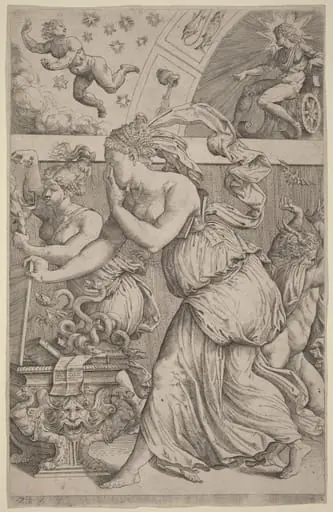 Pandora Opening Her Box
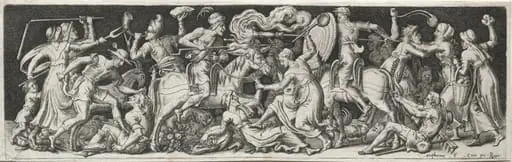 Combats and Triumphs
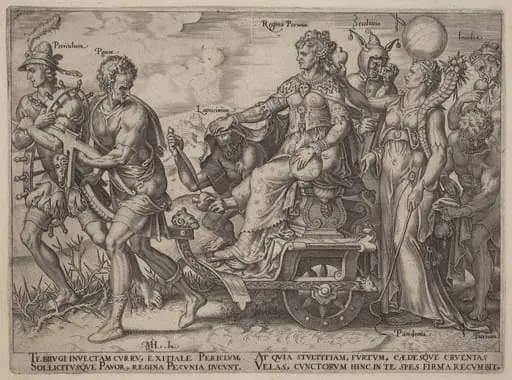 Dangers and Vices Accompanying Wealth
- Spring