Artwork
Madonna and Child with Angels, Saint Benedict, and Saint Scholastica
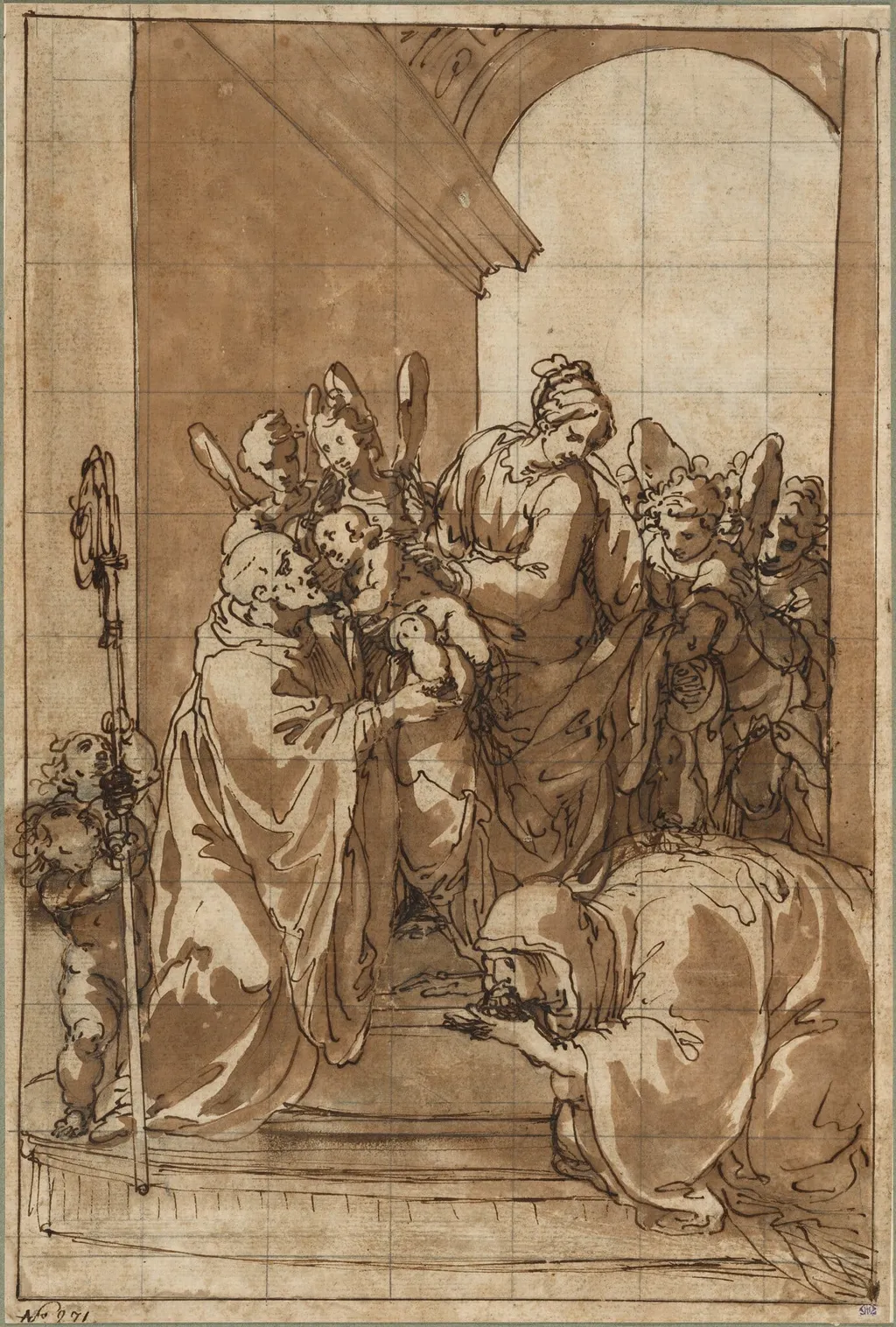
Madonna and Child with Angels, Saint Benedict, and Saint Scholastica is a graphite drawing by the Baroque artist Giulio Benso. It dates from 1629 and is held in the collection of the National Gallery of Art.
- Inscription
- Inscribed:by later hand, lower left in brown ink: No. 271; by later hand, upper right verso in graphite: Il Pomerancio; by later hand, lower left verso in graphite: ou Richardson(?) / Comte C. G. Tessin(?) / (Lugt 3985) / ex collection: F...[crossed out] / No. 270 / by later hand, lower right in blue ball point ink: L23.8 cm. 8
About this work
Overview
This 1629 drawing by Giulio Benso depicts the Virgin Mary with the Christ Child, flanked by two angels and two saints. Executed in pen and brown ink with wash over graphite squaring, it was made on laid paper and later mounted on an older support. The work functions as a preparatory study, its rapid, confident lines suggesting an artist working through compositional ideas before a final painting.
Subject & Meaning
To the left, Saint Benedict holds a staff, while Saint Scholastica, his sister, stands beside him.
The scene centers on the Virgin and Child, surrounded by celestial and monastic figures. Two angels hover closely, one crowned, the other leaning in, as if in reverent attendance. To the left, Saint Benedict holds a staff, while Saint Scholastica, his sister, stands beside him.
The grouping reflects devotional themes common in Counter-Reformation Italy, emphasizing familial sanctity and divine presence within a domesticated sacred space.
Technique & Style
Benso employed loose, fluid ink strokes and diluted washes to suggest volume and texture without detailed finish. Graphite squaring on the paper indicates planning for scale or transfer. Shading is economical, used to define folds in robes and facial contours, while untouched paper areas create highlights.
The sketchlike quality reveals an artist prioritizing gesture and spatial arrangement over polish, typical of preparatory work in early Baroque studios.
History & Provenance
The drawing entered the collection of the National Gallery of Art in Washington, D.C., where it remains today. Its provenance prior to institutional acquisition is not publicly documented. The presence of graphite squaring and the mounted support suggest it was preserved as a working document, possibly used in the production of a larger altarpiece or devotional panel now lost.
Context
Created during the height of the Baroque period in Liguria, Benso’s drawing reflects regional trends favoring emotional immediacy and dynamic composition in religious art. While larger altarpieces of the time often featured elaborate settings, this study’s intimacy and sketchlike execution align with a growing practice among artists to explore groupings and expressions in preliminary form before committing to final works.
Legacy
As a surviving preparatory drawing, it offers insight into Benso’s working method and the iterative nature of Baroque religious imagery. Though not a finished piece, its energy and clarity reveal how artists translated spiritual themes into visual form through rapid, decisive mark-making. It stands as a testament to the value placed on process in early 17th-century studio practice.
Own this work as a print
Artist & collection


- The Madonna and Child in Glory with Saint Theodore and a Monastic Saint
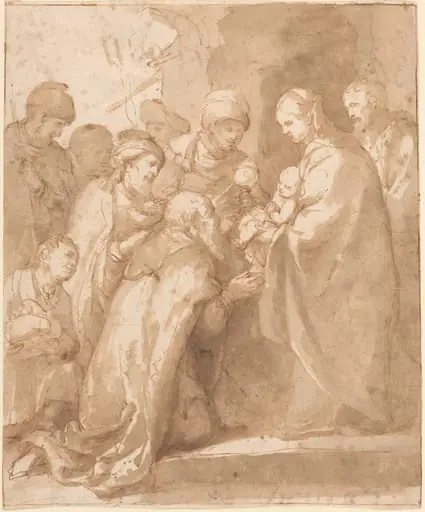 The Adoration of the Magi
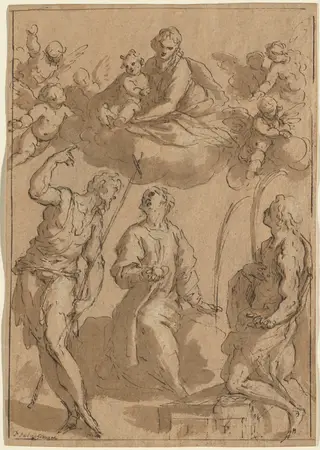 Madonna and Child in Glory with Saints John the Baptist, Stephen, and Lawrence
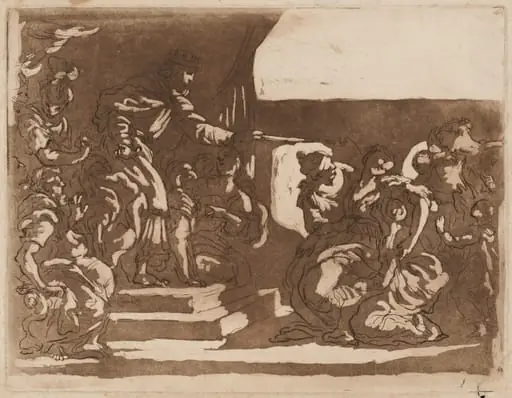 Esther before Ahasuerus
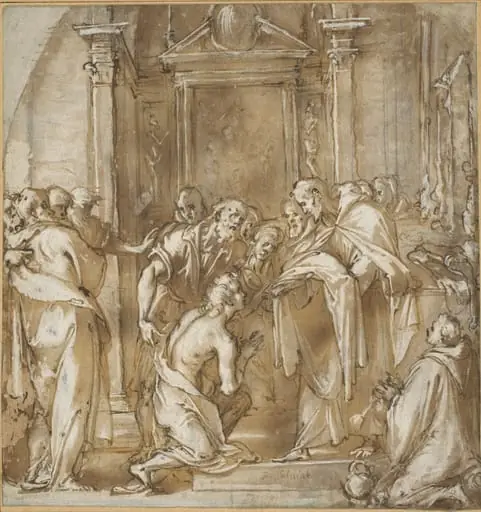 Saint Vincent Ferrer Taking His Vestments
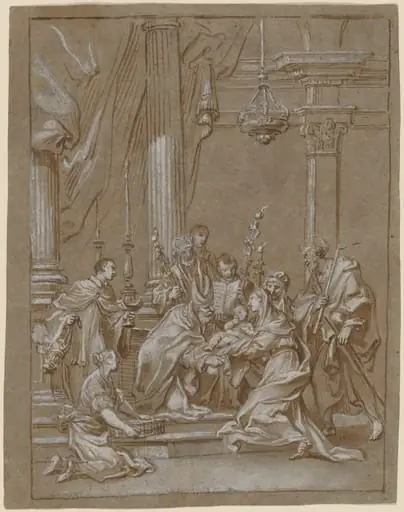 The Presentation in the Temple
 The Adoration of the Magi
 The Madonna and Child in Glory with Saints Gregory the Great and Andrew
 The Holy Family with Saint Philip Neri in Adoration, an Angel, and Putti
 Christ Administering the Host
![Jacob and Rebecca before Isaac [recto], by French 18th Century](https://artifactworldgallery.com/img/french-18th-century--jacob-and-rebecca-before-isaac-recto--5393ee8d0dceb48c-w320.webp) Jacob and Rebecca before Isaac [recto]
Jacob and Rebecca before Isaac [recto]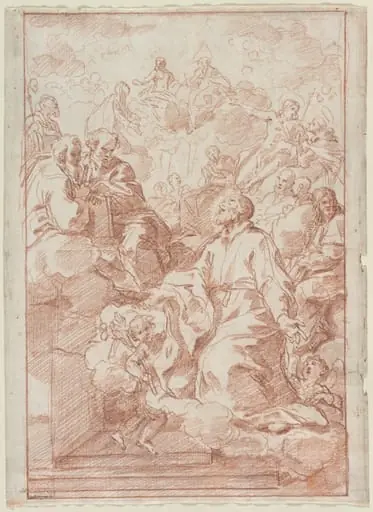 Vision of St. Philip Neri