Artwork
The Crucifixion of St. Andrew, with St. Francis and St. Paul below
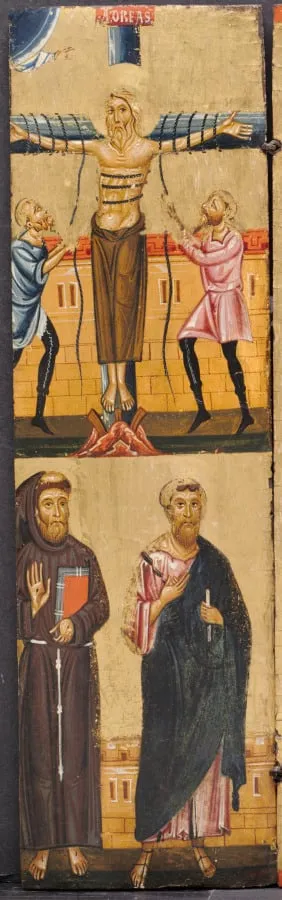
The Crucifixion of St. Andrew, with St. Francis and St. Paul below is an unspecified painting by the Italo Byzantine artist Berlinghiero Berlinghieri. It dates from 1234 and is held in the collection of the Cleveland Museum of Art. The work is a compact, three‑panel altarpiece designed for a private devotional setting.
- Accession no.
- 1966.237.b
About this work
Overview
The work is a compact, three‑panel altarpiece designed for a private devotional setting. Its hinged construction allows the panels to be folded for transport, and the central panel features the Virgin and Child, flanked by groups of saints on each side.
Subject & Meaning
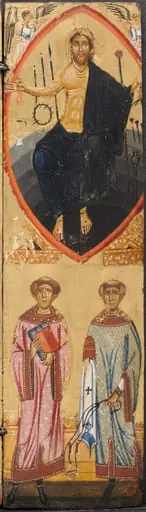
On the left wing Saint Andrew is shown on a cross, with Saint Francis and Saint Paul positioned beneath him; the right wing presents Christ holding the instruments of his Passion, accompanied by Saints Stephen and Lawrence. The selection of saints reflects a personal or familial devotion, integrating both early martyrs and a recently canonised figure.
Technique & Style
The figures are outlined with elongated, flowing lines that define their garments and hands, a stylistic trait inherited from Byzantine iconography that had spread from Constantinople into Italy during the medieval period. The palette and flat modeling further echo this Eastern influence while maintaining a distinctly Italian sensibility.
History & Provenance
The altarpiece is attributed to Berlinghiero of Lucca, one of the earliest Italian painters whose name is documented. Active in Lucca, then the leading artistic hub of Tuscany before the ascendancy of Siena and Florence, Berlinghiero operated a sizable workshop that included his sons, who likely assisted in its execution.
Context
Created at a time when Saint Francis was still a relatively new figure in the church, his presence alongside older saints underscores the evolving devotional landscape of early 13th‑century Italy. The work exemplifies how Byzantine visual conventions were adapted for local religious purposes.
Artist & collection
Artist
Berlinghiero, also known as Berlinghiero Berlinghieri or Berlinghiero of Lucca (fl.

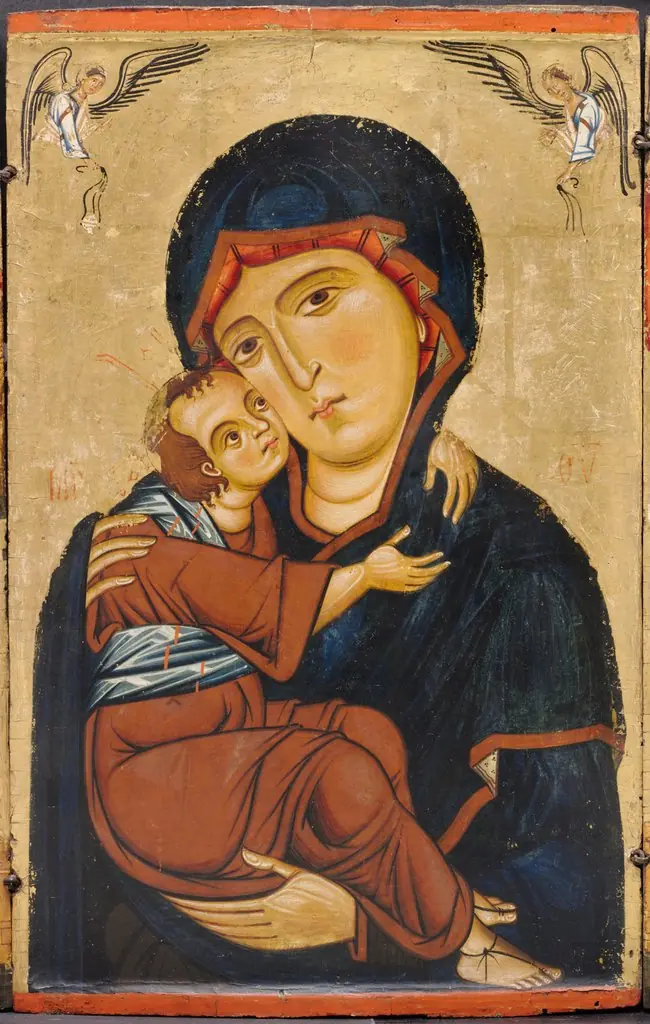 Virgin and Child with Saints
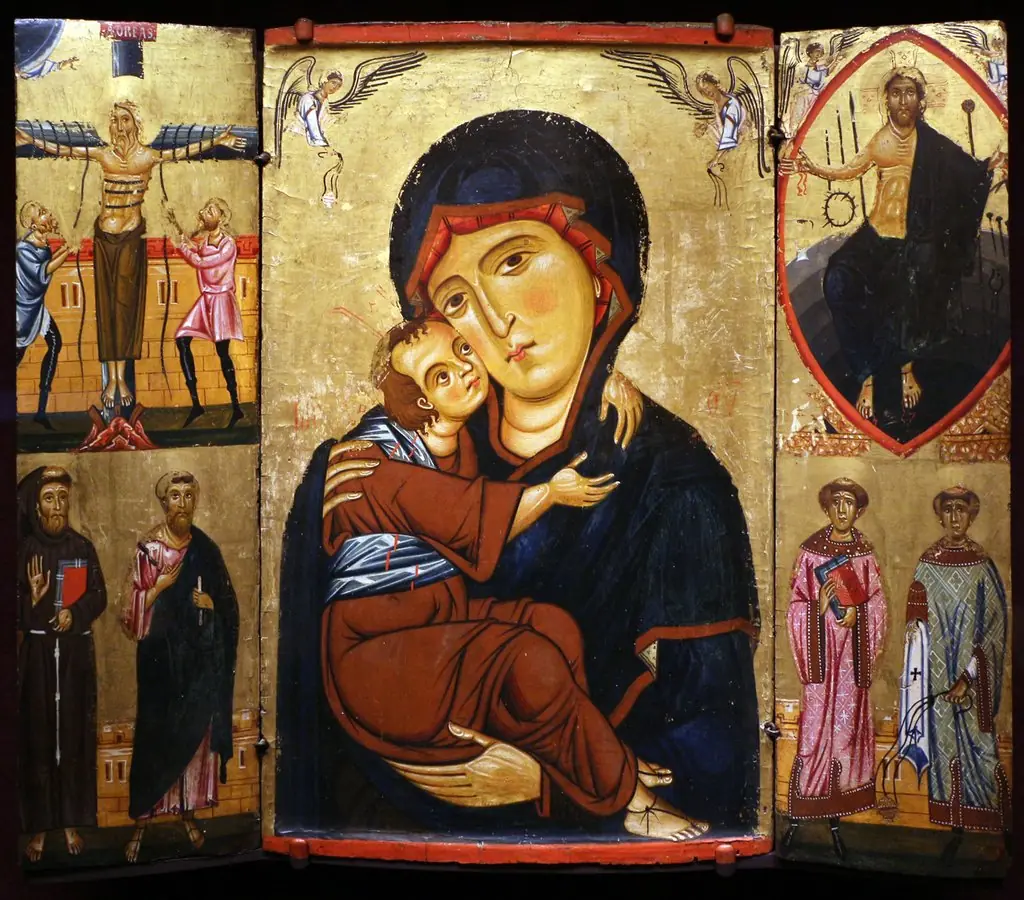 Madonna and Child with Saints
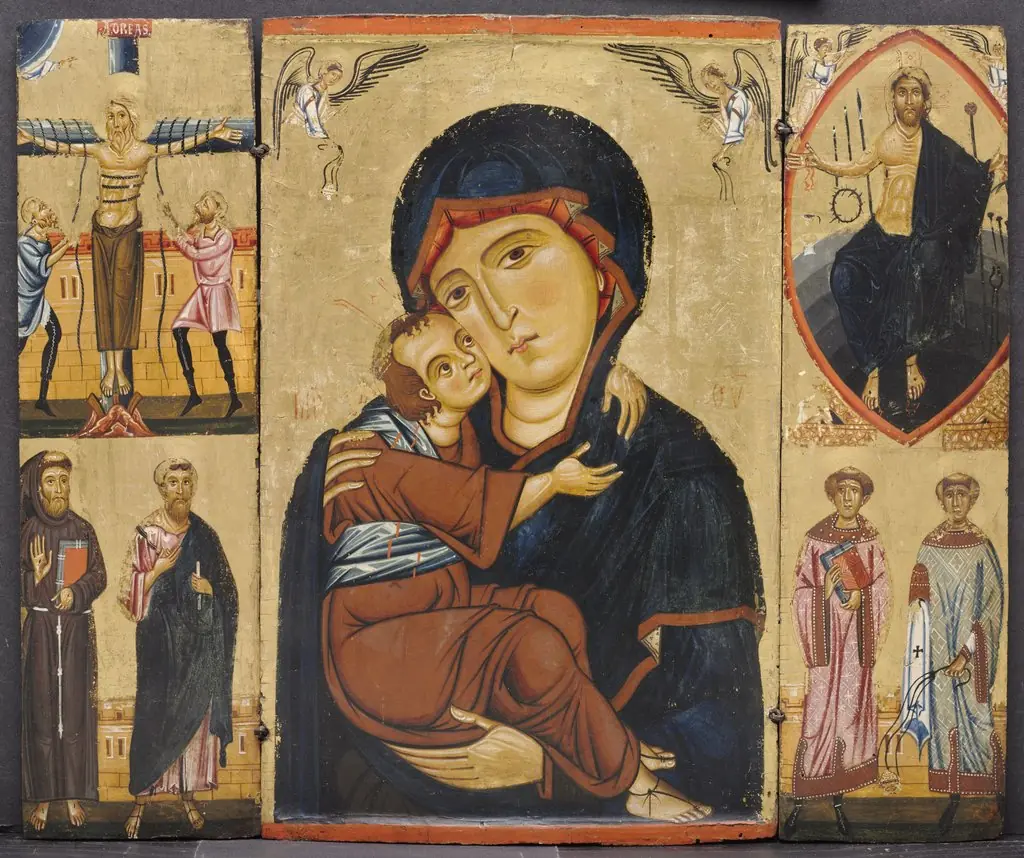 Virgin and Child with Saints
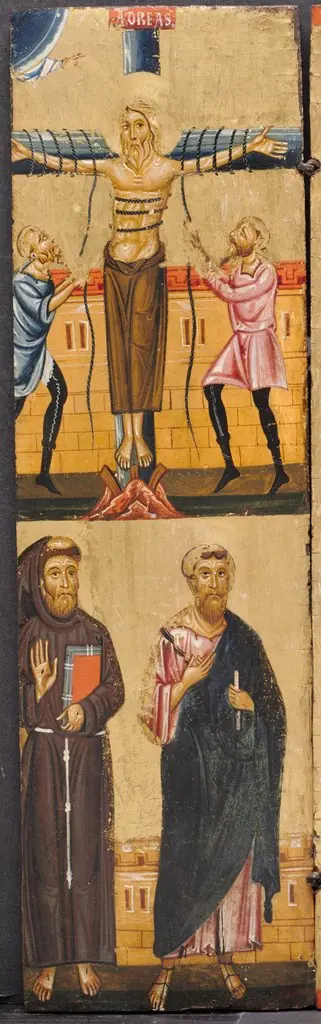 The Crucifixion of St. Andrew, with St. Francis and St. Paul below
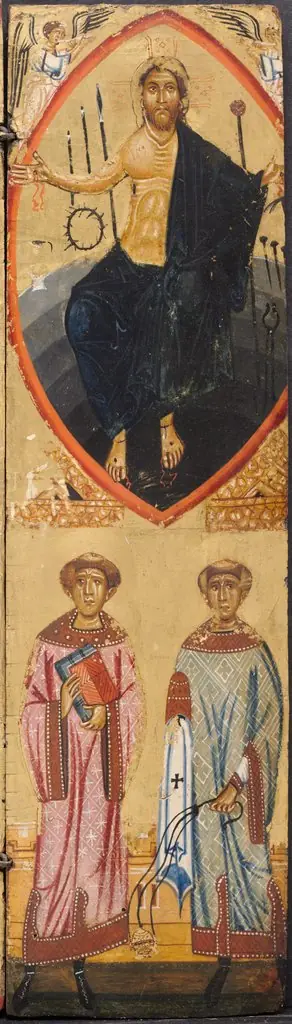 Christ in a Mandorla, with the instruments of the Passion, with St. Stephen and St. Lawrence below
- Christ in a Mandorla, with the instruments of the Passion, with St. Stephen and St. Lawrence below
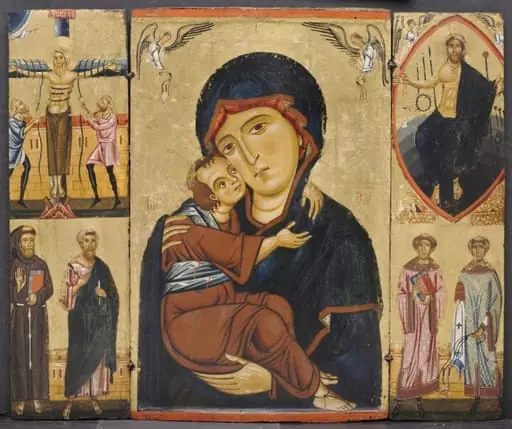 Virgin and Child with Saints