Artwork
Virgin and Child with Saints
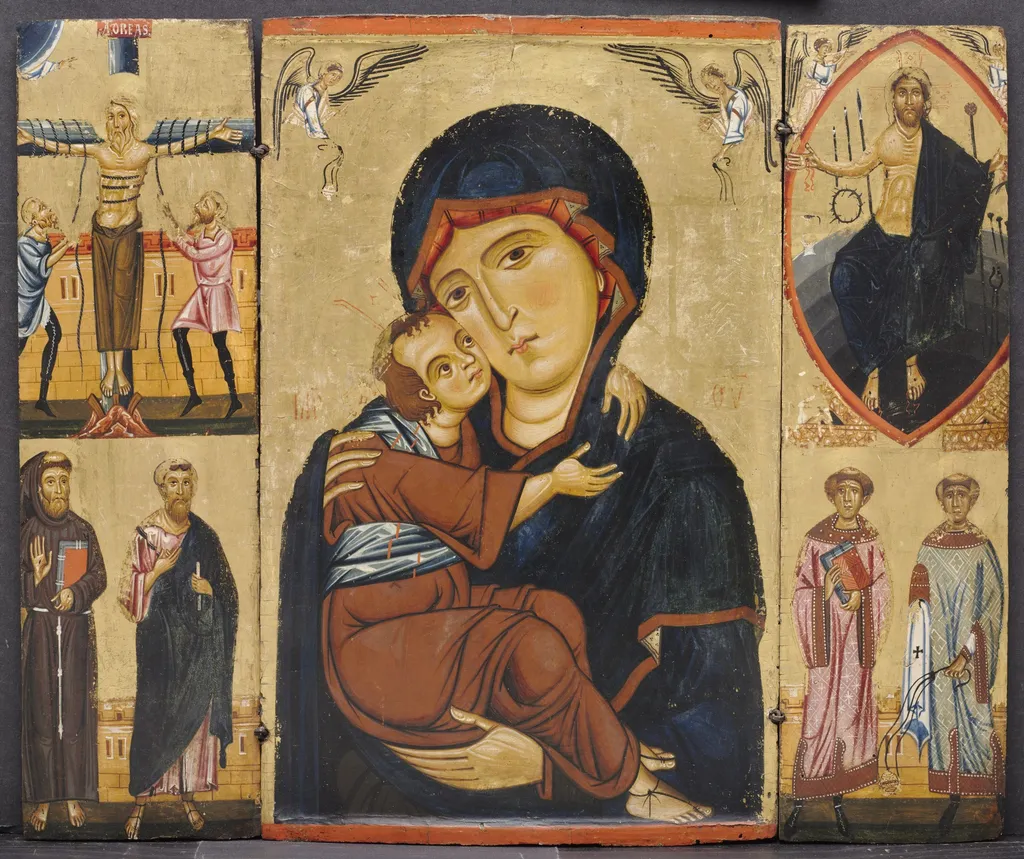
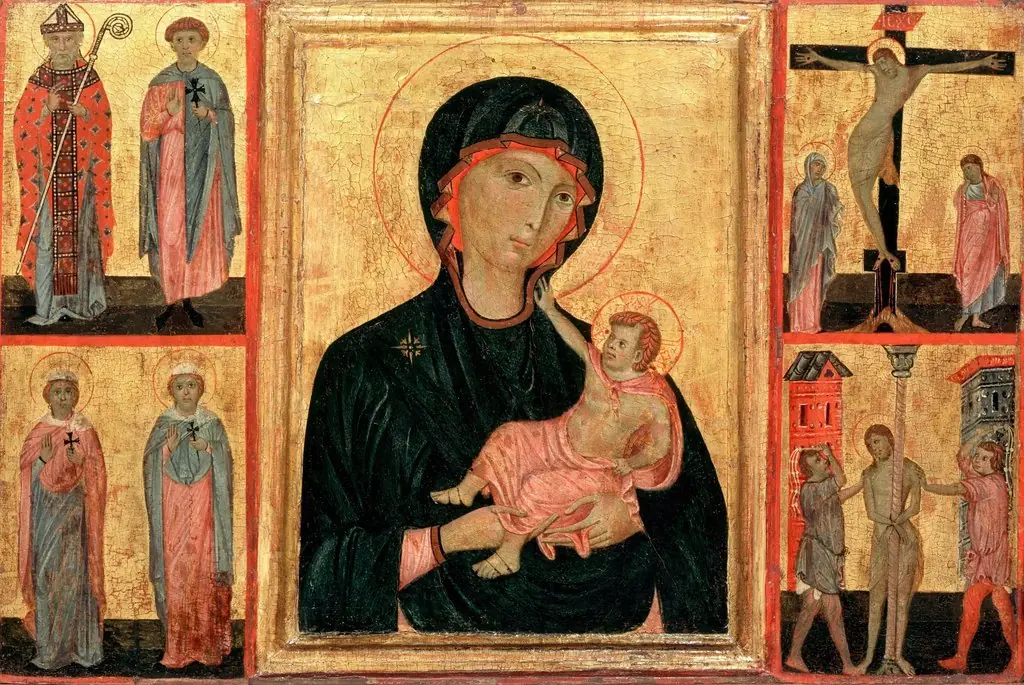
Virgin and Child with Saints is an unspecified painting by the Italo Byzantine artist Berlinghiero Berlinghieri. It dates from 1225 and is held in the collection of the Cleveland Museum of Art.
About this work
Subject & Meaning
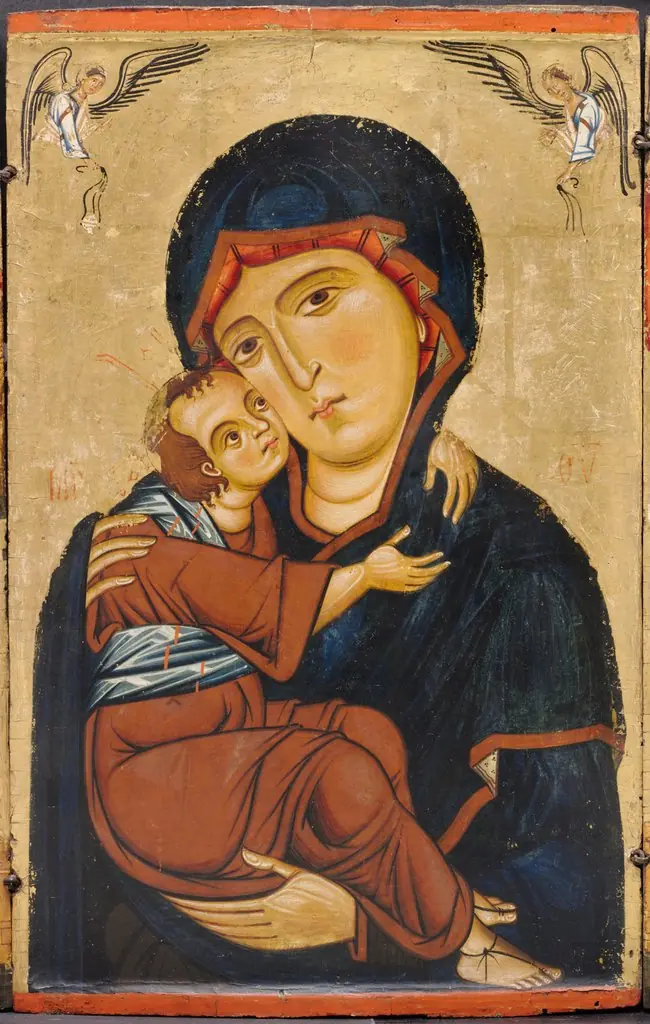
The Virgin is identified by her veil and gentle posture, while the Child is rendered with a blessing gesture that signals his role as the Savior.
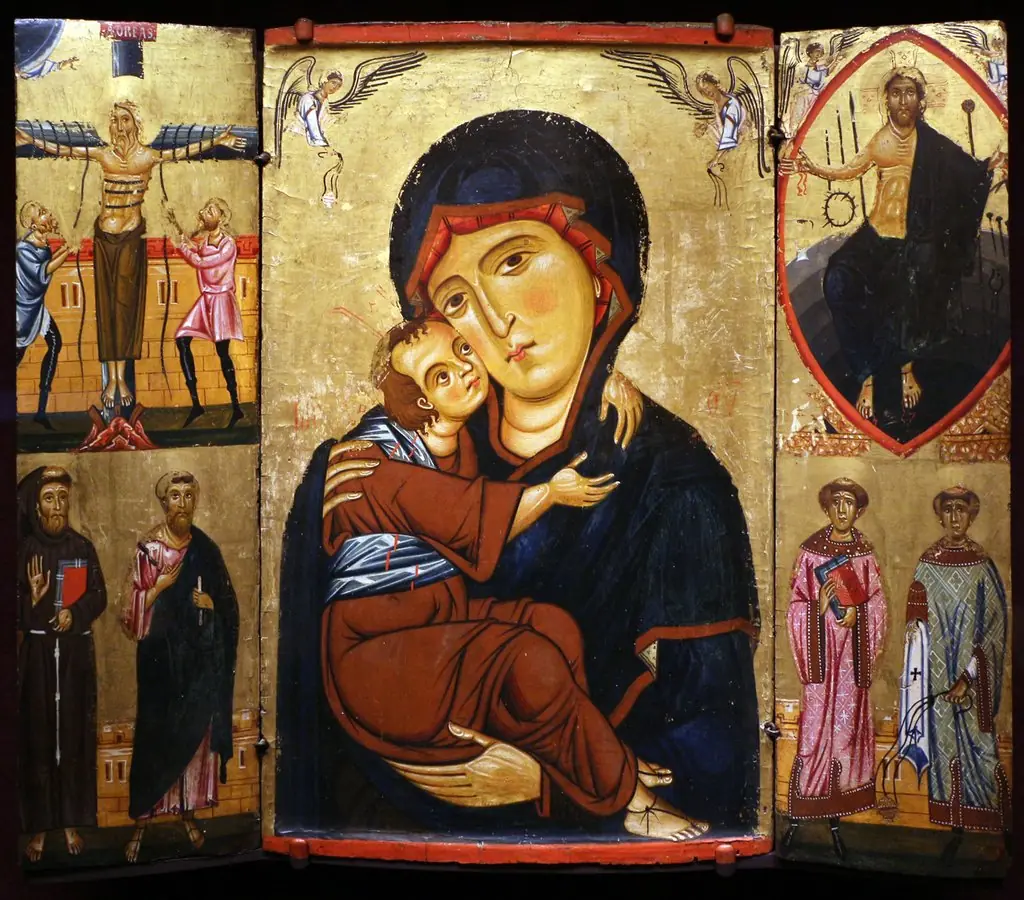
The painting shows the Virgin Mary holding the infant Jesus, flanked by saints, a composition typical of 13th‑century Italian religious art.
The Virgin is identified by her veil and gentle posture, while the Child is rendered with a blessing gesture that signals his role as the Savior.
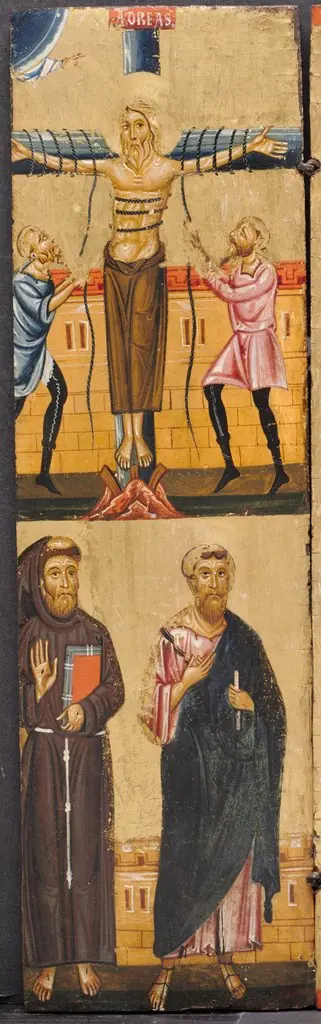
Attributes associated with the saints indicate their individual cults and reinforce the theme of heavenly intercession. Together, these elements convey a devotional message of protection and divine favor, reflecting the spiritual practices of the period.
The work is part of the Cleveland Museum of Art collection and was created in Italy around 1225.
History & Provenance
Created in 1225 by the Italian artist Berlinghiero Berlinghieri, this religious painting originated in Italy. The work entered the collection of the Cleveland Museum of Art, where it is cataloged under the accession number 1966.237. Prior to its acquisition by the museum, the panel was owned by Rudolf J. Heinemann.
The painting Virgin and Child with Saints by Berlinghiero Berlinghieri is housed in the Cleveland Museum of Art, where it is catalogued under accession number 1966.237. The museum’s records indicate that the work was acquired from the collection of Rudolf J. Heinemann and is classified as a 13th‑century religious painting, dating to 1225. No exhibition history is mentioned in the available documentation, suggesting that the piece has not been publicly displayed in major exhibitions according to the sources consulted.
Overview
This panel painting, Virgin and Child with Saints, was created by the Italian artist Berlinghiero Berlinghieri around 1225. Executed in the Italo-Byzantine style, it is a significant example of early thirteenth-century religious art. The work is currently housed in the collection of the Cleveland Museum of Art, representing a key period in the transition of European painting.
Technique & Style
The painting exemplifies the Italo-Byzantine aesthetic through its use of a radiant gold background, which serves to flatten the pictorial space and imbue the scene with a sacred aura. Figures are rendered with bright, unmodulated colors and a notable absence of shadows, contributing to a two-dimensional effect. The Virgin's face is depicted with a smooth, golden tone, contrasting with the child's slightly paler complexion, while small narrative scenes and angels occupy the upper corners.
Context
Berlinghiero Berlinghieri, an artist active in the early 13th century, is identified through the inscription "Berlingerius me pinxit" found on his works, as his given name remains unconfirmed. He was a notable figure whose artistic lineage continued through his three sons, Barone, Bonaventura, and Marco Berlinghieri, all of whom also became painters.
Own this work as a print
Artist & collection
Artist
Berlinghiero, also known as Berlinghiero Berlinghieri or Berlinghiero of Lucca (fl.

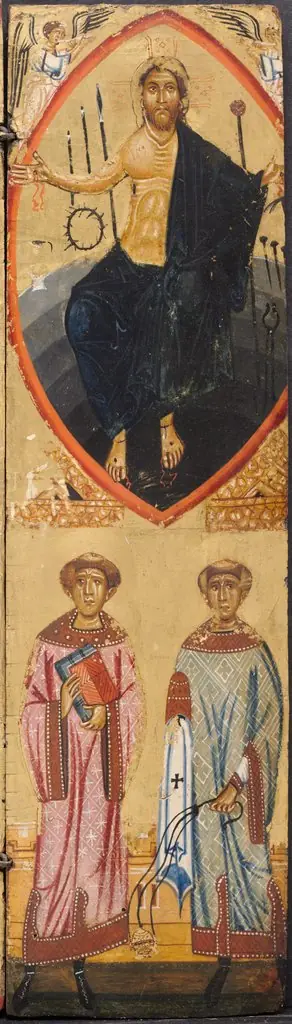
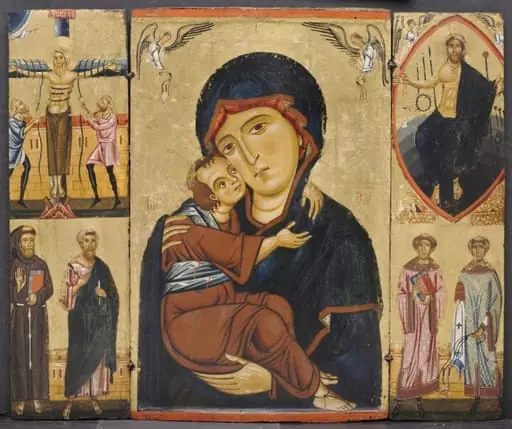 Virgin and Child with Saints
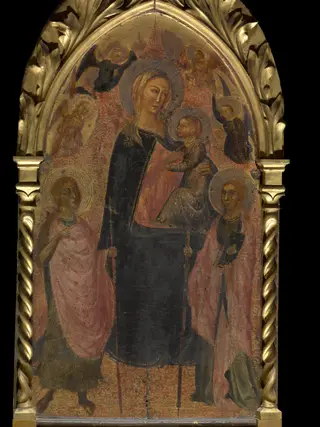 Madonna with Angels and Saints
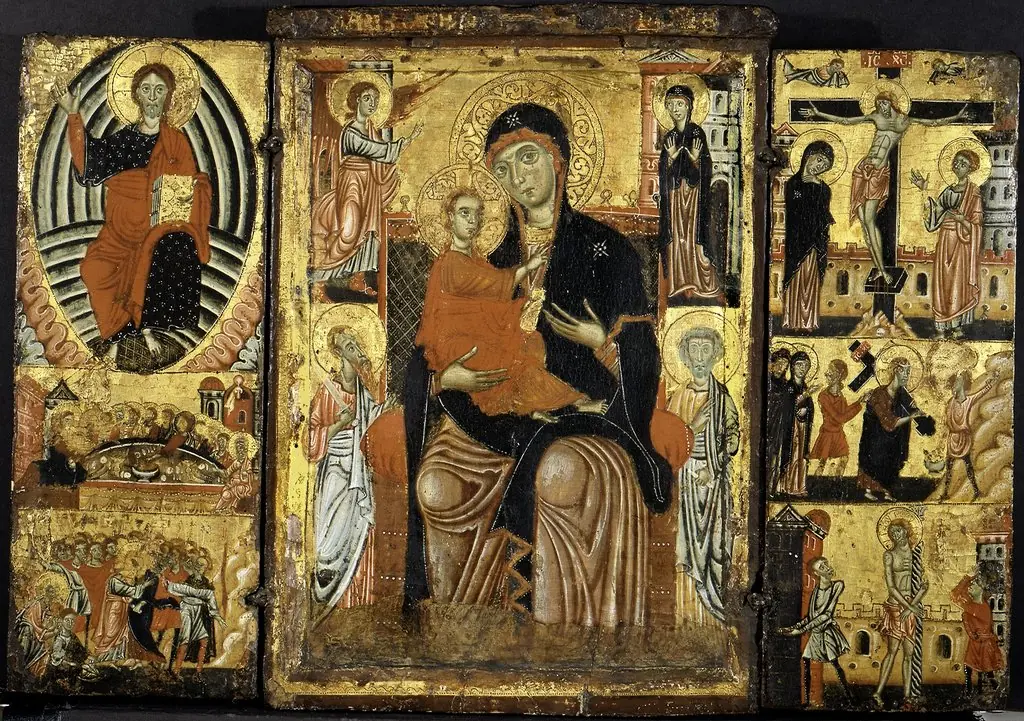 Madonna and Child Enthroned
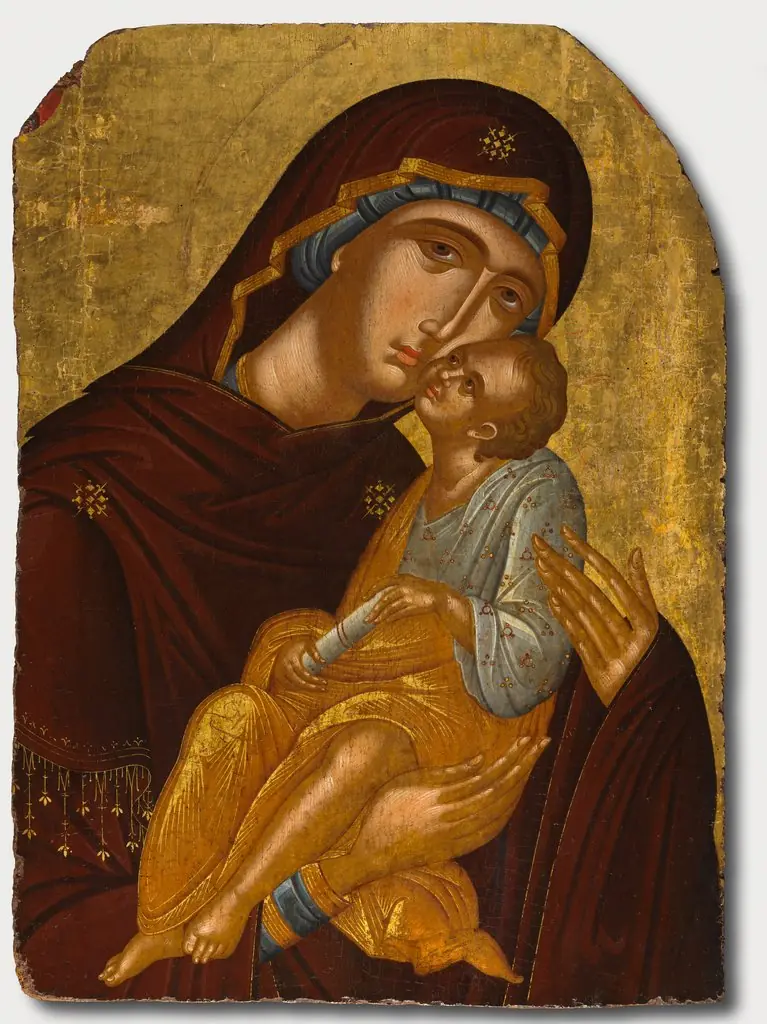 Icon of the Mother of God and Infant Christ (Virgin Eleousa)
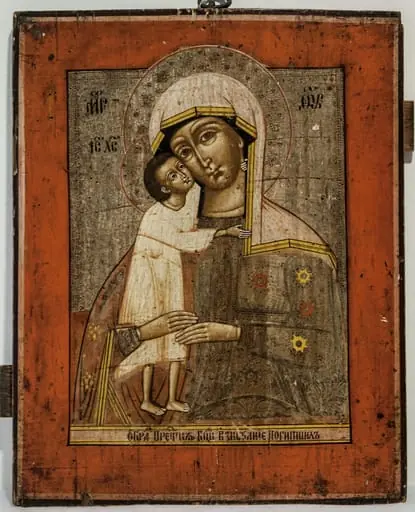 Maica Domnului, tipul Eleusa(dulcea sărutare, Mângâietoarea) îl ține strâns în brațe pe Iisus prunc, în picioare, cu obrazul lipit de cel al Maicii și o mână petrecută pe după gâtul ei. Iisus are nimbul cruciger, marcat cu motive florale punctate, Este înveșmântat într-o tunică 3/4 alb-gălbuie, care lasă să i se vadă picioarele. Maica poartă un maforion alb, bordat cu galben, partea din stânga a veșmântului din foiță metalică, decorată cu motive florale pictate cu roșu și galben, motive fitomorfe și geometrice incizate. În partea dreaptă veșmântul este roșu, decorat cu motive florale de culoare galbenă, foița fiind prezentă doar la mânecă. Nimbul decorat cu motive florale punctate în stratul de foiță metalică, Figurile modelate din culoare (alb, ocru) cu accente grafice fine, albe, sunt specifice icoanei rusești. Cromatica: alb, galben, roșu, auriu, brun, negru, foiță metalică, chenar roșu deschis, mărginit de două linii în nuanțe de roșu deschis și brun.Chenarul interior dublat de două șiruri de cercuri ștanțate în foiță. Inscripția dispusă pe o bandă dreptunghiulară în partea de jops a icoanei : Icoana Preacuratei Fecioare Prevăzând Jertfa (lui Iisus).
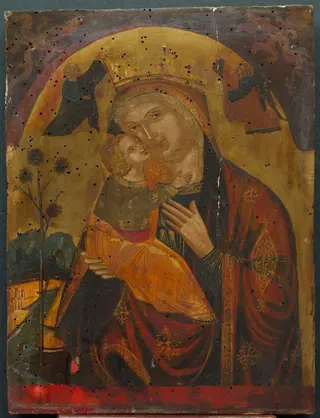 Virgin and Child
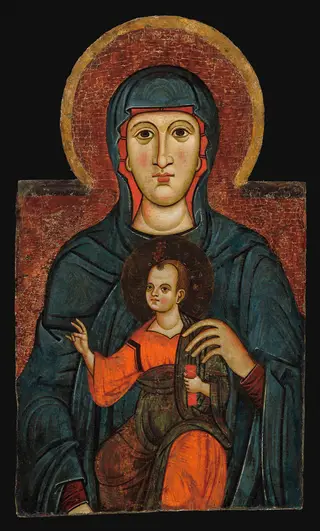 Virgin and Child
 Triptychon (Flügel fest)
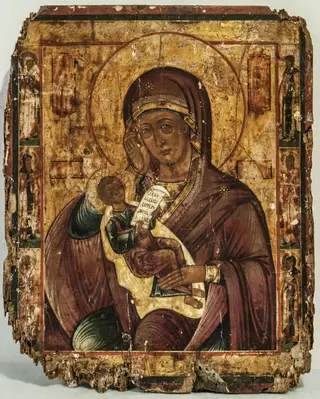 Icoana „Potolește întristările noastre” o înfățișează pe Maica Domnului ținând mâna stângă sub cap, care este ușor înclinat. Aceasta sugerează că Născătoarea de Dumnezeu ascultă lacrimile și rugăciunile tuturor credincioșilor care apelează la ea, în nevoile, necazurile și întristările lor. Cu mâna dreaptă, Fecioara Maria ține Pruncul Iisus. Mântuitorul ține în mâinile Sale un sul desfăcut, pe care sunt înscrise următoarele cuvinte: „Judecați cu dreptate, arătând milă unii față de alții, nu jigniți văduvele și orfanii și nu țineți răutate în inima voastră față de fratele vostru”.Maica este pictată pe fondul foiței aurite, cu o expresie blândă. Înveșmântată cu maforion grena, cu borduri aurite , dublate de o dantelărie fină, albă, pe umeri și frunte stelele întreitei feciorii. Stola verde cu galon lat aurit, la gât și mâneci. Pruncul , culcat în brațele Maicii pe o pânză albă, are o expresie tristă. Picioarele desculțe. Nimb cruciger, cu însemnele consacrate. Nimbul Fecioarei, trasat cu roșu, depășește bordura lată, aurită. Lateral, pe chenar, câte trei sfinți, în picioare. Se poate descifra doar inscripția de pe aureola sfântului Zosim și a sfintei Xenia(stânga). Inscripțiile referitoare la Iisus și Maica Domnului sunt casetate pe fondul aurit. Linia desenului foarte fină, drapajul veșmintelor bogat, cu unele accente de repictare(tușele de alb). Icoana prezintă degradări ale stratului pictural(eroziuni, clacuri, desprinderi, lacune, vernis îmbătrânit) și ale suportului(atac xilofag mai vechi care a fragilizat lemnul)
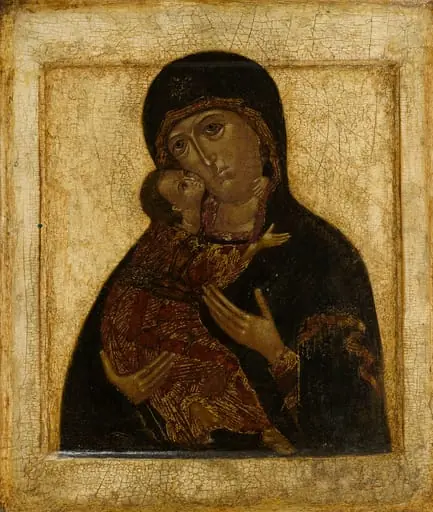 Vladimirin Jumalanäiti, venäläinen ikoni