Artwork
Virgin and Child with Saints
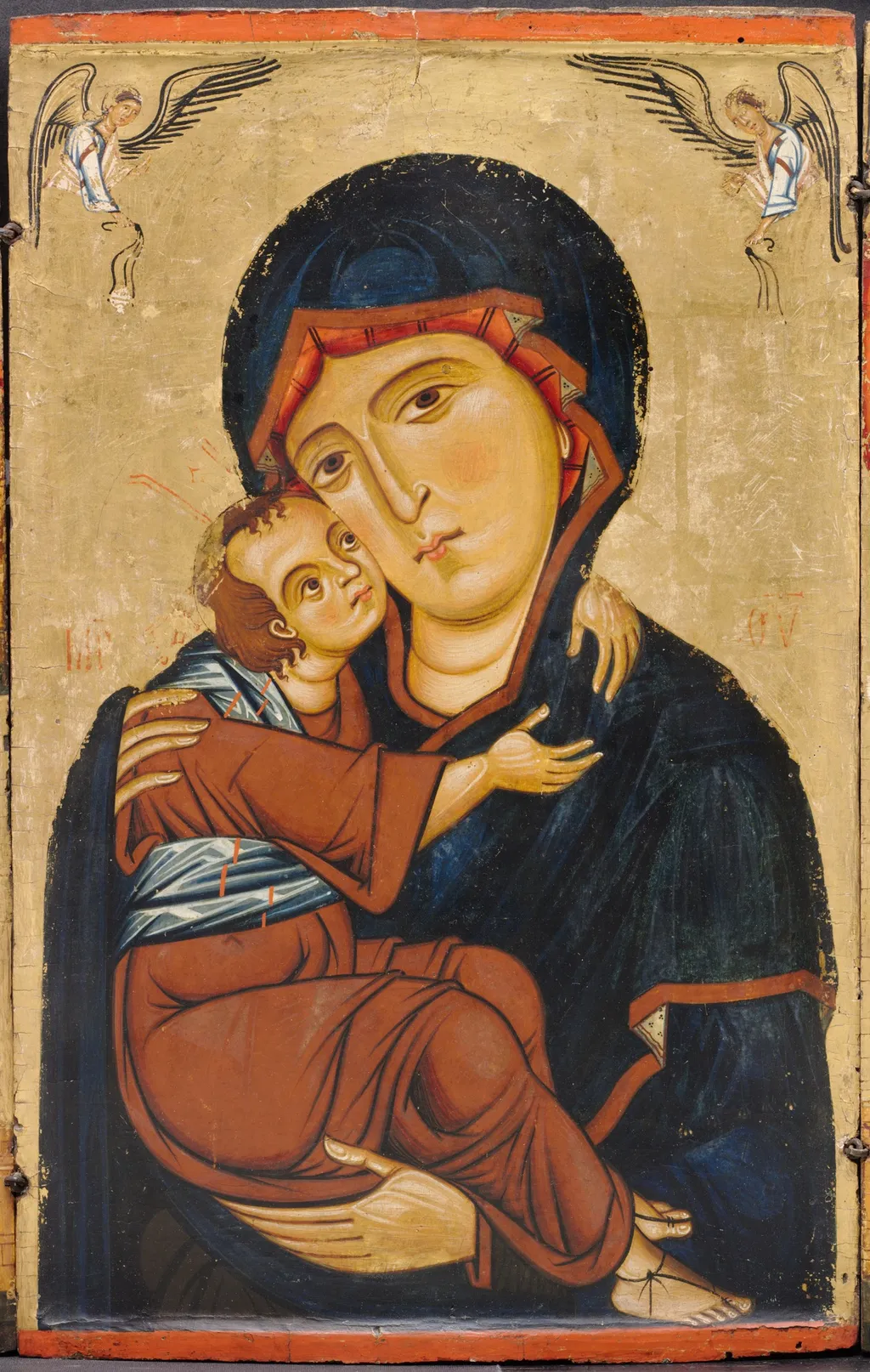
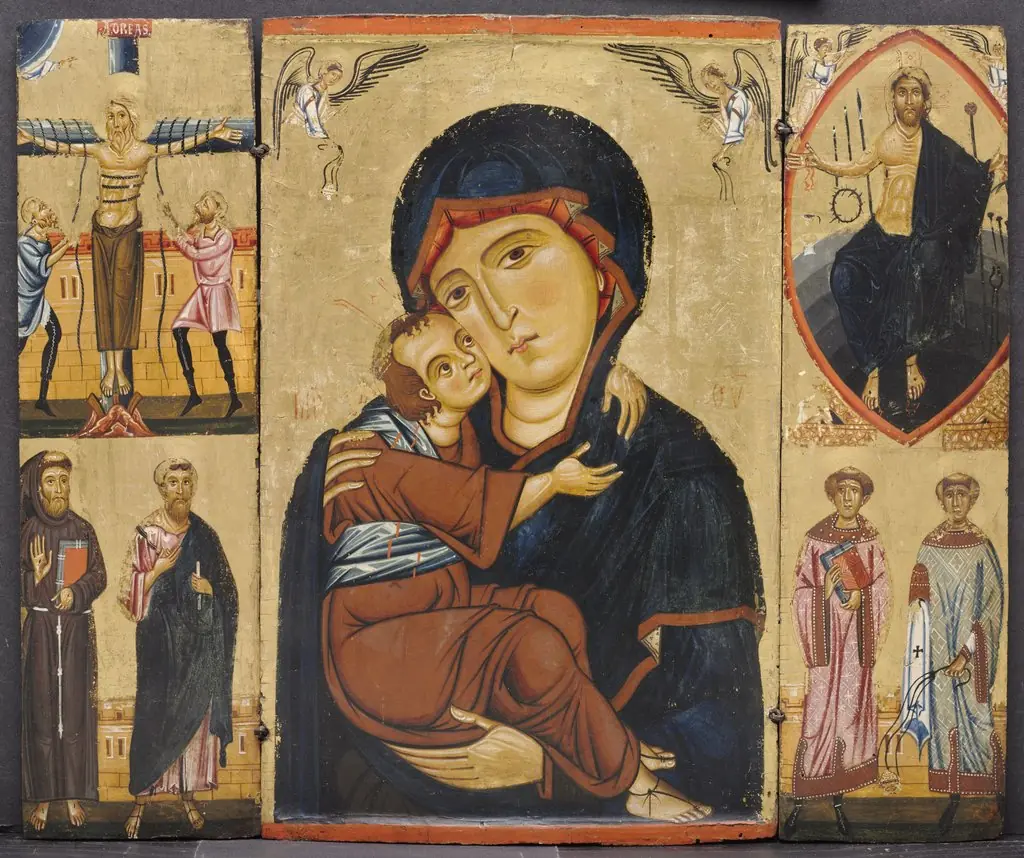
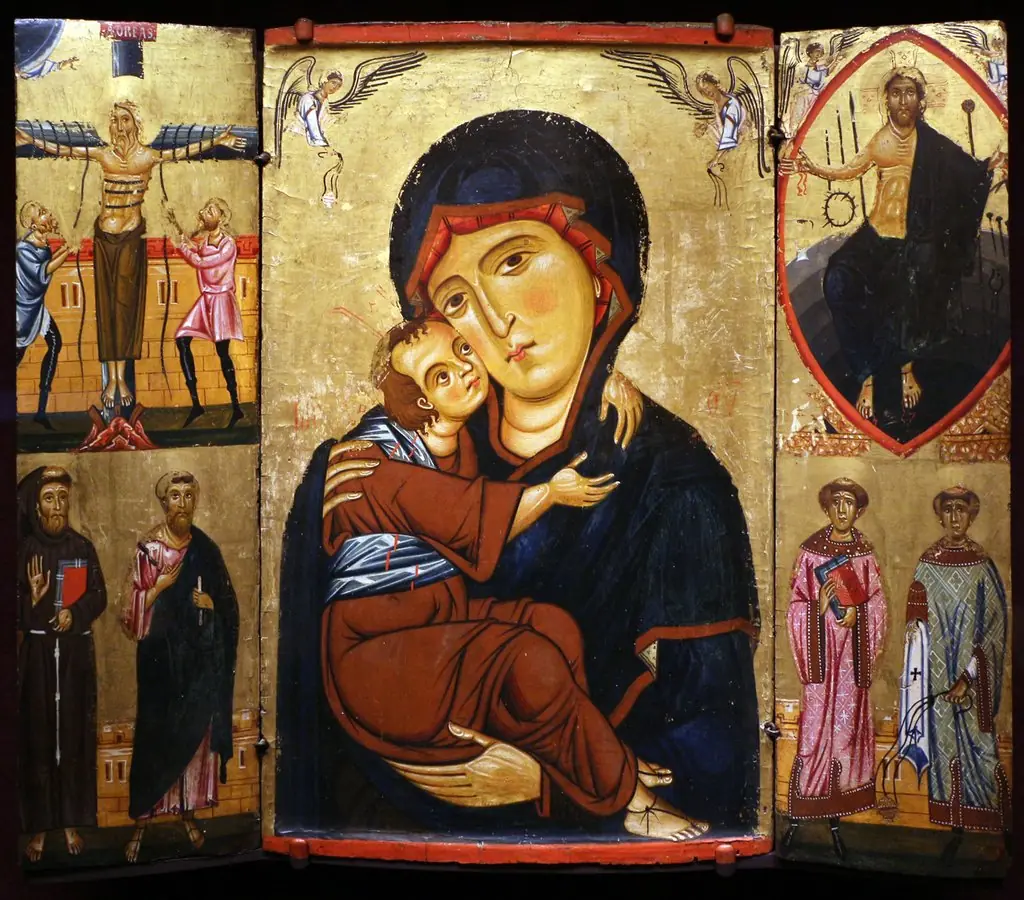
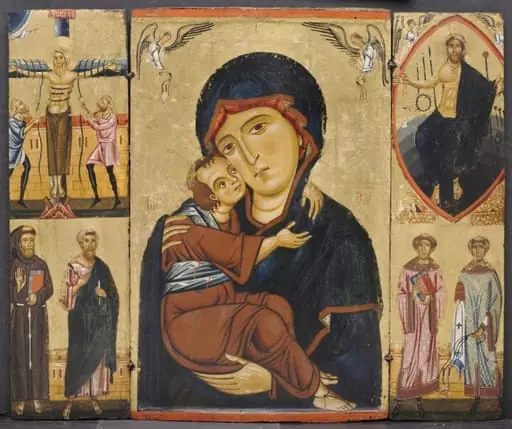
Virgin and Child with Saints is an unspecified painting by the Italo Byzantine artist Berlinghiero Berlinghieri. It dates from 1230 and is held in the collection of the Cleveland Museum of Art.
About this work
Subject & Meaning
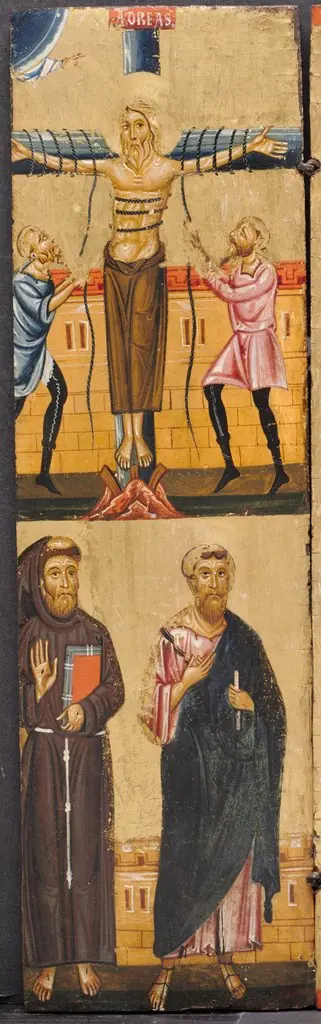
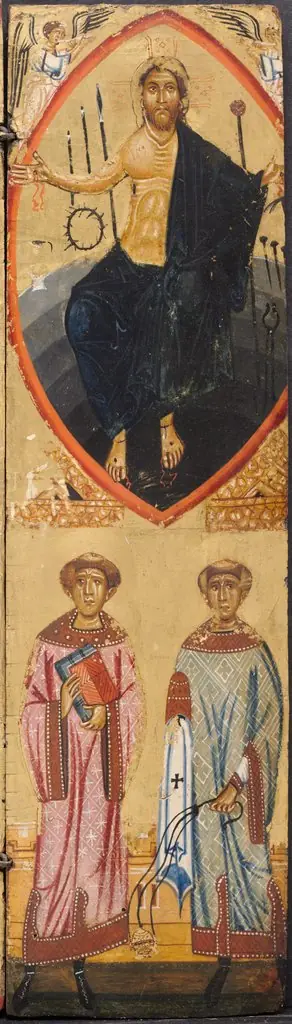
The panel depicts the Virgin Mary enthroned with the Christ Child, flanked by two standing male saints whose identities are not specified in the sources.
The panel depicts the Virgin Mary enthroned with the Christ Child, flanked by two standing male saints whose identities are not specified in the sources. The composition follows a hieratic format typical of early thirteenth-century Tuscan devotional images, emphasizing frontal symmetry and hierarchical scale to signal sanctity and maternal intercession. The small scale and intimate format suggest a private devotional context rather than a public altarpiece.
The gold ground and linear drapery articulate a sacred space removed from naturalistic setting, underscoring the figures' spiritual authority and the timelessness of the divine presence.
History & Provenance
The panel Virgin and Child with Saints by Berlinghiero Berlinghieri is dated to circa 1230 on both internal records and Wikidata. It entered the Cleveland Museum of Art as accession 1966.237.a, where it has remained. Berlinghieri, an Italian artist active before 1242, is credited as both creator and as the workshop master behind the work's production in Italy during the early thirteenth century.
Overview
Berlinghiero Berlinghieri, an Italian painter active in the early 13th century, created Virgin and Child with Saints around 1230. This religious panel painting, depicting the Madonna and Christ Child, exemplifies the Italo-Byzantine style prevalent during its creation. It is currently housed in the collection of The Cleveland Museum of Art.
Technique & Style
The painting exhibits the distinct characteristics of the Italo-Byzantine style, featuring a stiff, planar quality and vibrant coloration. Figures are rendered with golden complexions and strong dark outlines, particularly visible in the Virgin's face and the surrounding winged forms. This stylized approach, emphasizing spiritual rather than naturalistic representation, was typical for religious works of the era.
Context
Berlinghiero Berlinghieri was an Italian artist working in the early thirteenth century, a period when Byzantine artistic traditions profoundly influenced Italian painting. His adoption of the Italo-Byzantine style reflects the prevailing aesthetic for sacred imagery, which prioritized symbolic representation and devotional impact over realistic depiction. This approach shaped much of the religious art produced across the Italian peninsula at the time.
Own this work as a print
Artist & collection
Artist
Berlinghiero, also known as Berlinghiero Berlinghieri or Berlinghiero of Lucca (fl.

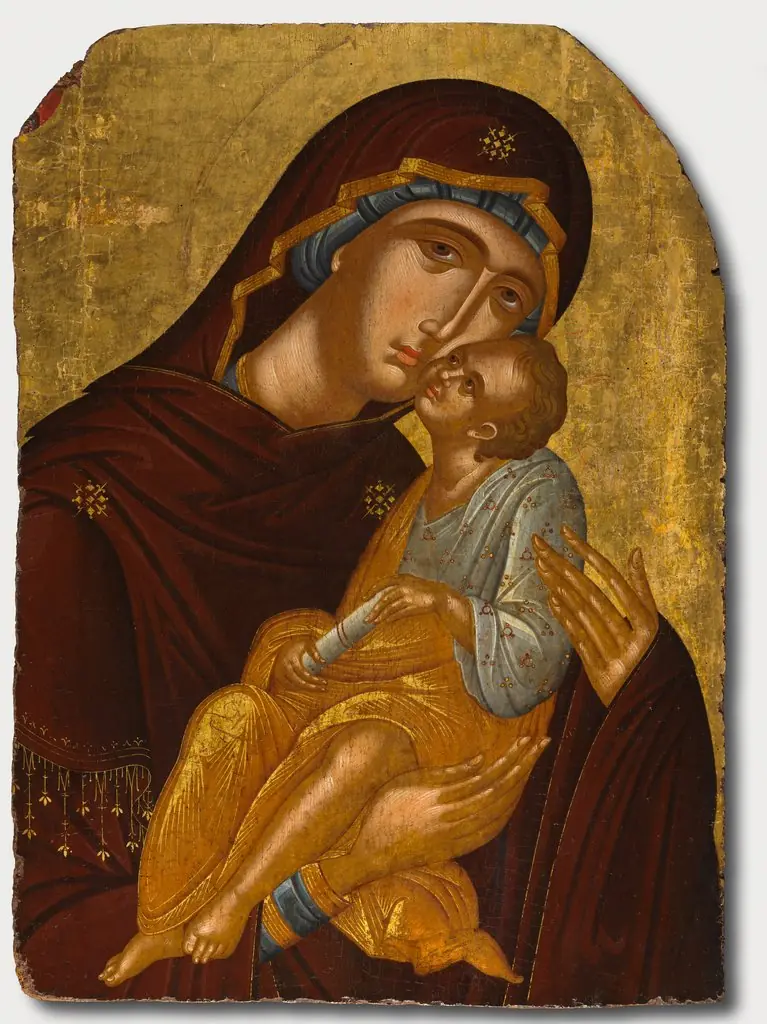 Icon of the Mother of God and Infant Christ (Virgin Eleousa)
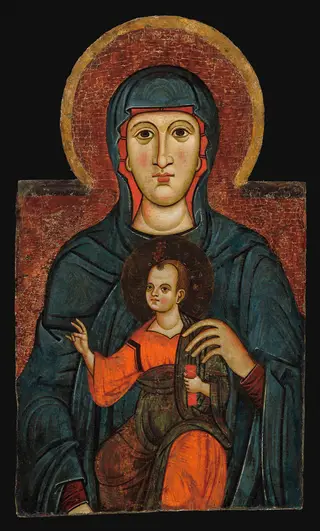 Virgin and Child
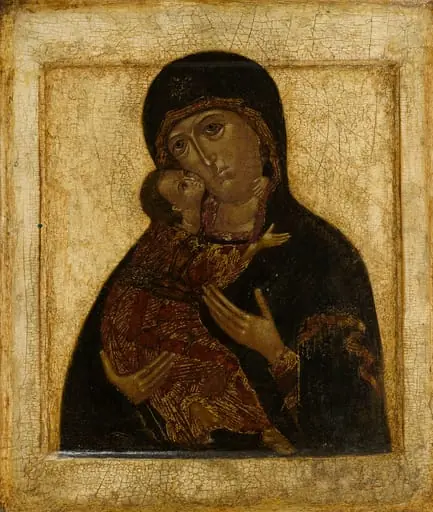 Vladimirin Jumalanäiti, venäläinen ikoni
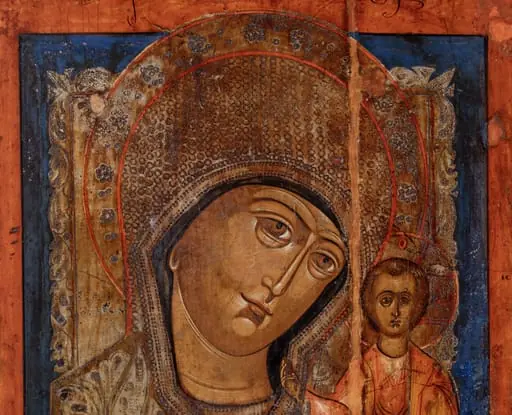
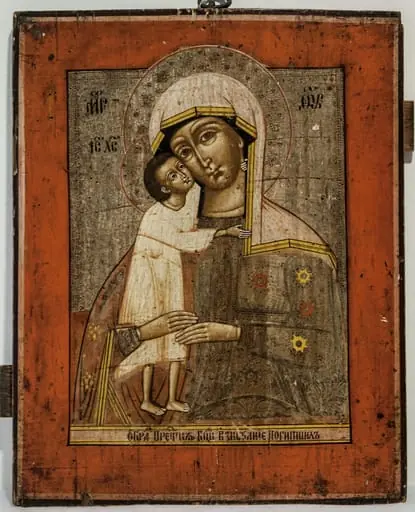 Maica Domnului, tipul Eleusa(dulcea sărutare, Mângâietoarea) îl ține strâns în brațe pe Iisus prunc, în picioare, cu obrazul lipit de cel al Maicii și o mână petrecută pe după gâtul ei. Iisus are nimbul cruciger, marcat cu motive florale punctate, Este înveșmântat într-o tunică 3/4 alb-gălbuie, care lasă să i se vadă picioarele. Maica poartă un maforion alb, bordat cu galben, partea din stânga a veșmântului din foiță metalică, decorată cu motive florale pictate cu roșu și galben, motive fitomorfe și geometrice incizate. În partea dreaptă veșmântul este roșu, decorat cu motive florale de culoare galbenă, foița fiind prezentă doar la mânecă. Nimbul decorat cu motive florale punctate în stratul de foiță metalică, Figurile modelate din culoare (alb, ocru) cu accente grafice fine, albe, sunt specifice icoanei rusești. Cromatica: alb, galben, roșu, auriu, brun, negru, foiță metalică, chenar roșu deschis, mărginit de două linii în nuanțe de roșu deschis și brun.Chenarul interior dublat de două șiruri de cercuri ștanțate în foiță. Inscripția dispusă pe o bandă dreptunghiulară în partea de jops a icoanei : Icoana Preacuratei Fecioare Prevăzând Jertfa (lui Iisus).
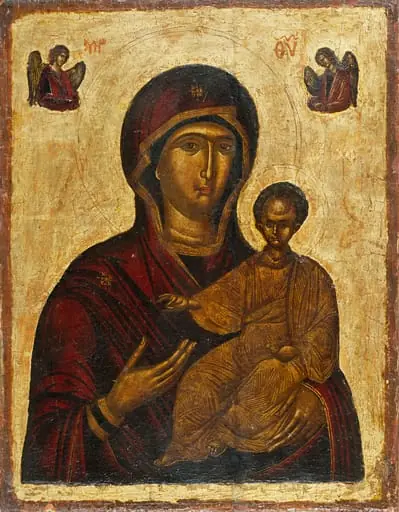 Jumalanäiti, Hodigitria - Tiennäyttäjä, bysanttilainen ikoni
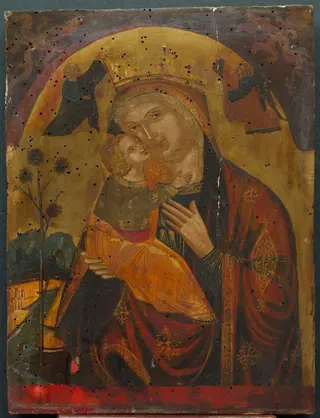 Virgin and Child
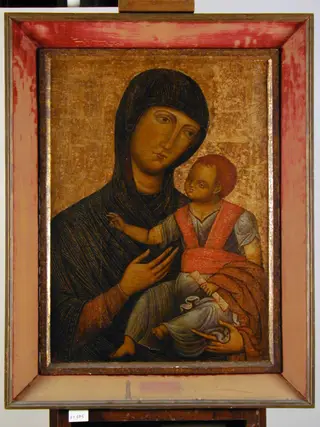 Madonna and Child
 Virgin and Child with Saints
 Fecioara cu Iisus
 Madonna and Child Enthroned with Four Saints