Artwork
The Crucifixion of St. Andrew, with St. Francis and St. Paul below
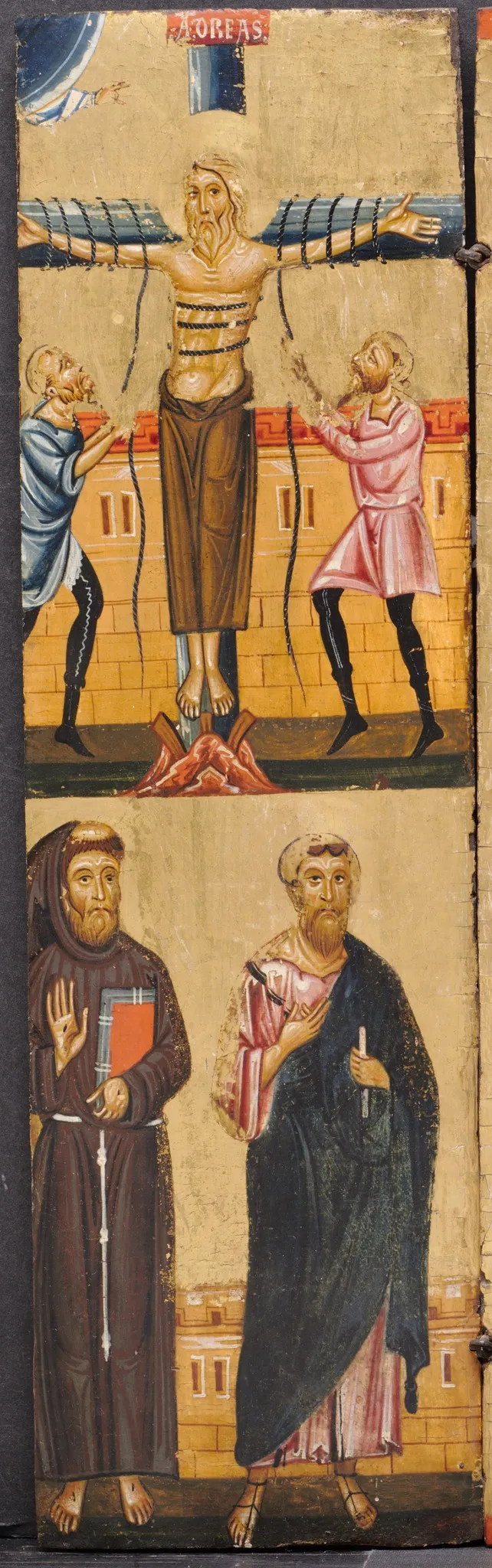
The Crucifixion of St. Andrew, with St. Francis and St. Paul below is an unspecified painting by the Italo Byzantine artist Berlinghiero Berlinghieri. It dates from 1230 and is held in the collection of the Cleveland Museum of Art.
About this work
History & Provenance
The provided sources do not contain information regarding specific exhibitions in which the work has been displayed.
The Crucifixion of St. Andrew, with St. Francis and St. Paul below is a religious painting created by the Italian artist Berlinghiero Berlinghieri around the year 1230. The work originated in Italy and is currently held in the collection of the Cleveland Museum of Art. While the specific commission details are not recorded in the available sources, the piece dates to the early thirteenth century, reflecting the artistic practices of that period in Italy.
The painting is held in the collection of the Cleveland Museum of Art in Cleveland, Ohio. It is cataloged under the accession number 1966.237.b. The provided sources do not contain information regarding specific exhibitions in which the work has been displayed.
Overview
This panel painting by Berlinghiero Berlinghieri, created around 1230, exemplifies the Italo-Byzantine artistic tradition. Titled The Crucifixion of St. Andrew, with St. Francis and St. Paul below, it portrays the suffering of Saint Andrew during his martyrdom. The composition also features the figures of Saint Francis and Saint Paul in the lower register. The work is currently housed in the collection of The Cleveland Museum of Art.
Subject & Meaning
The central focus of the painting is the crucifixion of Saint Andrew, depicted with arms extended and secured to his cross. Below him, two figures are engaged in the act of martyrdom, one holding a hammer and the other a rope. In the foreground, Saint Francis, identified by his hooded habit, and Saint Paul, holding a book, observe the scene.
A red banner displaying "AOREAS" (likely a variant of Andreas) appears in the upper left, reinforcing the saint's identity.
Technique & Style
Executed in the Italo-Byzantine manner, the painting reflects artistic conventions prevalent in early thirteenth-century Italy. Its aesthetic is characterized by a muted color palette, dominated by browns, beiges, and grays, set against a backdrop suggesting a stone wall. The composition employs bold lines and a simplified approach to form, typical of early medieval art, emphasizing clarity and narrative impact over naturalistic detail.
Context
Berlinghiero Berlinghieri was a significant painter active in Lucca during the early thirteenth century. He is recognized for his contributions to the development of Italian painting during a transitional period, working within the established Italo-Byzantine tradition. His artistic legacy extended through his family, as his three sons also pursued careers as painters, further establishing the family's influence in the region.

Artist & collection
Artist
Berlinghiero, also known as Berlinghiero Berlinghieri or Berlinghiero of Lucca (fl.

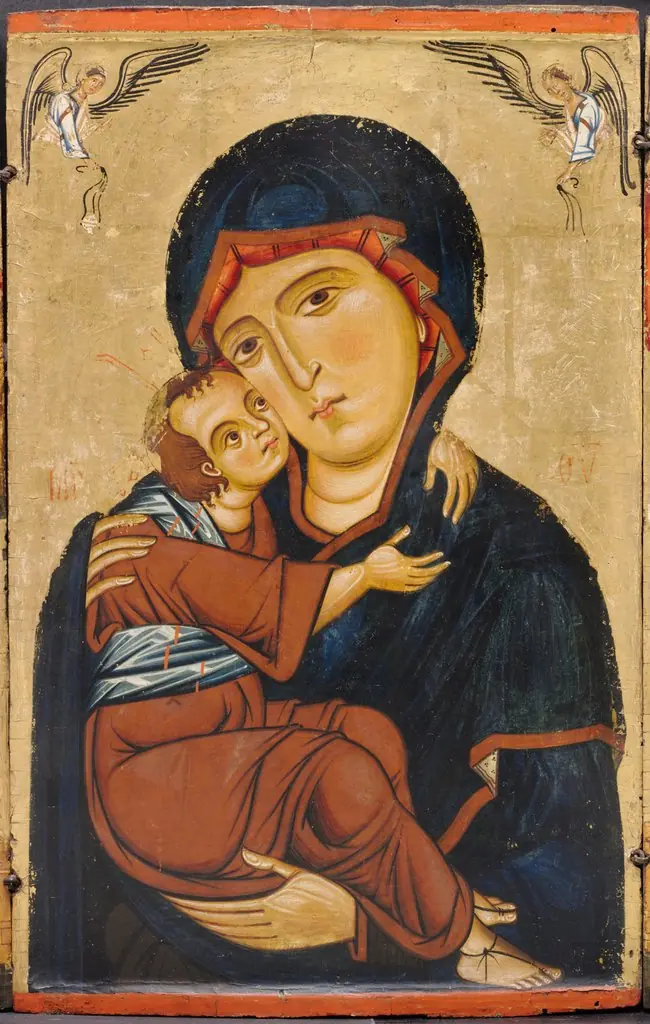
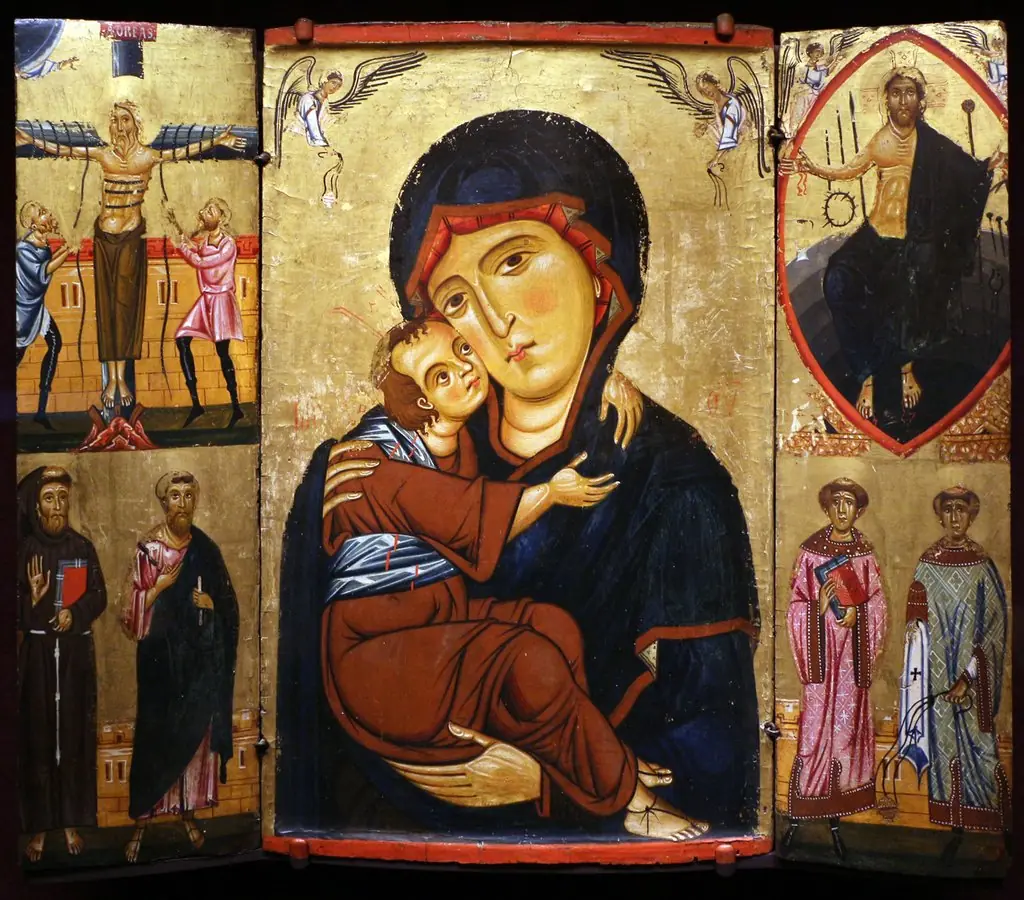
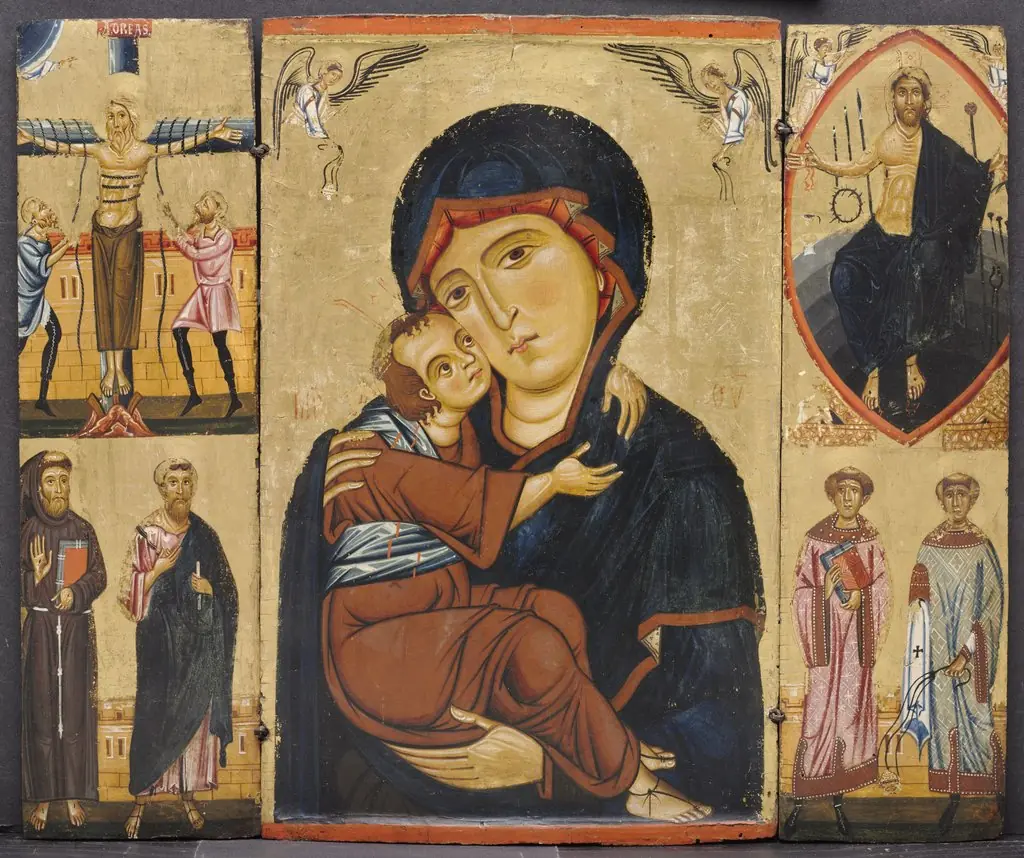
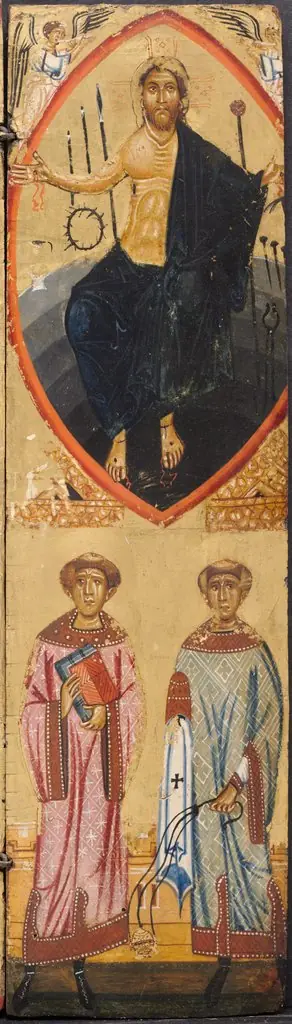
- The Crucifixion of St. Andrew, with St. Francis and St. Paul below
 Detail
 Baptism
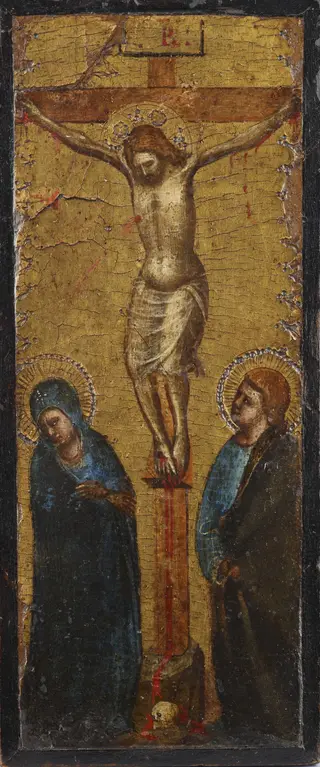 Crucifixion (Wing of a Triptych)
 Botezul lui Iisus Hristos
 Christ in a Mandorla, with the instruments of the Passion, with St. Stephen and St. Lawrence below
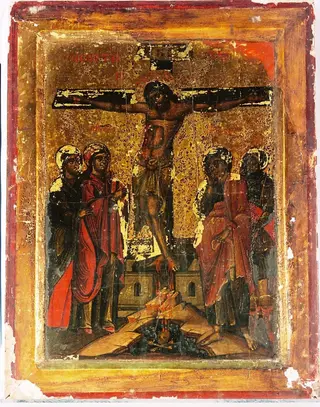 RASTIGNIREA
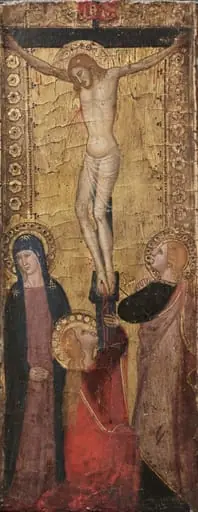 The Crucifixion
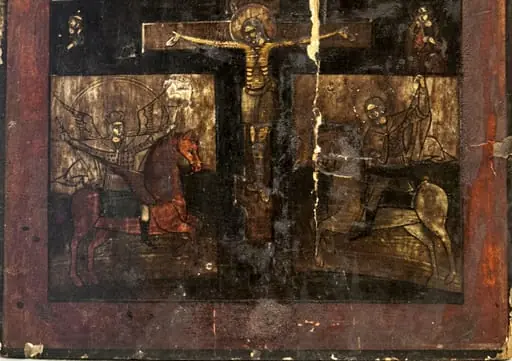 Răstarul
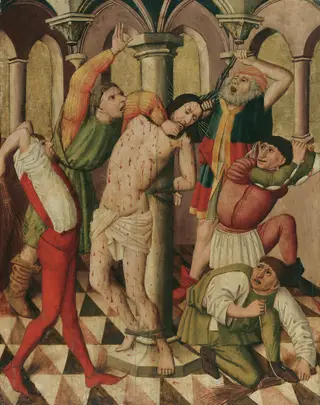 Geißelung Christi
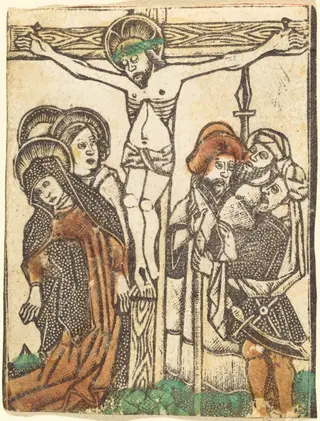 The Crucifixion