Artwork
Mehlmarkt in Vienna
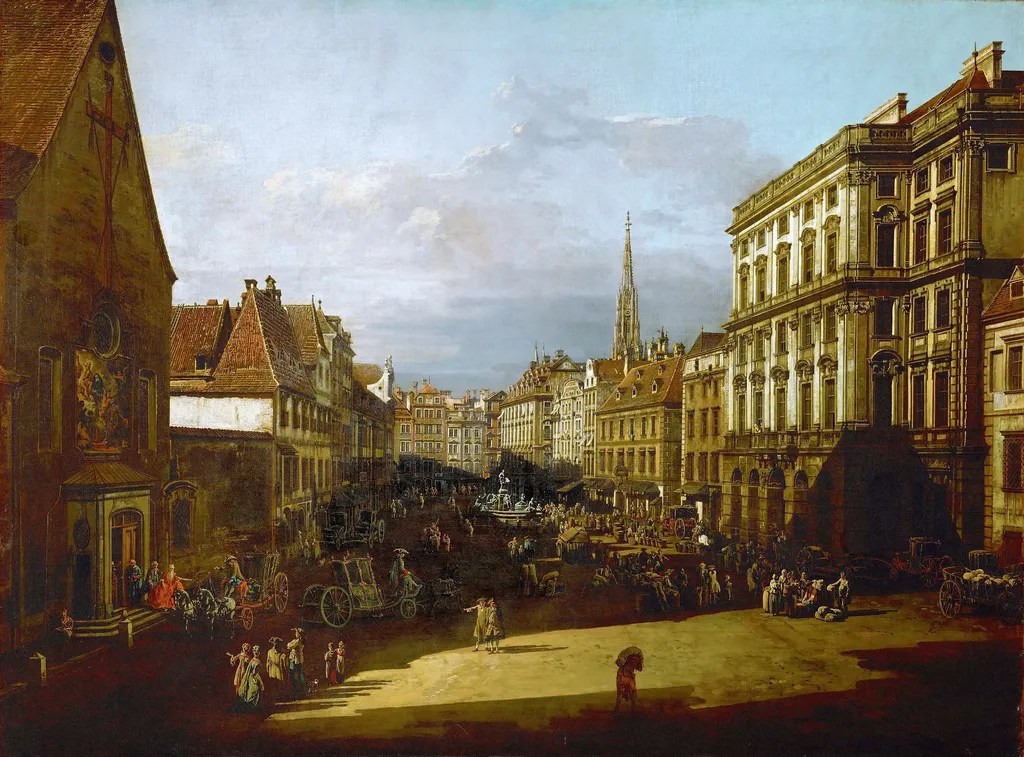
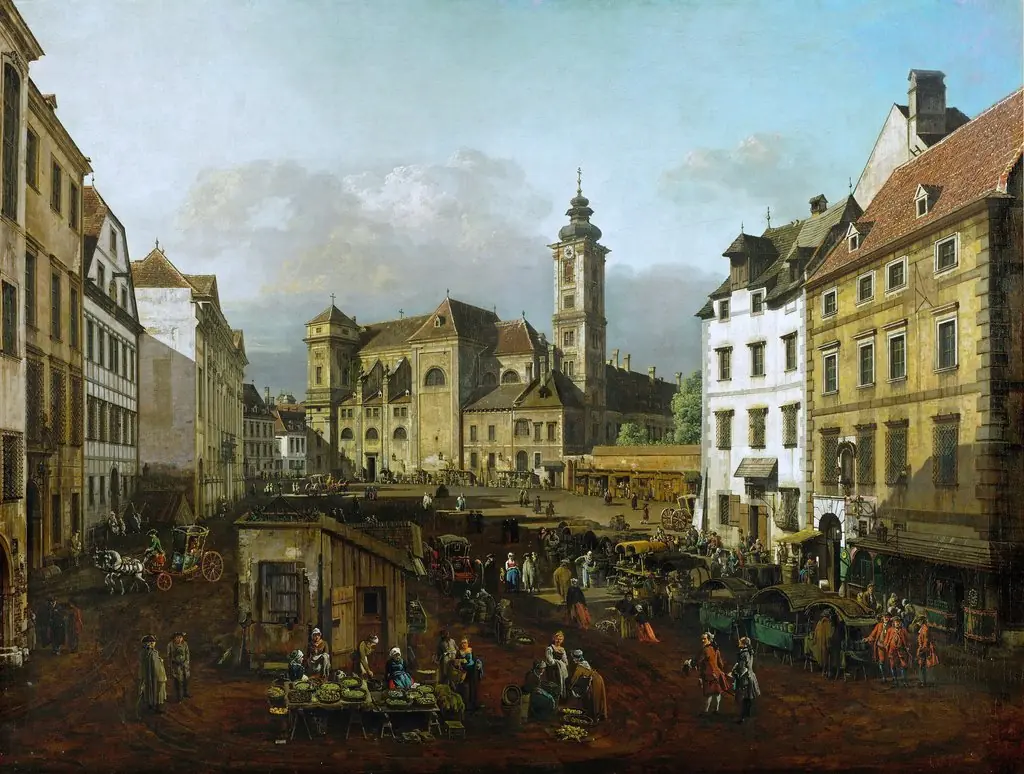
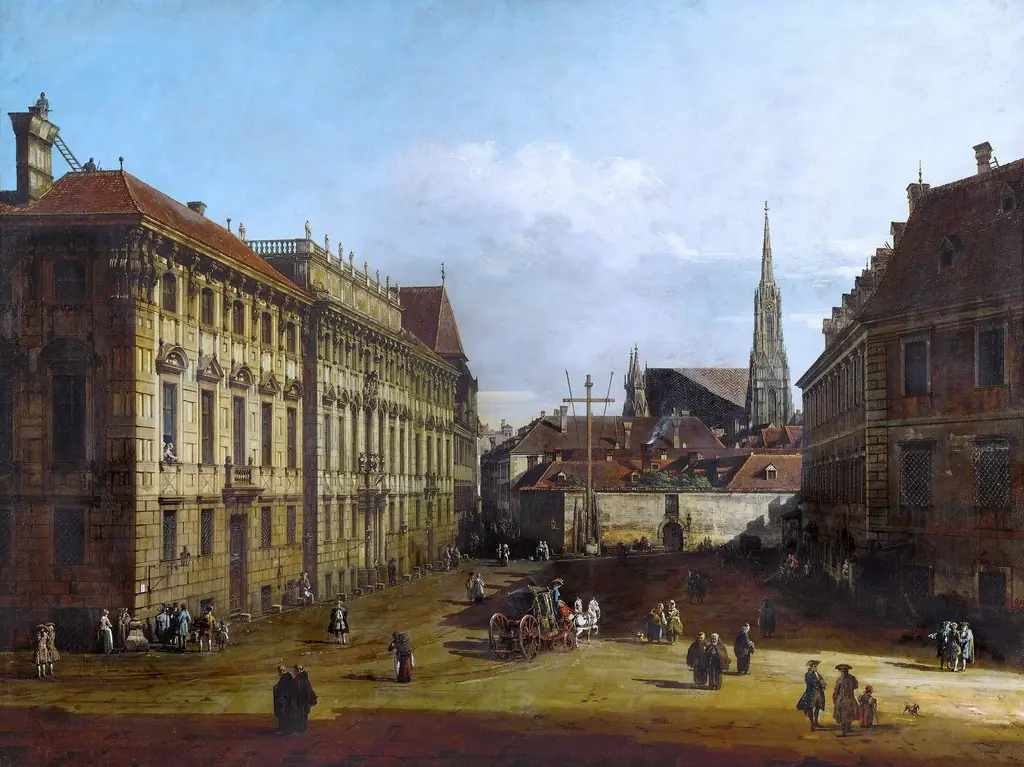
Mehlmarkt in Vienna is an oil painting by the Rococo painting artist Bernardo Bellotto. It dates from 1758 and is held in the collection of the Kunsthistorisches Museum.
About this work
Technique & Style
Executed in 1758, this work is an oil painting on canvas measuring 116 cm in height and 155 cm in width. Classified as a veduta, the piece presents a detailed cityscape view of Vienna. The composition focuses on the Mehlmarkt, utilizing the oil medium to render architectural forms and urban atmosphere with the precision characteristic of the genre.
History & Provenance
Additionally, the available documentation does not contain details regarding the artwork's exhibition history or specific display locations within the museum.
The painting Mehlmarkt in Vienna was created by Bernardo Bellotto in 1758, as documented by its dated inscription.
The work entered the collection of the Kunsthistorisches Museum in Vienna, where it remains held today. Its dimensions are recorded as 116 cm in height and 155 cm in width, consistent with the museum’s holdings of Bellotto’s vedute.
Bernardo Bellotto's Mehlmarkt in Vienna, an oil-on-canvas cityscape completed in 1758, is held in the collection of the Kunsthistorisches Museum in Vienna. The work measures 116 cm in height and 155 cm in width. While the painting is confirmed to be part of the museum's holdings, the provided sources do not list a specific inventory or accession number for the piece.
Additionally, the available documentation does not contain details regarding the artwork's exhibition history or specific display locations within the museum.
Context
Mehlmarkt in Vienna, painted in 1758 by Bernardo Bellotto, exemplifies his mature cityscape style, blending meticulous architectural detail with atmospheric perspective characteristic of 18th‑century Venetian vedute, while his role as nephew and pupil of Canaletto informed his precise urban documentation; the work is housed in the Kunsthistorisches Museum in Vienna, underscoring its significance within the artist’s broader oeuvre of Central European urban views and reflecting contemporary Enlightenment interests in mapping and idealizing imperial capitals
Scholarly analyses emphasize the painting’s contribution to veduta tradition, noting its technical mastery of oil on canvas and its function as both artistic record and political statement, thereby situating Bellotto within the transitional phase of veduta from topographical accuracy toward romanticized imperial grandeur
Overview
Bernardo Bellotto’s 1758 oil painting Mehlmarkt in Vienna presents an urban scene from mid-eighteenth-century Vienna. Executed with meticulous precision, the work captures a moment in the city’s daily life, emphasizing architectural grandeur and human activity. It resides in the Kunsthistorisches Museum, where it contributes to the museum’s collection of European cityscapes.
Subject & Meaning
The composition centers on Vienna’s Mehlmarkt, a marketplace bustling with commerce and social interaction. Figures engage in routine tasks, conversing, trading, or traversing the square, while the surrounding buildings, rendered in warm tones, frame the scene. Bellotto’s depiction transcends mere topographical record, offering insight into the rhythms of urban existence and the spatial dynamics of public life in Habsburg Vienna.
Own this work as a print
Artist & collection
Artist
Bernardo Bellotto, was an Italian urban landscape painter or vedutista, and printmaker in etching famous for his vedute of European cities – Dresden, Vienna, Turin, and Warsaw.