Artwork
John Day, Printer
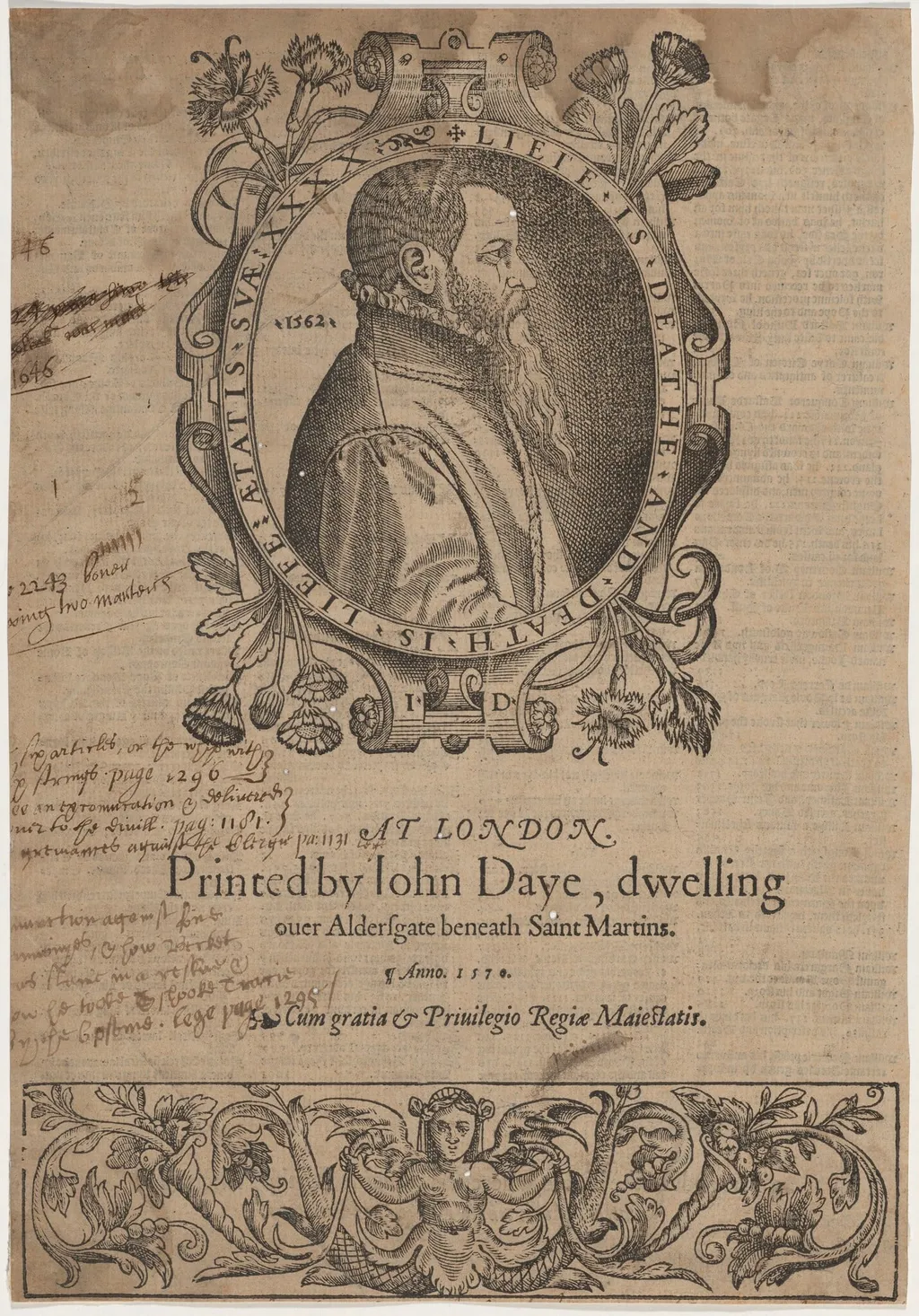
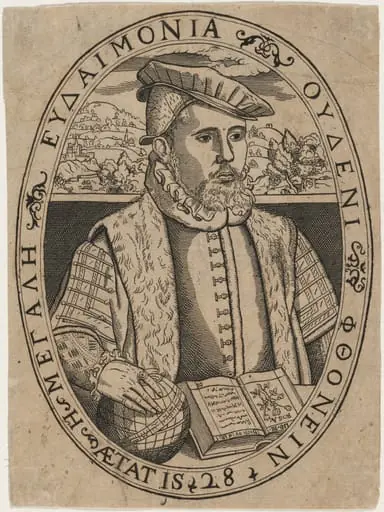
John Day, Printer is an ink print by the Renaissance artist John Bettes. It dates from 1562 and is held in the collection of the National Gallery of Art.
About this work
" The man holds a scroll with more writing, and his head is framed by a crown of leaves and flowers.
This is a black-and-white engraving of a bearded man sitting in a chair. Around him are Latin words on a banner: "Statis Vitae" and "Death Cum Vita." The man holds a scroll with more writing, and his head is framed by a crown of leaves and flowers. Below, a border shows three small figures with wings, each holding a different object.
The date "1562" is carved into the top of the chair, matching the year this was made. The text at the bottom says it was printed by John Day in London.
Next, look up engraving to see how artists like this carved images into metal.
Overview
John Bettes’ 1562 engraving, titled John Day, Printer, presents a seated, bearded figure framed by a leafy crown. The composition includes Latin inscriptions on a banner, Statis Vitae and Death Cum Vita, and a scroll held by the sitter. A decorative border below features three winged figures each bearing an object, while the date and printer’s name appear on the chair and base.
Subject & Meaning
The central figure likely represents a printer or scholar, emphasized by the scroll and the surrounding mottoes that juxtapose life and death. The Latin phrases, translating roughly to “Stand of Life” and “Death with Life,” suggest a contemplation of mortality and the enduring nature of the printed word.
Technique & Style
Executed as a black‑and‑white engraving, the image was incised on a metal plate, allowing fine line work and intricate detailing of the crown, facial hair, and surrounding motifs. The use of decorative borders and allegorical winged figures reflects the Renaissance interest in symbolic ornamentation.
History & Provenance
The print bears the date 1562 and the imprint “Printed by John Day, London,” identifying the London‑based printer after whom the work is named. This situates the piece within the mid‑sixteenth‑century English print culture, a period of growing demand for illustrated texts.
Context
During the 1560s, English engraving was emerging as a vehicle for disseminating both literary and visual information. Artists like Bettes contributed to the visual vocabulary of the book trade, integrating emblematic imagery with textual messages to appeal to educated patrons.
Legacy
John Day, Printer exemplifies early English engraving’s role in merging art and print commerce, offering insight into the visual strategies employed by printers to assert authority and intellectual gravitas in a rapidly expanding market.
Own this work as a print
Artist & collection

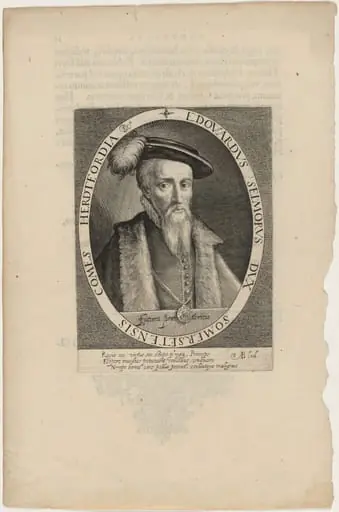
- Edward Seymour, First Duke of Somerset
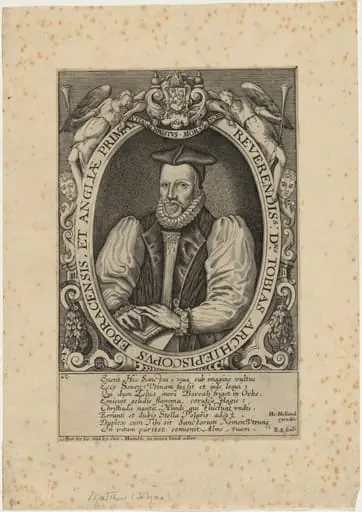 Tobias Matthew, D.D., Archbishop of York
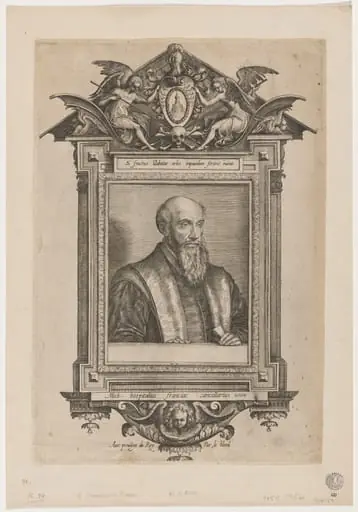 Portrait of a Man with a Long Beard
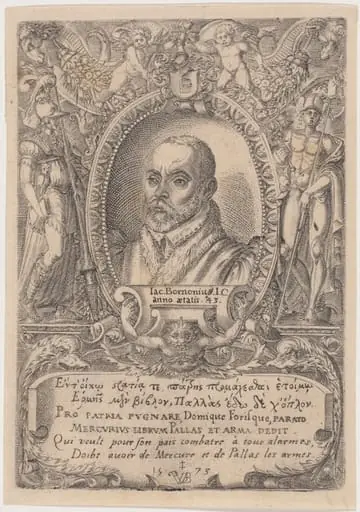 Jacob Bornonius
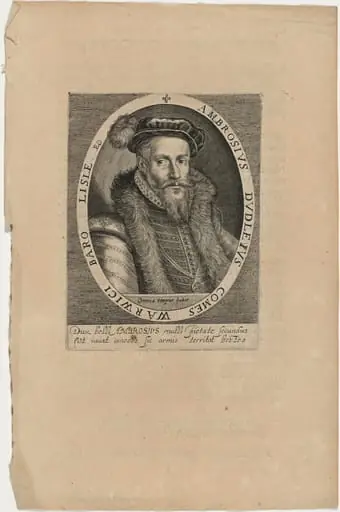 Ambrose Dudley, Earl of Warwick
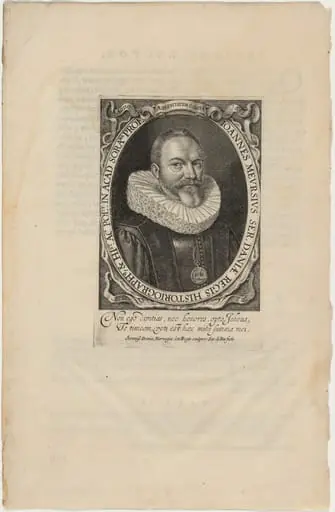 Johannes Meursius, Historian
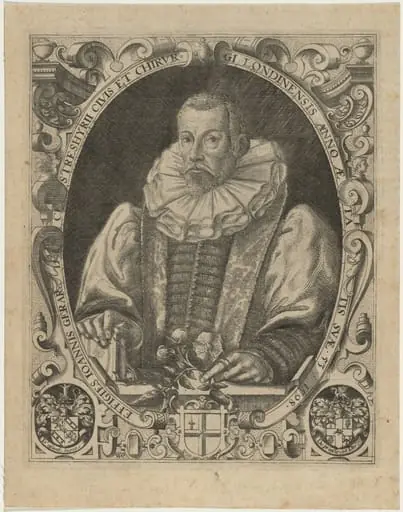 John Gerard, Herbalist
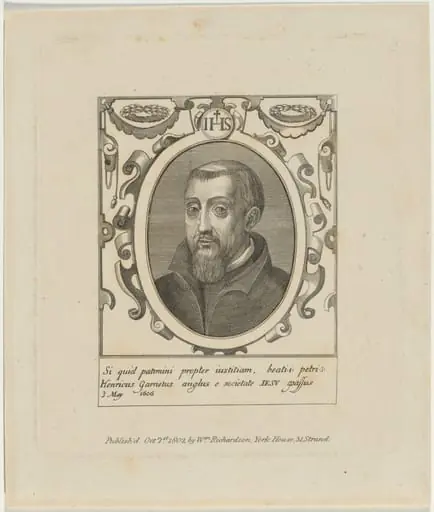 Henry Garnett, Jesuit Priest
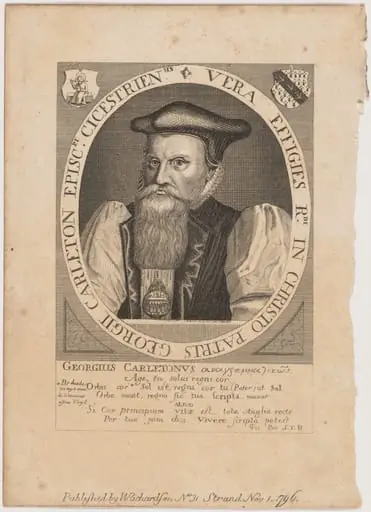 George Carlton, Clergyman
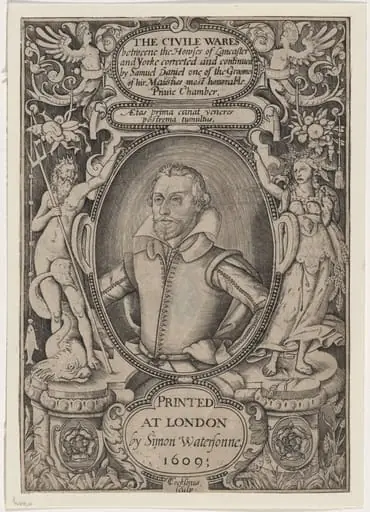 Samuel David
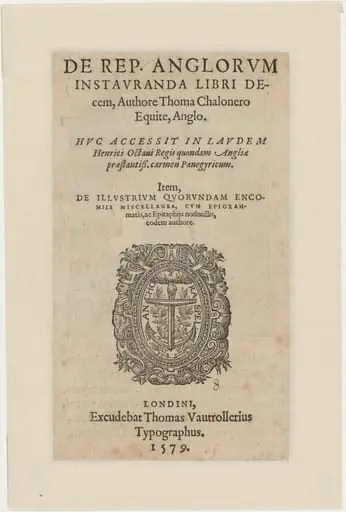 Title Page to De Republicae Anglorum by Thomas Chaloner
 Portrait of a Man