Artwork
Un Abri (A Shelter)
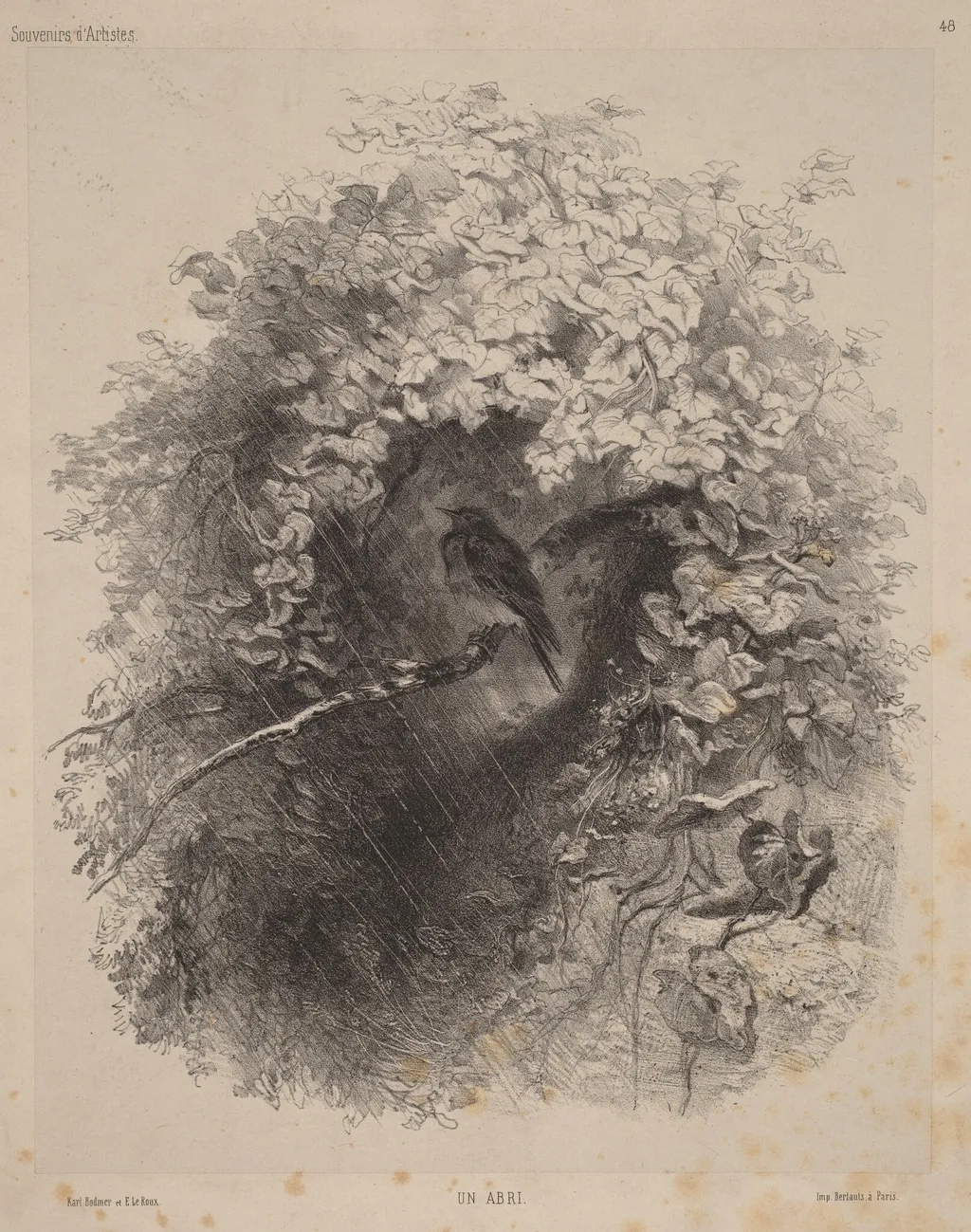
Un Abri (A Shelter) is an ink print by the Impressionist artist Karl Bodmer. It dates from 1858 and is held in the collection of the National Gallery of Art.
- Inscription
- Inscribed:on support lower left: Karl Bodmer et E.Le Roux; on support lower right: Imp. Bertauts à Paris; on support lower center: UN ABRI.; on support upper left: Souvenirs d'Artistes; on support upper right: 48
About this work
Overview
The work belongs to his later period, following his move to France, where he increasingly focused on intimate natural scenes.
Created in 1858, Un Abri (A Shelter) is a lithograph in black ink on chine collé by Swiss-French artist Karl Bodmer. The work belongs to his later period, following his move to France, where he increasingly focused on intimate natural scenes. Unlike his earlier topographical illustrations, this piece emphasizes atmosphere over precision, using the lithographic process to convey texture and mood through minimal, expressive marks.
Subject & Meaning
The image depicts a dense, overlapping thicket of branches and foliage, with a central mass of dark ink suggesting a concealed space. The title, meaning 'a shelter,' invites interpretation of the form as a refuge, whether natural, psychological, or symbolic. The contrast between the heavy center and the lighter, open edges evokes tension between enclosure and escape, without offering a literal narrative.
Technique & Style
Bodmer employed lithography to achieve a sketch-like immediacy, using coarse, gestural lines to build volume through tone rather than detail. The chine collé support enhanced the paper’s texture, allowing the ink to absorb unevenly and deepen the sense of spontaneity. His approach here diverges from his more polished earlier works, favoring emotional resonance over topographical accuracy.
History & Provenance
The print was made during Bodmer’s time in France, after his earlier travels in North America and his work documenting European river systems. While specific ownership history is not documented, the piece aligns with his late-career shift toward personal, atmospheric studies. It was likely produced for private circulation or as part of a series exploring natural forms in solitude.
Context
In mid-19th-century France, lithography was widely used for both commercial and artistic purposes. Bodmer’s focus on isolated natural forms reflected broader Romantic interests in nature’s emotional power, though his style remained restrained compared to contemporaries. His work stood apart from overtly political or narrative prints, instead offering quiet, introspective observations of the landscape.
Legacy
Un Abri exemplifies Bodmer’s evolution from illustrator to contemplative printmaker. Though not widely exhibited during his lifetime, the work is now recognized for its sensitivity to texture and mood. It contributes to understanding how 19th-century artists used print media to explore subjective experience, bridging documentary tradition and expressive abstraction.
Own this work as a print
Artist & collection
Artist
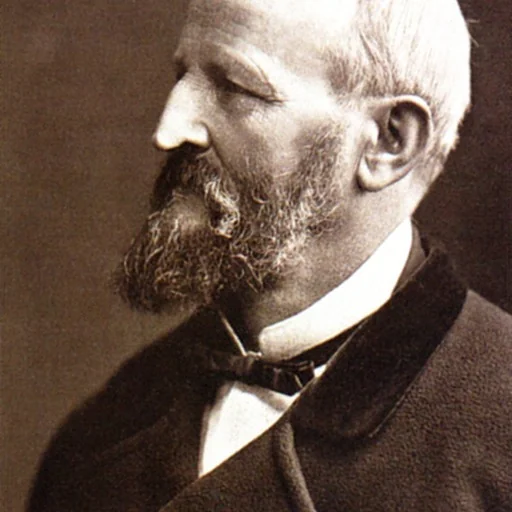
Johann Carl Bodmer (11 February 1809 – 30 October 1893) was a Swiss-French printmaker, etcher, lithographer, zinc engraver, draughtsman, painter, illustrator, and hunter.

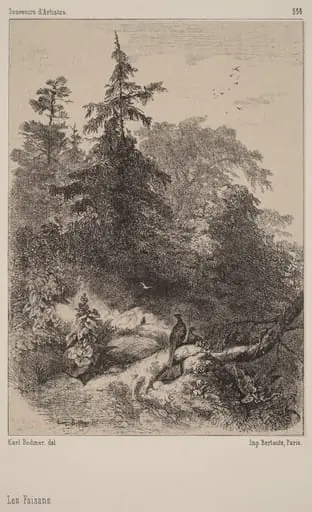 Les Faisans
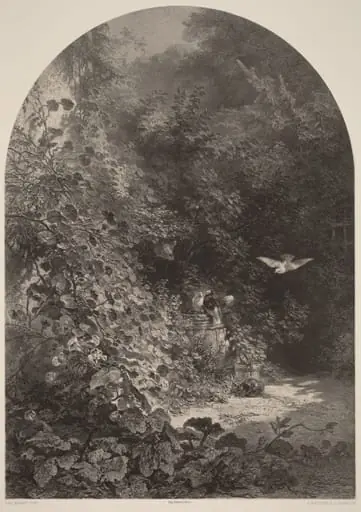 Un Coin de Jardin
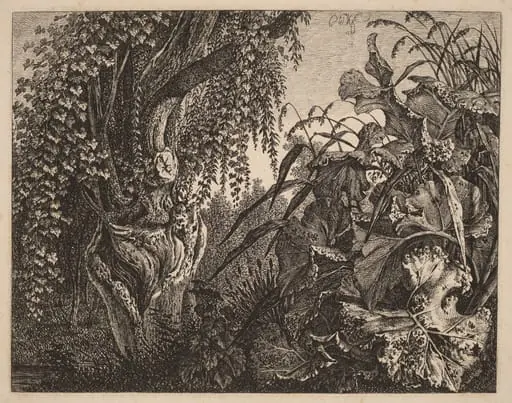 A Thicket; a Gnarled Willow Tree at Left, a Thicket of Vegetation at Right
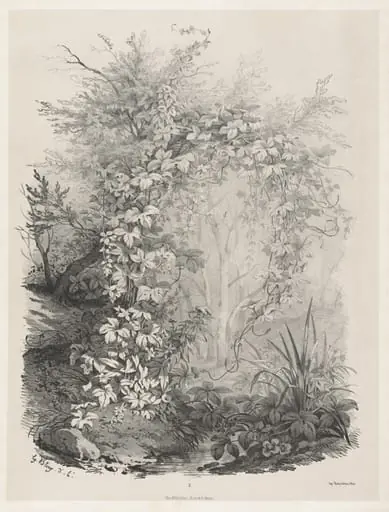 Plants and Ivies by a Stream
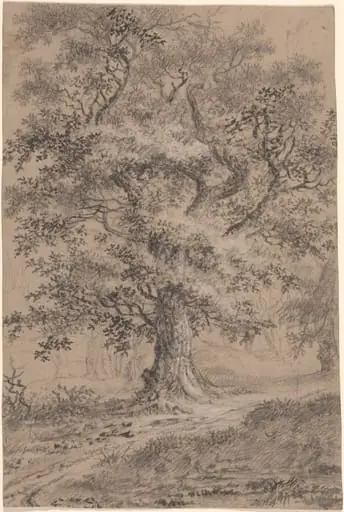 A Leafy Oak by a Woodland Path
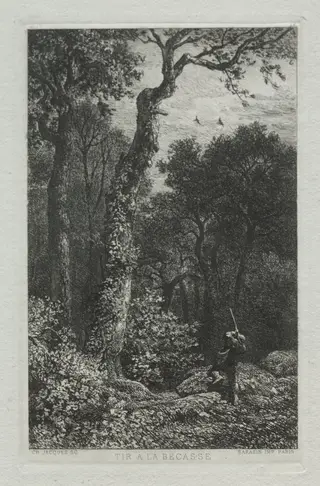 Shooting the Woodcock
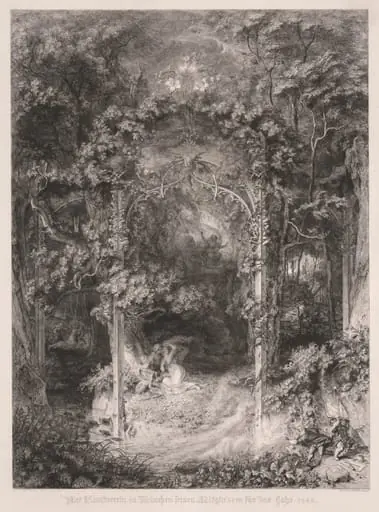 The Forest Maiden
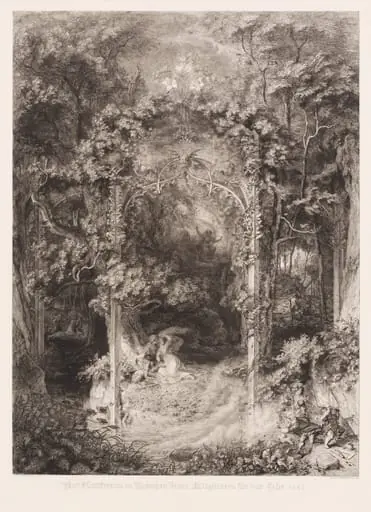 Das Waldfräulein (The Lady of the Forest)
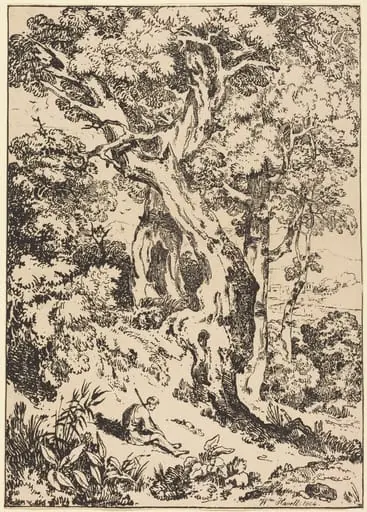 Study of Trees and Shrubs with Seated Figure
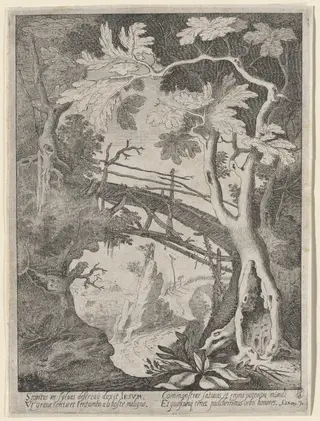 A Rocky Landscape with the Temptation of Christ
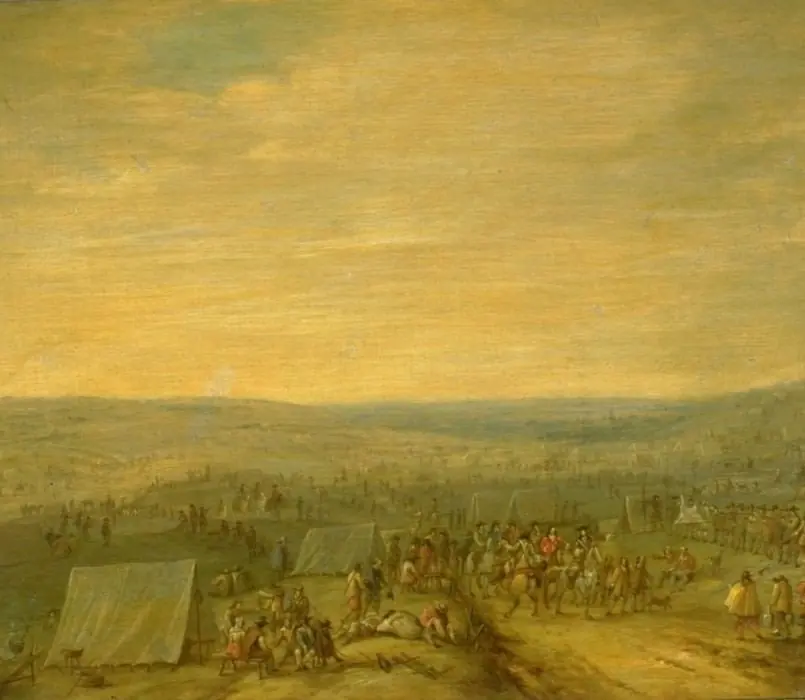 The Encampment