Artwork
Rock, Bamboo, and Orchids
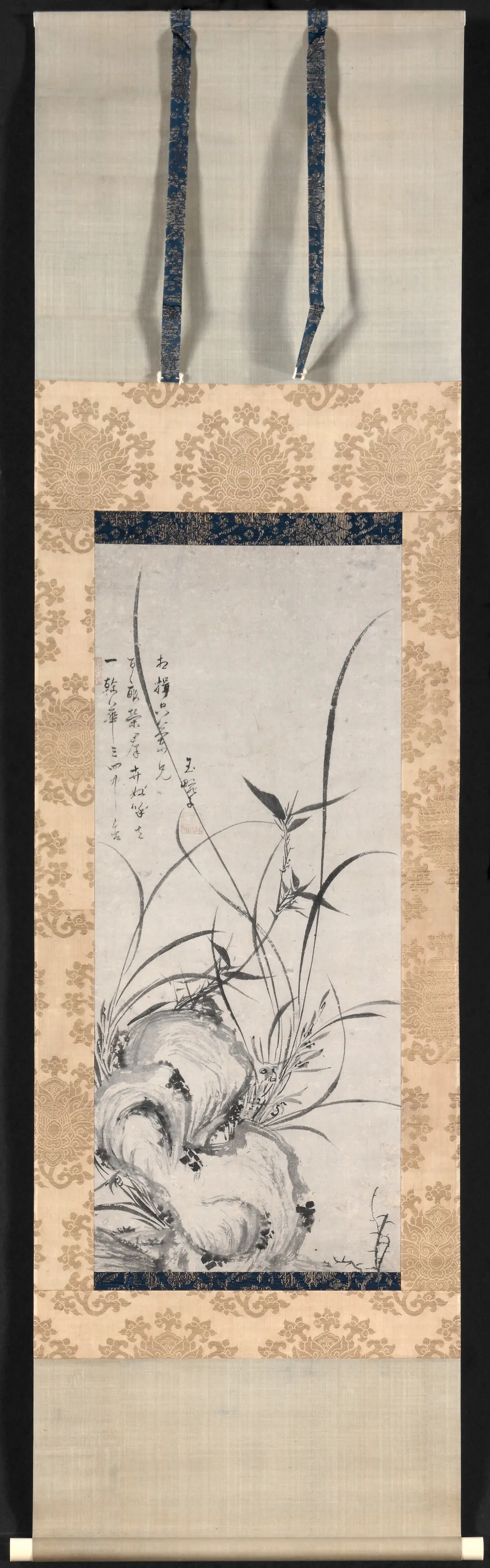
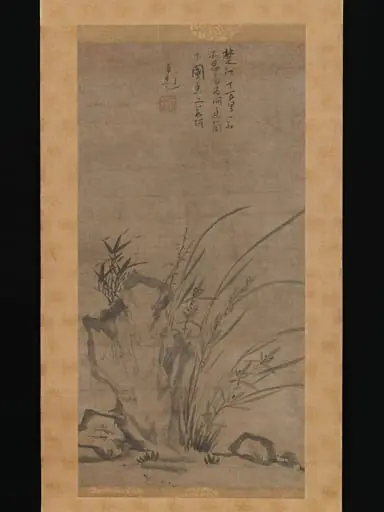
Rock, Bamboo, and Orchids is an unspecified painting by the Ming dynasty painting artist Bompō. It dates from 1406 and is held in the collection of the Cleveland Museum of Art.
About this work
Subject & Meaning
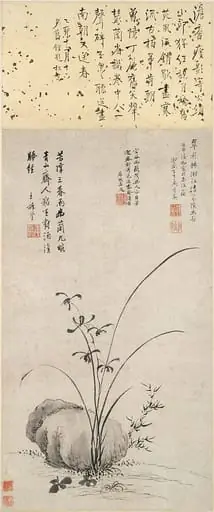
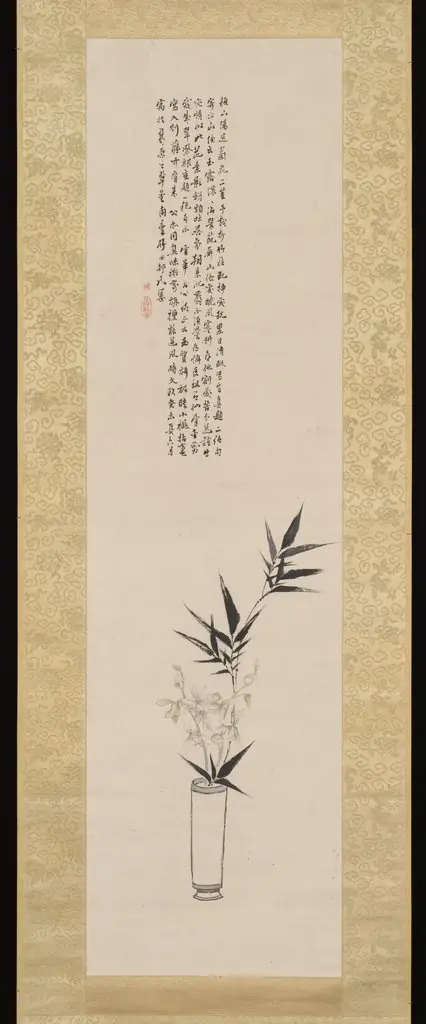
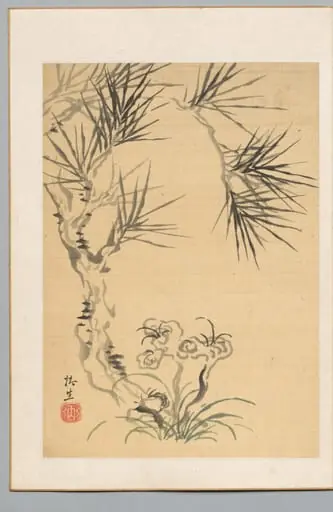
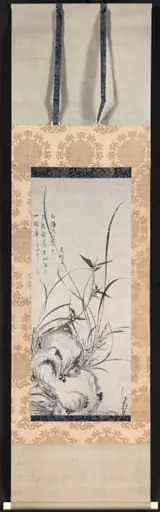
The work depicts a natural composition of rock, bamboo, and orchids that symbolizes resilience, endurance, and scholarly refinement in East Asian visual tradition. Bamboo stands for moral integrity and flexibility, orchids represent humility and scholarly pursuit, while the rock conveys stability and permanence, together forming a visual allegory of harmonious virtue. Executed in 1406 by Bompō, the painting was created in Japan and is now housed in the Cleveland Museum of Art, where it is catalogued under the accession number 1972.15.
Technique & Style
It depicts a composition of rock, bamboo, and orchids rendered in the monochrome style characteristic of early Muromachi ink painting.
The work is an ink-on-paper painting created in Japan in the early fifteenth century. It depicts a composition of rock, bamboo, and orchids rendered in the monochrome style characteristic of early Muromachi ink painting. The formal arrangement emphasizes asymmetrical balance and rhythmic spacing, reflecting the restrained aesthetic of the period.
The Cleveland Museum of Art holds the piece in its collection, where it remains part of the study of East Asian brushwork traditions.
History & Provenance
Bompō painted Rock, Bamboo, and Orchids in 1406 in Japan. The work entered the Cleveland Museum of Art collection in 1972 and remains there. Its provenance traces from creation in Japan to the museum's holdings.
The painting Rock, Bamboo, and Orchids by the Japanese artist Bompō is held in the collection of the Cleveland Museum of Art in Cleveland. The work, dated to 1406, is catalogued under the accession number 1972.15. While the source confirms its current location and inventory status, no specific exhibition history or past display records are provided in the available documentation.
Legacy
Bompō's Rock, Bamboo, and Orchids (1406) reflects a compositional model associated with depictions of auspicious flora in Japanese painting. The work's integration of naturalistic rock formations with symbolic bamboo and orchids relates to later artists' approaches to balancing structural elements and symbolic motifs within the same pictorial space. Its presence in the Cleveland Museum of Art collection since 1972 has facilitated scholarly attention to Bompō's role in the Muromachi period's evolution of ink-wash aesthetics, contributing to reevaluations of his handling of brushwork and pictorial space.
Overview
Rock, Bamboo, and Orchids is an ink painting executed by the Japanese artist Bompō in 1406. The work is part of the collection of the Cleveland Museum of Art, where it is displayed as an example of early Muromachi-period brushwork.
Context
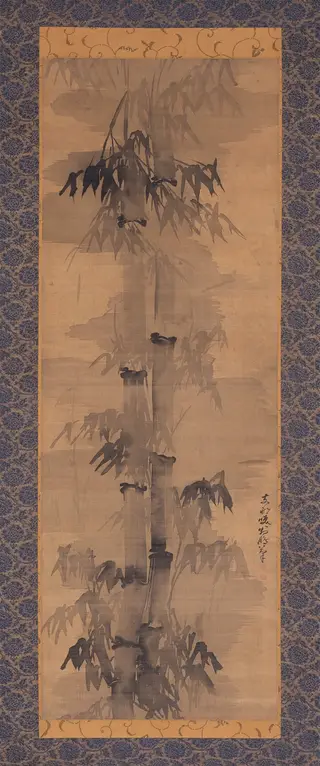
During the Muromachi era, Japanese artists increasingly looked to Chinese Song and Yuan models, especially in the depiction of bamboo, a symbol of resilience and moral integrity. Bompō’s work aligns with this cross‑cultural exchange, integrating Chinese brush techniques with Japanese aesthetic sensibilities.
Artist & collection