Artwork
Rock, Bamboo, and Orchids
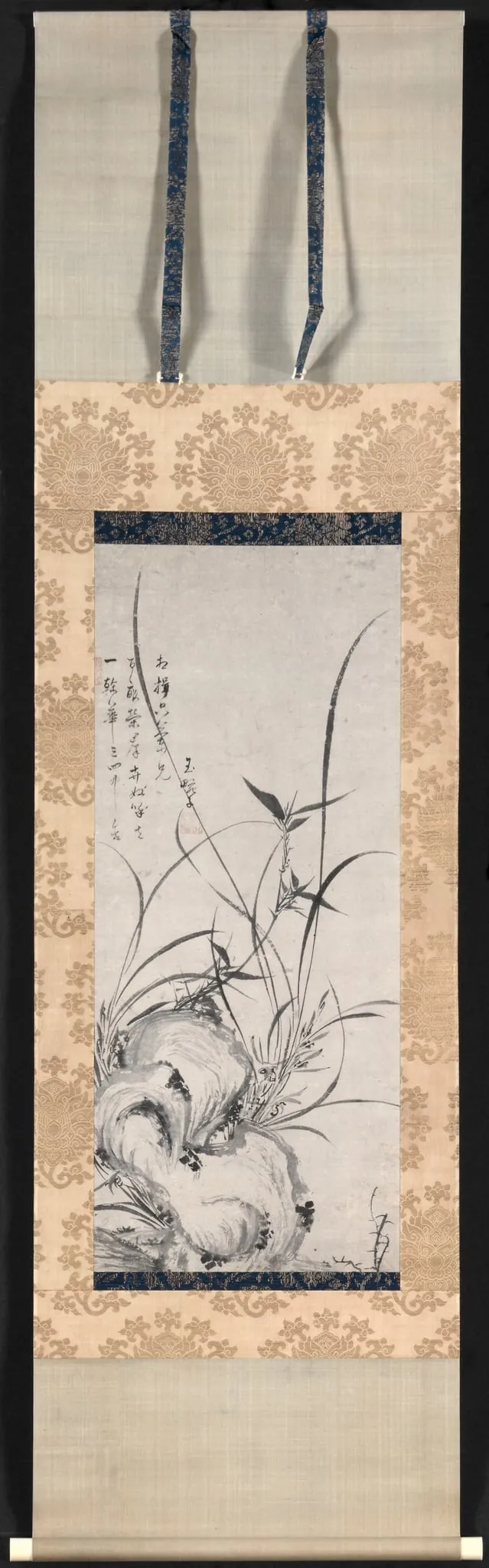
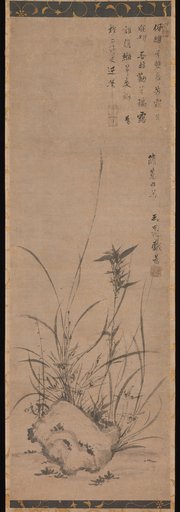
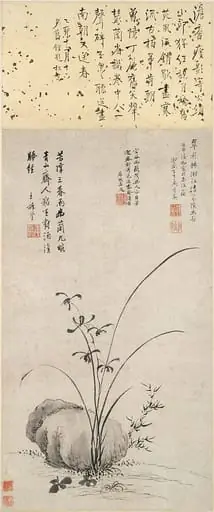
Rock, Bamboo, and Orchids is an unspecified painting by the Tosa School artist Gyokuen Bonpō. It dates from 1406 and is held in the collection of the Cleveland Museum of Art.
- Accession no.
- 1972.15
- Credit line
- John L. Severance Fund
About this work
Overview
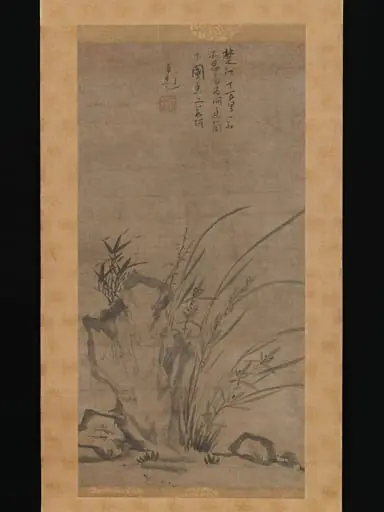
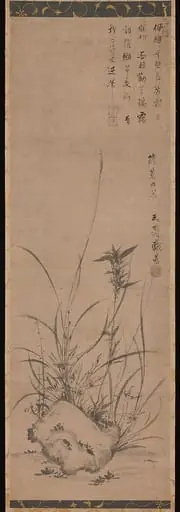
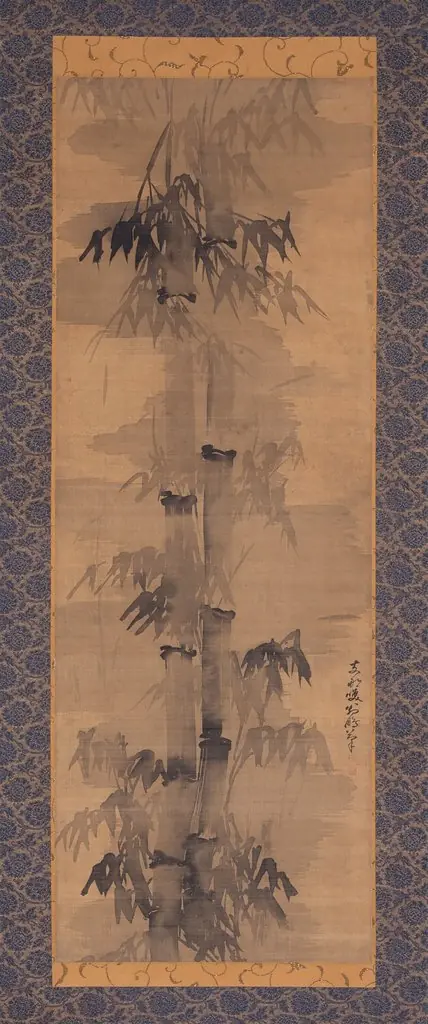
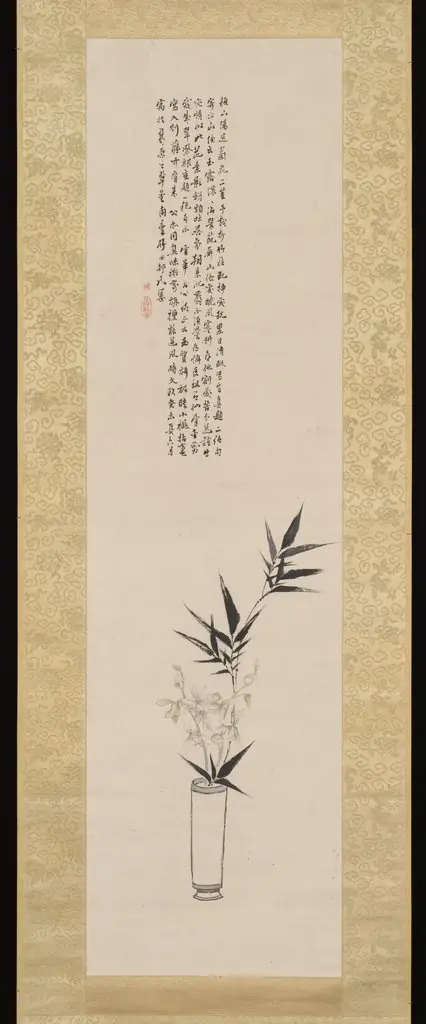
Gyokuen Bonpō’s ink painting, dated 1406, presents a composed arrangement of a central rock flanked by bamboo stalks and orchid blossoms. Rendered in restrained tones of gray, brown and muted green, the work conveys a quiet, balanced atmosphere. The composition emphasizes the interplay of solidity, represented by the rock, and the gentle, flowing lines of the surrounding vegetation.
Subject & Meaning
The trio of rock, bamboo, and orchids functions as a traditional symbolic grouping in Japanese ink art, each element embodying a quality: the rock for endurance, bamboo for flexibility, and orchids for refined elegance. Together they suggest a harmonious relationship between strength and delicacy, inviting contemplation of nature’s subtle virtues.
Technique & Style
Executed with brush and ink on paper, Bonpō employs a monochrome palette punctuated by subtle washes of brown and green. The brushwork varies from bold, confident strokes that define the rock’s mass to finer, sinuous lines that render bamboo leaves and orchid petals, illustrating the artist’s mastery of gradation and texture within the Muromachi aesthetic.
History & Provenance
Created in the early 15th century, the painting has been part of the Cleveland Museum of Art’s collection since its acquisition in the mid‑20th century. Its documented provenance traces back to Japanese holdings before entering the Western art market, where it was recognized as a representative work of early Zen-influenced painting.
Context
The work belongs to the Muromachi period, a time when Zen Buddhist principles heavily influenced Japanese visual culture. Ink monochrome paintings, or suiboku-ga, were employed as meditative exercises, and subjects drawn from the natural world served as allegorical references to spiritual ideals. Bonpō’s piece reflects these intellectual and aesthetic currents.
Artist & collection