Artwork
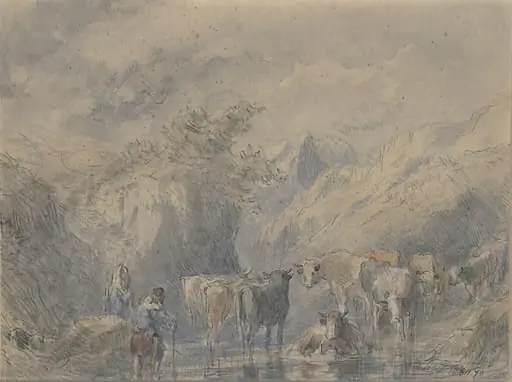
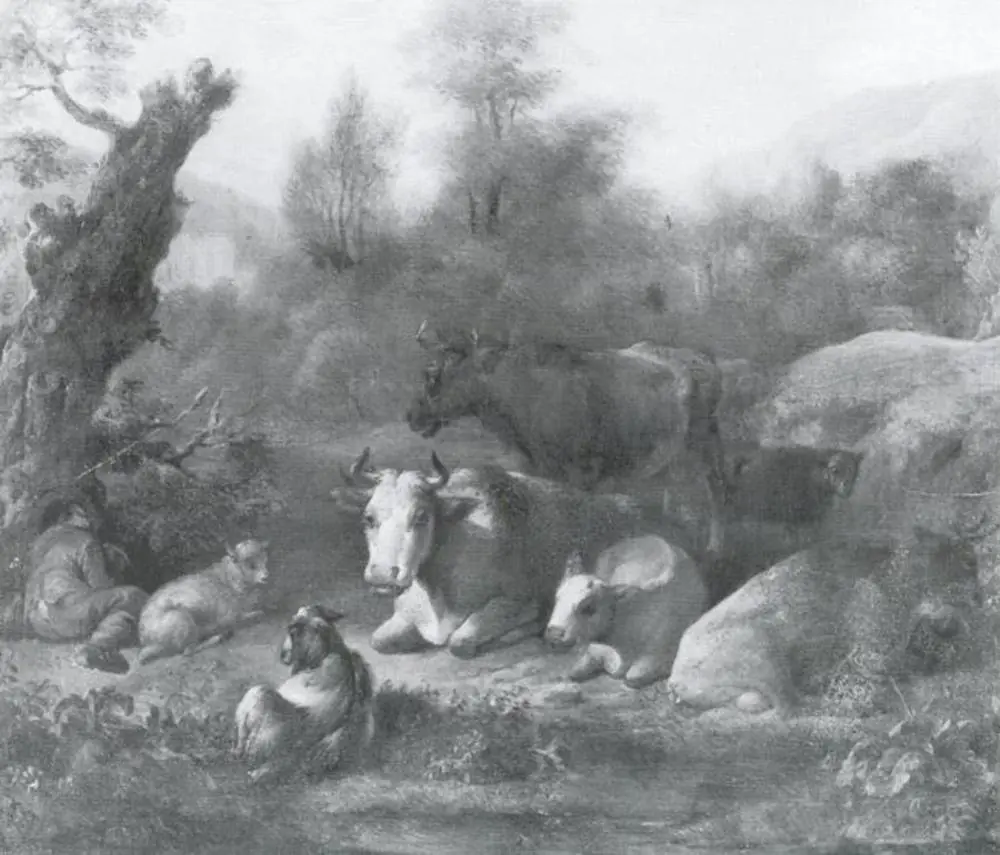
Cattle in the Auvergne
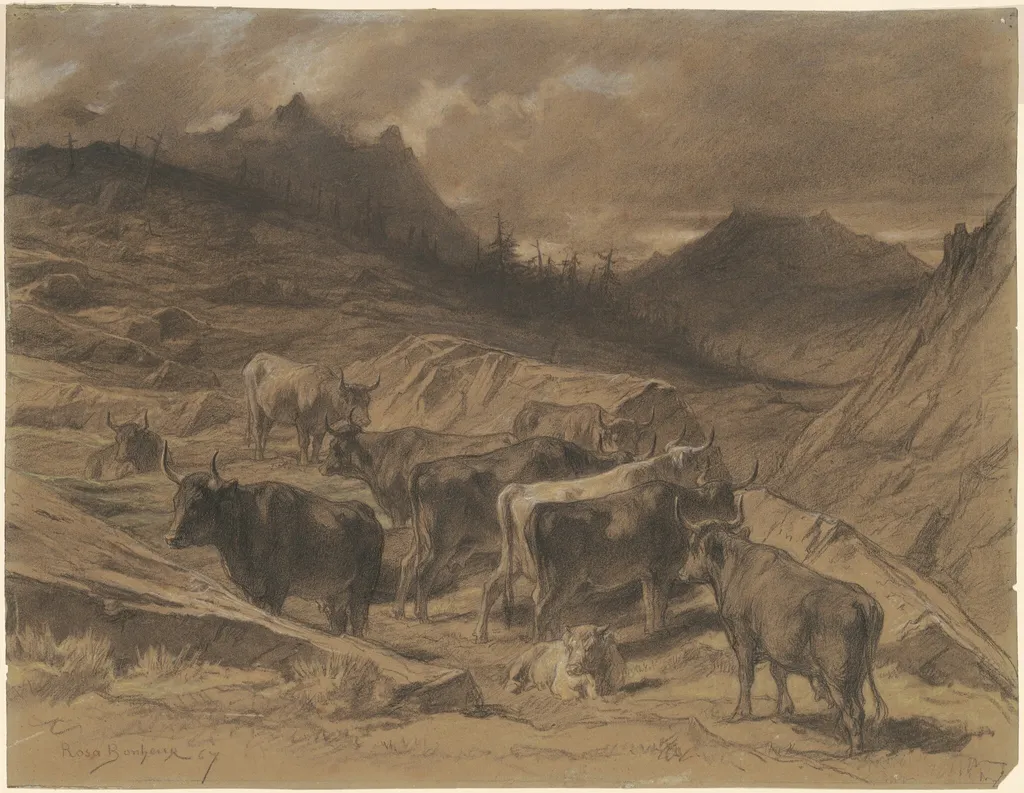
Cattle in the Auvergne is a pastel drawing by the Impressionist artist Rosa Bonheur. It dates from 1867 and is held in the collection of the National Gallery of Art.
- Inscription
- Inscribed:lower left in black chalk: Rosa Bonheur 67
About this work
Overview
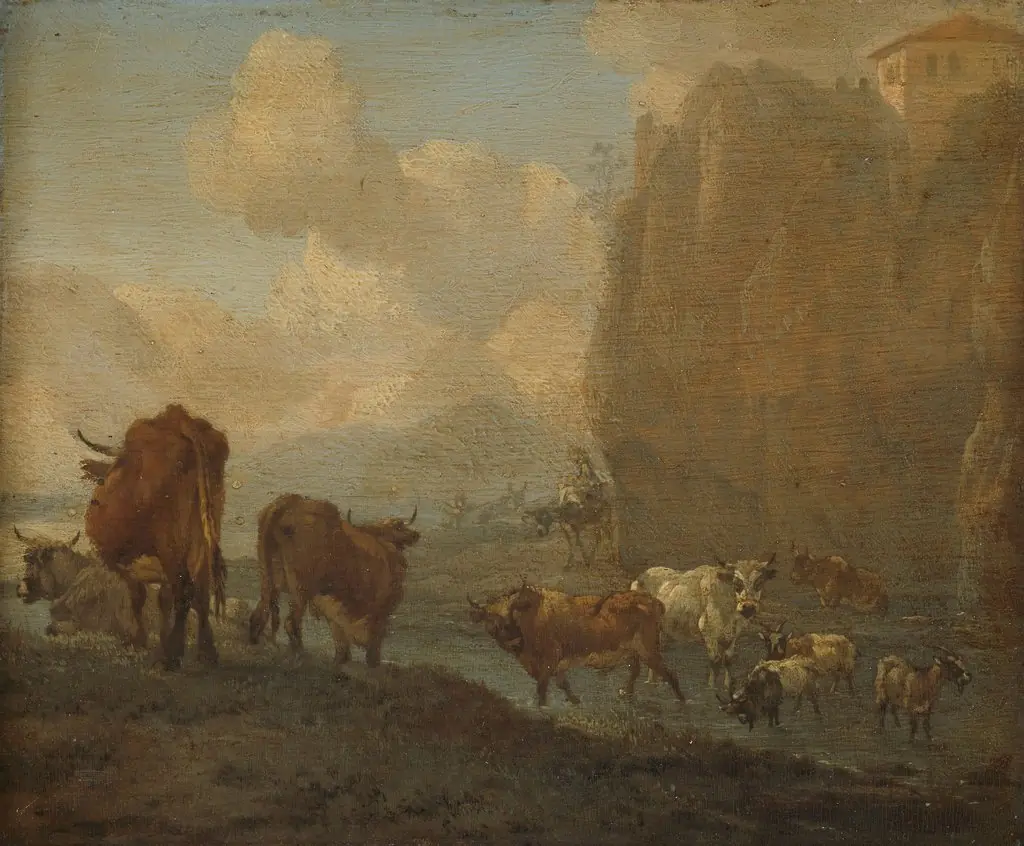
Created in 1867, Cattle in the Auvergne is a drawing by the French Realist Rosa Bonheur that captures the rugged pastoral landscape of the Auvergne region.
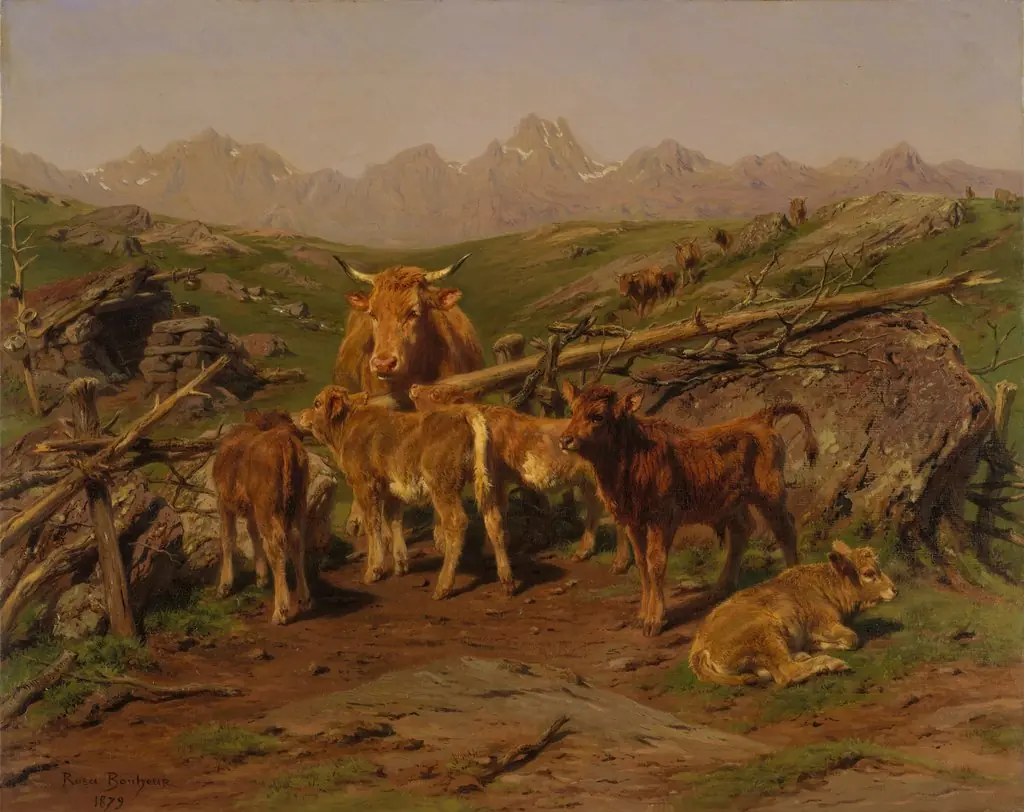
Created in 1867, Cattle in the Auvergne is a drawing by the French Realist Rosa Bonheur that captures the rugged pastoral landscape of the Auvergne region. Executed in black and white chalk with stumping and selective touches of pastel on brown wove paper, the work demonstrates Bonheur's mastery of tonal contrast and textural rendering. The composition features a herd of cattle positioned prominently on a hillside in the foreground, their forms modeled through careful shading to emphasize volume and the weight of their bodies.
Some animals gaze directly toward the viewer, establishing a quiet engagement, while others graze or rest. The background unfolds into a sweeping vista of mountains under a cloudy sky, rendered with softer strokes to suggest atmospheric depth. This piece reflects Bonheur's lifelong dedication to animal subjects and her commitment to observing nature with scientific precision.
Produced during the height of her career, the work exemplifies the Realist movement's focus on unidealized rural life and the artist's unique ability to convey the dignity and physical presence of livestock. The choice of brown paper as a ground allows the white chalk highlights to create a luminous effect, enhancing the naturalism of the scene.
Subject & Meaning
The composition centers on a herd of cattle positioned on a gentle slope, some turning toward the viewer. Behind them rise distant mountains beneath a cloud‑filled sky, suggesting the pastoral landscape of the Auvergne region and emphasizing the quiet coexistence of livestock and nature.
Technique & Style
Bonheur employed chalk for the primary tonal structure, applying stumping to blend and soften surfaces, thereby achieving a sense of atmospheric depth. Subtle pastel touches highlight highlights on the animals and terrain, while the brown paper provides a warm ground tone that unifies the monochrome palette.
History & Provenance
The drawing was produced during the period when Bonheur was establishing her reputation for realistic animal studies. It remains documented as part of her oeuvre from the late 1860s, though specific ownership records after its creation are not widely published.
Own this work as a print
Artist & collection

Artist
Rosa Bonheur was a French artist known best as a painter of animals (animalière).