Artwork
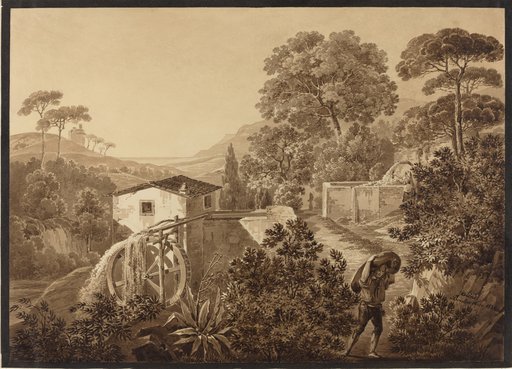
Italian Landscape with a Watermill
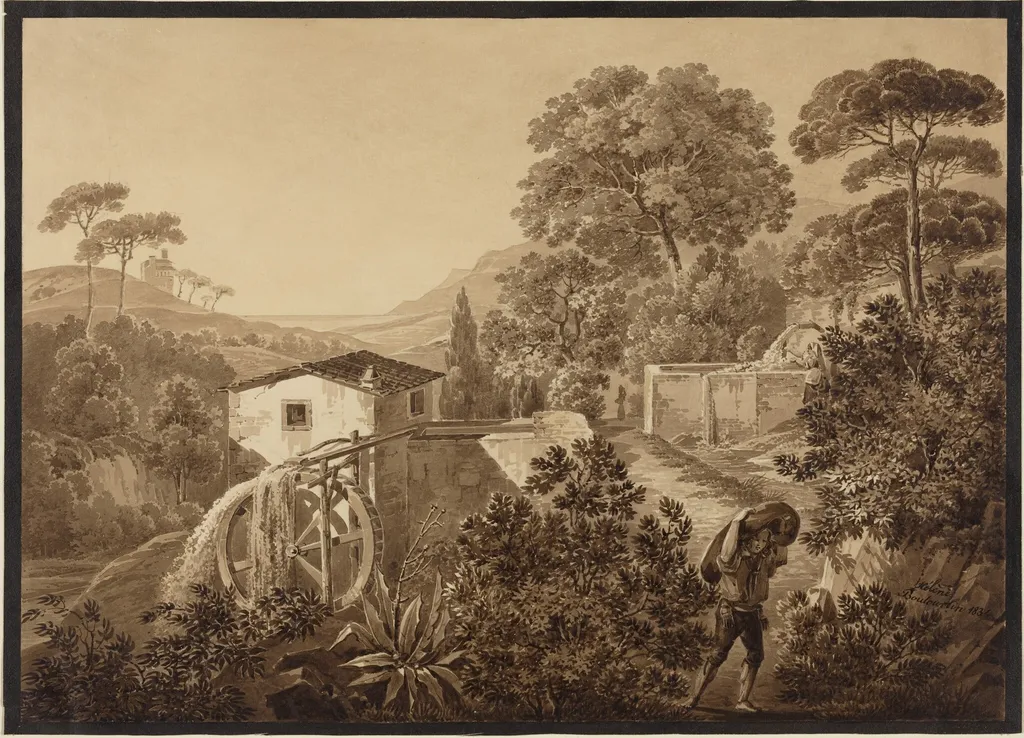
Italian Landscape with a Watermill is a graphite drawing by the Romanticist artist Hélène Boutourlin. It dates from 1834 and is held in the collection of the National Gallery of Art.
- Inscription
- Inscribed:lower right in pen and brown ink: Hélène / Boutourlin 1834
About this work
Overview
Italian Landscape with a Watermill is a paper drawing executed in 1834 by French artist Hélène Boutourlin. Rendered with a brown wash applied over graphite on wove paper, the work measures a modest size and presents a tranquil rural scene rendered in muted earth tones.
Subject & Meaning
The composition depicts a gentle countryside: rolling hills recede into a hazy sky, a modest stone house sits beside a stream, and a sizable wooden waterwheel turns at its edge. A solitary figure, bent forward with a bundle on the back, stands near the water, suggesting everyday labor within a peaceful setting.
Technique & Style
Boutourlin employed a limited palette of brown washes to model form and atmospheric depth, allowing the darker tones of the waterwheel and house to emerge against lighter hills. The drawing utilizes chiaroscuro, balancing light and shadow to convey volume and a subdued mood, a practice common among early‑19th‑century landscape draftsmen.
History & Provenance
Created in 1834, the work reflects the period’s interest in idyllic rural vistas. While specific ownership records are scarce, the drawing has been documented in catalogues of Boutourlin’s oeuvre and remains in a public collection, illustrating the artist’s engagement with Italian scenery during her travels.
Own this work as a print
Artist & collection

- Italian Landscape
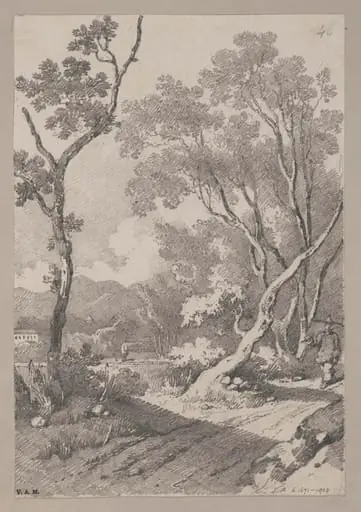 A figure on a path between rocks and trees
 Liber Studiorum: A Study
 A Farmyard
 Tomb of Scipios
 Landscape with Wagon
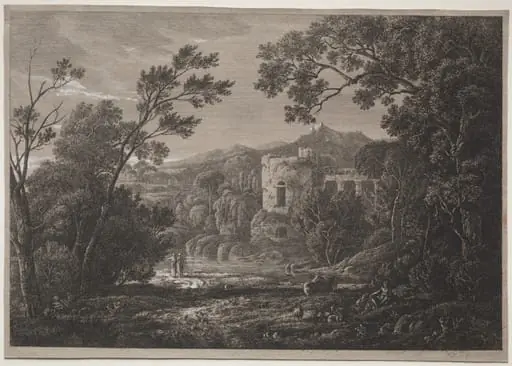 An Italian View
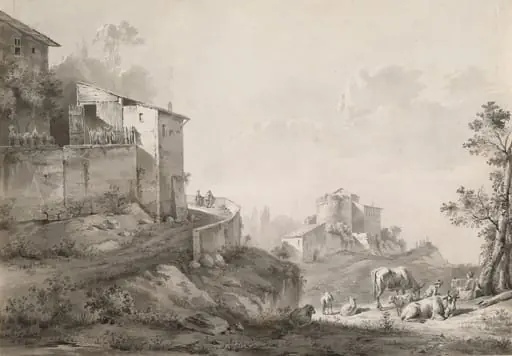 A Sunlit Landscape with Hilltop Houses
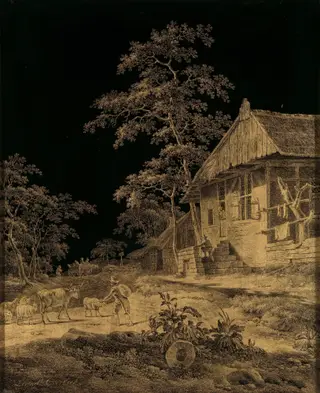 Shepherd at a Farmstead
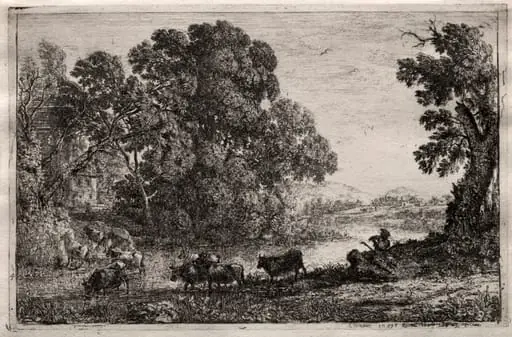 The Cowherd
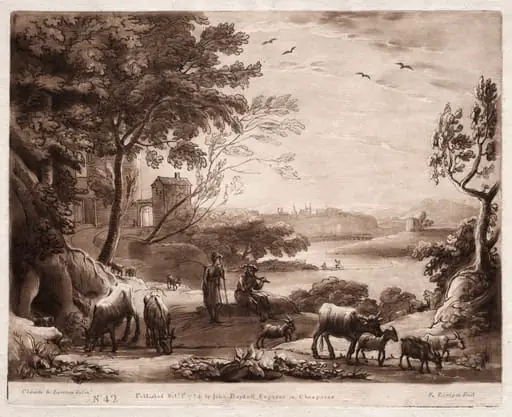 Liber Veritatis: No. 42, A River Landscape with a Shepherd and Shepherdess and a Herd of Cattle
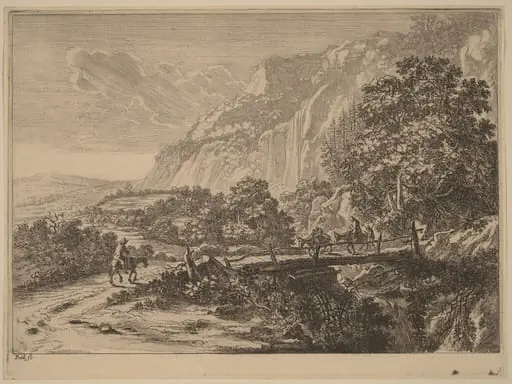 The Wooden Bridge at Sulmona near Tivoli