Artwork
A Cornfield at Sunset
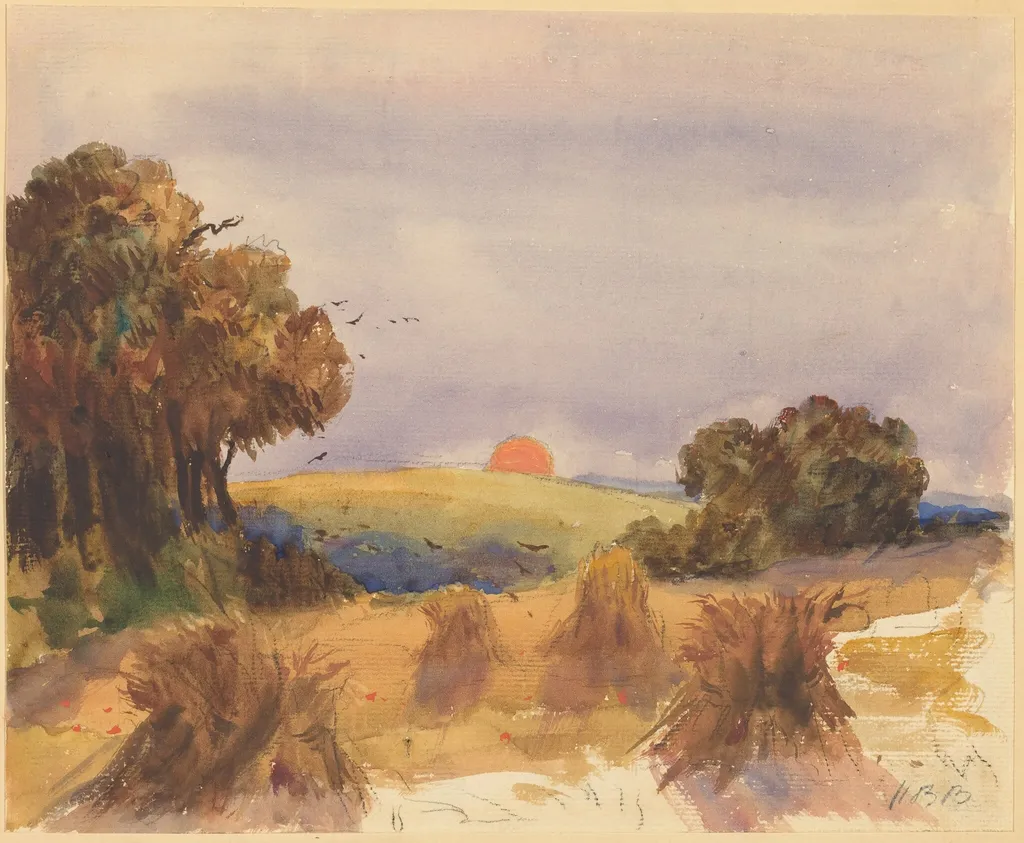
A Cornfield at Sunset is a chalk drawing by the Romanticist artist Hercules Brabazon Brabazon. It dates from 1864 and is held in the collection of the National Gallery of Art.
- Inscription
- Inscribed:by artist, lower right in graphite: HBB
About this work
Overview
Created in 1864, A Cornfield at Sunset is a drawing executed in watercolor and gouache, enhanced with black chalk over a graphite underdrawing on laid paper. The English artist Hercules Brabazon Brabazon, noted for his atmospheric landscapes, produced the work in a manner reminiscent of J.M.W. Turner’s approach to light and colour.
Subject & Meaning
The composition presents a tranquil evening scene: a golden cornfield bathed in the soft glow of a setting sun. Two prominent trees frame the view, their dark silhouettes contrasting with a pale sky, while a round orange sun and low‑flying birds add a sense of calm movement.
Technique & Style
Brabazon employed a loose, brushy application of watercolor and gouache, allowing pigments to blend and create a luminous atmosphere. The underlying graphite sketch provides structure, and black chalk accents define the trees and sky, contributing to the work’s airy, impressionistic quality.
History & Provenance
The drawing reflects Brabazon’s mid‑nineteenth‑century practice of adopting Turner’s tonal strategies in his own rural subjects. It remains a representative example of his output during a period when English landscape artists were exploring the expressive potential of watercolor.
Context
During the 1860s, British artists increasingly used watercolour and gouache to capture fleeting effects of light, a trend inspired by Turner’s legacy. Brabazon’s A Cornfield at Sunset aligns with this movement, emphasizing mood over detailed representation.
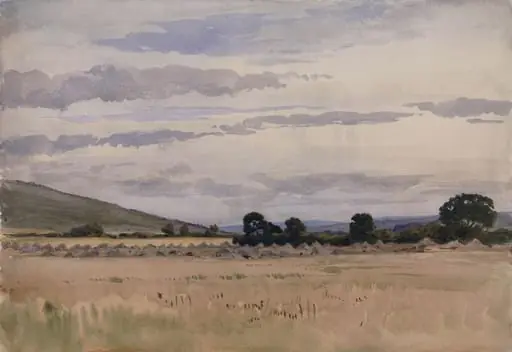
Own this work as a print
Artist & collection
Artist
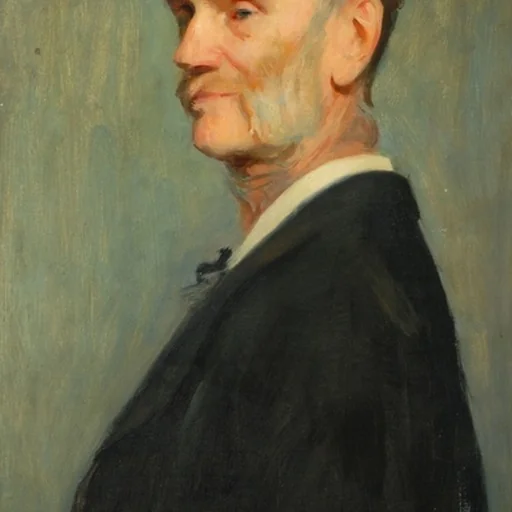
Hercules Brabazon Brabazon (born Hercules Brabazon Sharpe; 27 November 1821 – 14 May 1906) was an English artist, accomplished in Turner-manner watercolours.

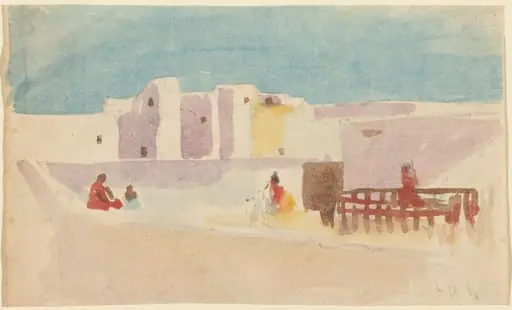
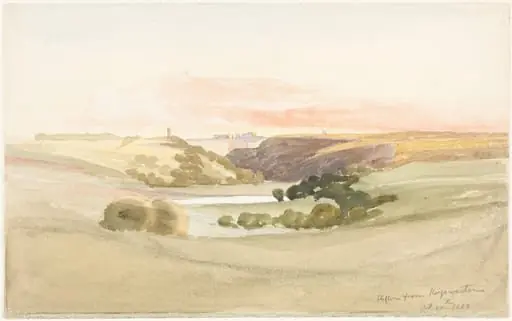 Clifton from Kingsweston
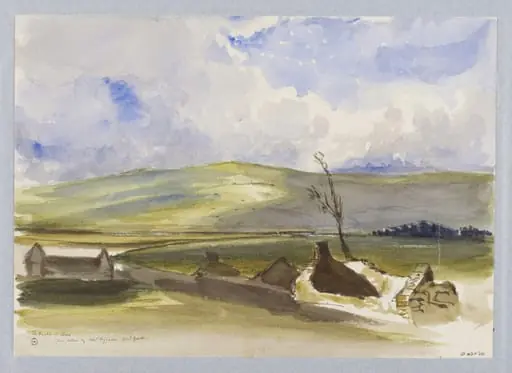 Sketches made during the Campaign of 1854-55 in the Crimea, Circassia and Constantinople
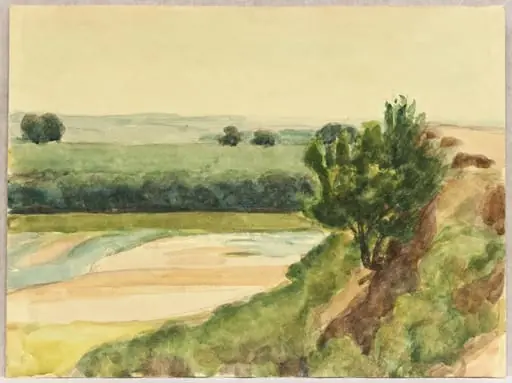 Peisaj panoramic
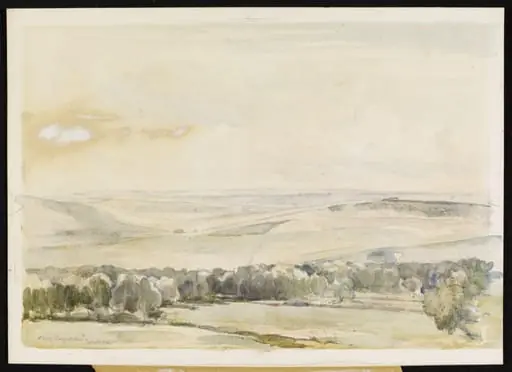 The Downs from Friston
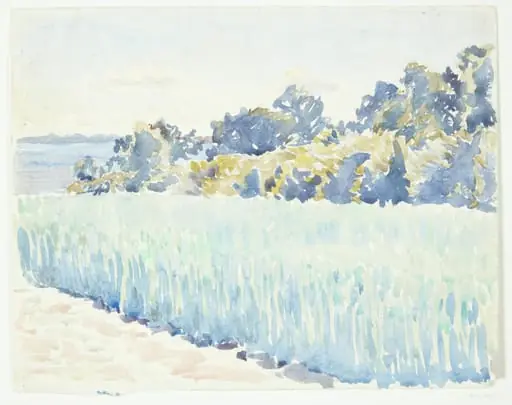 Fynsk landskab. Kornmark ved en skov
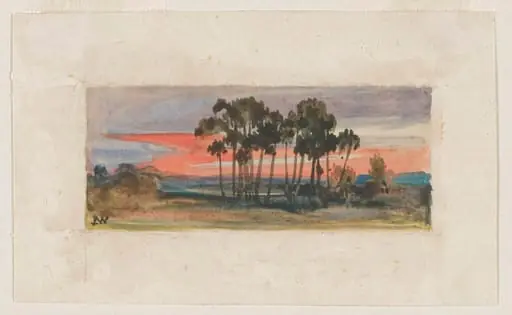 Sunset at Highcliffe
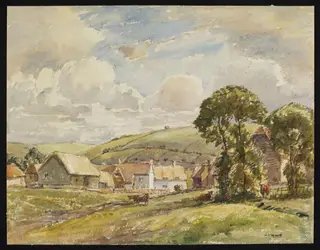 Wishford, Wylye Valley
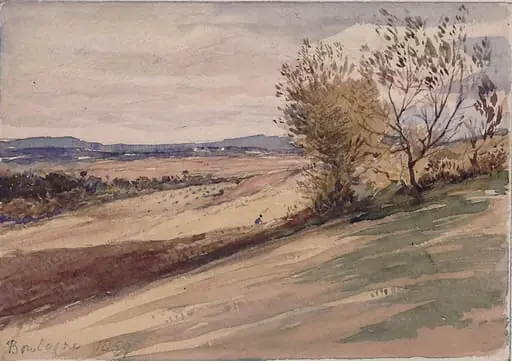 Landscape near Boulogne
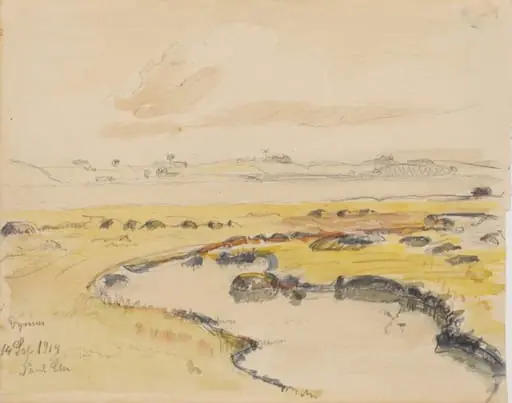 Dyrnæs enge
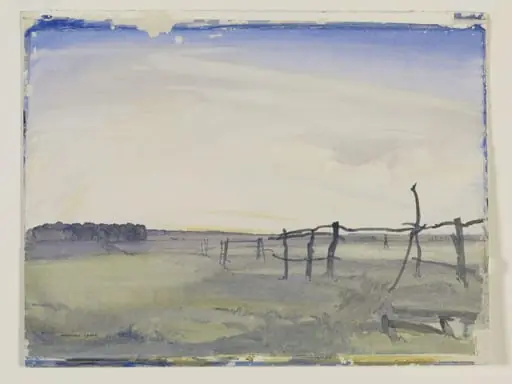 The River Bank at Blythburgh
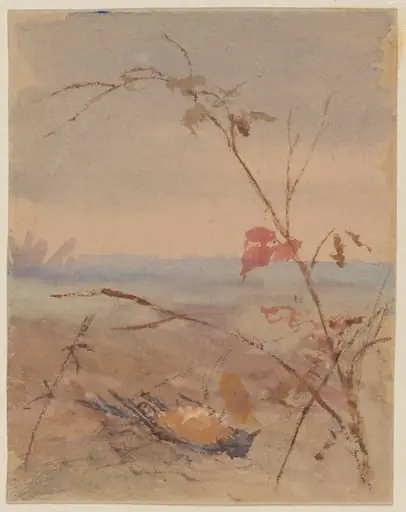 Dead Yellow-breasted Bird in Autumn Landscape
- Landscape with a cornfield in the foreground and hills in the distance