Artwork
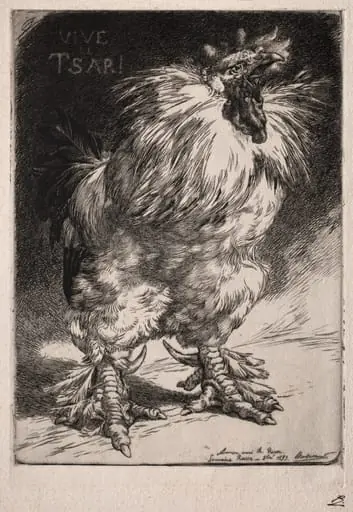
Long Live the Tzar! (Vive le Tzar!)
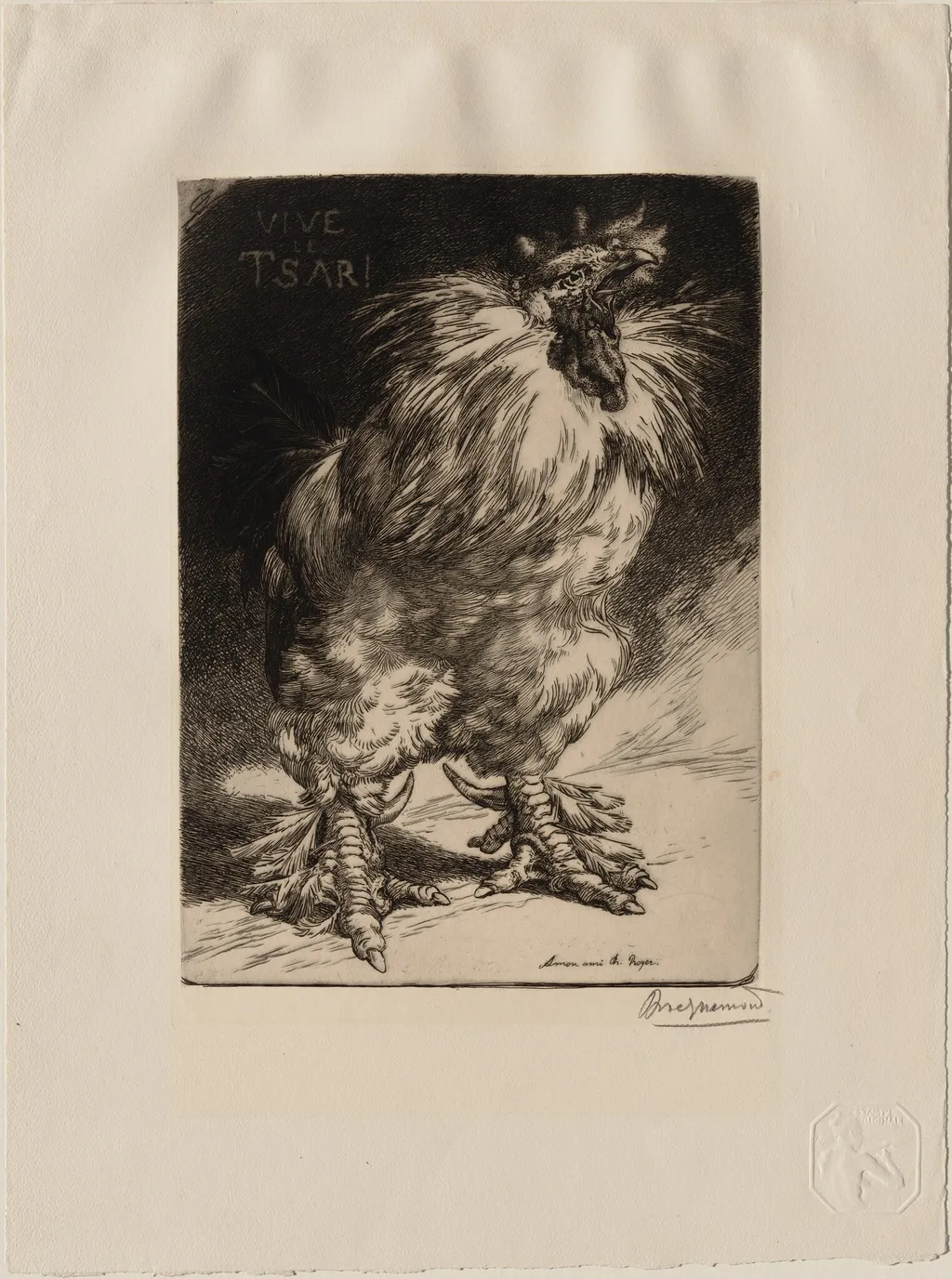
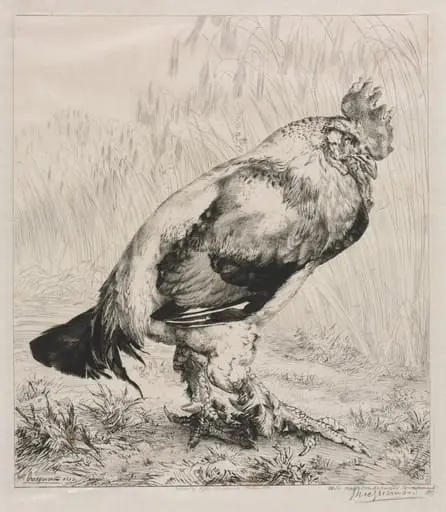
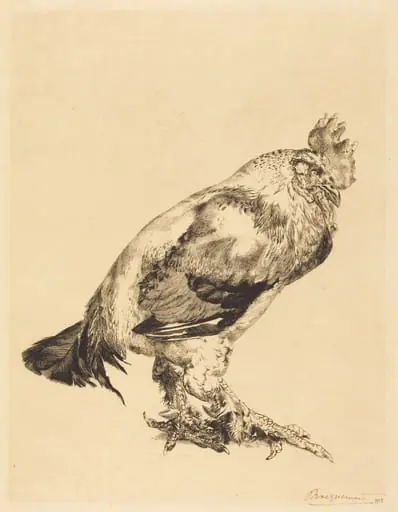
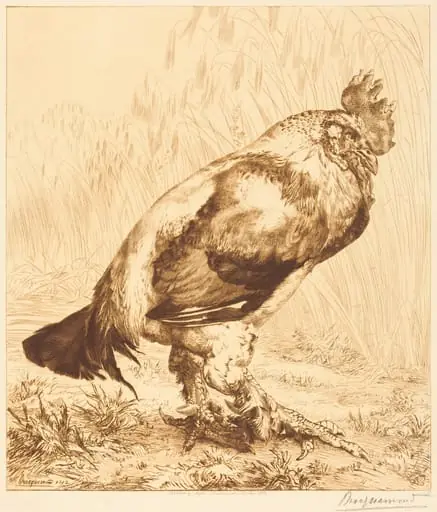
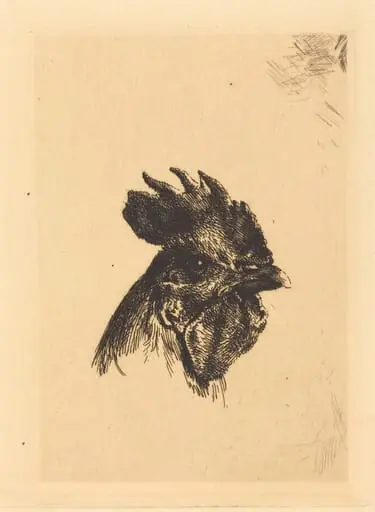
Long Live the Tzar! (Vive le Tzar!) is an ink print by the Impressionist artist Pierre Braquemond. It dates from 1893 and is held in the collection of the National Gallery of Art.
- Inscription
- Inscribed:Blind-stamped below image, at right: L'ESTAMPE / ORIGINALE; In image, at bottom right: Amon ami Ch. Royer.; below image, in graphite: Braquemond.
About this work
Overview
Pierre Braquemond’s 1893 print titled Long Live the Tzar! (Vive le Tzar!) is an etching executed on wove cream paper. The work presents a straightforward composition rendered in bold, decisive lines, emphasizing a clear visual message rather than decorative detail. Its compact format and stark graphic quality mark it as a distinctive example of late‑19th‑century printmaking.
Technique & Style
The image was produced by traditional intaglio etching, in which a metal plate is incised with a needle and then inked before being pressed onto a smooth, cream‑colored paper. Braquemond’s approach favors minimalism: he reduces forms to essential outlines and employs a limited tonal range, contrasting sharply with the more elaborate, painterly prints popular among his contemporaries.
Subject & Meaning
The title celebrates the Russian monarch, suggesting a political or propagandistic intent. By coupling the French exclamation “Vive le Tzar!” with the Russian title, the work hints at cross‑cultural admiration or commentary on the Tsar’s international stature during a period of heightened diplomatic interest.
Context
Created in the early 1890s, the etching emerges at a time when many European artists were exploring Symbolism and Art Nouveau, often favoring intricate ornamentation. Braquemond’s decision to adopt a stark, graphic aesthetic positions the piece as a counter‑statement to prevailing trends, emphasizing clarity of message over decorative complexity.
History & Provenance
The print is catalogued as a work by Braquemond dated 1893, with no recorded changes in ownership beyond its inclusion in institutional collections focused on graphic arts of the period. Its preservation on wove cream paper has allowed the original line work and tonal contrast to remain largely intact.
Own this work as a print
Artist & collection