Artwork
Miss Loïe Fuller
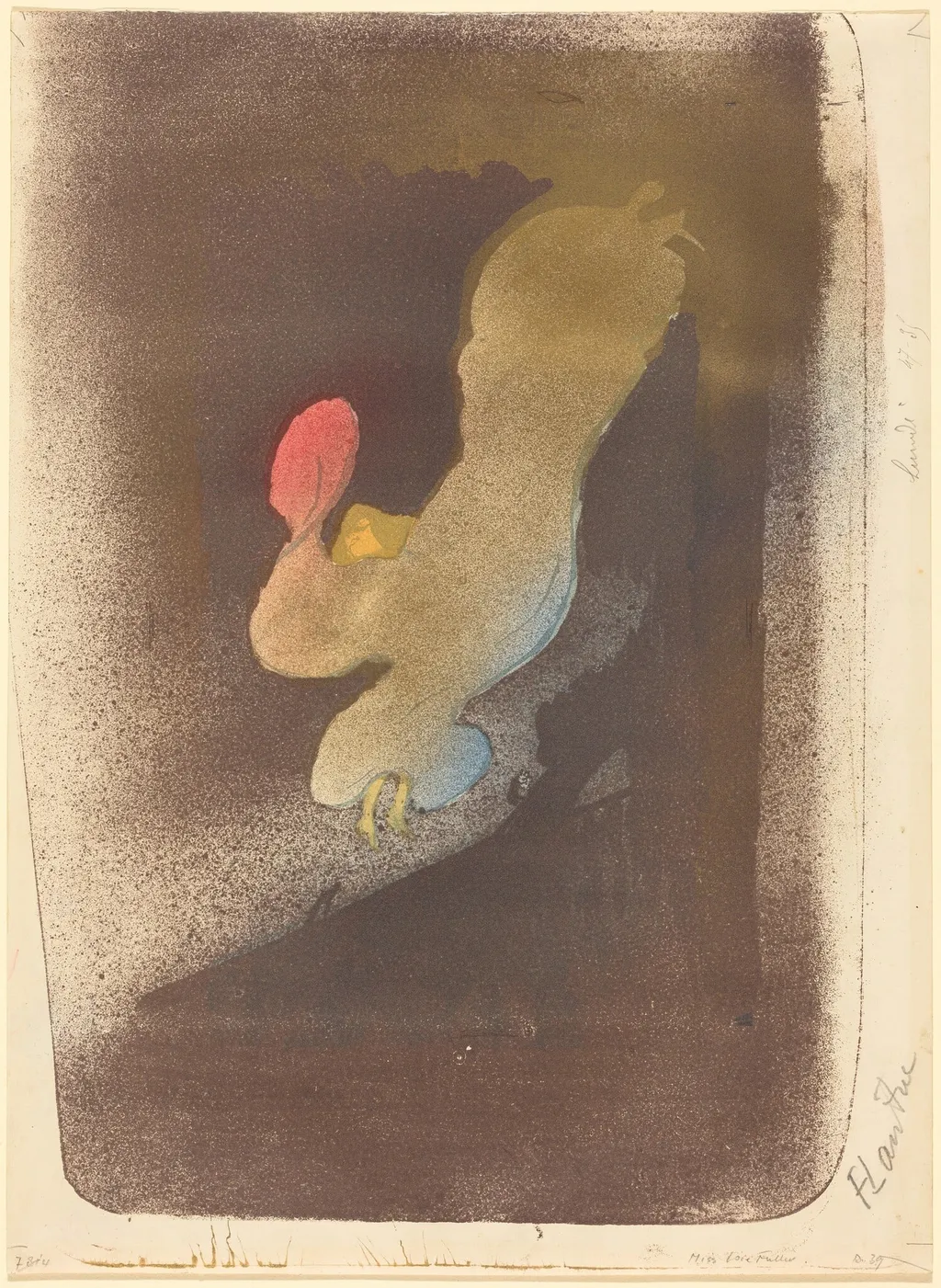
Miss Loïe Fuller is an ink print by the Impressionist artist Henri de Toulouse-Lautrec. It dates from 1893 and is held in the collection of the National Gallery of Art.
- Inscription
- Inscribed:recto: upper right, in graphite: Lundi 47-35 [written sideways]; lower left, in graphite: 7814; lower right, in graphite: HT Lautrec / Miss Loie Fuller D. 39; verso: lower left, in graphite: P.P. 250; lower center, in graphite: [indecipherable]; verso: at upper right in graphite: 400; at lower left in graphite: PP 350; at lower center in graphite: [indecipherable]
- Markings
- Marked:recto: none; verso: National Gallery of Art
About this work
Overview
Henri de Toulouse-Lautrec’s 1893 color lithograph presents the celebrated dancer Loïe Fuller in the midst of her signature swirling performance.
Henri de Toulouse-Lautrec’s 1893 color lithograph presents the celebrated dancer Loïe Fuller in the midst of her signature swirling performance. Executed on wove paper, the print captures a fleeting moment of motion, with Fuller’s luminous figure emerging from a dim, smoky atmosphere. The composition emphasizes the kinetic energy of the dance, rendering the scene as a vivid snapshot of Parisian nightlife.
Subject & Meaning
The work focuses on Fuller, a pioneer of modern dance known for her illuminated, flowing costumes and rapid, circular movements. By portraying her arms outstretched and her skirt a blur of red, blue, and gold, the image conveys both the physical dynamism of her performance and the ethereal, almost otherworldly aura that surrounded her onstage.
Technique & Style
Toulouse-Lautrec employed the lithographic process, drawing directly onto a smooth stone to achieve bold, sketch‑like lines that suggest motion. The loose, gestural strokes and limited palette create a sense of immediacy, while the contrast between the dark background and the bright, fragmented colors of the dancer’s attire heightens the impression of rapid spin and fleeting light.
History & Provenance
Created during the height of Toulouse-Lautrec’s interest in Parisian entertainment venues, the lithograph was produced shortly after Fuller’s famed performances at the Folies‑Bergère. The print circulated among the artist’s circle of collectors and remains a documented example of his engagement with contemporary theatrical figures.
Context
In the late 19th century, Paris experienced a surge of avant‑garde performance art, with figures like Fuller redefining dance through technology and costume. Toulouse-Lautrec’s depiction aligns with his broader oeuvre, which frequently documented the city’s cabarets, theaters, and the personalities that animated them, reflecting the era’s fascination with modernity and spectacle.
Own this work as a print
Artist & collection
Artist
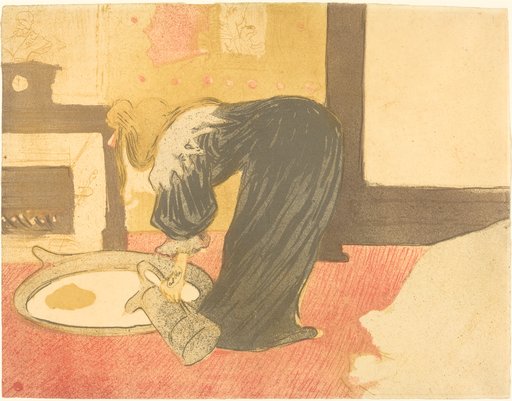
Comte Henri Marie Raymond de Toulouse-Lautrec-Montfa (24 November 1864 – 9 September 1901), known as Toulouse-Lautrec (French: ), was a French painter, printmaker, draughtsman, caricaturist, and illustrator.