Artwork
Ecce Homo
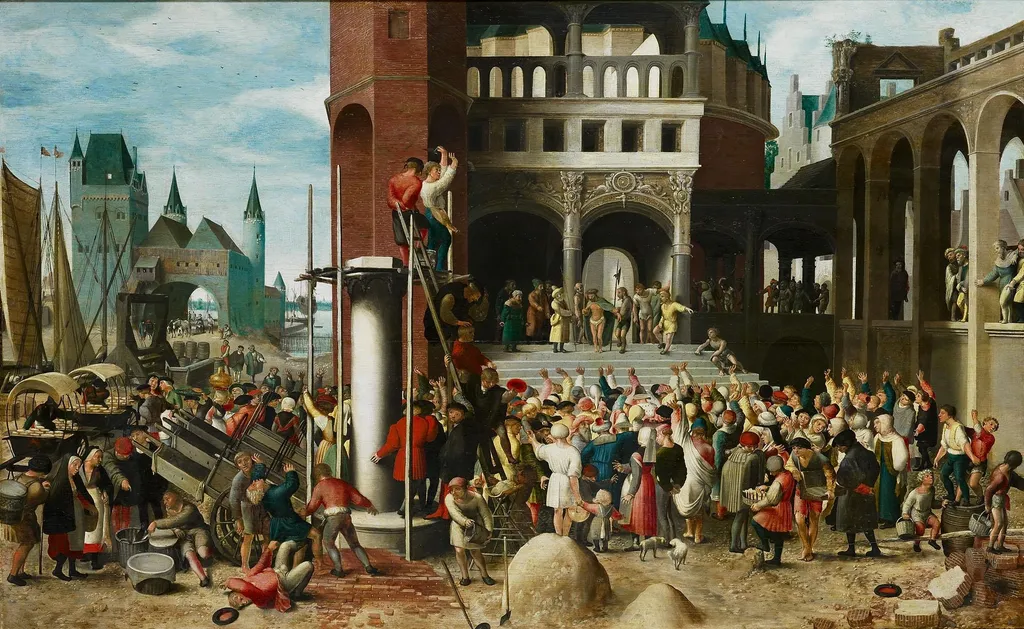
Ecce Homo is an oil painting by the Northern Renaissance artist Brunswick Monogrammist. It dates from 1545 and is held in the collection of the Rijksmuseum. Created in 1545, this oil on panel portrays the moment when Pontius Pilate presents Jesus to the assembled masses.
About this work
Subject & Meaning
The work presents Christ in the moment of condemnation, emphasizing his humanity and suffering through a direct gaze and crown of thorns.
The work presents Christ in the moment of condemnation, emphasizing his humanity and suffering through a direct gaze and crown of thorns. By focusing on the phrase ‘Ecce Homo’ – ‘Behold the Man’ – the image underscores themes of mockery, injustice, and sacrificial love central to the Passion narrative. Its composition isolates the figure against a dark background, heightening emotional intensity and inviting contemplation of redemption.
Technique & Style
Created in 1545 by the Brunswick Monogrammist, this religious painting depicts Jesus Christ as the subject of Ecce Homo. The work is executed in oil paint on a panel support, a common combination for Netherlandish art of the period. Originating from the Southern Netherlands, the composition measures 55 cm in height and 89.5 cm in width.
The piece is currently held within the collections of the Rijksmuseum and the Mauritshuis, with its physical location cited as the Rijksmuseum. The medium and support define its material presence, while the specific dimensions establish its scale as a horizontal panel painting focused on the biblical narrative.
History & Provenance
The Ecce Homo by the Brunswick Monogrammist is dated 1545, indicating it was produced in the mid-16th century within the Southern Netherlands.
The painting entered the collection of the Rijksmuseum, where it is currently held. It is also associated with the Mauritshuis in records, suggesting a shared provenance or exhibition history between these institutions at some point.
The painting Ecce Homo by the Brunswick Monogrammist, dated 1545, is held in the collection of the Rijksmuseum. Although some records associate the work with the Mauritshuis, the primary location is identified as the Rijksmuseum in Amsterdam. The artwork, executed in oil on panel, measures 55 cm in height and 89.5 cm in width.
Specific inventory or accession numbers for this work are not provided in the available sources, nor is a detailed exhibition history documented.
Overview
Created in 1545, this oil on panel portrays the moment when Pontius Pilate presents Jesus to the assembled masses. The composition is dominated by a bustling crowd gathered before a large brick structure with arched openings, their gestures and activities suggesting a scene of both labor and celebration. The work exemplifies the Northern Renaissance’s attention to detailed, everyday realism within a biblical narrative.
Own this work as a print
Artist & collection
Artist
The Brunswick Monogrammist or Master of the Brunswick Monogram was an anonymous Netherlandish Renaissance painter, active in the mid-to-late 16th century.

- The Marketplace in Bergen op Zoom
 The Crucifixion
 Christ Driving the Traders from the Temple
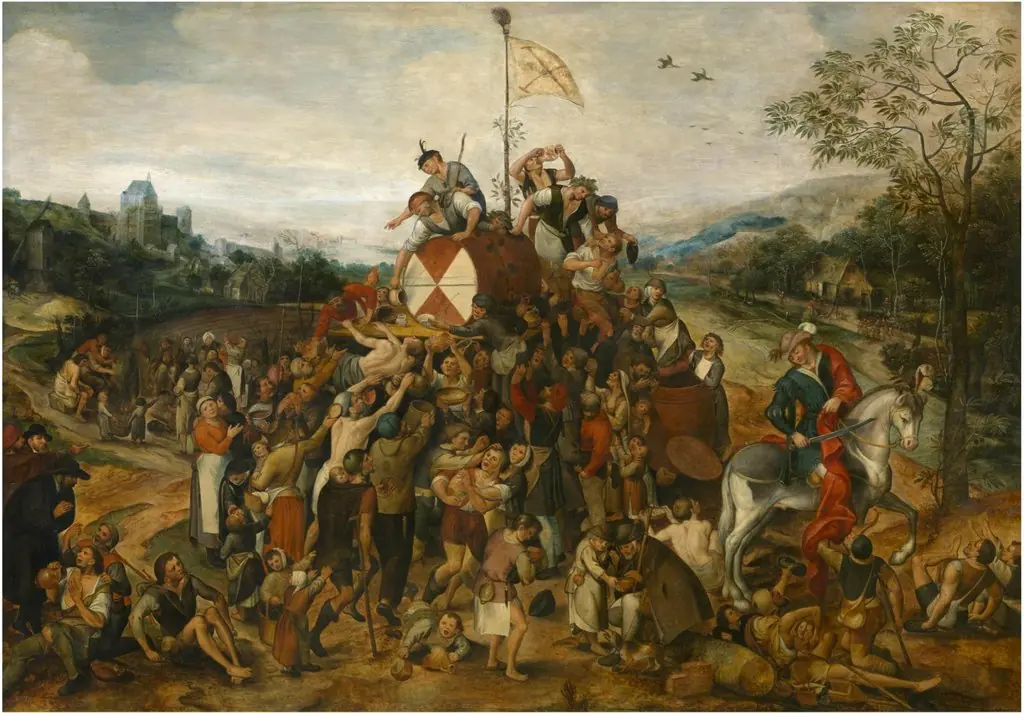 Saint Martin's Day
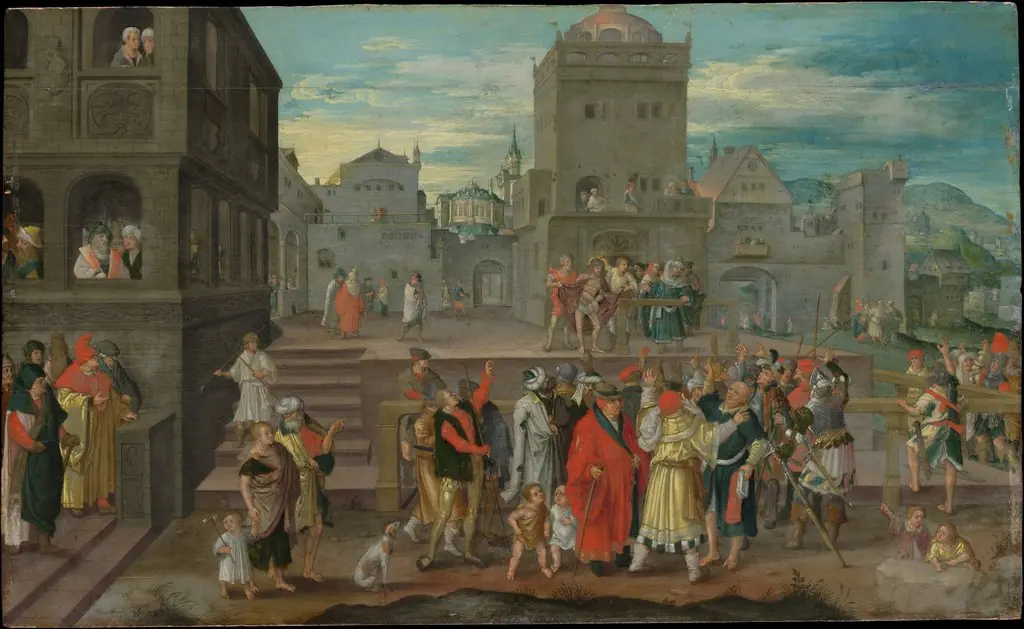 Christ Presented to the People
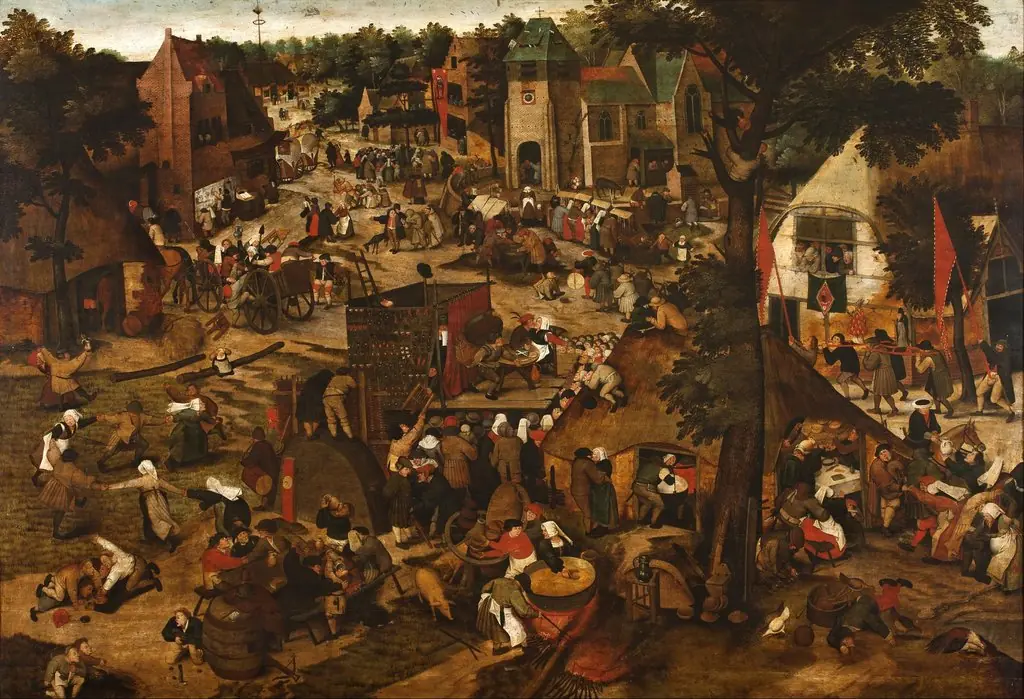 Fair with a Theatrical Presentation
 Parable of the great banquet
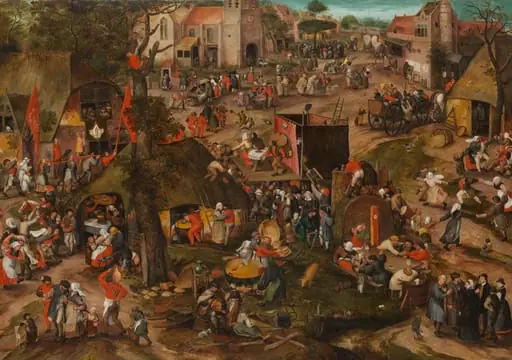 A Flemish Kermis with a Performance of the Farce ‘Een cluyte van Plaeyerwater’
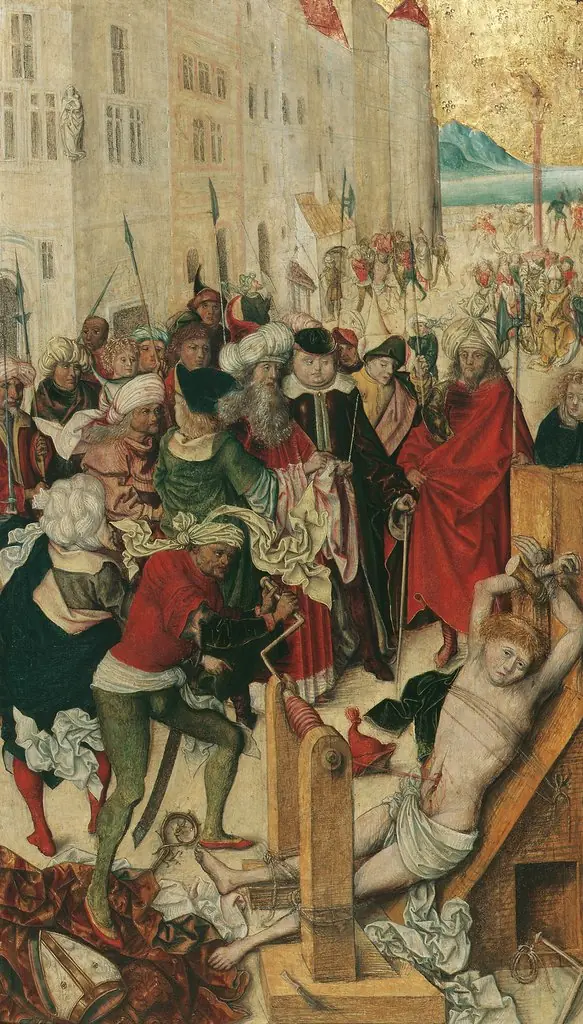 Martyrdom of St. Erasmus
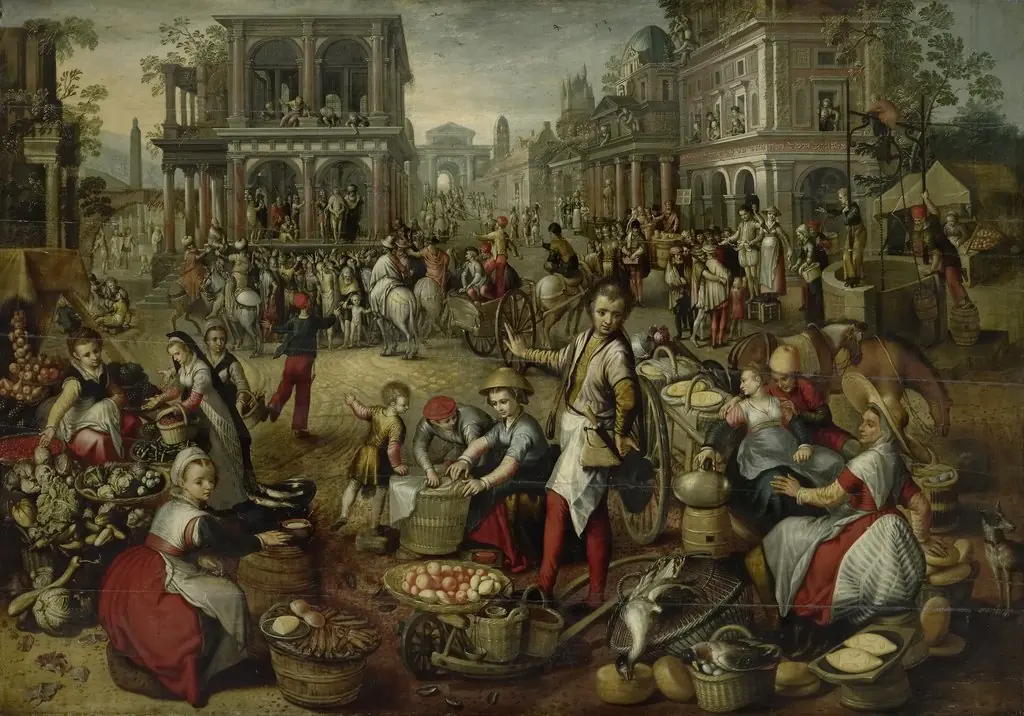 Marketplace with the flaggellation, the Ecce Homo and the bearing of the cross in the background
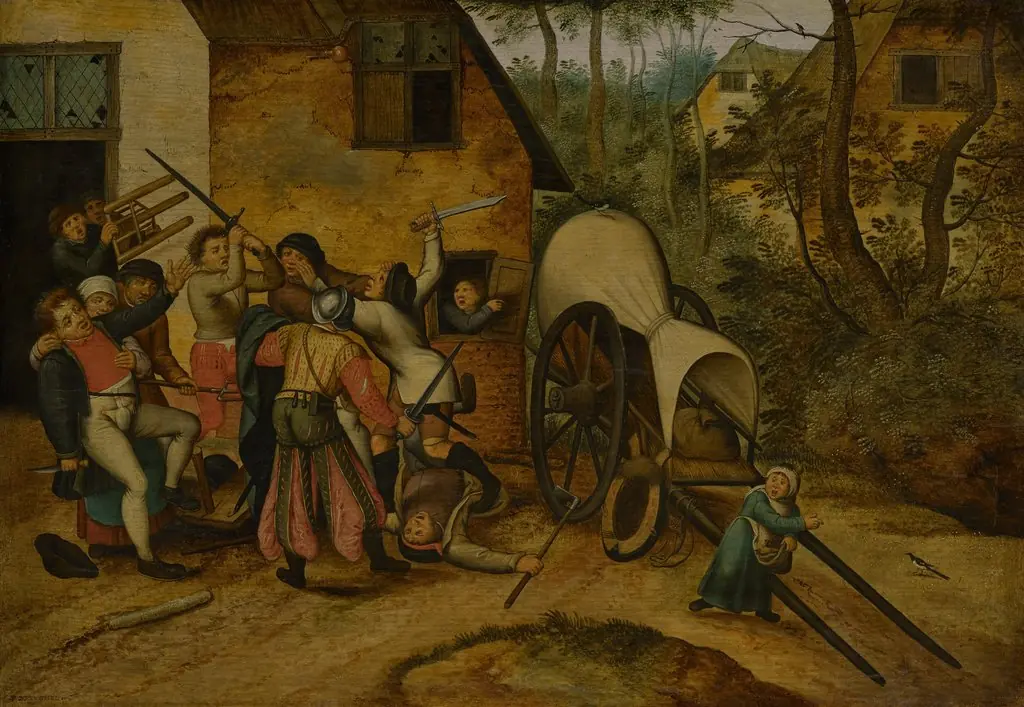 Fight in the Country
 The Siege of Rhenen