Artwork
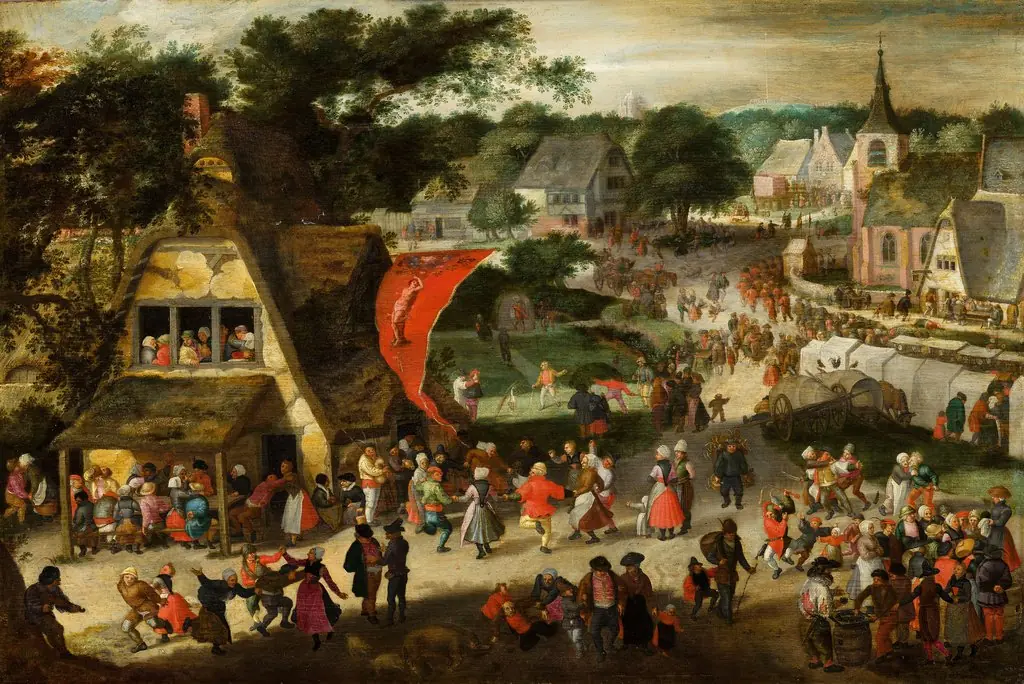
A Flemish Kermis with a Performance of the Farce ‘Een cluyte van Plaeyerwater’
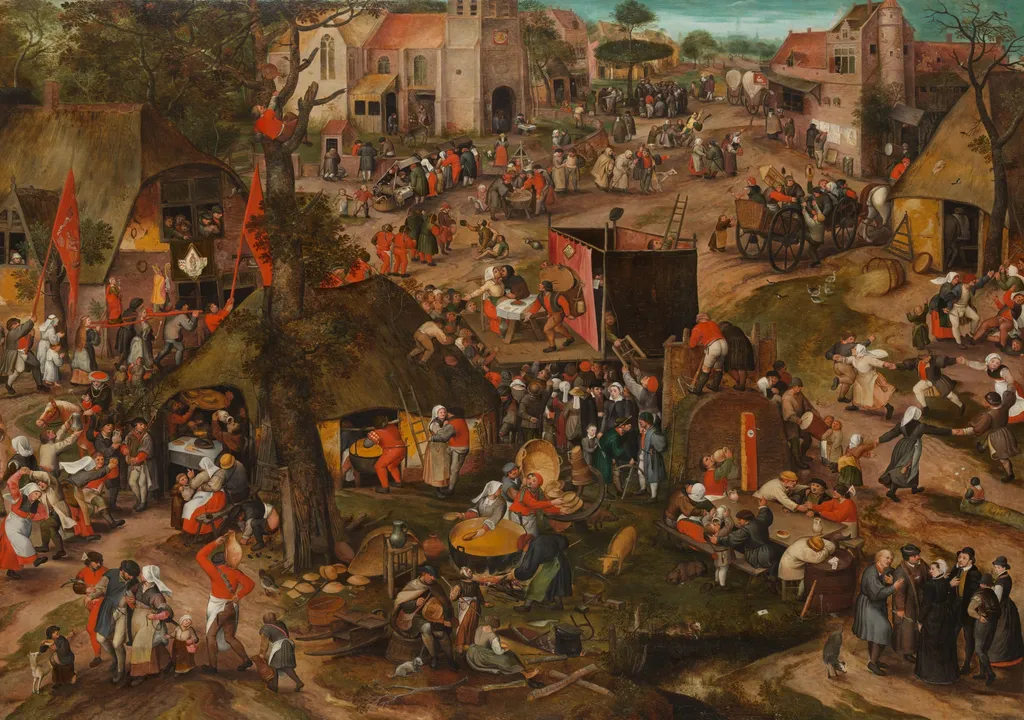
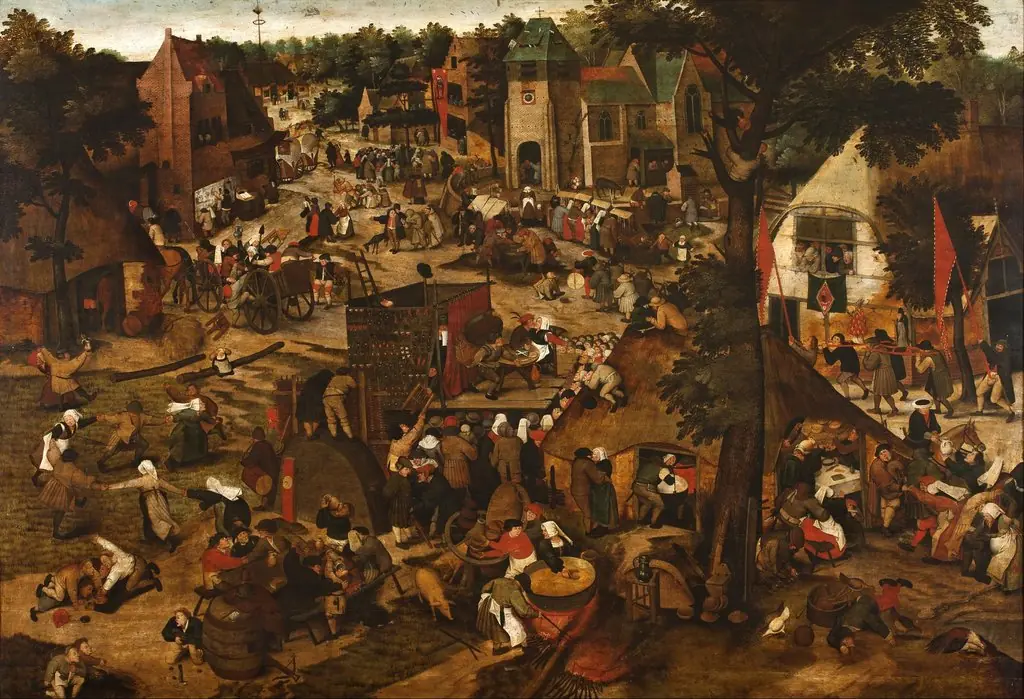
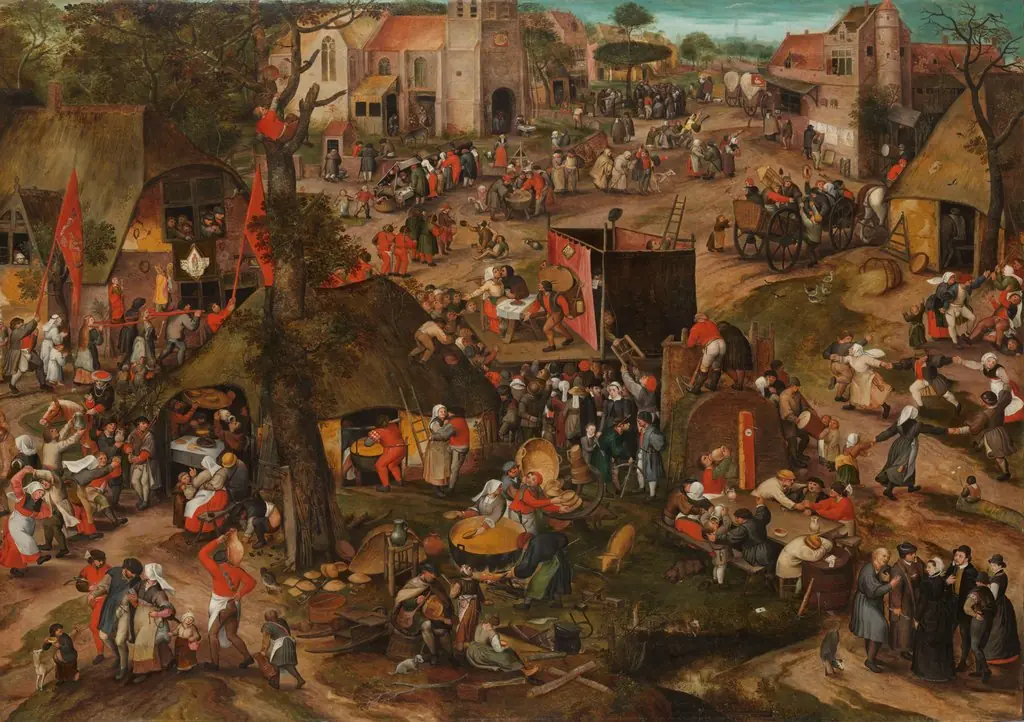
A Flemish Kermis with a Performance of the Farce ‘Een cluyte van Plaeyerwater’ is an unspecified painting by the Flemish Baroque painting artist Pieter Balten. It dates from 1570 and is held in the collection of the Rijksmuseum. Peeter Baltens, a 16th‑century Flemish painter linked to the circle of Pieter Bruegel, created a bustling village fair scene.
About this work
Subject & Meaning
Baltens utilizes this subject to emphasize the farcical and comical aspects of peasant life, populating the composition with crowds of revellers.
The painting depicts a bustling village kermis (fair) centered around a theatrical performance of the popular farce 'Een cluyte van Plaeyerwater' ('A farce of phony water'). The narrative enacted within the scene tells the story of a wife who deceitfully sends her husband to find non-existent curative water, intending to use his absence for a tryst with a priest. The plot is ultimately foiled when the husband is informed of the scheme and catches the couple in the act.
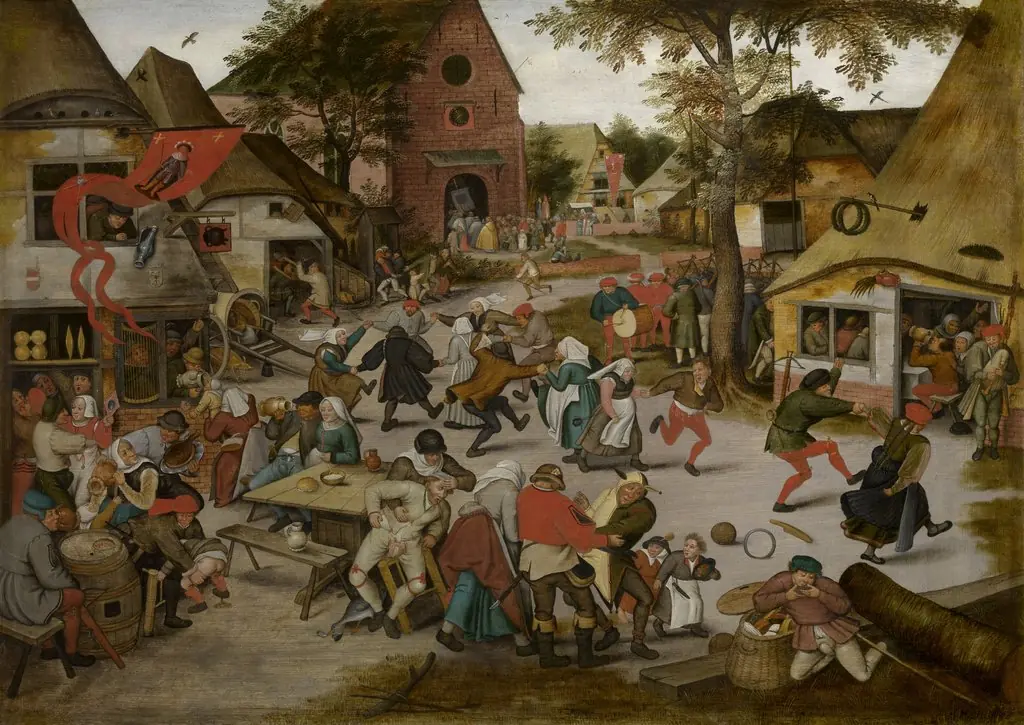
Baltens utilizes this subject to emphasize the farcical and comical aspects of peasant life, populating the composition with crowds of revellers. The artist's use of bright, audacious colors, particularly red, serves to make the figures stand out against the background, visually reinforcing the exuberant gaiety and energetic merrymaking characteristic of such village celebrations.
Technique & Style
Peeter Baltens executed this painting in oil, a medium he handled with an agreeable and adept touch, and he also worked in distemper. His formal style is defined by clearly and energetically defined forms. The composition features a village scene populated by highly colored, energetically painted figures that emphasize the farcical aspects of peasant life.
Baltens employed an audacious palette for his time, showing a distinct preference for bright red. This vivid coloration makes the figures stand out from the background and visually reinforces the exuberant gaiety of the villagers' merrymaking.
History & Provenance
The painting A Flemish Kermis with a Performance of the Farce ‘Een cluyte van Plaeyerwater’ was created around 1570 by Peeter Baltens, a Flemish Renaissance artist active in Antwerp. It depicts a village scene based on a popular farce in which a wife deceives her husband while plotting with a priest. The work is part of Baltens' limited oeuvre, which includes approximately 13 paintings and 11 drawings, and reflects his focus on genre scenes of peasant life.
The painting was likely executed during his mature period, when he was established enough to lead collaborations, such as the lost altarpiece for the Glovemakers' Guild in Mechelen where he painted the central panel while Pieter Bruegel the Elder executed the wings. Baltens signed his works with variations of his name including 'PB' and 'Peeter Baltens'.
Context
Peeter Baltens’ A Flemish Kermis with a Performance of the Farce ‘Een cluyte van Plaeyerwater’ occupies a pivotal position in the development of Flemish genre painting. Scholars now recognize Baltens as a foundational figure in the emergence of village scenes, a genre later popularized by Pieter Bruegel the Elder. Earlier art-historical narratives, notably Karel van Mander’s 1604 Schilder-boeck, erroneously cast Baltens as Bruegel’s follower, but recent research reverses this relationship: Baltens collaborated with Bruegel on an altarpiece for the Mechelen Glovemakers’ Guild, where Baltens painted the central panel, indicating his senior status.
His energetic compositions and bold palette, particularly his use of bright red, distinguished his work from contemporaries, emphasizing the farcical and communal aspects of peasant life.
The painting’s depiction of the farce Een cluyte van Plaeyerwater reflects Baltens’ interest in satirical theater, aligning with his broader engagement in Antwerp’s rederijker circles. His influence extended to Pieter Bruegel the Younger, who adapted a detail from Baltens’ Ecce Homo into an independent work, underscoring Baltens’ role in shaping the Bruegel dynasty’s visual language. This work exemplifies Baltens’ contribution to the Flemish Renaissance’s shift toward secular, narrative-driven genre scenes, a legacy that bridged medieval traditions and early modern realism.
Legacy
Peeter Baltens’ A Flemish Kermis with a Performance of the Farce ‘Een cluyte van Plaeyerwater’ played a foundational role in the development of Flemish village genre scenes. Though once mislabeled a follower of Pieter Bruegel the Elder, Baltens is now recognized as a key innovator whose brightly colored, energetically composed peasant festivities influenced Bruegel’s own work. Their collaboration on the Mechelen altarpiece (1550–1551) underscores Baltens’ seniority in depicting rural life, while Pieter Bruegel the Younger later adapted a detail from Baltens’ Ecce Homo into an independent painting, demonstrating his lasting impact on the Bruegel dynasty.
Baltens’ reputation suffered from Karel van Mander’s 1604 claim that he was merely a Bruegel imitator, but modern scholarship restores him as a pioneer of the village kermis genre, celebrated for his vivid palette and dynamic figural groupings.
Overview
Peeter Baltens, a 16th‑century Flemish painter linked to the circle of Pieter Bruegel, created a bustling village fair scene. The composition captures a kermis, a seasonal market and festival, filled with townspeople eating, drinking, dancing, and gathering around a temporary wooden stage where a comic play is being performed.
Own this work as a print
Artist & collection
Artist
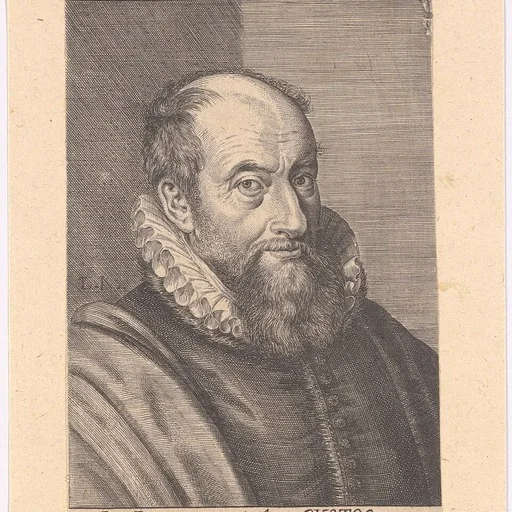
Peeter Baltens, Pieter Balten or Pieter Custodis (c. 1527 in Antwerp – 1584 in Antwerp), was a Flemish Renaissance painter, draughtsman, engraver and publisher. Baltens was also active as an art dealer and poet. He was…