Artwork
Christ Presented to the People
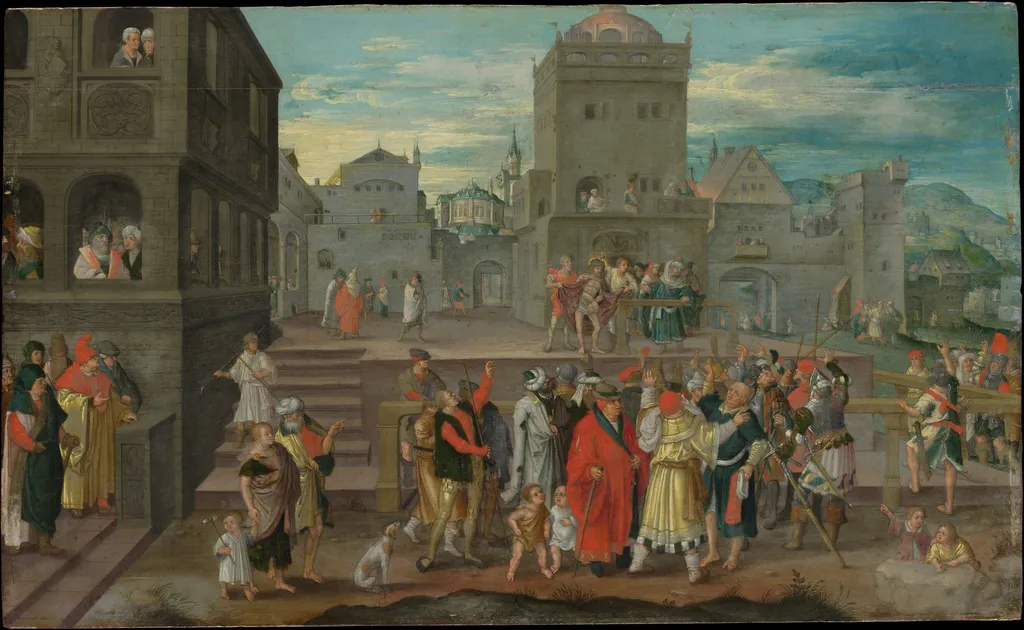
Christ Presented to the People is an oil painting. It dates from 1600 and is held in the collection of the Metropolitan Museum of Art.
About this work
Subject & Meaning
The work’s title and subject link it to the Ecce Homo theme, a moment from the Passion narrative in which Pilate presents the condemned Jesus to the crowd.
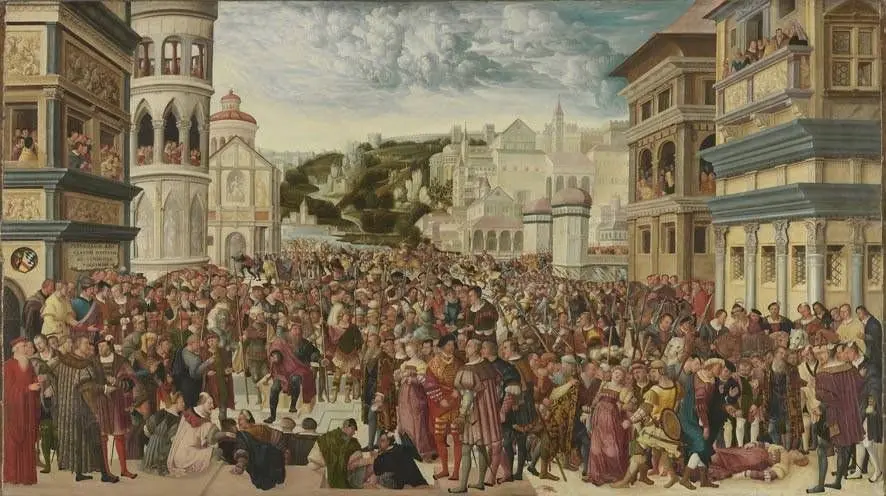
The painting portrays the moment of Christ being presented to the assembled crowd, a scene identified as an Ecce Homo composition. Central figures include Jesus Christ, a child, a dog, and a gathering of onlookers, all rendered in oil paint with gold leaf. The iconography follows traditional religious imagery, emphasizing the humanity and suffering of Christ as he is shown to the people.
The work’s title and subject link it to the Ecce Homo theme, a moment from the Passion narrative in which Pilate presents the condemned Jesus to the crowd. Its religious genre and inclusion in collections such as the Metropolitan Museum of Art underscore its devotional purpose.
Technique & Style
Christ Presented to the People is executed in oil paint with the addition of gold leaf, as indicated by its material description. The work is identified as a painting after Lucas van Leyden, suggesting that its technique and handling emulate his manner, particularly in the rendering of figures and narrative detail. As a religious painting depicting the Ecce Homo scene, it employs the traditional medium of oil on a support typical of early‑17th‑century panel or canvas works, though the specific support is not detailed in the sources. No information regarding its current condition or conservation history is provided in the given references.
History & Provenance
Christ Presented to the People is an oil painting dated to 1600, classified as a religious work depicting the Ecce Homo subject. According to documented records, the provenance of the painting traces through several notable owners. Earlier in its ownership history, the work passed through the collections of Louis François, Prince of Conti, Louis François II de Bourbon, Francisco Luis Héctor de Carondelet, and Armand Hawkins.
The painting was subsequently acquired by Henry Gurdon Marquand, through whom it entered the holdings of the Metropolitan Museum of Art, where it is currently held. A documented exhibition history records its inclusion in the Exhibition of 1888–89 at the University of California, Los Angeles. The painting is described as a work after Lucas van Leyden, indicating it was produced after an earlier composition by the Dutch master, though the specific circumstances of its commission and creation are not detailed in available records.
Context
The work titled Christ Presented to the People is dated to the year 1600 and is classified as an oil painting within the religious genre. It is recorded as a derivative of Lucas van Leyden’s composition, reflecting the influence of early Dutch masters on later European religious art. The painting, measuring 27.6 × 45.7 cm, depicts the Ecce Homo scene with Christ, a child, a dog, and a crowd, and was part of the Metropolitan Museum of Art’s collection.
Its visibility increased after inclusion in the Exhibition of 1888–89 at the University of California, Los Angeles, indicating contemporary scholarly and public interest in the work. These attributes place the piece at the intersection of 17th‑century devotional painting and the historiography of artistic copying in early modern Europe.
Overview
This oil painting, titled "Christ Presented to the People," captures a dynamic street scene teeming with onlookers. A central figure, identifiable by his red robes, guides a partially unclothed individual forward, seemingly for public viewing. The setting features stone architecture with arched entrances and balconies, populated by a diverse assembly of figures, from children in the foreground to a soldier and a man in a turban.
Artist & collection

- Historienzyklus: Geschichte der Verginia
 Christ Driving the Traders from the Temple
 Christ Carrying the Cross
 Parable of the great banquet
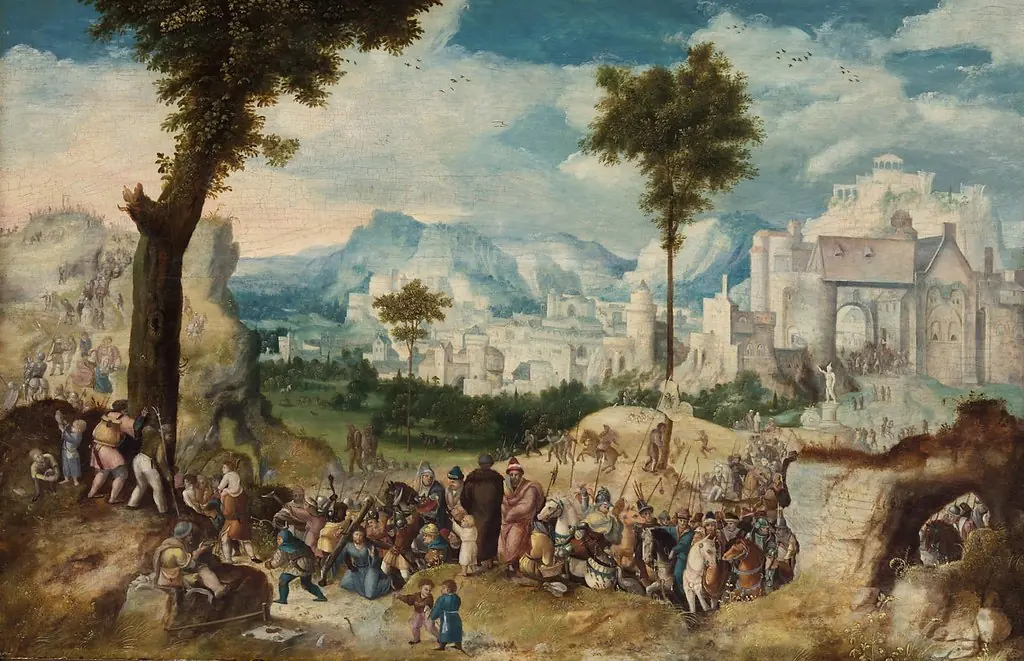 Kreuztragung Christi
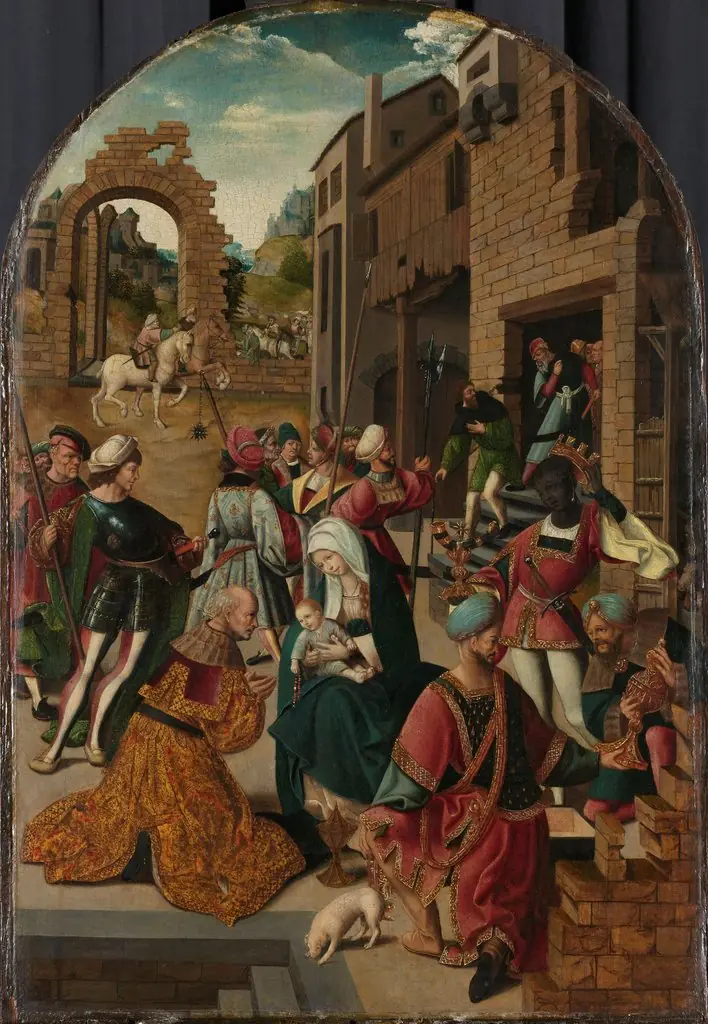 The adoration of the magi
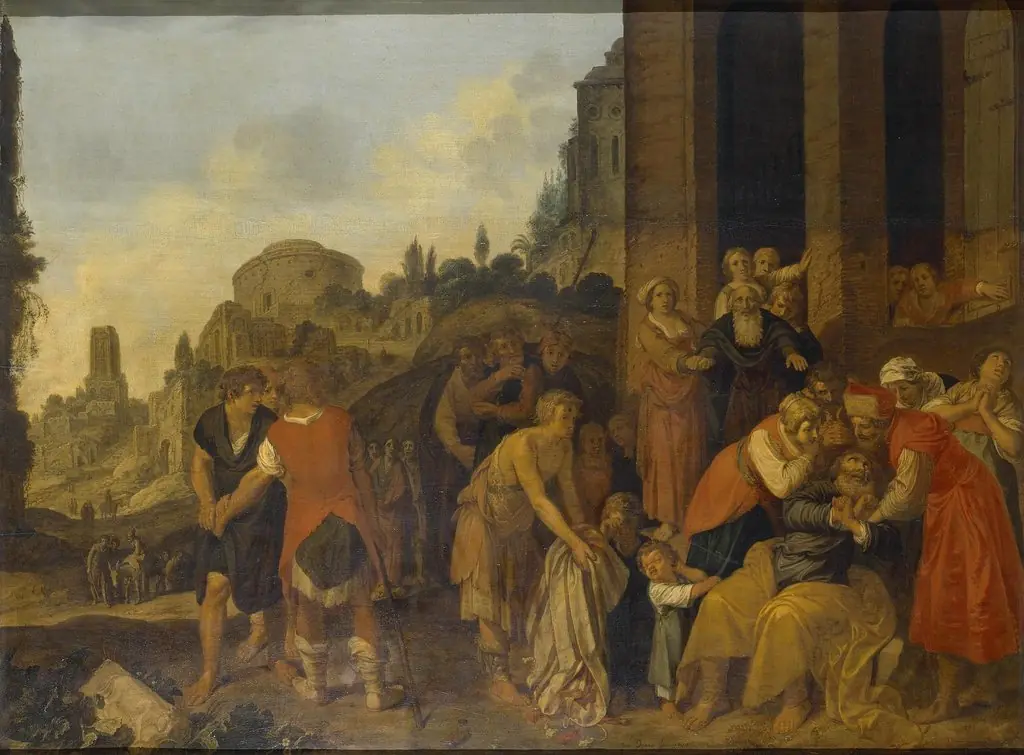 Jacob's Sons Show Him Joseph's Blood-Stained Robe
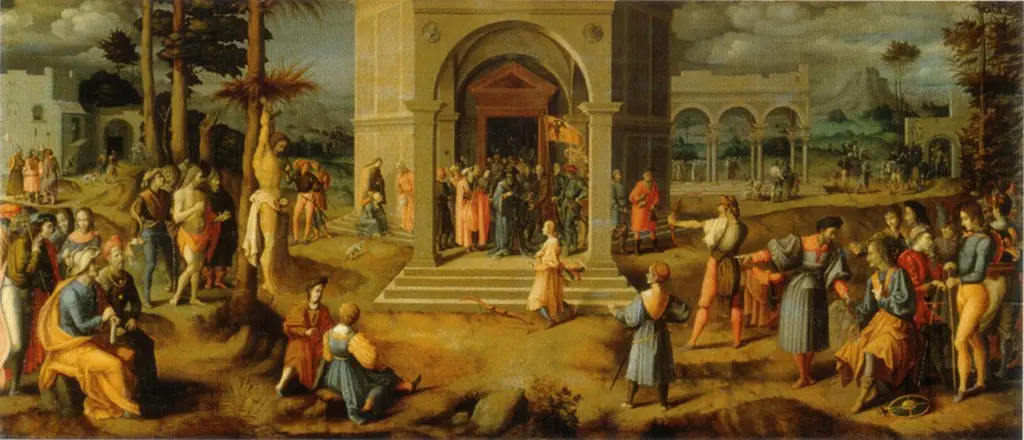 The Legend of the King's Sons
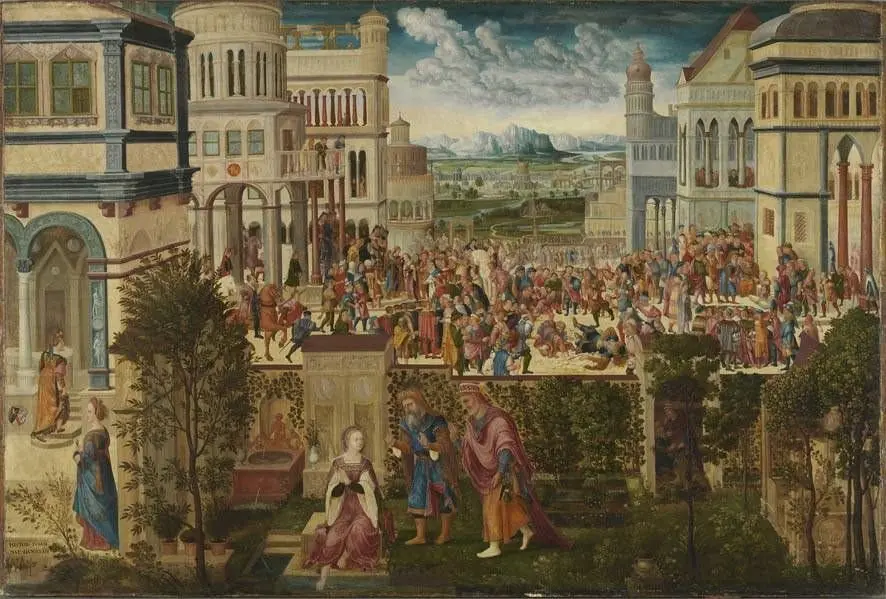 Historienzyklus: Geschichte der Susanna
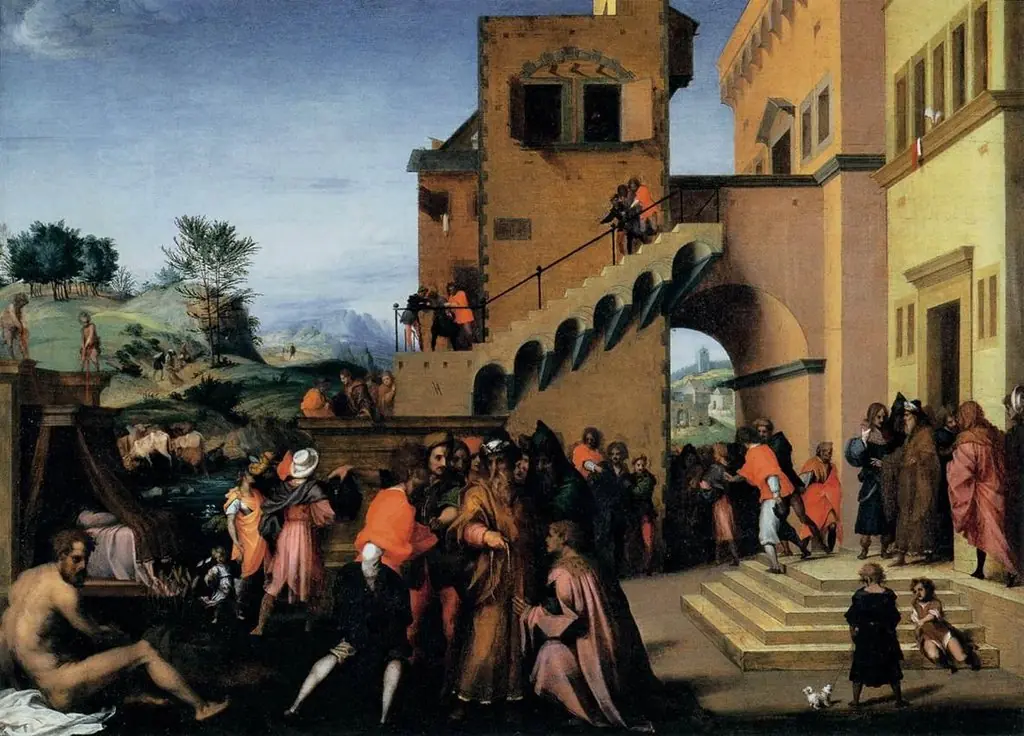 Joseph interpreting Pharaoh's dresm
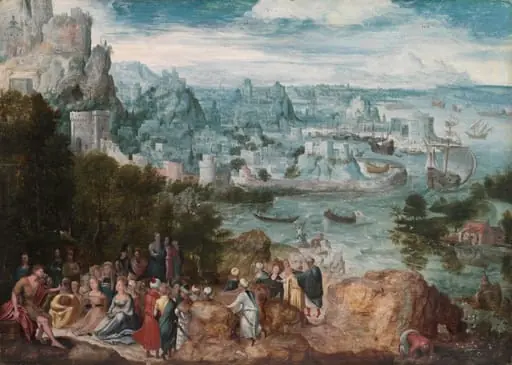 Landscape with Saint John the Baptist
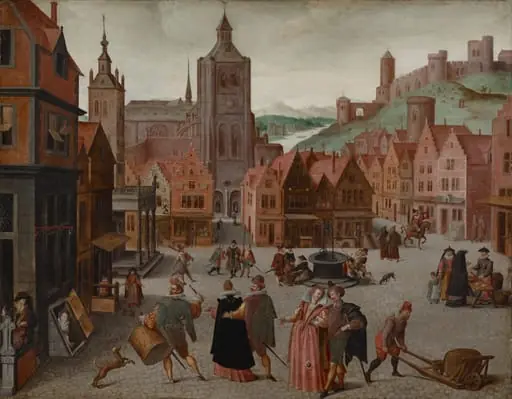 The Marketplace in Bergen op Zoom