Artwork
Frontispiece for "Les Salles d'Estampes"
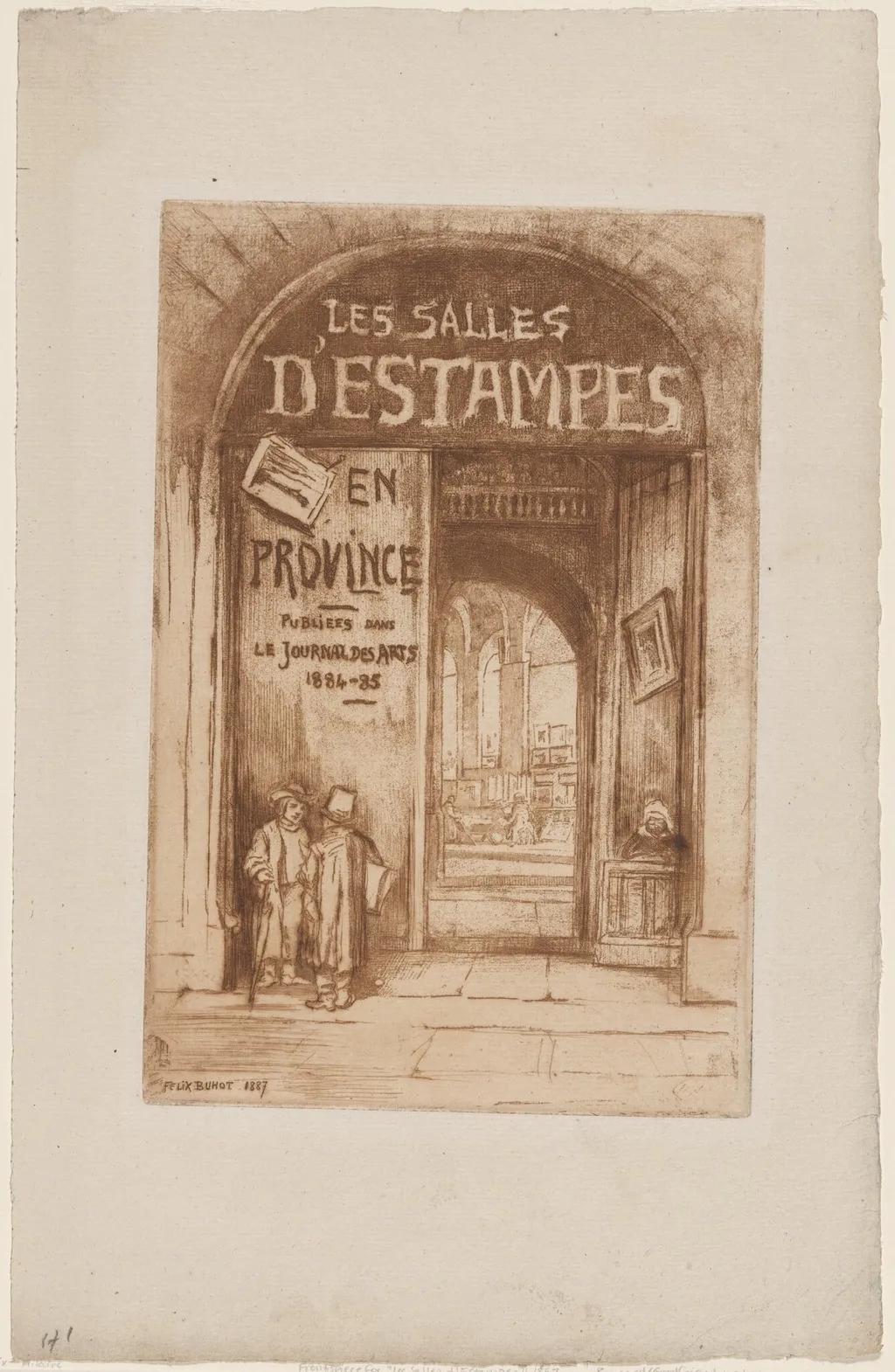
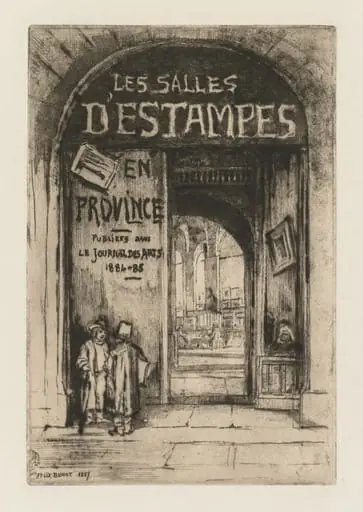
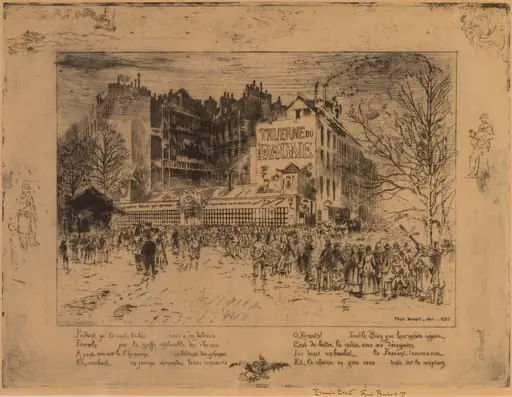
Frontispiece for "Les Salles d'Estampes" is an ink print by the Impressionist artist Félix-Hilaire Buhot. It dates from 1887 and is held in the collection of the National Gallery of Art.
- Inscription
- Inscribed:lower left in graphite: indecipherable; lower right in graphite verso: 020099 [numbers are in a box]
About this work
Overview
' Executed in etching, aquatint, drypoint, and stipple, it captures a modest print shop in Paris with nuanced tonal gradations.
Created in 1887 by Félix-Hilaire Buhot, this print serves as the frontispiece for the publication 'Les Salles d'Estampes.' Executed in etching, aquatint, drypoint, and stipple, it captures a modest print shop in Paris with nuanced tonal gradations. The work is held in the collection of the National Gallery of Art in Washington, D.C., and exemplifies Buhot’s interest in urban life and the material culture of printmaking.
Subject & Meaning
The scene depicts a small print shop with a hand-painted sign reading 'Les Salles d'Estampes' and 'En Province,' suggesting a connection between provincial and metropolitan art markets. Two children peer at a stack of prints outside, while faint figures are visible within the dim interior. The inclusion of newspaper dates implies a link between current events and the circulation of images, subtly framing the shop as a hub of visual information.
Technique & Style
Buhot employed multiple intaglio techniques, etching for fine lines, aquatint for soft tonal areas, drypoint for rich, fuzzy textures, and stipple for delicate shading, to render the shop’s interior and exterior with atmospheric depth. The brown ink enhances the sense of aged paper and dim lighting, while the layered marks convey both architectural detail and the quiet activity of daily commerce.
History & Provenance
The print was produced as part of a publication documenting print collections and dealers in late 19th-century France. It entered the National Gallery of Art’s collection through established acquisition channels, likely as part of a broader effort to preserve examples of French graphic art from the period. Its survival reflects its role as both artistic document and commercial artifact.
Context
In the 1880s, Paris saw a surge in interest in print collecting and the reproduction of artworks. Buhot’s work responds to this trend, portraying the physical spaces where prints changed hands, often modest shops tucked into city streets. The inclusion of children and provincial references hints at the democratization of art ownership beyond elite circles.
Legacy
Buhot’s frontispiece remains a quiet testament to the everyday infrastructure of print culture in fin-de-siècle France. Though not widely exhibited, it contributes to scholarly understanding of how prints were distributed, consumed, and valued by ordinary audiences. Its technical precision and observational detail continue to inform studies of graphic arts and urban visual life.
Own this work as a print
Artist & collection

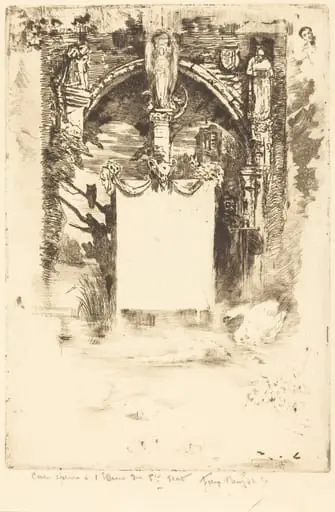 Ex-Libris pour "L'Ensorcelée" (Bookplate for "L'Ensorcelée")
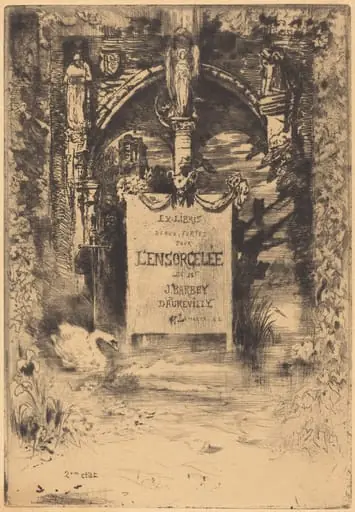 Ex-Libris pour "L'Ensorcelée" (Bookplate for "L'Ensorcelée")
 Figures on Top of a Hill, Overlooking the Sea
 Ebury Street
 A Gathering in an Interior; A Curtained Doorway
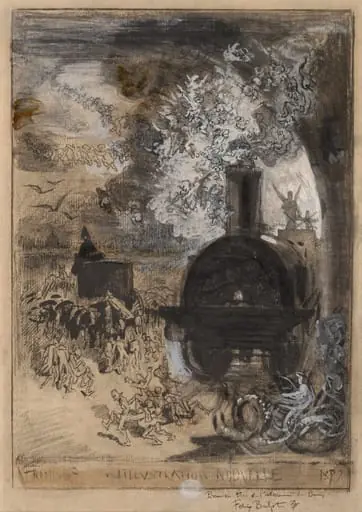 Frontispiece for L'Illustration Nouvelle: The Burial of the Burin
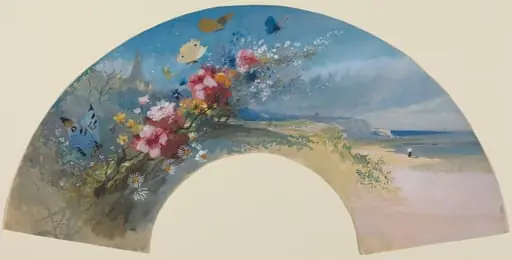 Fan with Wildflowers and Butterflies against the Norman Coast
![Gillingham Pier, London [verso], by Félix-Hilaire Buhot](https://artifactworldgallery.com/img/felix-hilaire-buhot--gillingham-pier-london-verso--641e03dd7de8217b-w320.webp) Gillingham Pier, London [verso]
Gillingham Pier, London [verso]
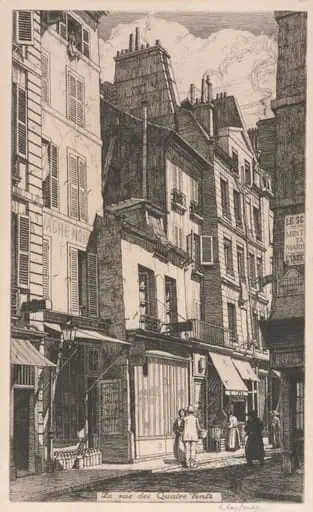 La rue des Quatre Vents
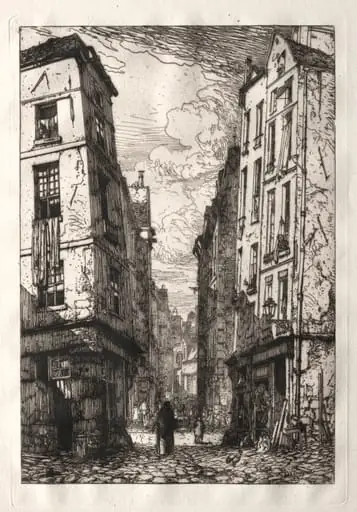 Rue des Marmousets (Old Paris)
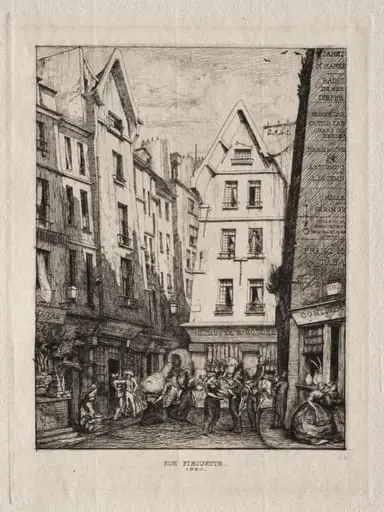 Pirouette Street, near the Markets, Paris
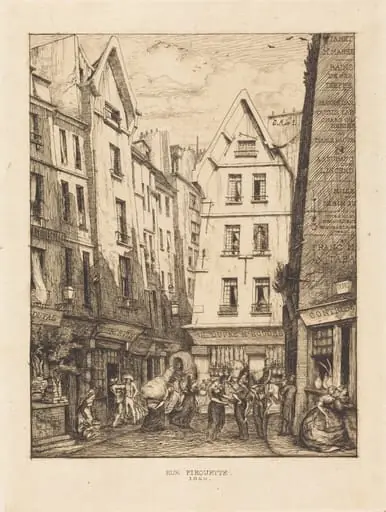 La Rue Pirouette aux halles, Paris (Pirouette Street, Near the Markets, Paris)
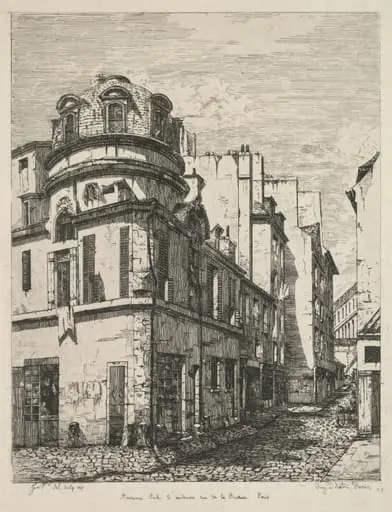 Eaux-Fortes sur le Vieux Paris: Ancienne école de médecine rue de la Bûcherie (Etchings of Old Paris: Former Medical School, rue de la Bucherie)
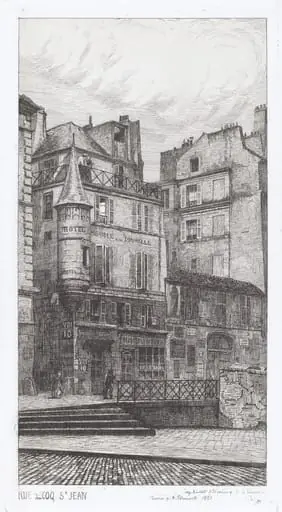 Rue du Coq St. Jean
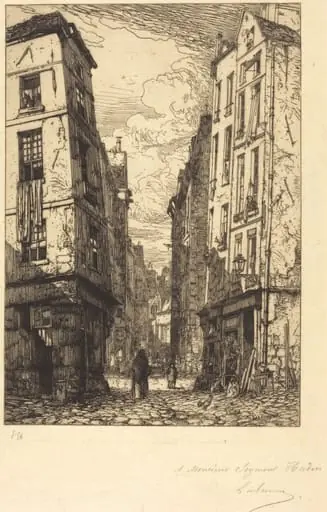 Rue des Marmousets (Quartier de la cite, vieux Paris)
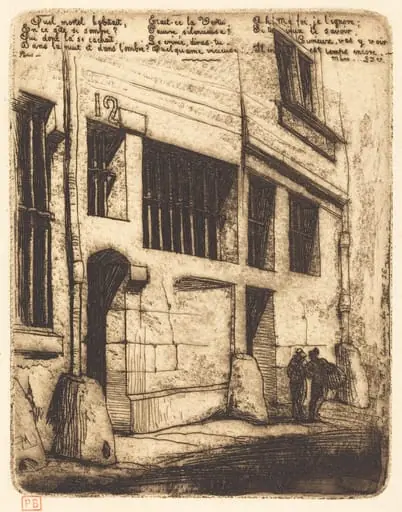 La Rue des Mauvais Garçons, Paris (The Street of the Bad Boys)
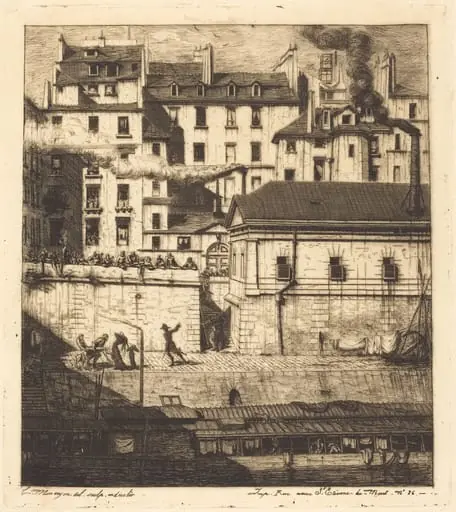 La morgue, Paris (The Mortuary)
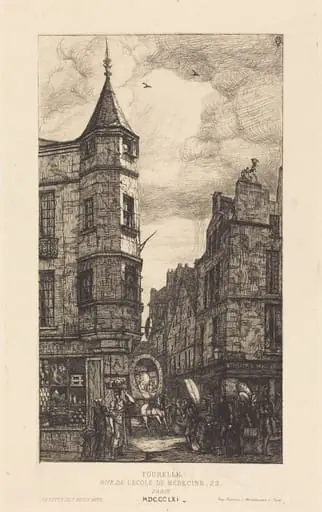 Tourelle, Rue de l'École de Médecine, 22, Paris
 La Place des Martyrs et La Taverne du Bagne (The Place des Martyrs and the Jailhouse Tavern)
- Les Salles d'Estampes en Province