Artwork
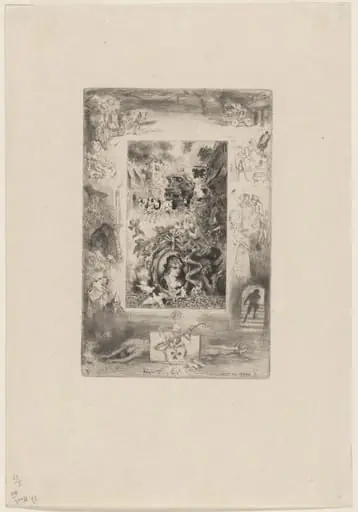
Jacques Cazotte's "Le Diable amoureux" (3rd vignette)
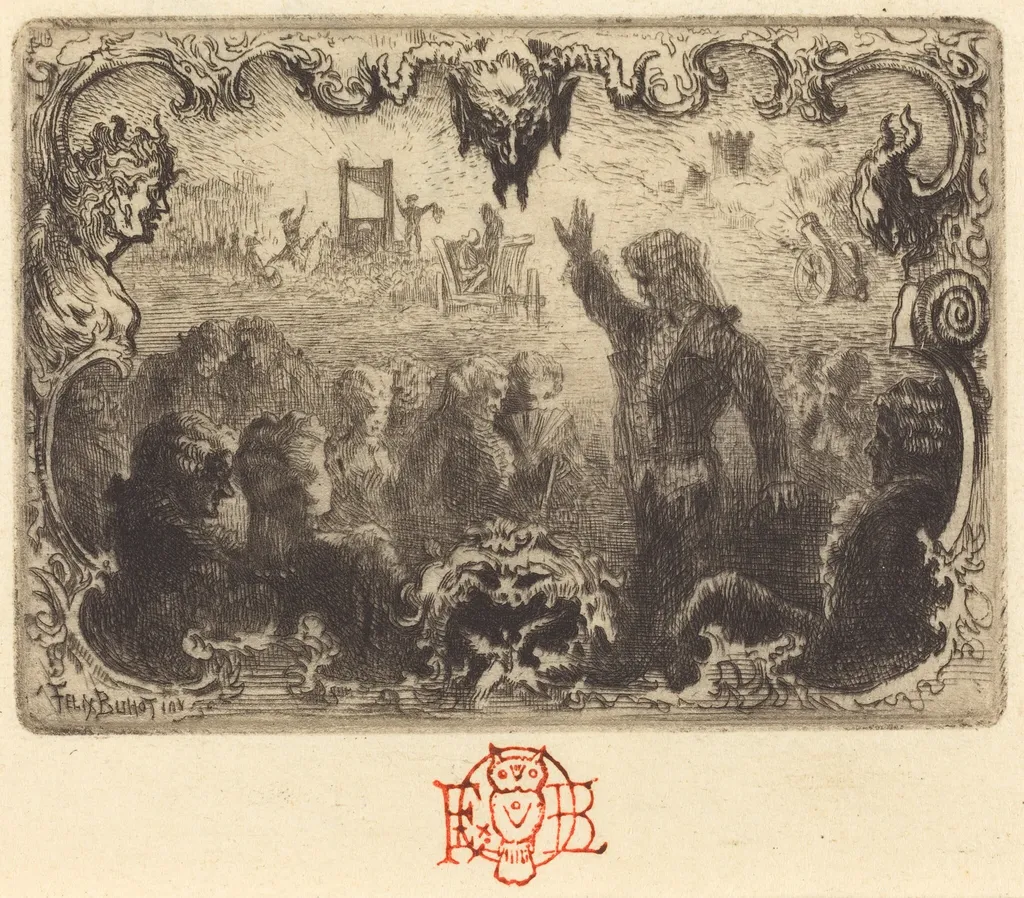
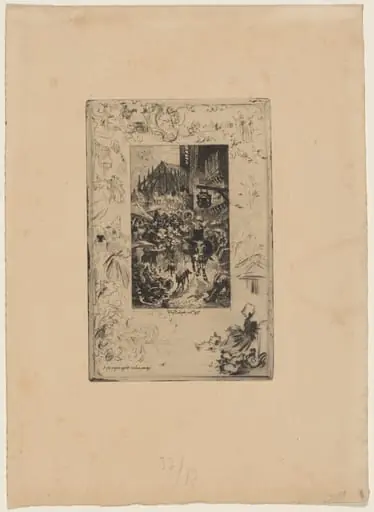
Jacques Cazotte's "Le Diable amoureux" (3rd vignette) is an ink print by the Impressionist artist Félix-Hilaire Buhot. It dates from 1878 and is held in the collection of the National Gallery of Art.
- Inscription
- Inscribed:lower left in plate: Felix Buhot inv; lower center below plate mark stamped in red: FB (Lugt 977); by later hand, lower right in graphite: 3 (circled); by later hand, upper right verso in graphite: Coll: (not deciphered); by later hand, lower right verso in graphite: 12; by later hand, upper left verso in graphite: Cat 98; by later hand, lower left verso in graphite: APG 9561/3
About this work
Overview
Buhot utilizes the medium of etching and drypoint to create deep contrasts and textural variety, enhancing the dreamlike, nightmarish atmosphere of the scene.
Félix-Hilaire Buhot's 1878 etching and drypoint, the third vignette for Jacques Cazotte's 'Le Diable amoureux,' visualizes a moment of supernatural chaos from the 1772 novel. The composition centers on a formally dressed female figure, likely the protagonist, who stands amidst a swirling throng of grotesque figures and hybrid creatures. Hovering directly above her is a horned, demonic entity, establishing a vertical axis of supernatural intervention.
The lower register dissolves into a dense, dynamic mass of animals and humans, rendered with Buhot's characteristic energetic line work and varied biting techniques. Buhot utilizes the medium of etching and drypoint to create deep contrasts and textural variety, enhancing the dreamlike, nightmarish atmosphere of the scene. The print is framed by decorative borders featuring swirling motifs that echo the turbulence within.
Created during a period when Buhot was pioneering the revival of the etching medium in France, this work demonstrates his mastery of atmospheric effects and his interest in literary illustration. It reflects the artist's engagement with Romantic and Symbolist themes, bridging the gap between traditional narrative illustration and the expressive potential of the print medium.
Subject & Meaning
The central focus is a woman in elaborate attire, surrounded by a throng of figures and bizarre creatures. Hovering above her is a horned entity, while below the scene erupts into a chaotic mixture of animals and people. The surrounding ornamental swirls frame the action, suggesting a supernatural disturbance that reflects the story’s themes of temptation and demonic interference.
Technique & Style
Buhot employed both etching and drypoint, allowing him to incise fine lines that generate rich tonal contrasts. The drypoint work adds velvety, deep shadows that give the image a sketch‑like immediacy, while the etched areas provide crisp outlines. The combination yields a layered texture, with the paper’s surface appearing almost carved, enhancing the dramatic intensity of the scene.
History & Provenance
Created in the late nineteenth century, the print forms part of a series illustrating Cazotte’s literary work. Produced in 1878, it reflects the period’s fascination with literary illustration and the technical possibilities of printmaking. The piece remains an example of Buhot’s collaborative efforts with literary sources, illustrating the cross‑media dialogues prevalent in French art of the era.
Own this work as a print
Artist & collection

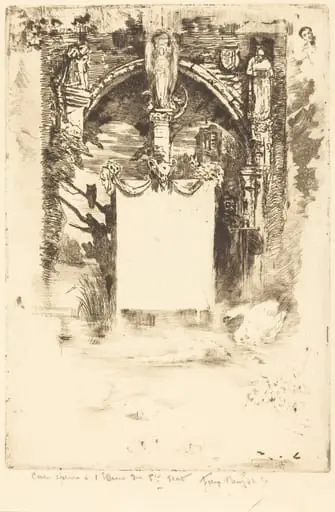 Ex-Libris pour "L'Ensorcelée" (Bookplate for "L'Ensorcelée")
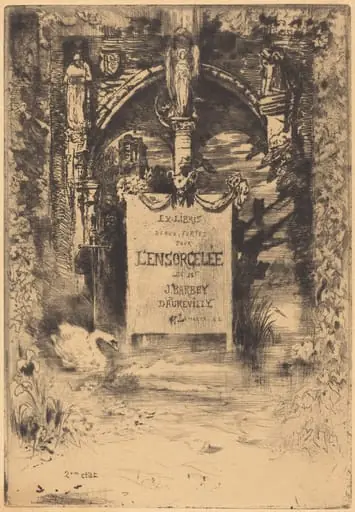 Ex-Libris pour "L'Ensorcelée" (Bookplate for "L'Ensorcelée")
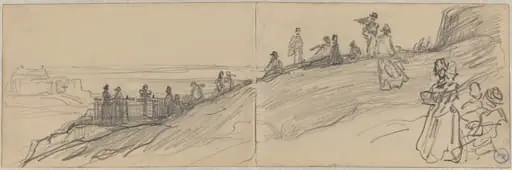 Figures on Top of a Hill, Overlooking the Sea
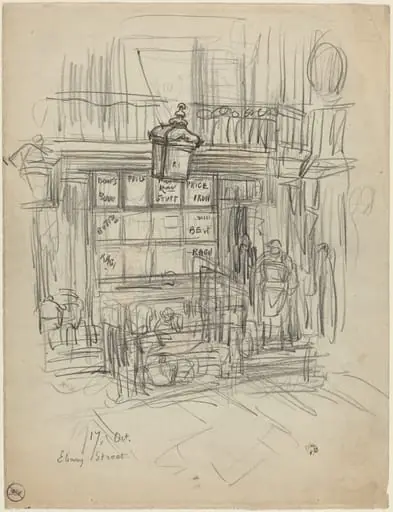 Ebury Street
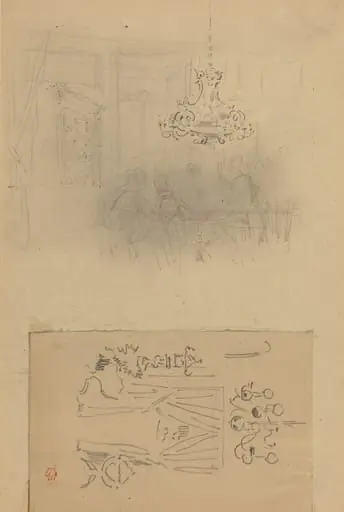 A Gathering in an Interior; A Curtained Doorway
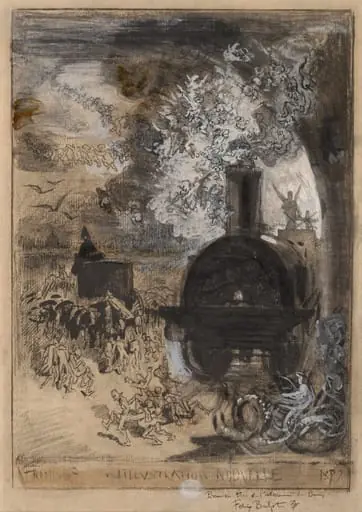 Frontispiece for L'Illustration Nouvelle: The Burial of the Burin
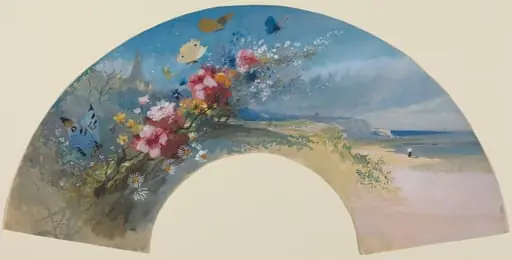 Fan with Wildflowers and Butterflies against the Norman Coast
![Gillingham Pier, London [verso], by Félix-Hilaire Buhot](https://artifactworldgallery.com/img/felix-hilaire-buhot--gillingham-pier-london-verso--641e03dd7de8217b-w320.webp) Gillingham Pier, London [verso]
Gillingham Pier, London [verso]