Artwork
Ragland
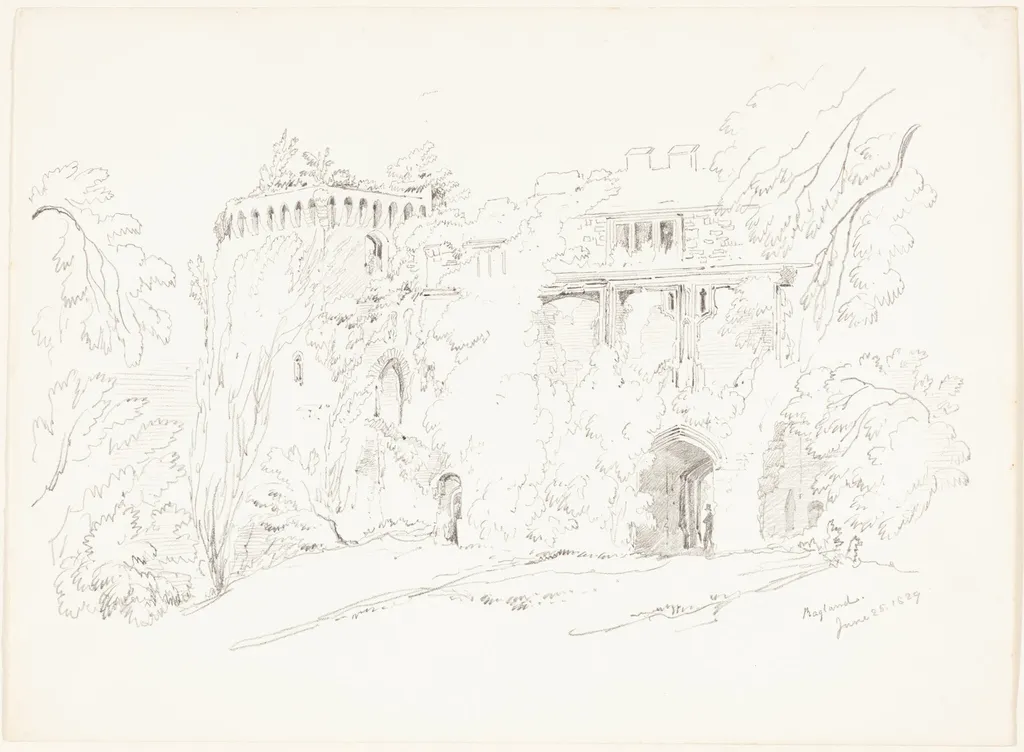
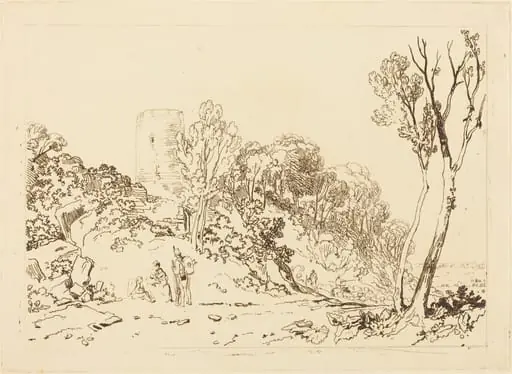
Ragland is a graphite drawing by the Romanticist artist James Bulwer. It dates from 1829 and is held in the collection of the National Gallery of Art.
- Inscription
- Inscribed:lower right: Ragland. / June 25.1829
About this work
Overview
Ragland is a graphite drawing on wove paper created by James Bulwer in 1829.
Subject & Meaning
The drawing depicts a neglected stone structure overgrown with trees and ivy, with a small figure near the entrance. The scene conveys a sense of abandonment and neglect.
Technique & Style
Bulwer employed loose, sketchy graphite strokes to capture the scene, eschewing detailed rendering and smooth shading in favor of a spontaneous, observational approach.
Context
The work is associated with Romanticism, a movement in which artists often used ruined landscapes to evoke emotions and narratives.
Own this work as a print
Artist & collection


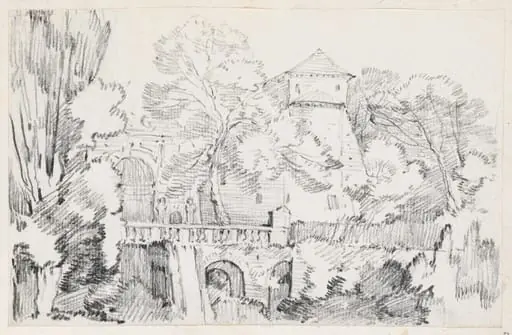 The Water Organ in the Gardens of the Villa d'Este, Tivoli
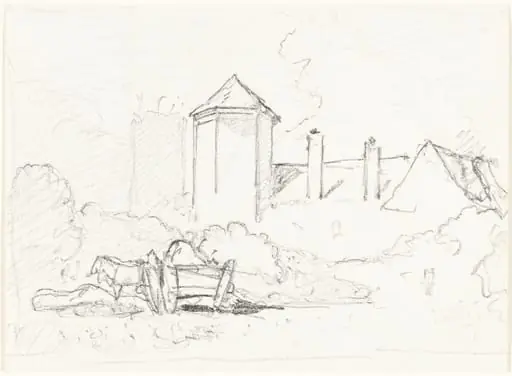 Sketch of Buildings with Cart and Horses in Foreground
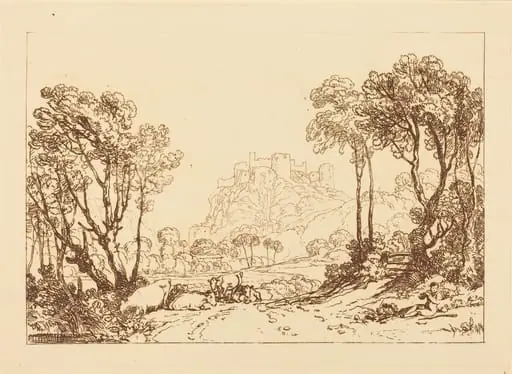 The Castle Above the Meadows
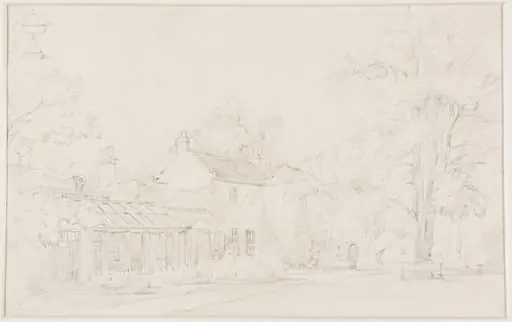 A house, with trees
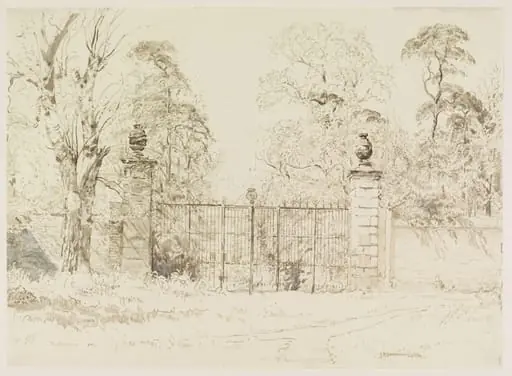 The Old Gates, Ham House
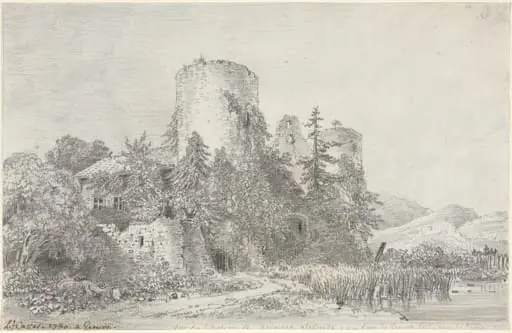 Vue du Chateau de Saconnex
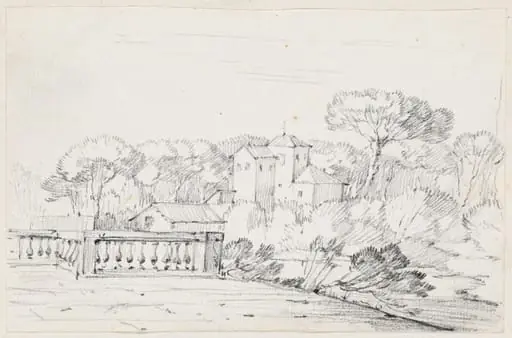 Terrace by a River with a Villa and Trees Beyond
 Sketch of landscape with trees
 The Maltings, Saffron Walden
 Russikon, 1843
 Fortified Castle on a High Cliff
 Winchelsea, Sussex