Artwork
The Rhine, below St. Goar
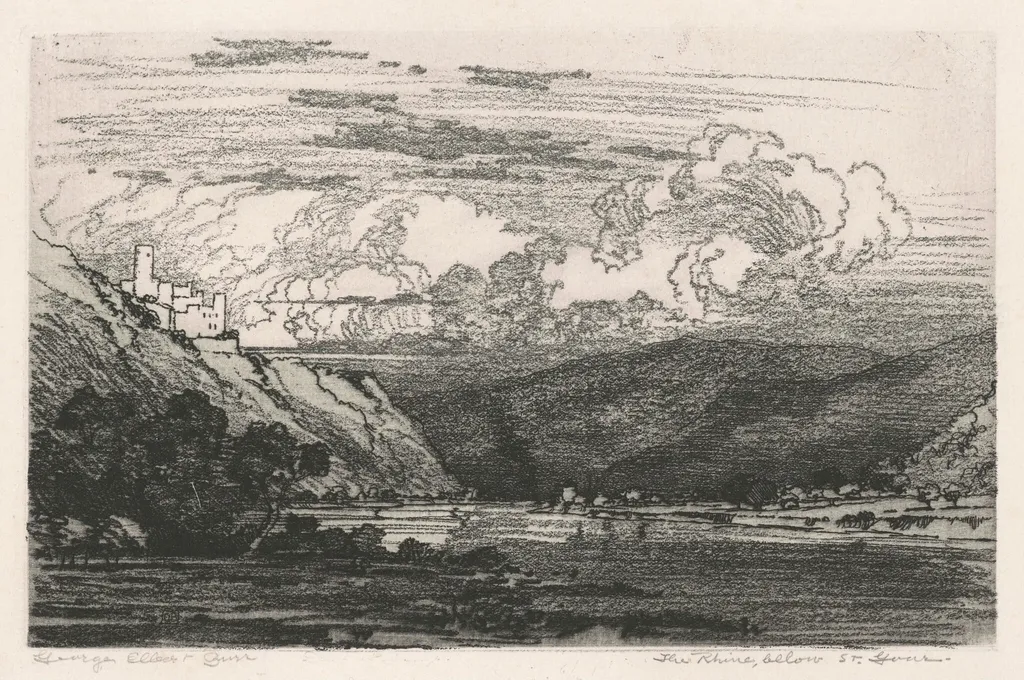
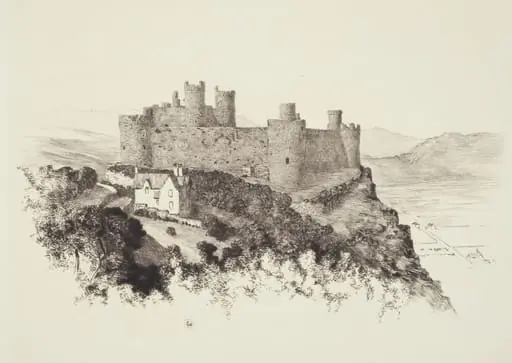
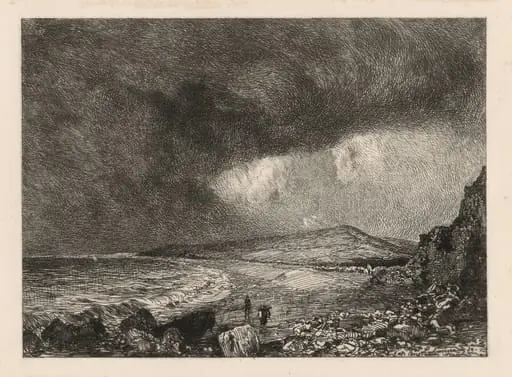
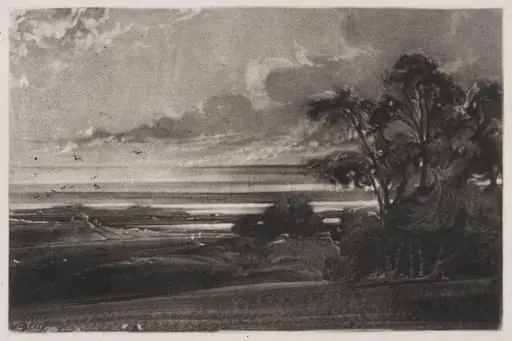
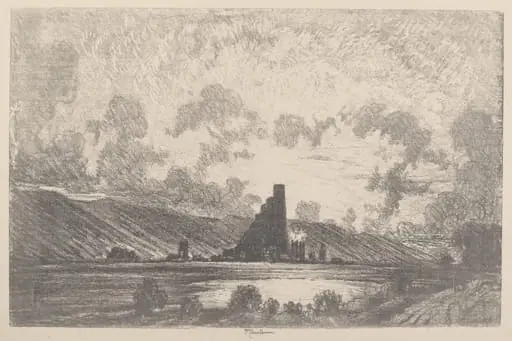
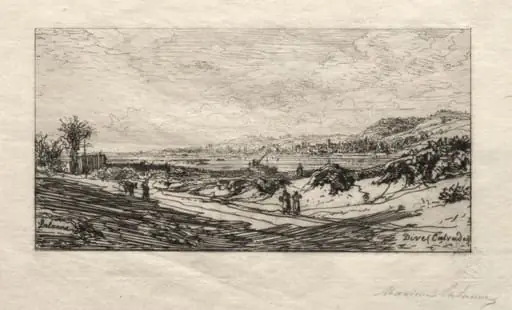
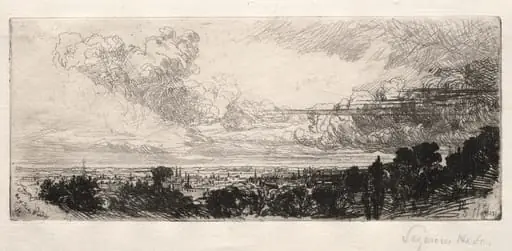
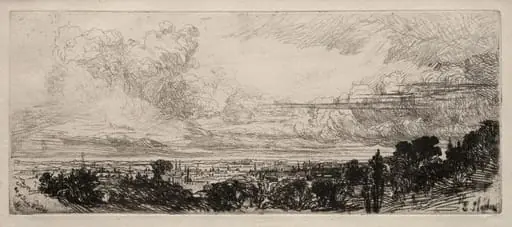
The Rhine, below St. Goar is an ink print by George Elbert Burr. It dates from 1915 and is held in the collection of the National Gallery of Art. Created around 1915, The Rhine, below St.
- Inscription
- Inscribed:lower left in plate: GB [the artist's monogram]; lower left in graphite: George Elbert Burr; lower right in graphite: The Rhine, below St. Goar; lower left corner in blue colored pencil: S.K. Rule; lower center edge in graphite by unknown hand: Soft-Ground; lower right edge in graphite by unknown hand: San Goar #104
- Markings
- Marked:stamped lower right verso in black ink: F.B.B. [circled]
About this work
Overview
Executed in black ink on wove paper, the work captures a tranquil stretch of the Rhine River near the German town of St.
Created around 1915, The Rhine, below St. Goar is a softground etching by American artist George Elbert Burr. Executed in black ink on wove paper, the work captures a tranquil stretch of the Rhine River near the German town of St. Goar. Unlike Burr’s more familiar Western landscapes, this piece reflects his engagement with European scenery during a period of international travel, showcasing his adaptability as a printmaker.
Subject & Meaning
The scene presents a quiet riverside vista: a medieval castle clings to a rocky cliff on the left, while calm water reflects the sky and carries small boats. Open fields and gentle hills extend to the right, framing the composition with a sense of stillness. The absence of human activity and the subdued tones suggest contemplation rather than narrative, inviting attention to the relationship between land, water, and time.
Technique & Style
Burr employed softground etching to achieve a loose, sketchlike quality. The lines are deliberately uneven and textured, mimicking the spontaneity of a pencil drawing. This method allowed him to capture atmospheric effects, particularly the layered clouds and rough cliff faces, with a tactile, handwrought feel. The lack of polished precision emphasizes the immediacy of observation over idealized representation.
History & Provenance
Burr produced this print during a phase of his career when he traveled extensively in Europe, broadening his subject matter beyond the American West. While specific ownership history is not widely documented, the work aligns with his broader output of landscape etchings from this period, many of which were exhibited and collected by institutions interested in American printmaking.
Context
In the early 20th century, American artists increasingly looked to Europe for inspiration, and Burr was among those drawn to historic river valleys and ruins. His choice of the Rhine, a region long associated with Romantic painting, reflects a broader cultural interest in European heritage. Yet his approach, with its rough texture and informal composition, diverges from traditional Romantic grandeur, favoring quiet observation.
Legacy
The Rhine, below St. Goar exemplifies Burr’s commitment to printmaking as a medium for personal expression rather than commercial reproduction. Though less known than his Western works, this etching contributes to understanding his stylistic range and his role in expanding the thematic scope of American printmaking in the early 1900s.
Own this work as a print
Artist & collection

Artist
George Elbert Burr (April 14, 1859 – November 17, 1939 ) was an American printmaker and painter best known for his etchings and drypoints of the desert and mountain regions of the American West.