Artwork
Opossum Mouse
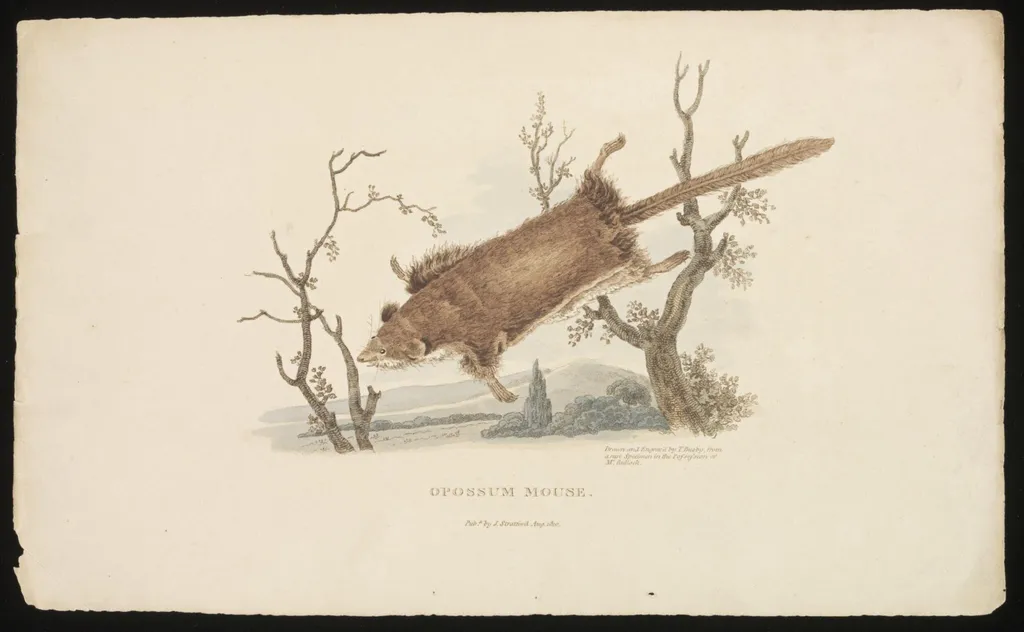
Opossum Mouse is a print by the Romanticist artist Thomas Lord Busby. It dates from 1810 and is held in the collection of the Victoria and Albert Museum.
About this work
Overview
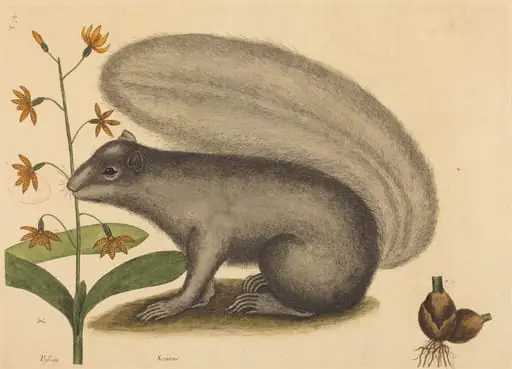
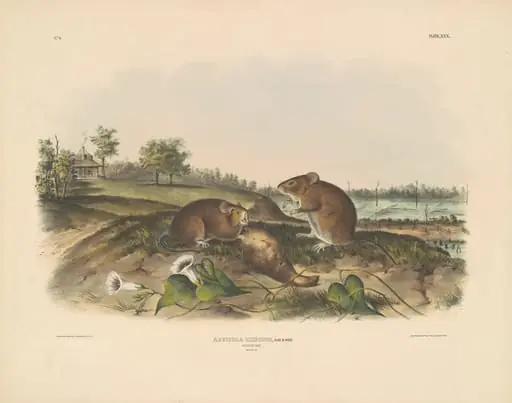
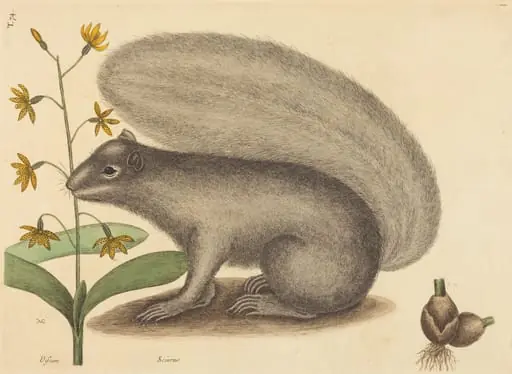
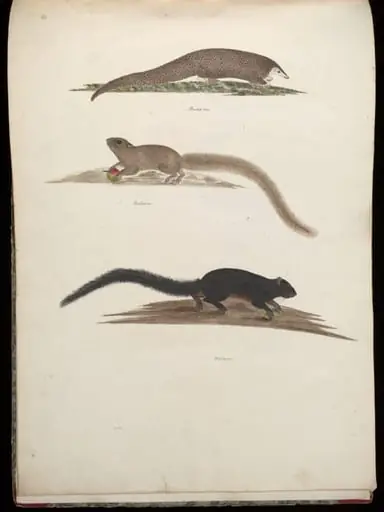
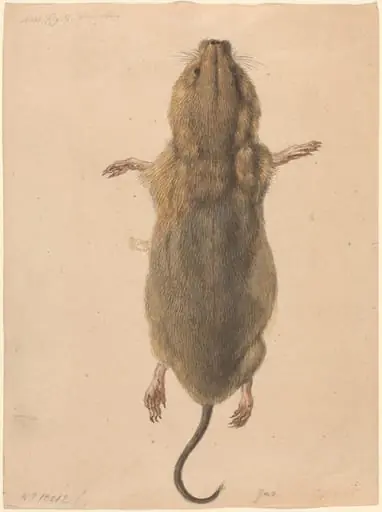
This hand‑coloured engraving, printed on paper, portrays a diminutive mammal with a long, bushy tail and a pointed snout, positioned upside‑down on a bare branch. The background is sketched with faint hills or cliffs, and the animal’s fur is rendered with a rough texture, suggesting a naturalistic approach typical of early nineteenth‑century scientific illustration.
Subject & Meaning
The figure resembles a gliding rodent, akin to a flying squirrel, complete with a membrane (patagium) between its limbs that would allow it to glide between trees. The caption identifies the creature as “Opossum Mouse,” a name that does not correspond to any recognized species and reflects historical taxonomic confusion.
Technique & Style
The image combines line engraving with selective hand‑colouring, a common method for disseminating natural history information before the advent of chromolithography. Fine cross‑hatching defines the animal’s anatomy, while washes of colour highlight the fur and the surrounding foliage, balancing scientific detail with aesthetic appeal.
History & Provenance
Published in 1810 as part of George Perry’s Arcana, or, The Museum of Natural History, the print formed one plate in a monthly series that illustrated and described a wide range of animals. The composition was derived from an earlier sketch in a contemporary zoological volume, illustrating the practice of reusing existing drawings for new publications.
Context
The work belongs to a period when naturalists sought to catalogue the world’s fauna through illustrated compendia. Such prints served both educational and decorative purposes, catering to a public eager for visual access to exotic and little‑known species.
Artist & collection
Artist
Thomas Lord Busby had a habit of hiding tiny jokes in his prints, like calling a giraffe a "cameleopard" like it was an ancient Greek monster.