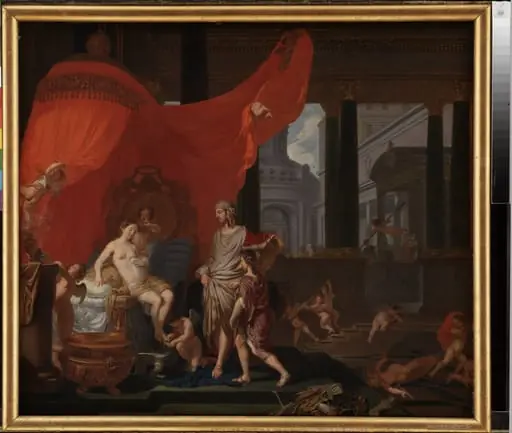
Artwork
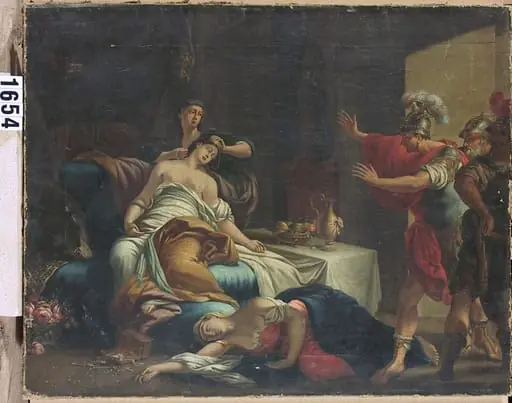
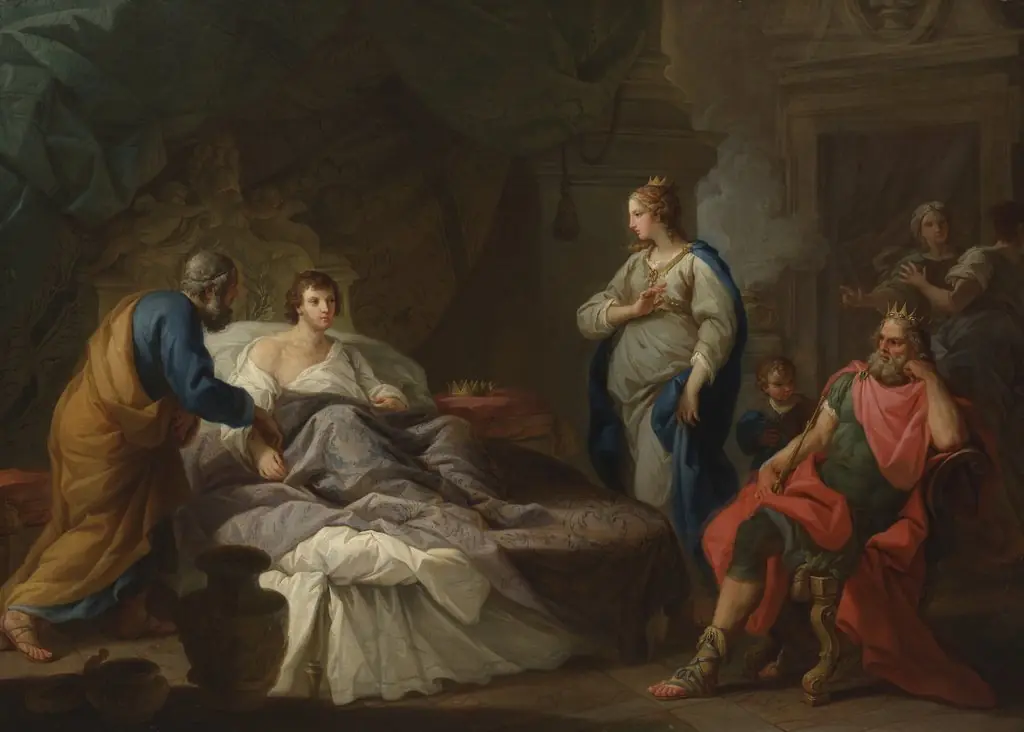
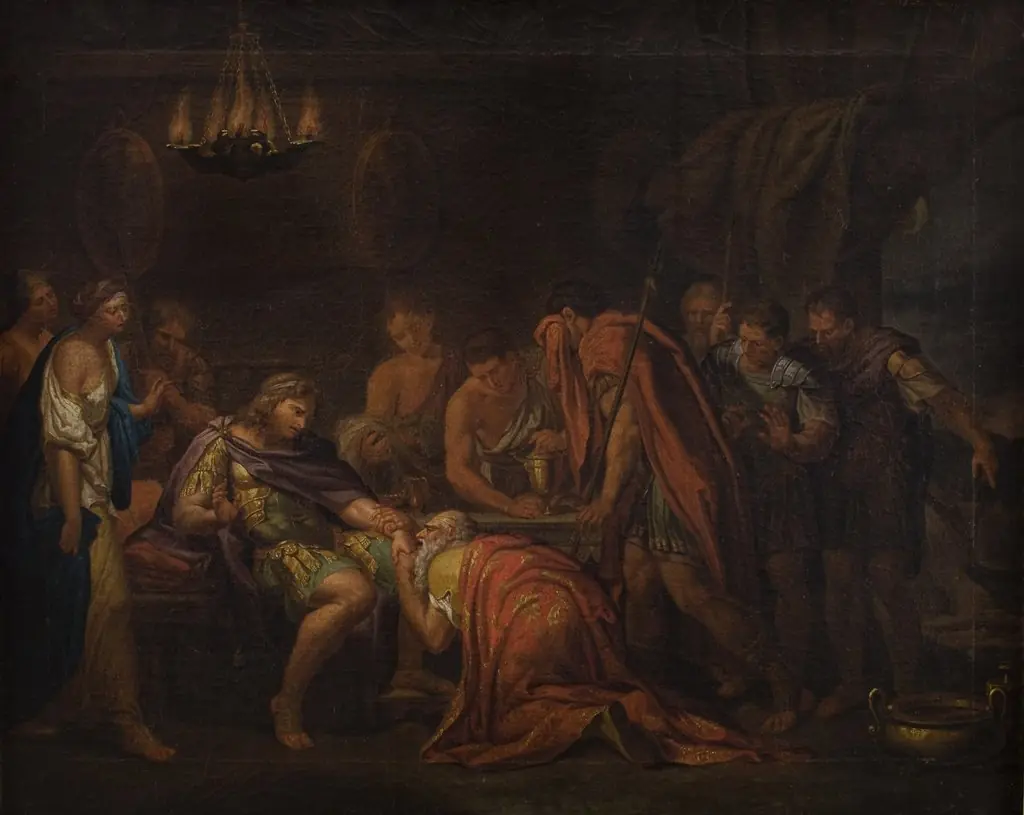
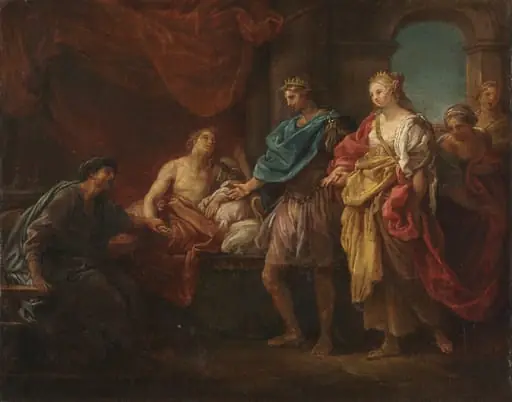
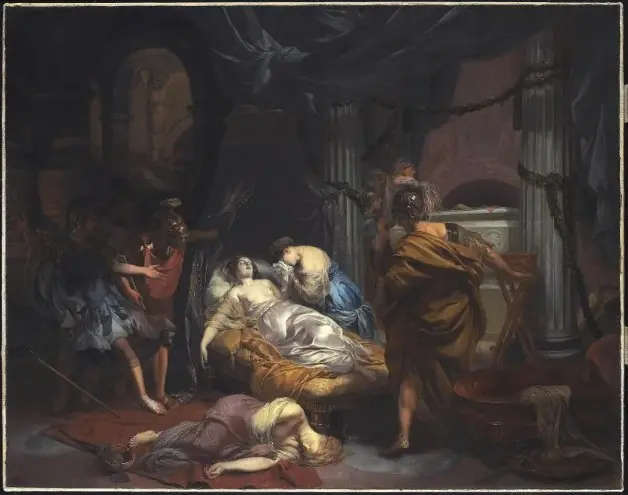
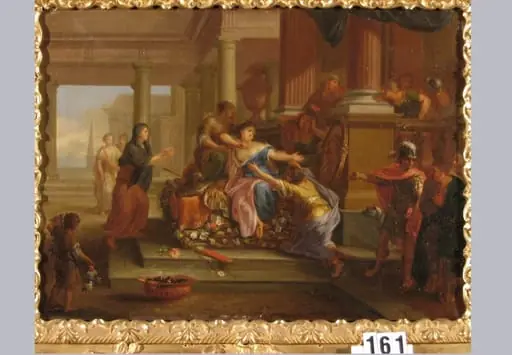
Antiochus pe patul de suferință. Pandant: Sinuciderea Didonei
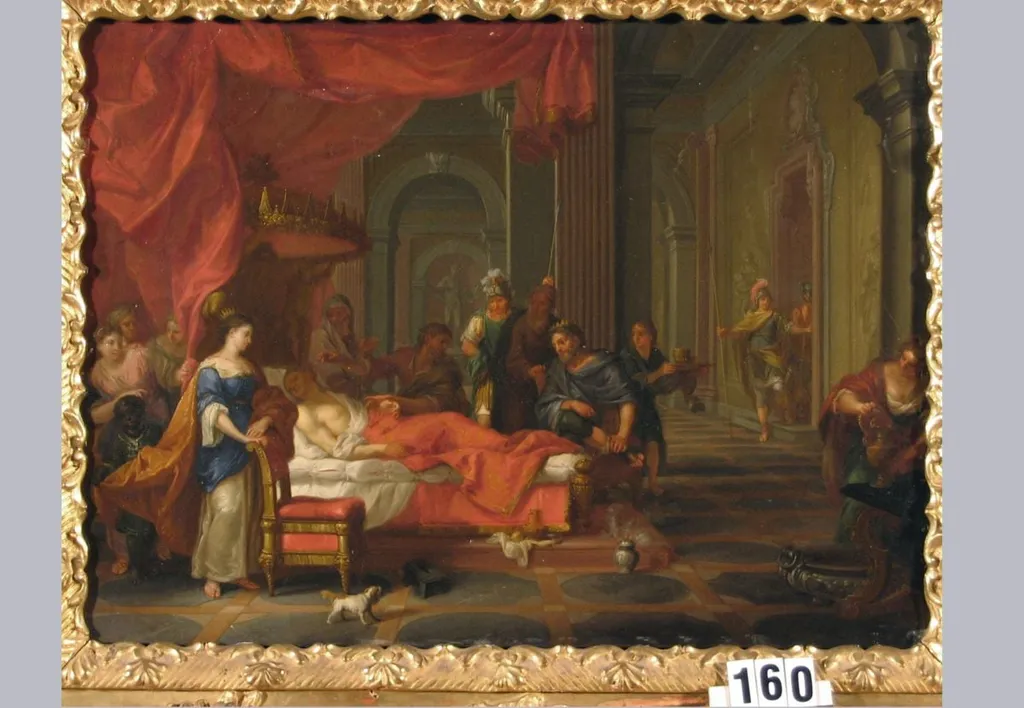
Antiochus pe patul de suferință. Pandant: Sinuciderea Didonei is an unspecified painting by the Baroque artist Johann Rudolf Byss. It is held in the collection of the Brukenthal National Museum.
About this work
Overview
The work, titled Antiochus pe patul de suferință and paired with a pendant depicting the suicide of Dido, presents a dramatic tableau of the dying prince. Antiochus reclines on a couch, his visage contorted in pain, while a woman nearby clutches her hands, bearing witness to his anguish.
Subject & Meaning
The painting draws on the classical tale of Antiochus, the son of Seleucus I, whose fatal love for his stepmother Stratonice leads to his demise. The accompanying Dido scene reinforces themes of tragic love and self‑destruction, inviting reflection on the destructive power of forbidden desire.
Technique & Style
Byss employs stark chiaroscuro, juxtaposing deep shadows with illuminated flesh to accentuate the prince’s suffering. The red robe draped over Antiochus creates a vivid focal point, while the crisp rendering of the woman's clasped hands adds a tactile sense of tension.
History & Provenance
Created by Johann Rudolf Byss, a Swiss‑German painter active in the early eighteenth century, the piece reflects the artist’s engagement with Baroque drama. Its provenance traces back to private collections before entering a museum setting, where it is displayed alongside its pendant.
Context
Byss worked during a period when historical and mythological subjects were favored for their moral and emotional resonance. The composition aligns with contemporary tastes for theatrical narrative, echoing the influence of Caravaggist lighting within a Northern European framework.
Legacy
Although not widely reproduced, the painting exemplifies Byss’s skill in conveying pathos through light and composition. It continues to serve as a reference point for scholars studying the transmission of classical motifs in early modern Central European art.
Artist & collection