Artwork
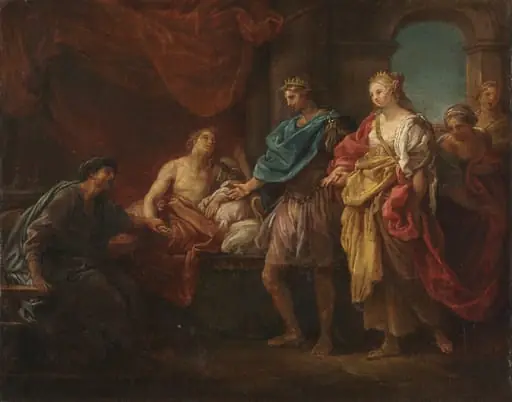
Antiochus Yearning for Stratonice
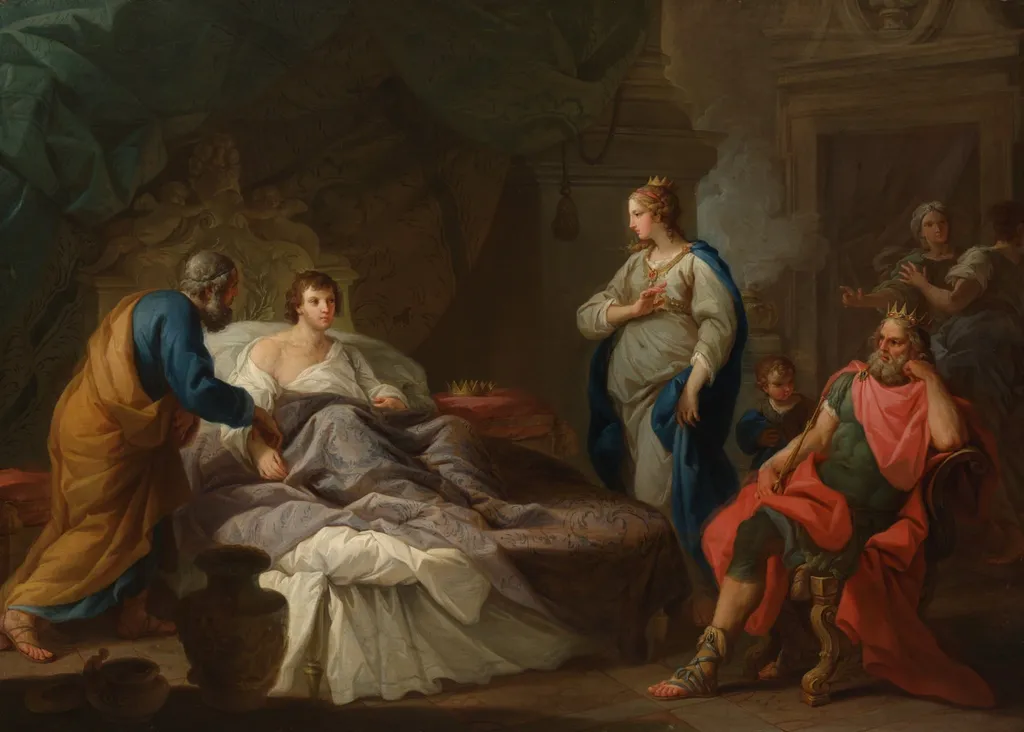
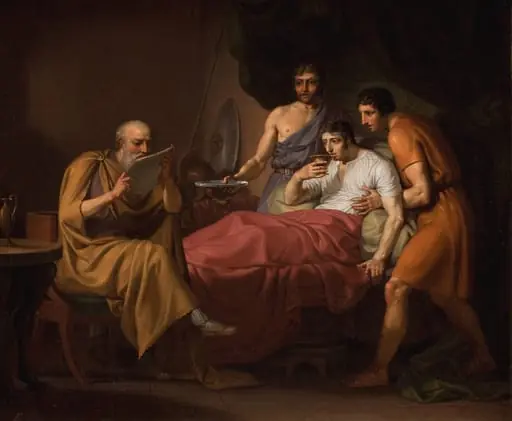
Antiochus Yearning for Stratonice is an oil painting by the Baroque artist Stefano Pozzi. It dates from 1740 and is held in the collection of the Art Institute of Chicago.
- Accession no.
- 53064
- Credit line
- Old Masters Society Purchase Fund
About this work
Overview
The scene captures the precise moment of medical diagnosis where the doctor realizes the patient's condition is love, not disease.
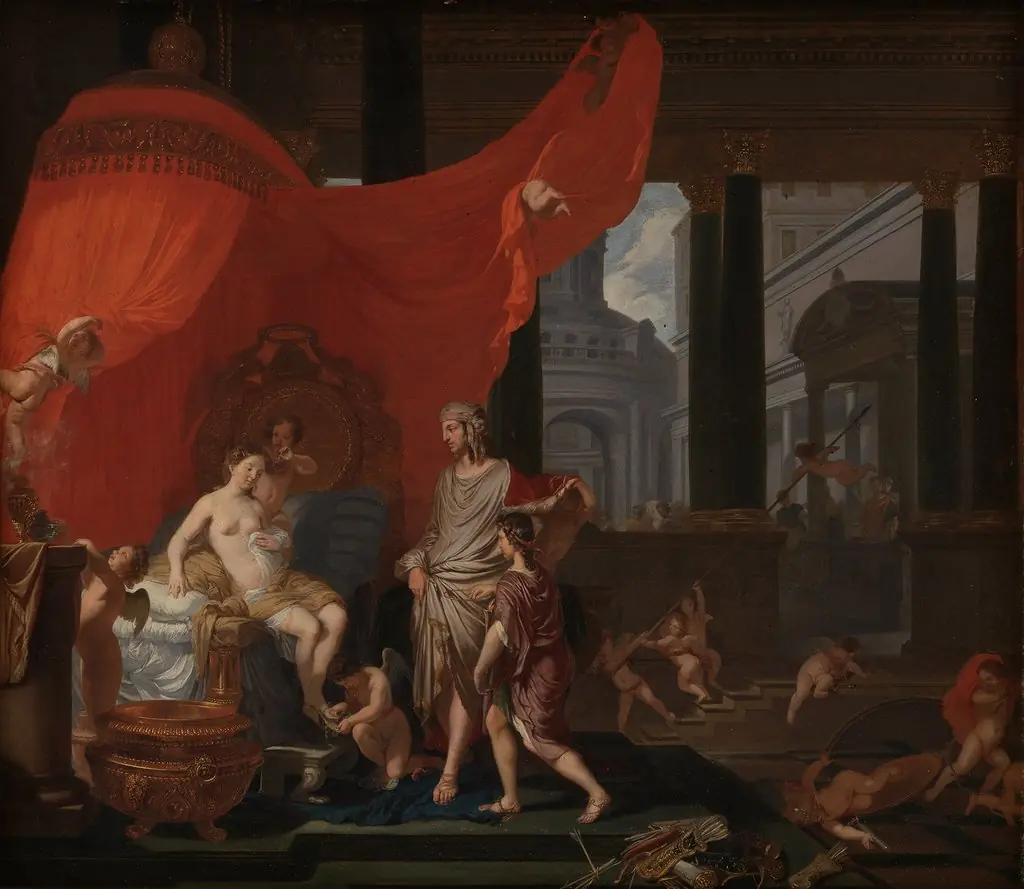
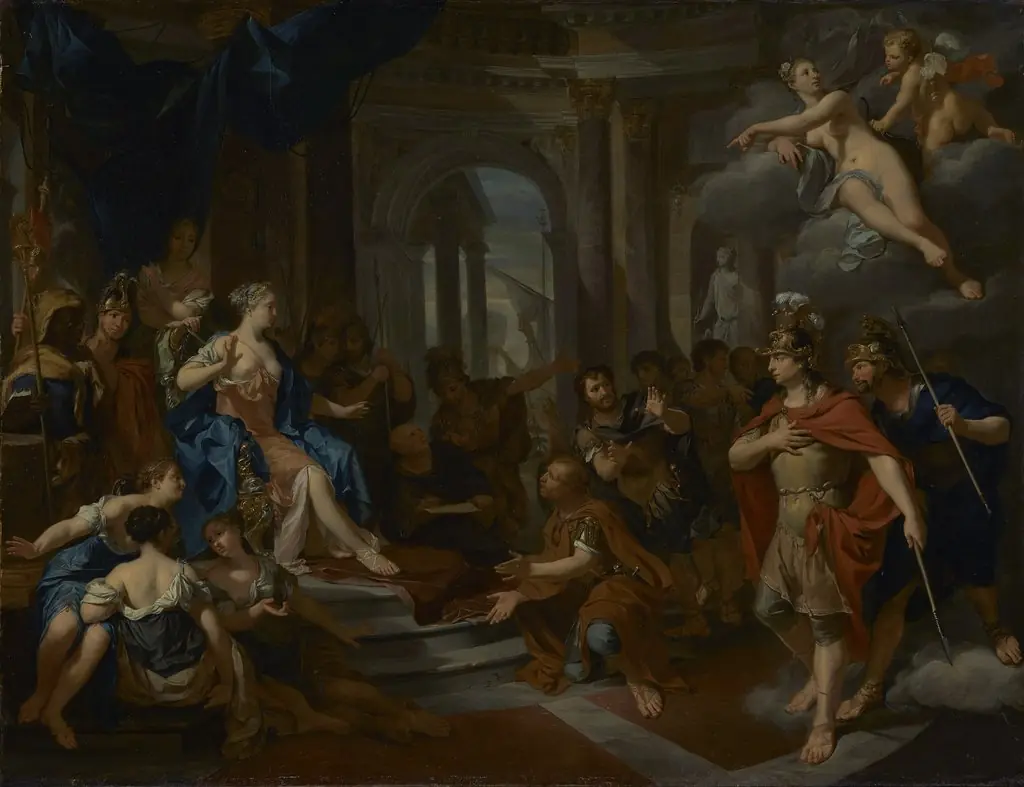
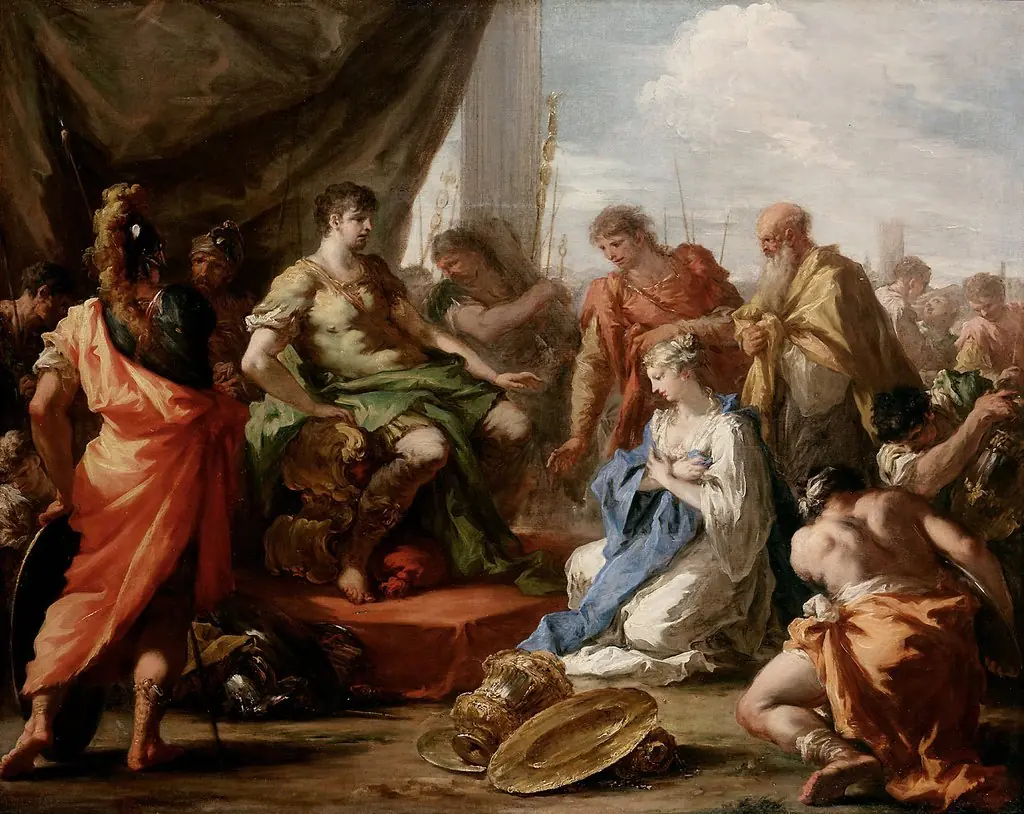
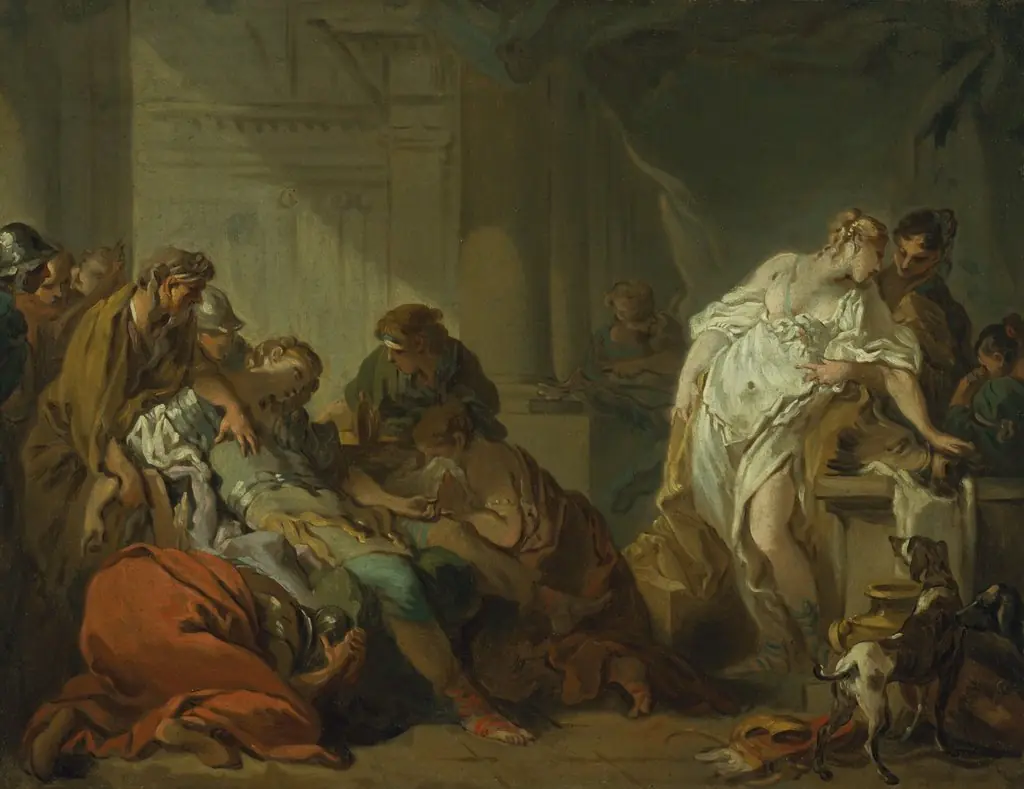
Stefano Pozzi's 'Antiochus Yearning for Stratonice,' painted in 1740, is an oil on canvas history painting illustrating a famous anecdote from Plutarch and Lucian. The composition centers on Antiochus, the son of Seleucus I Nicator, who is depicted slumped on a couch in a red robe, his eyes closed in the throes of a mysterious illness caused by his forbidden love for his stepmother, Stratonice. To his right, the physician Erasistratus presses a hand to the prince's chest, a gesture intended to detect the rapid pulse that reveals the true, psychological nature of the ailment.
Stratonice, dressed in blue, stands nearby, her presence the catalyst for the prince's physical distress. The scene captures the precise moment of medical diagnosis where the doctor realizes the patient's condition is love, not disease. Executed during the height of the Italian Baroque tradition, the work demonstrates Pozzi's skill in narrative clarity and emotional expression, typical of 18th-century academic history painting.
The artist utilizes the dramatic lighting and the contrasting colors of the robes to guide the viewer's eye through the psychological tension of the scene, emphasizing the internal conflict of the protagonist over the external action.
Subject & Meaning
The scene depicts the young prince Antiochus, afflicted by an unspoken love for his stepmother Stratonice. Overcome with melancholy, he reclines on a couch, eyes shut, while a physician, sensing his distress through a pulse examination, confronts the hidden passion. A woman in blue, identified as Stratonice, watches the exchange, embodying the silent tension of forbidden desire.
Technique & Style
Pozzi employs a pronounced chiaroscuro, using deep shadows to frame the figures and a focused light that highlights Antiochus’s pallor and the physician’s hand. The contrast of the red robe against the dark background intensifies the emotional atmosphere, while the smooth brushwork conveys the silkiness of the fabrics and the softness of flesh.
History & Provenance
Created in the mid‑18th century, the painting entered the Art Institute of Chicago’s holdings through a mid‑20th‑century acquisition, though earlier ownership records remain sparse. Its attribution to Pozzi has been consistently affirmed by stylistic analysis and archival references to a commission for a private collector interested in classical subjects.
Context
The work reflects the Enlightenment fascination with moralizing episodes from antiquity, where personal virtue and hidden emotions were explored through historical allegory. Pozzi’s choice of a love‑laden yet discreet narrative aligns with contemporary tastes for refined, didactic scenes that could be displayed in aristocratic salons.
Own this work as a print
Artist & collection
Artist
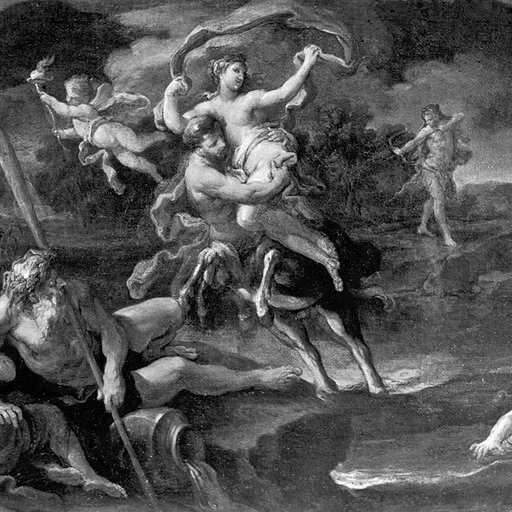
Stefano Pozzi was an Italian painter, designer, draughtsman, and decorator whose career was spent largely in Rome.