Artwork
Swiss Landscape
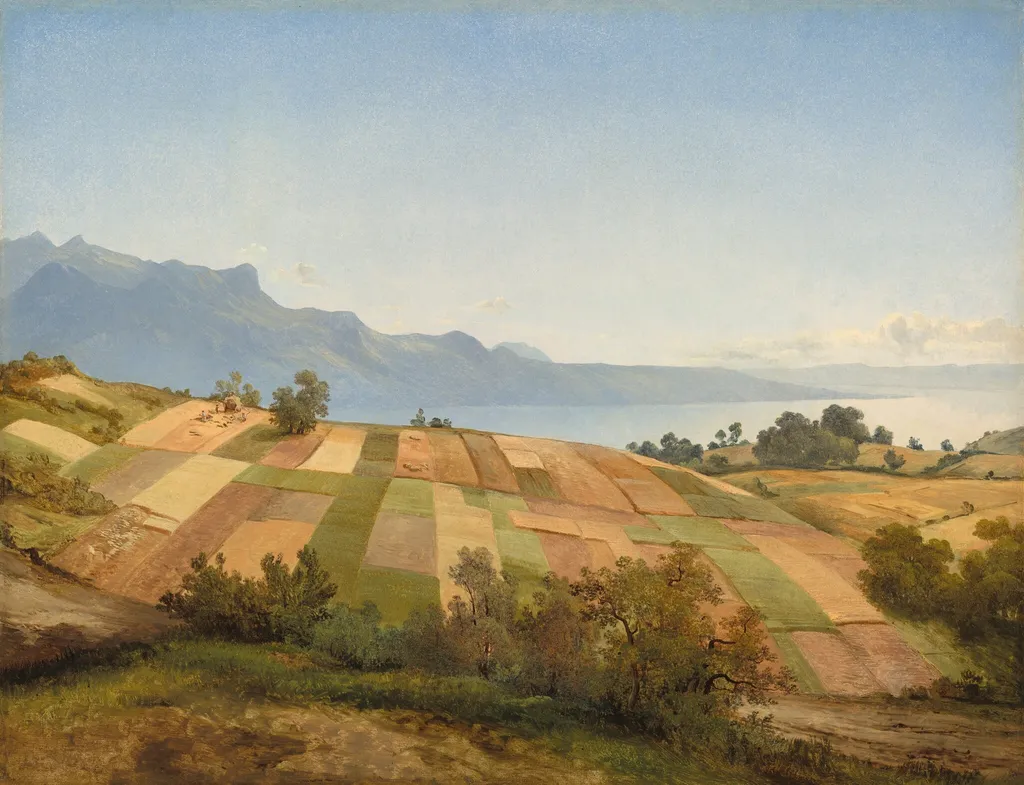
Swiss Landscape is an oil painting by the Romanticist artist Alexandre Calame. It dates from 1830 and is held in the collection of the National Gallery of Art.
About this work
Subject & Meaning
The composition centers on these geological and botanical features without additional narrative figures or allegorical elements explicitly noted in the records.
Alexandre Calame's 1830 painting, Swiss Landscape, is a landscape work that depicts natural elements including mountains and trees. As a genre piece, the artwork focuses on the representation of the Swiss terrain, capturing the physical characteristics of the region's topography. The composition centers on these geological and botanical features without additional narrative figures or allegorical elements explicitly noted in the records.
The subject matter aligns with the artist's focus on the Romantic portrayal of the Alpine environment, presenting the mountain and tree as the primary visual subjects of the oil painting.
Technique & Style
Swiss Landscape is executed in oil on paper mounted on canvas, a layered support arrangement that provides a textured ground beneath the painted surface. The work measures 40 by 52 centimeters, a relatively modest scale suited to its handling as a finished cabinet picture. Calame's technique reflects the disciplined draftsmanship associated with his Alpine subjects, with the oil medium allowing controlled modeling of the mountainous terrain and tree forms that define the composition.
The paper-on-canvas construction is consistent with the work's early date of 1830 and its subsequent provenance through a Swiss private collection before entering the National Gallery of Art.
History & Provenance
Alexandre Calame created the oil painting Swiss Landscape in 1830, executing the work on paper mounted to canvas. The piece entered the collection of Antoine de Cheneviere in Switzerland, where it remained within his family throughout the 19th century. Decades later, the National Gallery of Art in Washington, D.C., acquired the work on March 21, 2003.
The acquisition was facilitated through the London-based gallery Hazlitt, Gooden & Fox, which sold the painting to the museum. This transaction established the current institutional ownership of the landscape, which depicts mountains and trees.
Alexandre Calame’s Swiss Landscape (1830) is held by the National Gallery of Art in Washington, D.C. The painting was acquired in March 2003 from Swiss dealer Antoine de Chenevière through the London firm Hazlitt, Gooden & Fox, and it remains in the museum’s collection. Its dimensions measure 40 cm in height and 52 cm in width, and it is classified as an oil on paper on canvas landscape. The work is listed in the National Gallery of Art’s catalogue under its accession record. Exhibition history for this piece is not recorded in the sources consulted.
Overview
Alexandre Calame's Swiss Landscape, created around 1830, is an oil painting rendered on paper and subsequently affixed to canvas. This work presents a serene natural scene, focusing on the dramatic interplay between a prominent mountain formation and a solitary tree. The composition exemplifies the artist's engagement with landscape painting during a period when such subjects gained increasing prominence in European art.
Context
Alexandre Calame was a notable figure in 19th-century landscape painting, a genre that often explored themes of the sublime and the individual's relationship with nature. His approach to depicting the formidable beauty of the Alps aligns with broader Romantic sensibilities prevalent across Europe. Viewers interested in similar expressions of natural grandeur and contemplative landscapes might explore the works of contemporaries such as Caspar David Friedrich, who also imbued his scenes with profound emotional depth.
Own this work as a print
Artist & collection

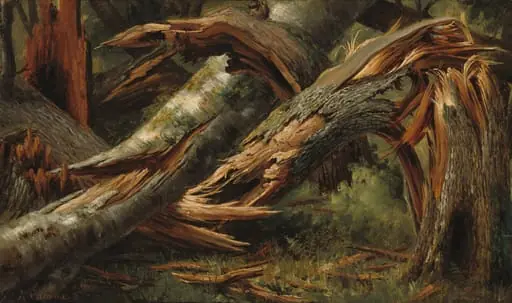
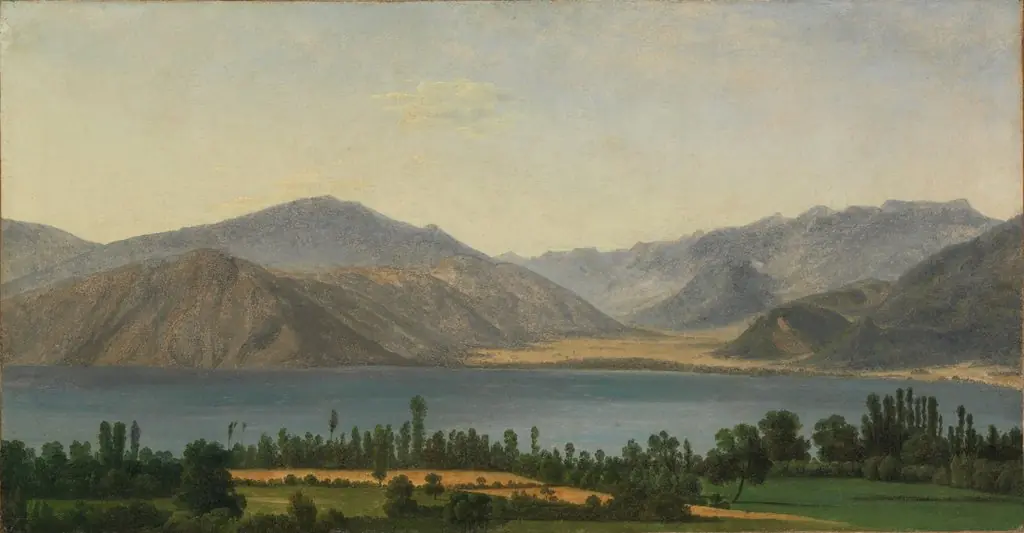 Lake Fucino and the Abruzzi Mountains
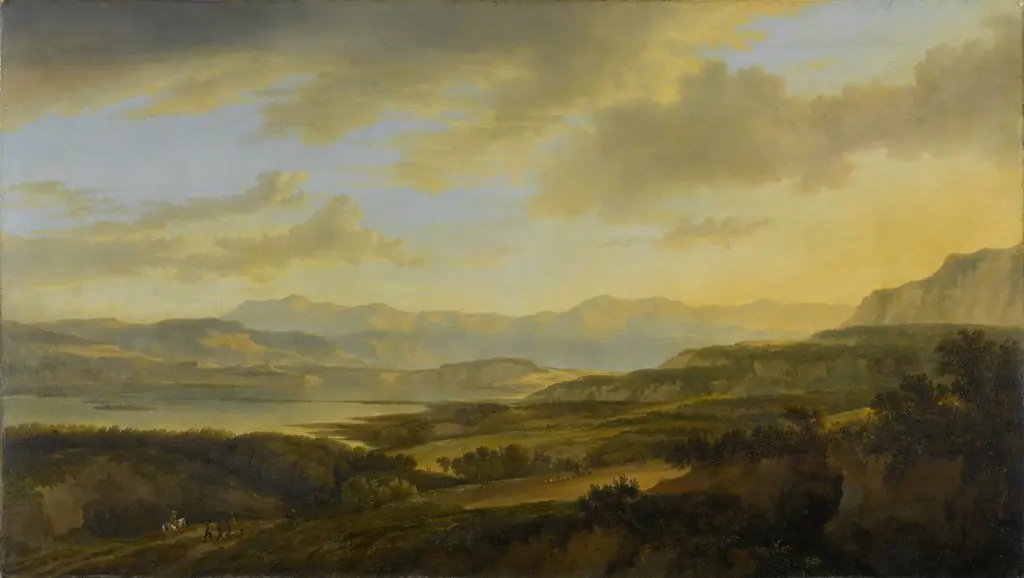 The Lake of Zurich
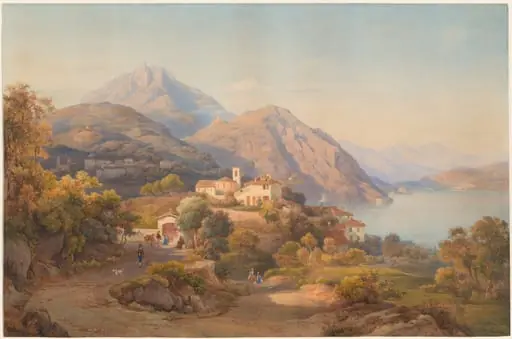 A Summer Evening at the Lago Maggiore
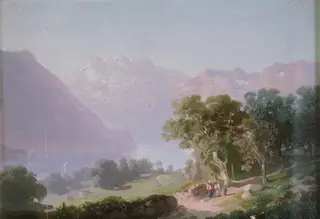 Mountain landscape II
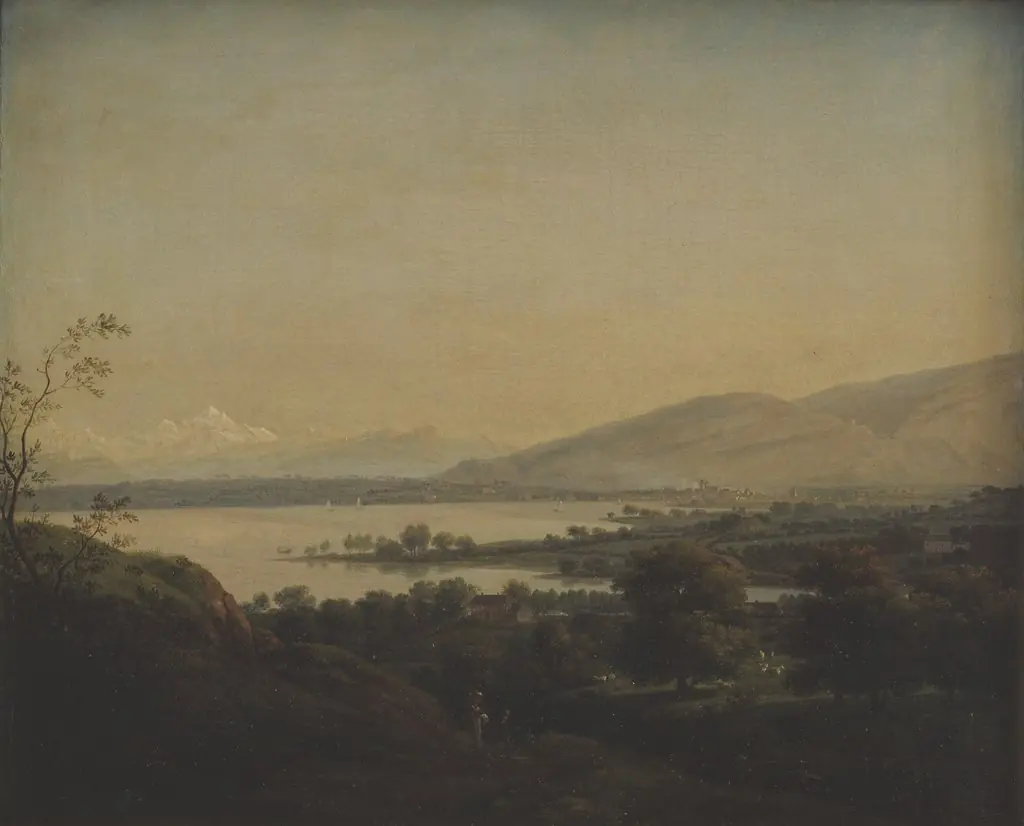 A View Across Lake Leman Towards Mont Blanc and Geneva
 A View Across Lake Leman Towards Mont Blanc and Geneva
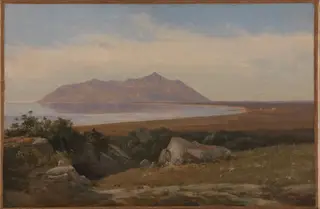 Monte Circeo Seen from the District of Terracina
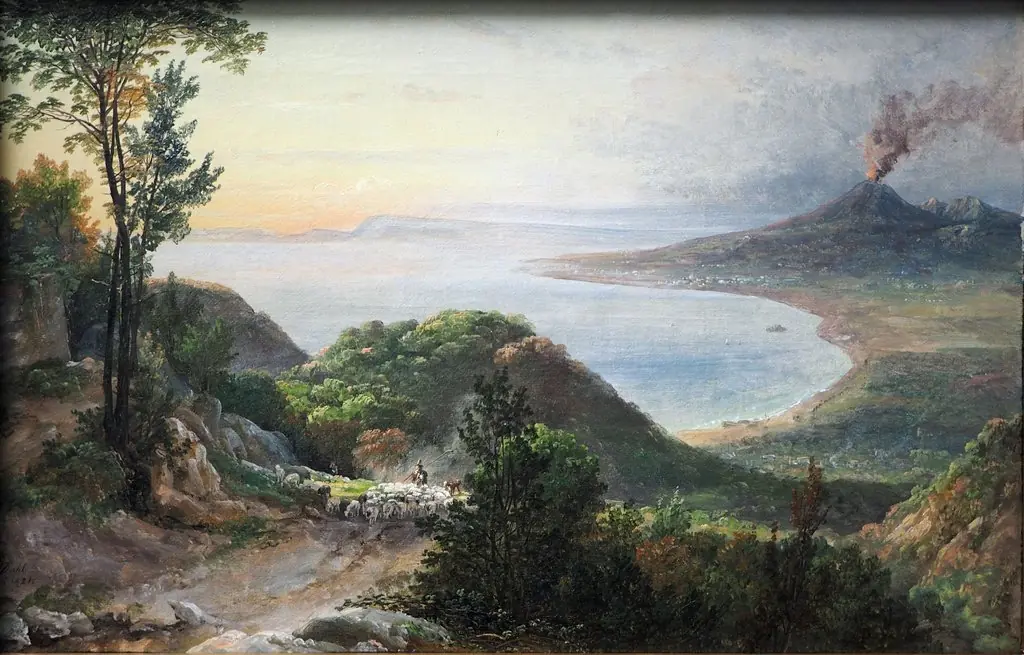 Blick von Pimonte auf die Bucht von Neapel
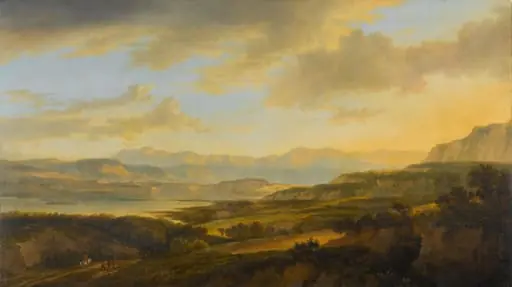 Het meer van Zürich
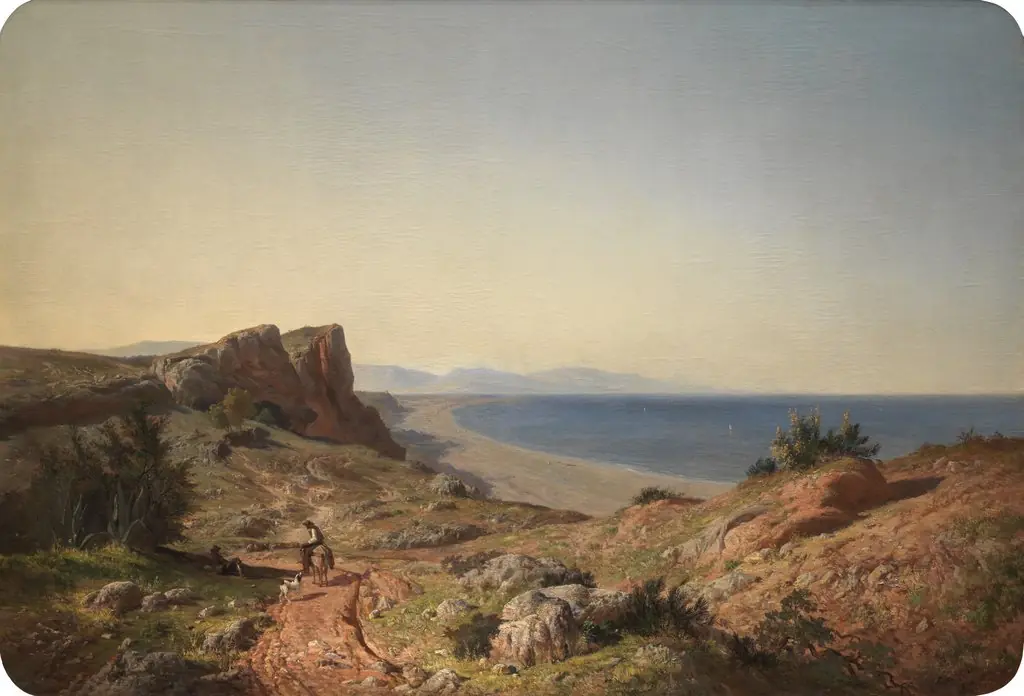 A Landscape. Recollections of Andalusia: the Mediterranean coast near Torremolinos
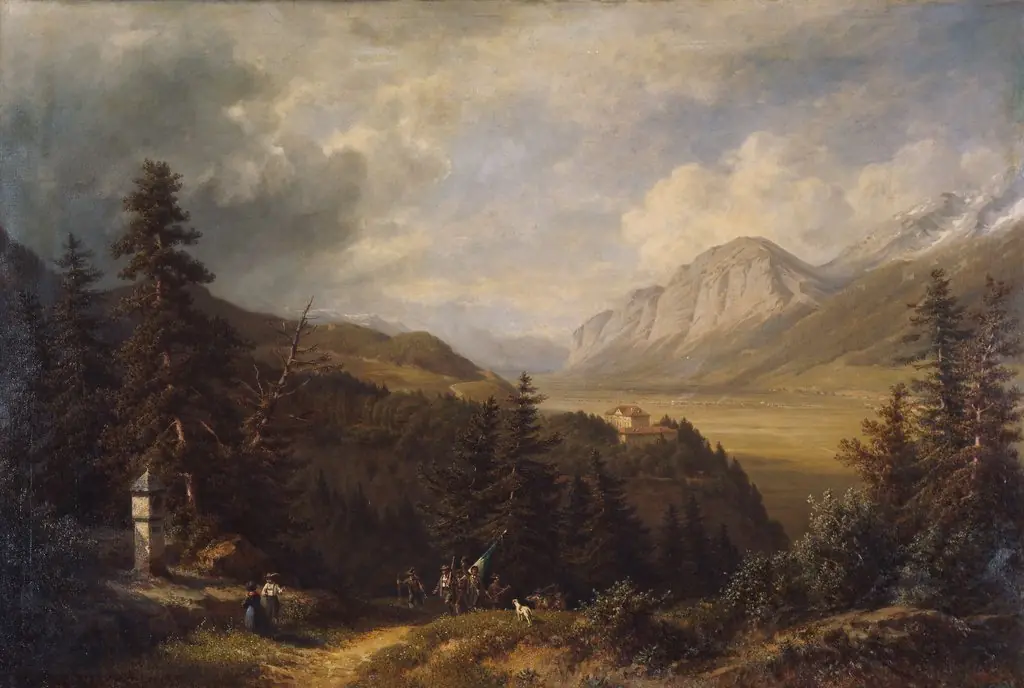 Bergisel
- Landscape, Switzerland