Artwork
Fallen Tree
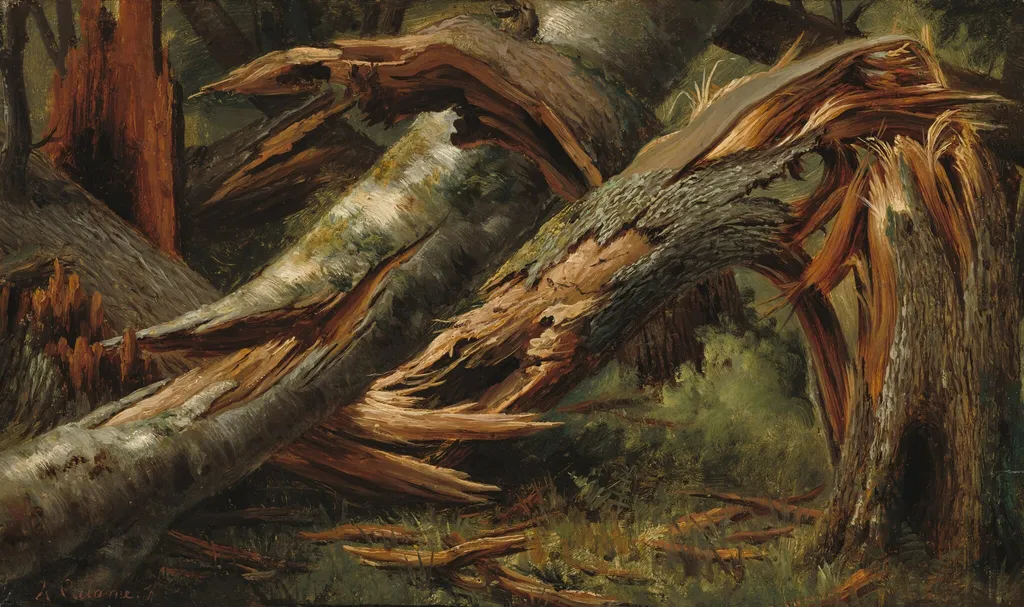
Fallen Tree is an oil painting by the Barbizon school artist Alexandre Calame. It dates from 1842 and is held in the collection of the National Gallery of Art.
- Inscription
- Inscribed:lower left: A. Calame. [?]; on stretcher: Calame
About this work
Technique & Style
This technical approach aligns with the artist's broader practice of rendering alpine environments with both scientific observation and romantic sensibility.
Fallen Tree is an oil painting executed on paper affixed to canvas, a technique documented in its provenance and cataloging. The work measures 25 cm in height by 41 cm in width, reflecting its physical dimensions as recorded in institutional catalogs. It is classified as a painting within the corpus and holds a documented provenance tracing from private collectors to a 1997 gift to the National Gallery of Art.
The piece is part of the National Gallery of Art's collection in Washington, D.C., where it remains on view.
The artwork exemplifies 19th-century Swiss landscape painting through its compositional focus on natural decay and atmospheric depth. Its formal qualities include layered application of oil medium creating textured surfaces that interact with the underlying paper support, demonstrating deliberate handling of materials to achieve tonal gradations. This technical approach aligns with the artist's broader practice of rendering alpine environments with both scientific observation and romantic sensibility.
History & Provenance
Fallen Tree is an oil painting on paper on canvas by Alexandre Calame, created in 1842. The work entered the National Gallery of Art collection through a gift in 1997 from Ivan E. Phillips, who had acquired it from David and Constance Yates in New York. Prior to this, it was held by Ivan E. Phillips in Bedford, New York.
The painting is part of the National Gallery of Art's collection in Washington, D.C., where it remains on view.
The provenance chain begins with David and Constance Yates, followed by Ivan E. Phillips, and culminates in its donation to the National Gallery of Art in 1997.
Alexandre Calame's painting Fallen Tree, created in 1842, is held in the collection of the National Gallery of Art in Washington, D.C. The work entered the museum's holdings in 1997 as a gift from Ivan E. Phillips of Bedford, New York. Prior to this donation, the painting was part of the private collection of Ivan E. Phillips and previously belonged to David and Constance Yates in New York. The National Gallery of Art lists the work under its accession records as a significant example of the artist's landscape oeuvre.
Overview
Alexandre Calame’s 1842 work titled Fallen Tree is executed in oil on paper affixed to canvas. The composition centers on a solitary tree that has been knocked down, its trunk and broken limbs sprawled across the ground. The piece captures a moment of natural disruption, emphasizing the exposed roots and the weathered bark of the fallen specimen.
Subject & Meaning
The painting presents a lone tree stripped of its upright stature, its twisted branches and rugged bark rendered in muted browns, greys and greens. By focusing on the tree’s vulnerability and the rawness of its exposed roots, Calame invites contemplation of nature’s cycles of growth, decay and renewal, themes common to mid‑nineteenth‑century landscape art.
Own this work as a print
Artist & collection

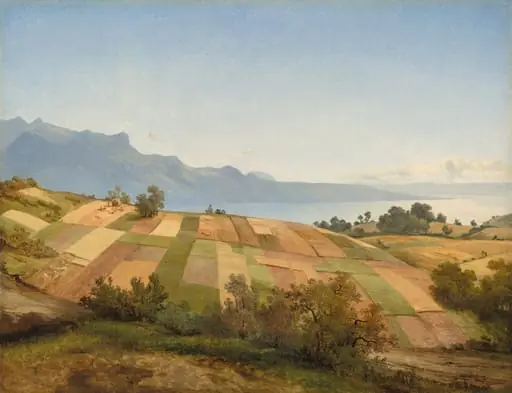
- Volhynian Forest
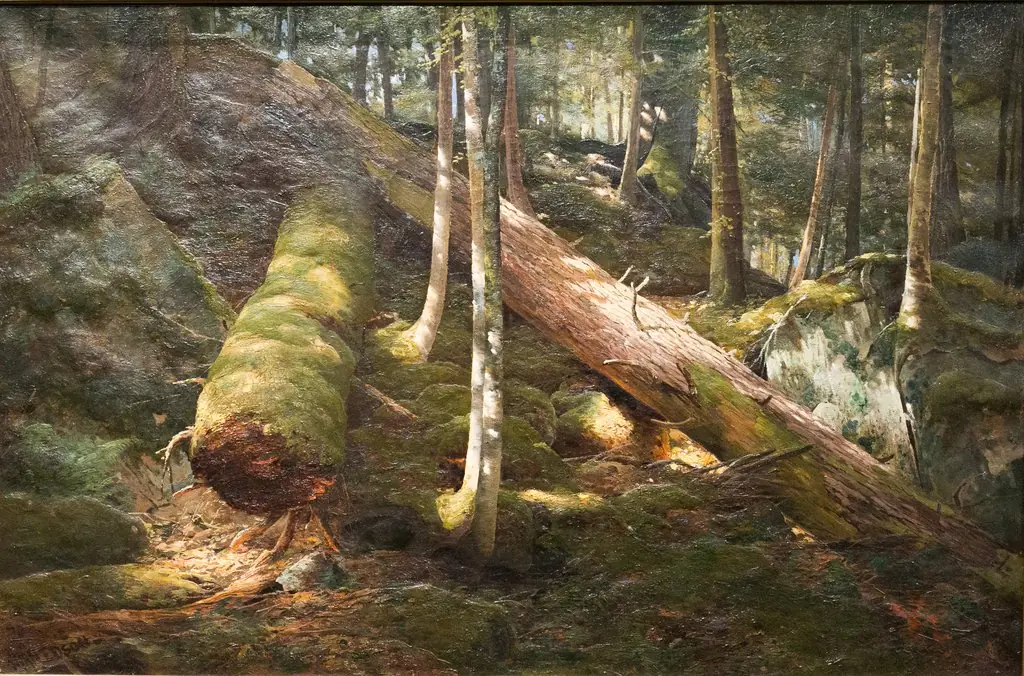 Primeval Forest
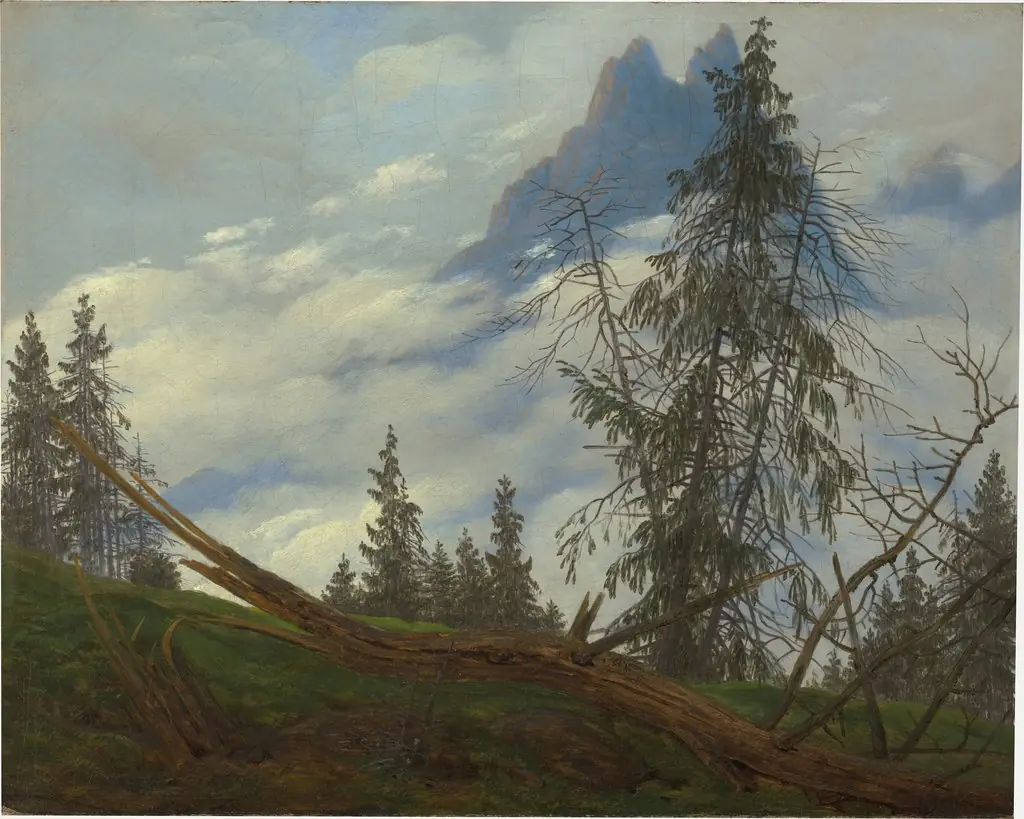 Mountain Peak with Drifting Clouds
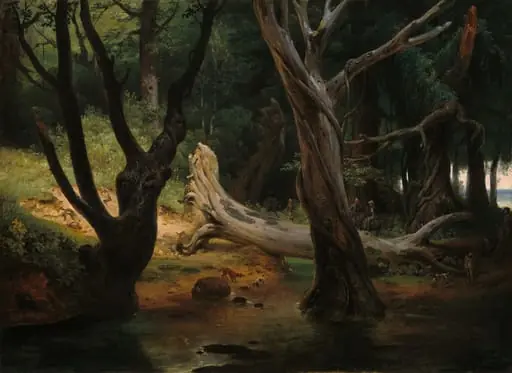 Departure for the Hunt in the Pontine Marshes
 Sammaleinen kallio metsässä
 Rocher couvert de mousses et troncs d'arbres abattus
 Birch Tree in a Storm
 Forest in the Morning Light
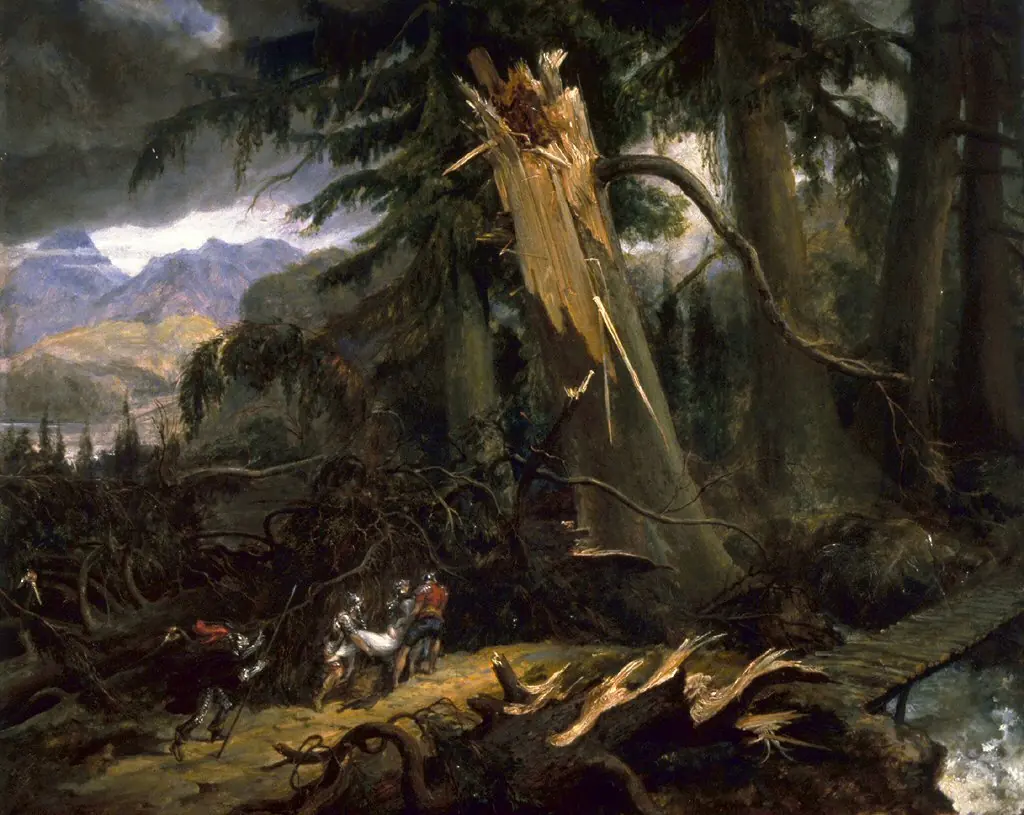 After the Storm
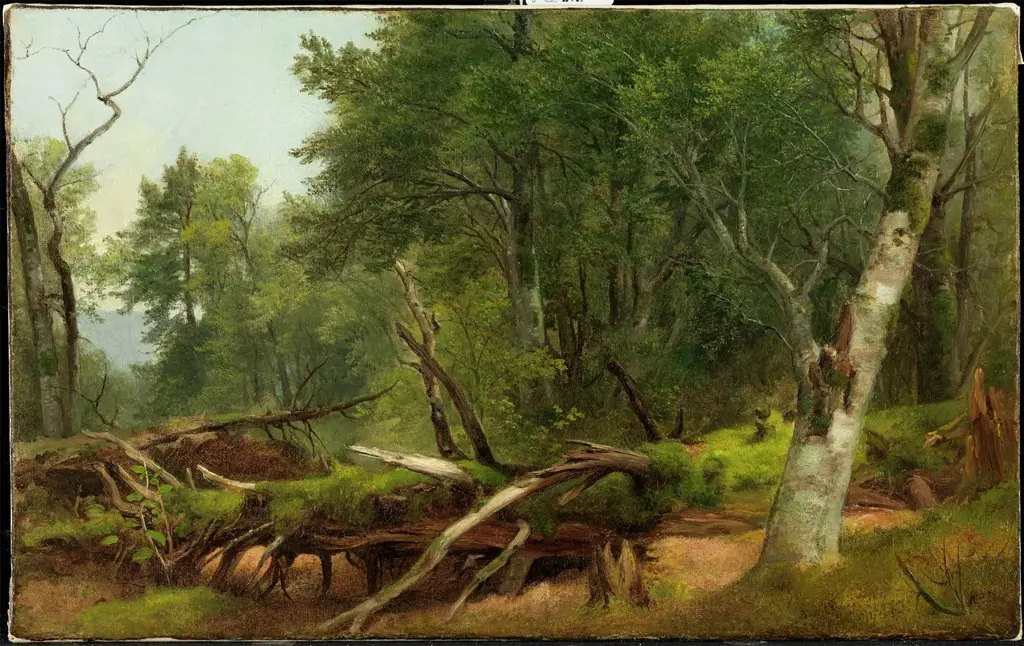 Forest Scene in the Catskills
 Blasted Tree
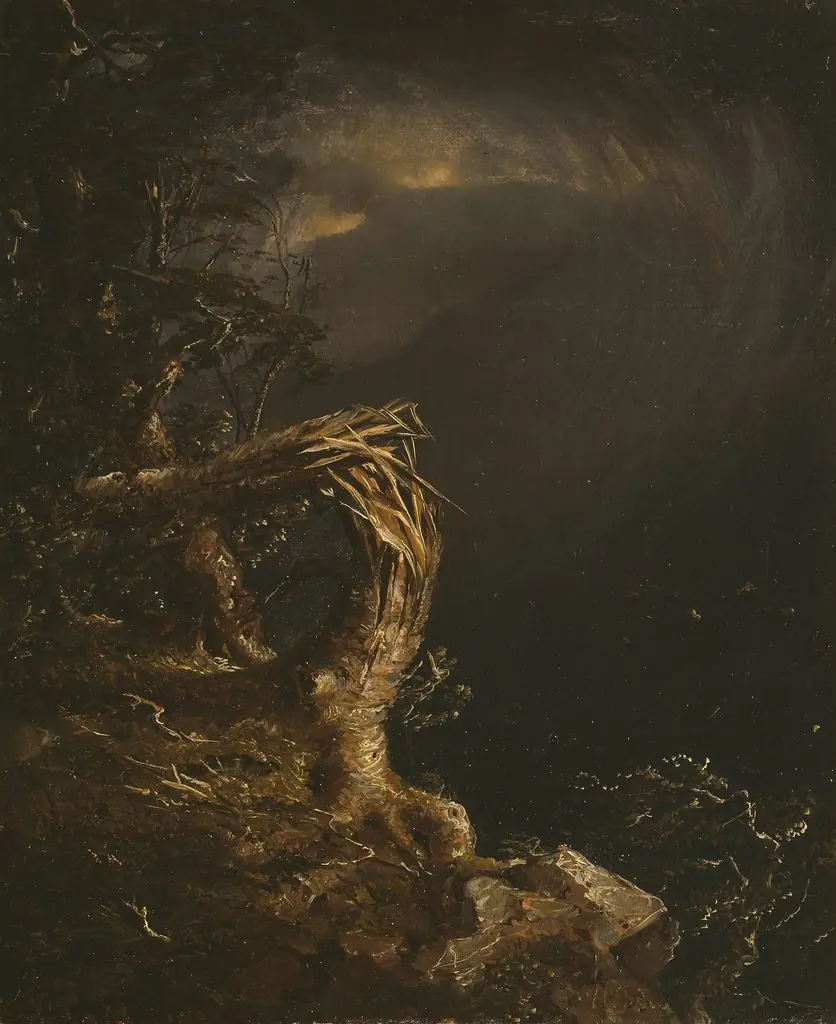 Blasted Tree