Artwork
Embarkation at Genoa
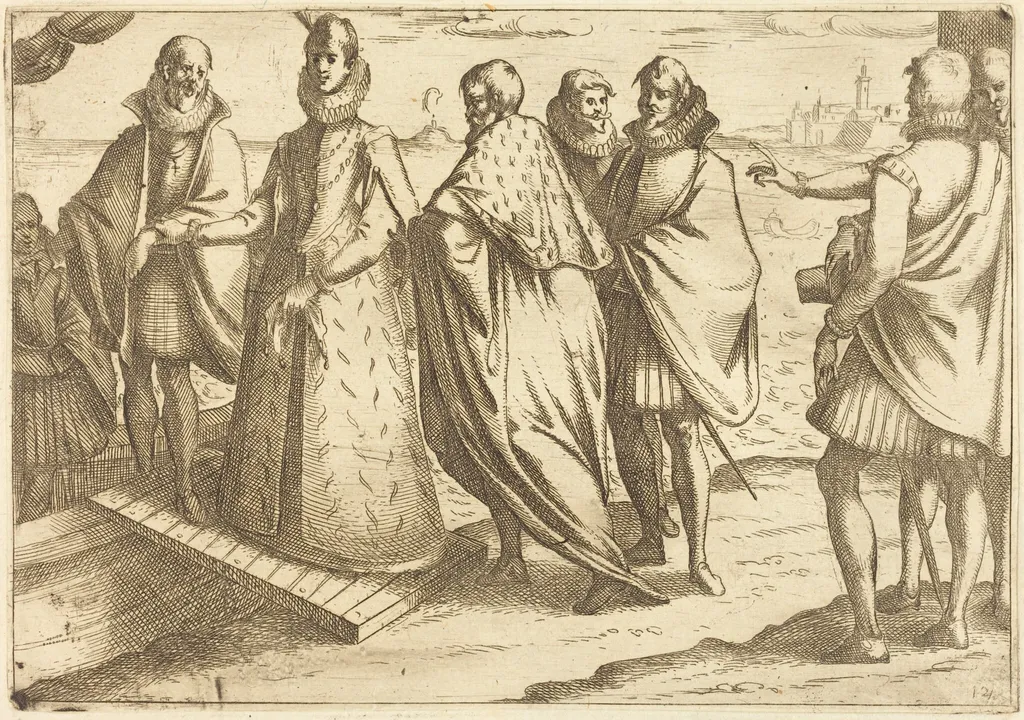
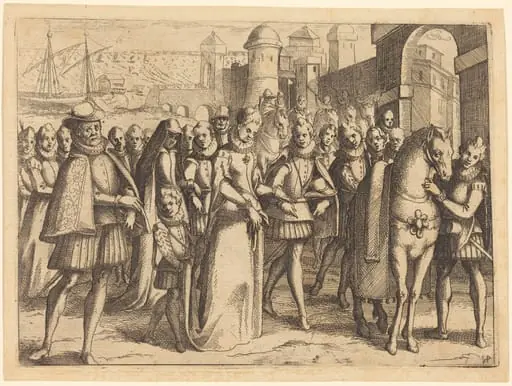
Embarkation at Genoa is an ink print by the Baroque artist Jacques Callot. It dates from 1612 and is held in the collection of the National Gallery of Art.
About this work
Overview
This particular plate captures a bustling scene of departure from the port of Genoa, foregrounding a crowd of travelers against a distant cityscape and the sea.
Jacques Callot’s Embarkation at Genoa is an early‑date etching, executed in 1612 on laid paper. The work belongs to Callot’s prolific print output, which exceeds fourteen hundred images documenting a wide range of seventeenth‑century subjects. This particular plate captures a bustling scene of departure from the port of Genoa, foregrounding a crowd of travelers against a distant cityscape and the sea.
Subject & Meaning
The composition depicts a heterogeneous group of figures boarding a vessel, their garments ranging from simple cloaks to elaborate hats, suggesting a mix of social ranks. By focusing on the act of embarkation, Callot records a moment of civic and commercial activity, emphasizing the collective movement and the transient nature of travel in a maritime hub.
Technique & Style
Callot employs fine, cross‑hatching and varied line work to render texture in clothing, ship rigging, and water. The contrast of light and shadow creates a sense of depth, while the dynamic poses of the figures convey motion. The etching’s baroque sensibility is evident in its dramatic chiaroscuro and the energetic arrangement of the crowd.
History & Provenance
First printed in the early 1610s, the plate was later re‑struck, a common practice for popular images in Callot’s workshop. Surviving impressions have passed through several European collections, appearing in catalogues of Baroque prints before entering museum holdings in the twentieth century.
Context
Callot worked in the Duchy of Lorraine, a region exposed to both French and Italian influences. His prints often combined detailed landscape backgrounds with narrative scenes of everyday life, reflecting the baroque interest in realism and theatricality. Embarkation at Genoa aligns with his broader interest in documenting contemporary urban and military events.
Legacy
The etching contributed to Callot’s reputation as a chronicler of early modern society and influenced later printmakers who sought to blend documentary detail with expressive composition. Its study offers insight into the visual culture of Mediterranean ports and the technical possibilities of early seventeenth‑century etching.
Own this work as a print
Artist & collection
Artist
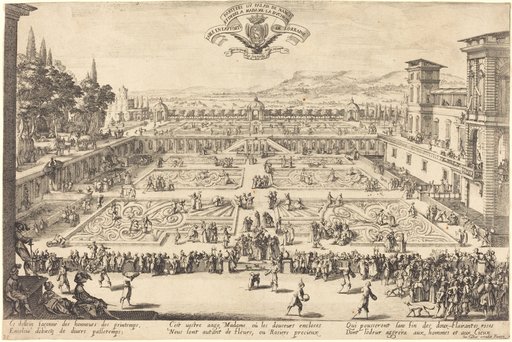
Jacques Callot (French: ; c. 1592 – 1635) was a baroque printmaker and draftsman from the Duchy of Lorraine. He is an important person in the development of the old master print. He made more than 1,400 etchings that…

 Holy Family at supper
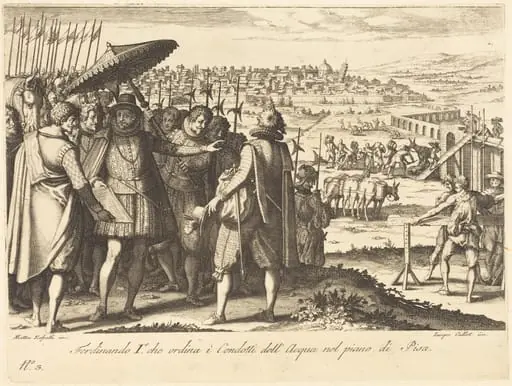 Restoration of the Aqueduct at Pisa
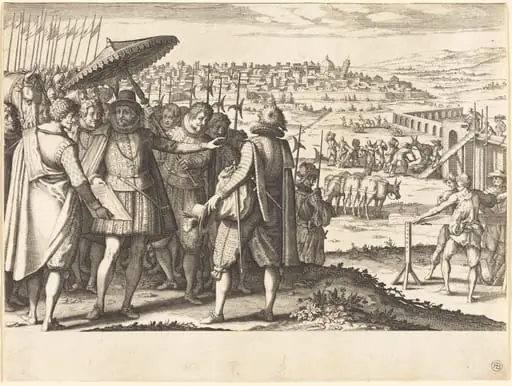 Restoration of the Aqueduct at Pisa
 Square in Paris with Many Figures
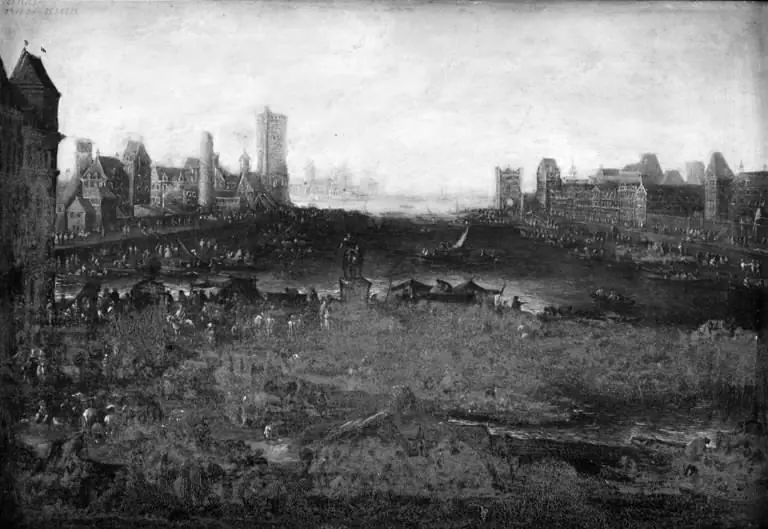 Square in Paris with Many Figures
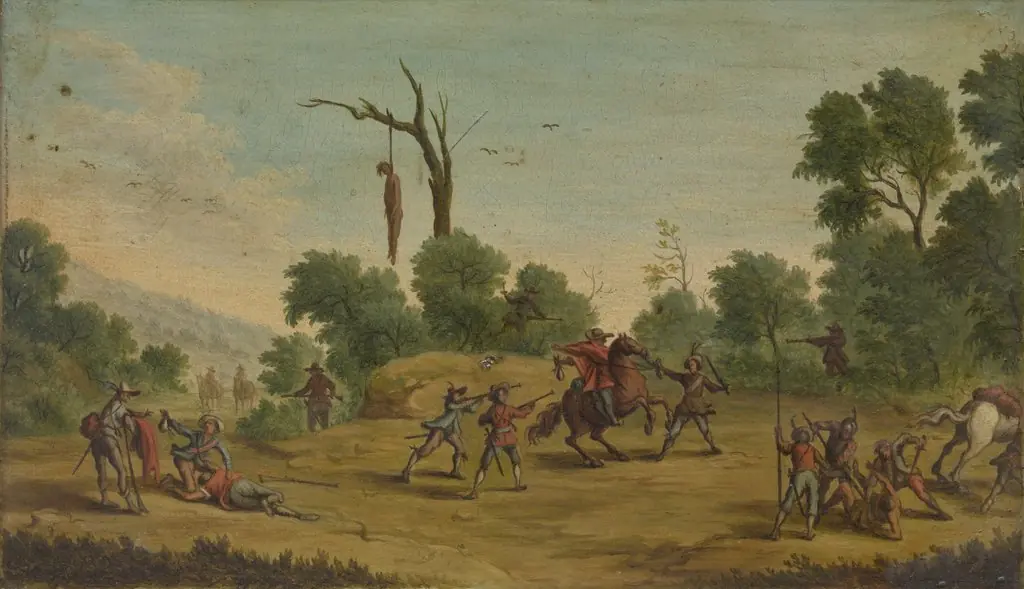 Horsemen Attacked by Robbers
 HOW WILL A COVERED PART BE CORRECTED?HOW WIKA A COVERED HEART DEED CORRECTED?
![Christ Walking on the Water [second plate], by Jacques Callot](https://artifactworldgallery.com/img/jacques-callot--christ-walking-on-the-water-second-plate--2069f3bfe4cb2126-w320.webp) Christ Walking on the Water [second plate]
Christ Walking on the Water [second plate]
![Embarkation at Genoa [recto], by Jacques Callot](https://artifactworldgallery.com/img/jacques-callot--embarkation-at-genoa-recto--1268aacde904a48c-w320.webp)
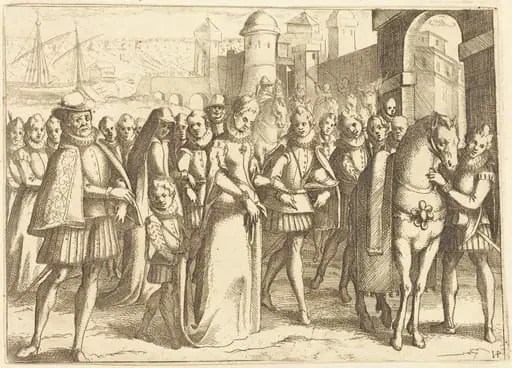
![Arrival at Valencia [recto], by Jacques Callot](https://artifactworldgallery.com/img/jacques-callot--arrival-at-valencia-recto--71b2dc540ea6bc48-w320.webp)