Artwork
The Apostle Peter
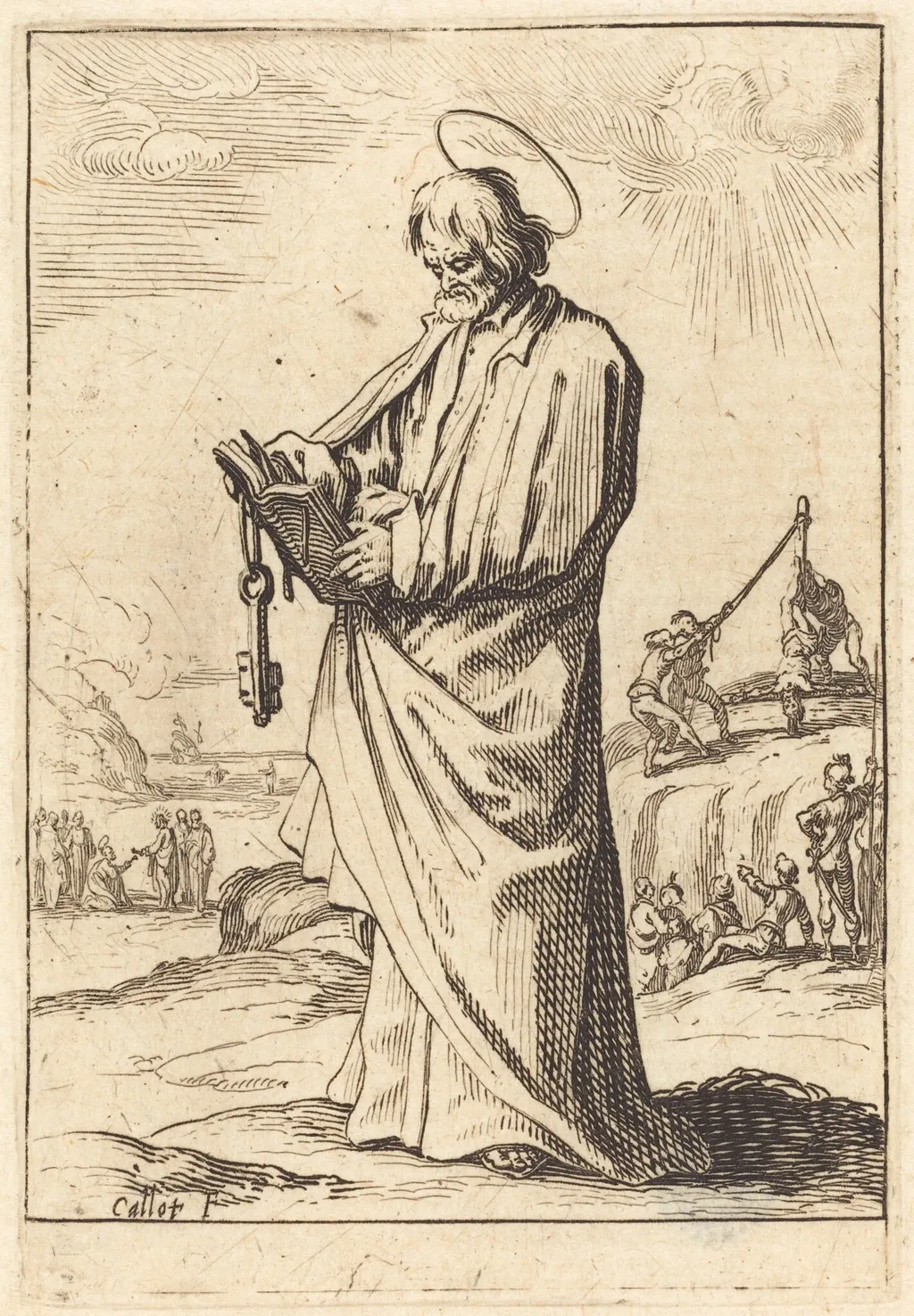
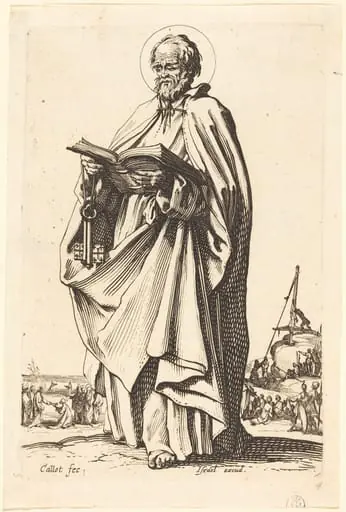
The Apostle Peter is an ink print by the Renaissance artist Jacques Callot. It dates from 1626 and is held in the collection of the National Gallery of Art.
About this work
Overview
Created around 1626, this etching depicts the apostle Peter holding a set of keys, a traditional symbol of his authority. The figure stands solemnly beneath a halo, set against a rocky shoreline where other figures attend to a boat. The composition combines a central religious portrait with a broader narrative landscape.
Subject & Meaning
Peter is presented as an elder in a long robe, the keys emphasizing his role as the keeper of heaven’s gates. The surrounding group on the shore and the laborers on the vessel suggest the spread of the early Christian community and the ongoing work of the Church beyond the saint’s singular authority.
Technique & Style
The image was produced by etching a metal plate, allowing Callot to render fine, incisive lines that model light and shadow with dramatic contrast. His handling of line creates a sense of depth in the background while maintaining crisp detail in the figures, reflecting the baroque emphasis on movement and chiaroscuro.
History & Provenance
Jacques Callot, a prolific printmaker from the Duchy of Lorraine, created more than 1,400 prints during his career, ranging from religious subjects to depictions of soldiers, court life, and marginal figures. This work exemplifies his capacity to integrate detailed human forms within expansive settings, a hallmark of his extensive oeuvre.
Own this work as a print
Artist & collection
Artist
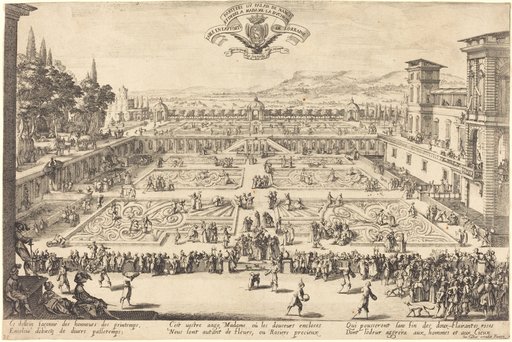
Jacques Callot (French: ; c. 1592 – 1635) was a baroque printmaker and draftsman from the Duchy of Lorraine. He is an important person in the development of the old master print. He made more than 1,400 etchings that…

 Holy Family at supper
 Restoration of the Aqueduct at Pisa
 Restoration of the Aqueduct at Pisa
 Square in Paris with Many Figures
 Square in Paris with Many Figures
 Horsemen Attacked by Robbers
 HOW WILL A COVERED PART BE CORRECTED?HOW WIKA A COVERED HEART DEED CORRECTED?
![Christ Walking on the Water [second plate], by Jacques Callot](https://artifactworldgallery.com/img/jacques-callot--christ-walking-on-the-water-second-plate--2069f3bfe4cb2126-w320.webp) Christ Walking on the Water [second plate]
Christ Walking on the Water [second plate]