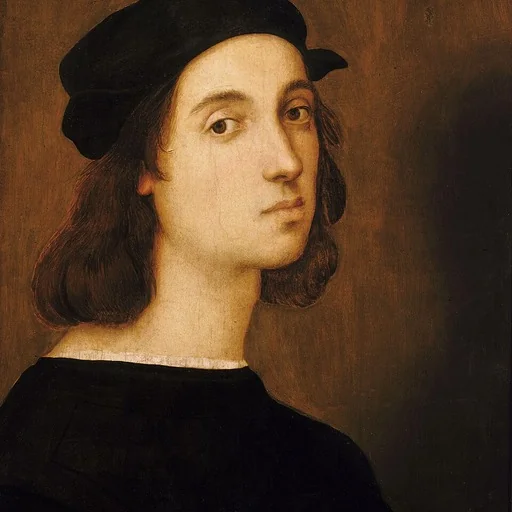
Subject
Halo
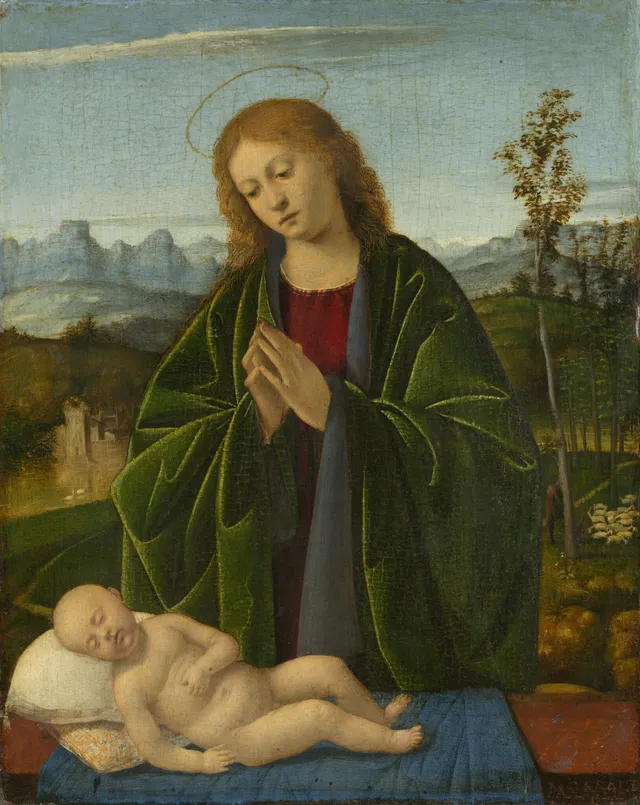
Halo is a subject in art. The gallery holds 81 works in this subject in art, including works by Raphael, El Greco and Peter Paul Rubens.
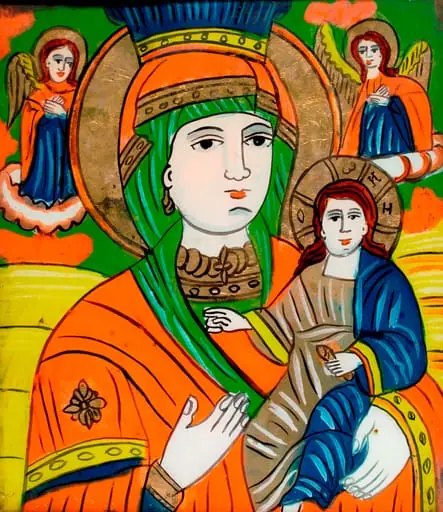
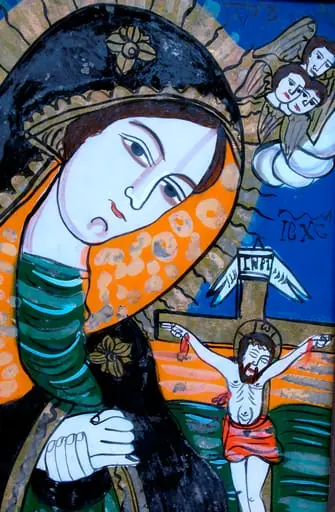
The halo, or nimbus, is a disk or ring of light encircling the head of a sacred or eminent figure to signify holiness, divine radiance, or sovereign power. Its origins are pre-Christian: in the Hellenistic and Roman worlds a radiate nimbus marked solar deities such as Helios and divinized rulers, while in the East the rulers of the Kushan Empire were among the first to crown themselves with haloes on their coinage. Many scholars locate the motif's spread in Central Asia, whence it travelled the Silk Roads in both directions—appearing in the Buddhist art of India by the late 3rd century CE and reaching China by the 400s.
Christian art absorbed the device in the 4th century, with the earliest iconic images of Christ; artists were at first wary of its pagan associations, but by the 6th century it was firmly established. A precise vocabulary of forms followed: the plain circular nimbus for saints and angels; the cruciform halo, bearing a cross and (in Byzantine usage) the Greek letters Ὁ Ὤ Ν, "the Being," reserved for Christ; and the mandorla, an almond-shaped aureole of full-body radiance enclosing Christ or the Virgin in scenes of glory. Byzantine and medieval painters rendered these in burnished gold leaf, whose reflectance lent figures an otherworldly shimmer.
The naturalism of the Italian Renaissance turned the halo into a problem of representation. Giotto and his successors struggled to reconcile a flat golden disk with figures set in convincing three-dimensional space. Florentine painters reimagined it as a solid object seen in perspective—Masaccio and Piero della Francesca tilting it into a foreshortened disc hovering at an angle above the head—while Fra Angelico kept gilded haloes of devotional brilliance and Leonardo reduced the form to the faintest luminous thread, as in the Virgin of the Rocks.
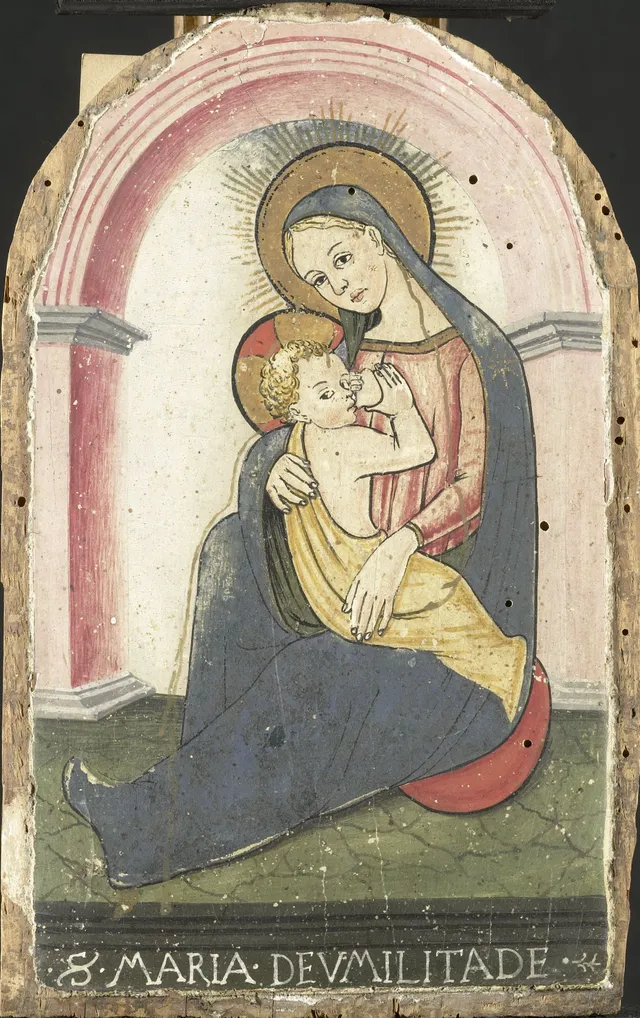
The perspectival disk ultimately proved untenable, and Michelangelo and Titian abandoned the halo in the 16th century. The Counter-Reformation revived sacred radiance in a new key, dissolving the ring into naturalistic rays of light streaming from the holy head—a Northern device of 15th-century Flemish painting taken up by late-Cinquecento Italians and the Baroque. The catalogue's holdings trace this arc, from the gilded discs of Antoniazzo Romano's Madonna and Child and Francesco del Cossa's Saint Lucy, through the gentler nimbi of Marco Basaiti and the Madonna of Humility, to the luminous, near-dissolved halation of Juan Bautista Maíno's Adoration of the Shepherds and the celestial light of Rubens's The Origin of the Milky Way.
Key artists
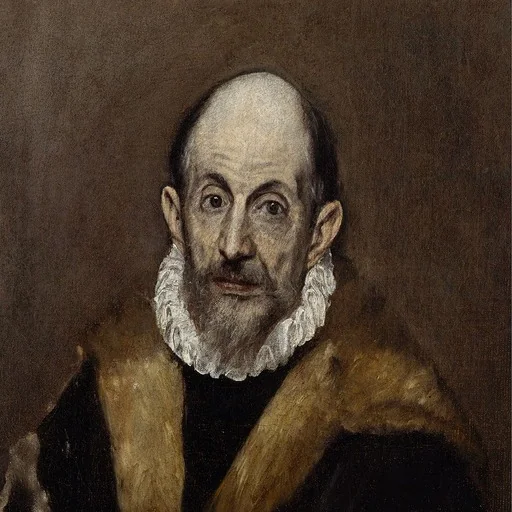
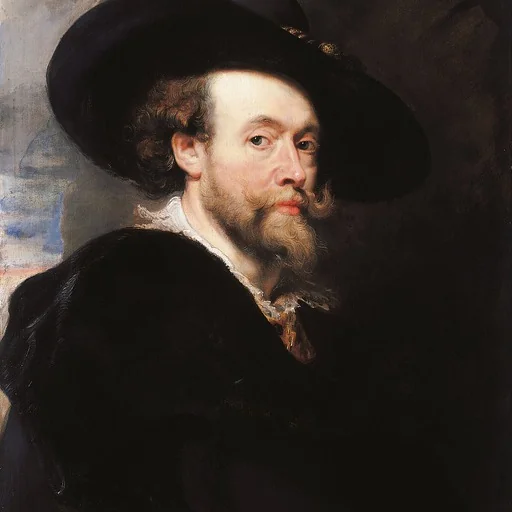

Overview
The halo is a luminous circle or disc of light surrounding the head of a sacred or holy figure in visual art. While the term is widely recognized from its use in religious painting, the sources provided here document a different subject: the Halo franchise, a military science fiction video game series and media property. The franchise, originally developed by Bungie and currently managed by Halo Studios (previously 343 Industries), part of Microsoft's Xbox Game Studios, launched in November 2001 with the first-person shooter Halo: Combat Evolved and its tie-in novel, The Fall of Reach. The series has become one of the highest-grossing media franchises of all time, with more than 81 million copies sold worldwide and over $6 billion in franchise sales, spanning novels, graphic novels, comic books, short films, animated films, feature films, and other licensed products. The name "Halo" within this franchise refers to the ring-shaped megastructures created by the ancient Forerunner civilization as weapons of last resort against the parasitic Flood.
Iconography & meaning
Within the video game franchise, the Halo structures function as the central iconographic and narrative symbol. These ring-shaped megastructures were conceived by the Forerunners as galaxy-destroying weapons designed to eliminate all sentient life and thereby starve the Flood parasite. The Covenant, a theocratic alliance of alien races, venerates these structures as instruments of transcendence rather than destruction, creating a layered symbolism around salvation and annihilation. The franchise's visual identity extends to the Master Chief's Mjolnir powered assault armor and the energy shield mechanic, which regenerates when the player avoids fire, distinguishing the series from conventional armor-pickup systems in first-person shooters. The artificial intelligence Cortana, represented as a holographic purple figure, serves as both companion and evolving antagonist, embodying themes of technological transcendence and hegemony. The Flood parasite itself functions as a visual and narrative symbol of corruption and consumption, transforming infected organisms into grotesque hive-mind creatures.
Across movements & periods
The treatment of the halo motif has shifted dramatically across periods and cultures. In traditional religious art, the halo served as a stable signifier of divinity or sanctity from late antiquity through the Renaissance and Baroque periods, as evidenced by the collection's inclusion of works such as Madonna and Child and The Presentation in the Temple. The motif persisted in Western art through devotional imagery. The contemporary Halo franchise represents a radical repurposing of the term, stripping it of religious connotation while retaining its associations with cosmic significance and existential stakes. The franchise itself has undergone significant evolution across game development eras: the original Bungie trilogy (2001-2007) established the first-person shooter foundation; the 343 Industries era beginning with Halo 4 in 2012 introduced new narrative directions including the Reclaimer Trilogy; and the 2024 rebranding to Halo Studios marked a shift away from proprietary game technology toward multi-platform availability. Spinoffs have expanded into real-time strategy (Halo Wars, 2009; Halo Wars 2, 2017), top-down shooters (Halo: Spartan Assault, 2013; Halo: Spartan Strike, 2015), and arcade formats (Halo: Fireteam Raven, 2018).
Notable depictions
The collection's notable depictions of the traditional halo include Saint Lucy, The Origin of the Milky Way, Madonna Adoring the Child, Madonna of Humility, Madonna and Child, Adoration of the Shepherds, The Agony in the Garden, Madonna Bardi, The Presentation in the Temple, and The Saints Cosmas and Damian with their Brothers before the Proconsul Lysias. Within the video game franchise, the most significant depictions are the main series entries: Halo: Combat Evolved (2001), Halo 2 (2004), Halo 3 (2007), Halo 4 (2012), Halo 5: Guardians (2015), and Halo Infinite (2021). Halo: Combat Evolved served as the Xbox's flagship launch title and "killer app," cementing Microsoft's position in the console market. Halo 3 generated $170 million in its first 24 hours, later surpassed by Halo: Reach with $200 million and Halo 4 with $220 million in equivalent periods. The franchise has also produced notable cross-media depictions including the webseries Halo 4: Forward Unto Dawn (2012), the animated anthology Halo Legends (2010), and the live-action series Halo: Nightfall (2014) produced by Ridley Scott.
Legacy
The Halo franchise's legacy encompasses multiple domains. As a commercial property, it ranks among the highest-grossing media franchises globally, with more than $6 billion in sales. Its games have sold over 81 million copies worldwide, with several titles listed among the greatest video games of all time. The series pioneered online matchmaking, social features, and video game marketing in the console space. Its sequels established benchmarks for first-person shooter design on consoles. The franchise's expansion into cross-media formats, including novels, comics, animated and live-action films, and webseries, demonstrated the viability of transmedia storytelling for video game properties. The 2011 release of Halo: Combat Evolved Anniversary marked the first major remaster in the series, timed to the tenth anniversary of the franchise. The 2014 compilation Halo: The Master Chief Collection remastered the first four mainline titles for Xbox One. The developer's 2024 rebranding from 343 Industries to Halo Studios, alongside the shift to multi-platform development, indicates ongoing evolution of the property's production and distribution model. The franchise's music, composed by Martin O'Donnell and Michael Salvatori, has also been recognized as a distinctive element of its identity.
Works
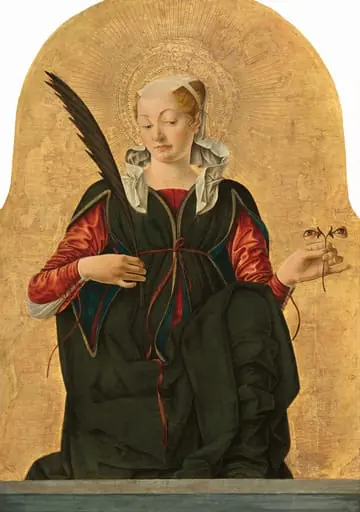 Saint Lucy
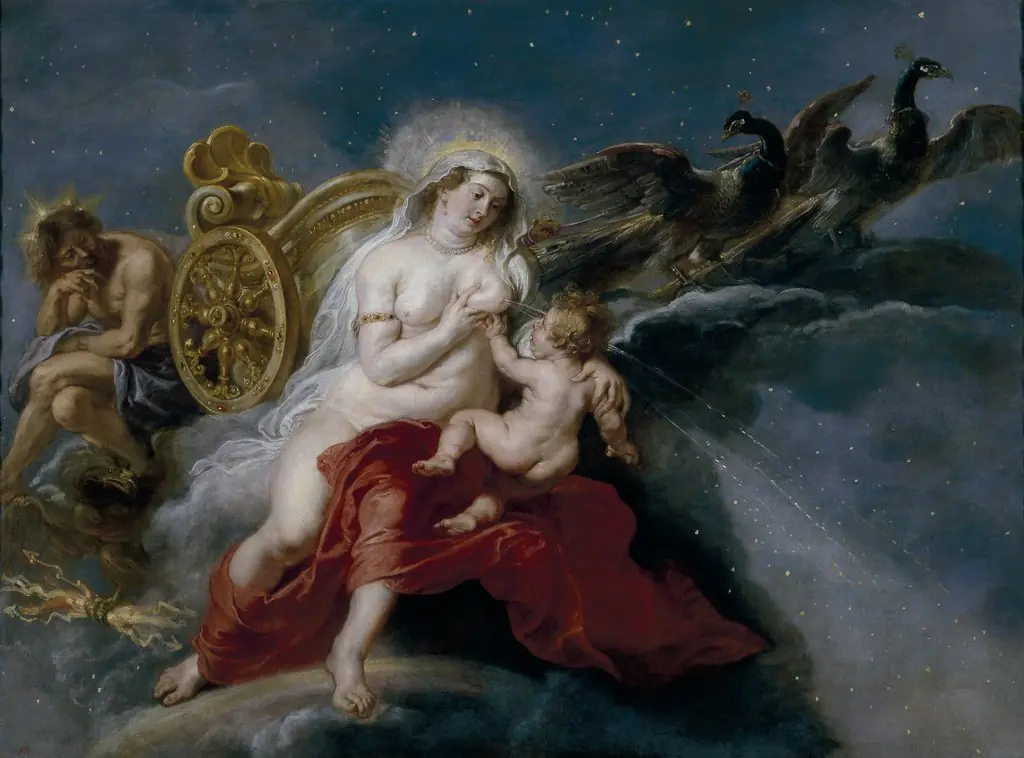 The Origin of the Milky Way
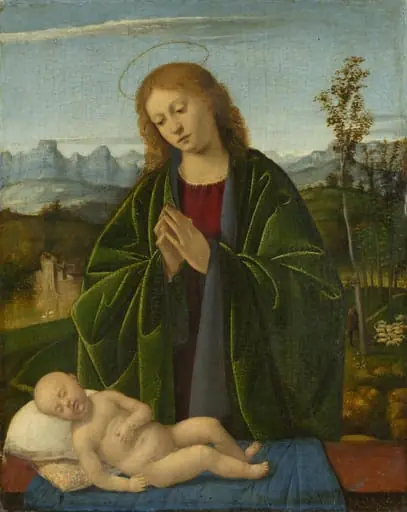 Madonna Adoring the Child
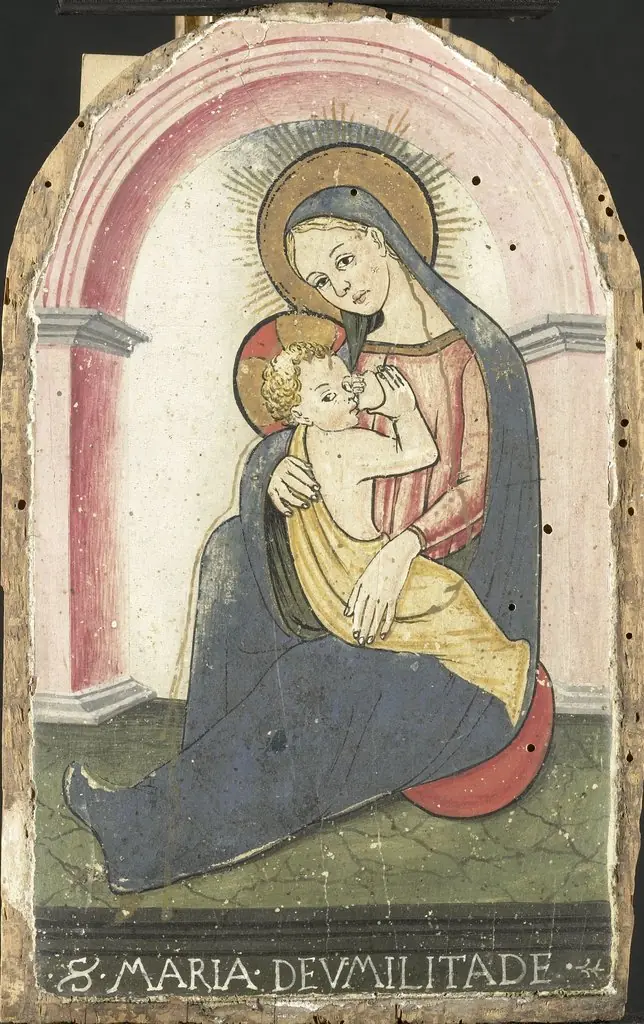 Madonna of Humility
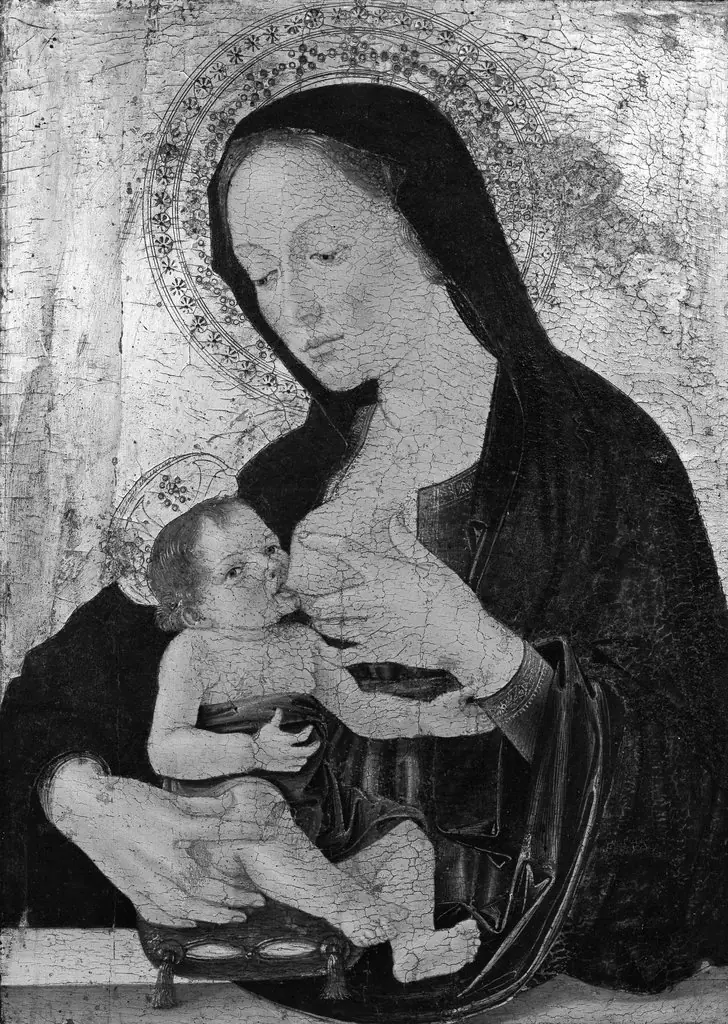 Madonna and Child
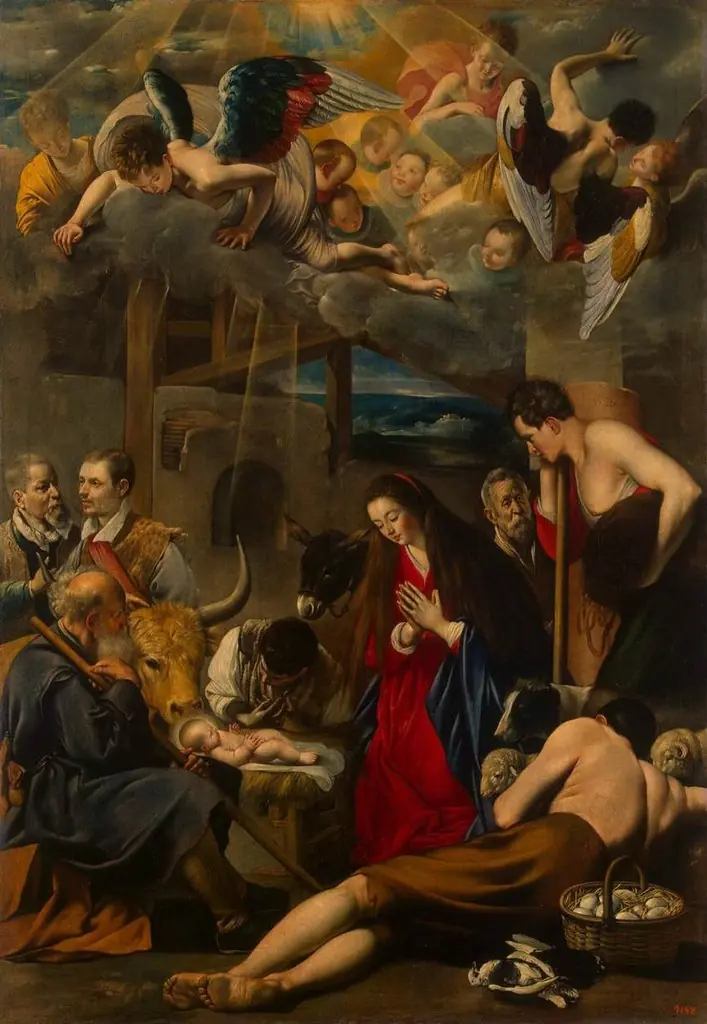 Adoration of the Shepherds
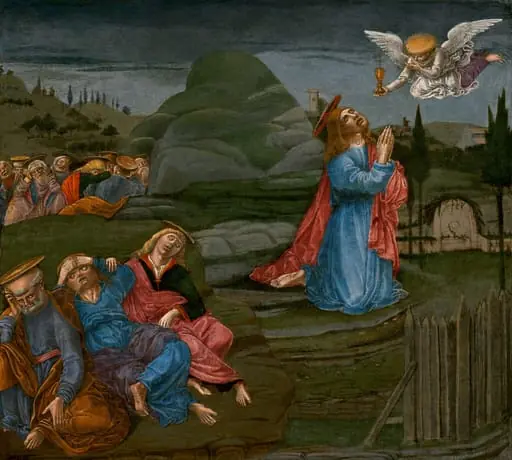 The Agony in the Garden
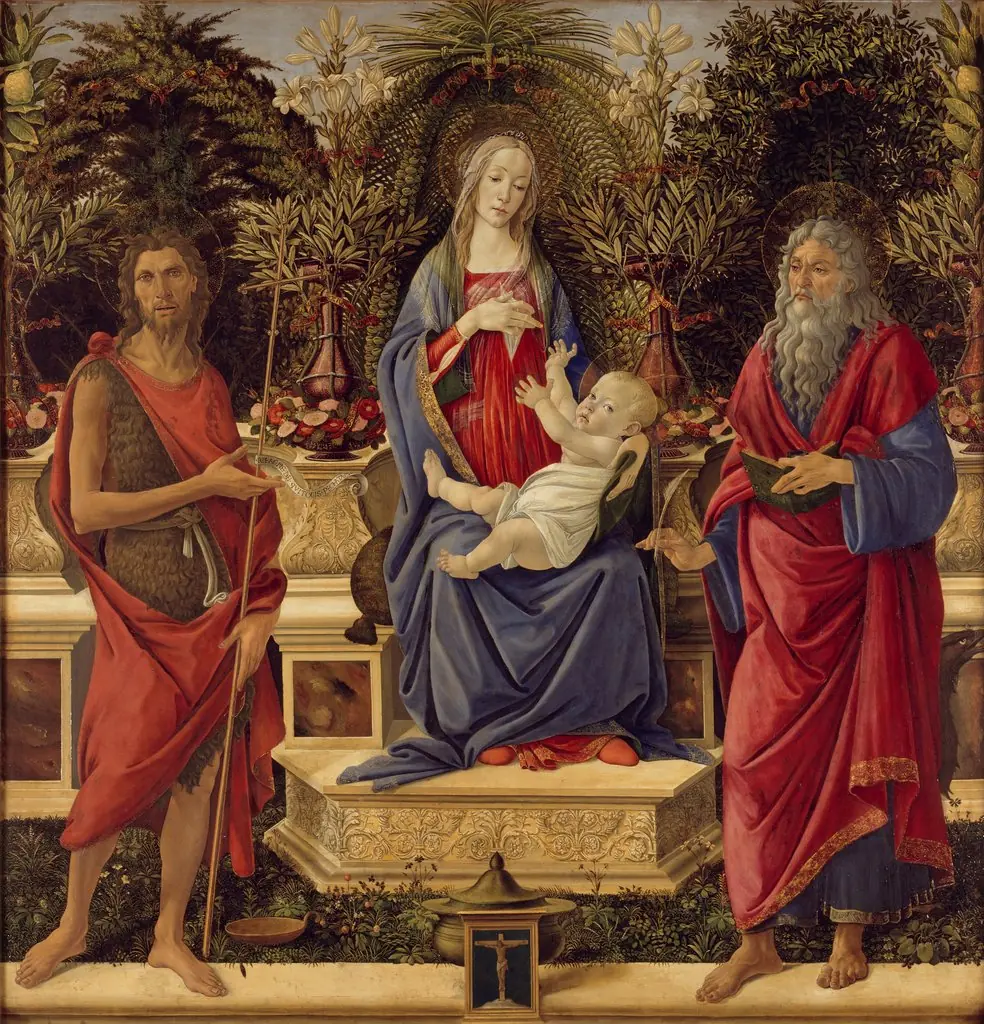 Madonna Bardi
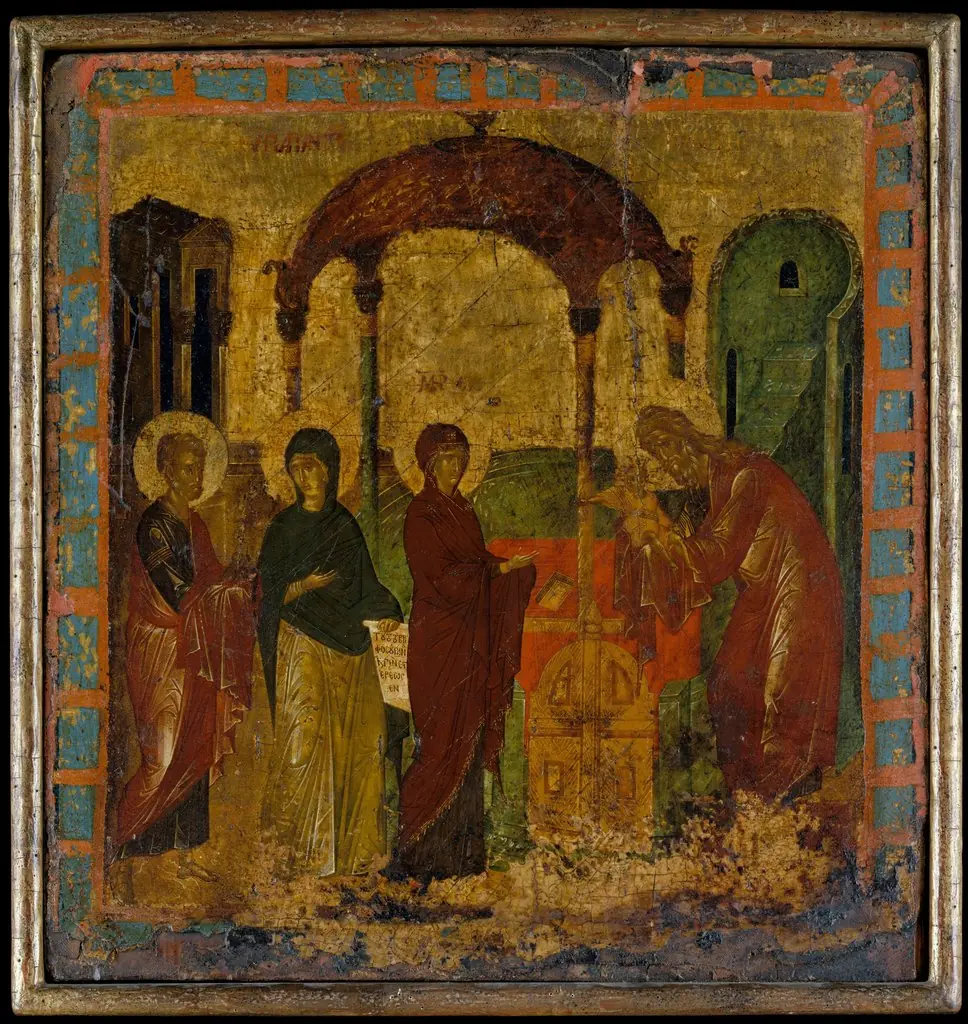 The Presentation in the Temple
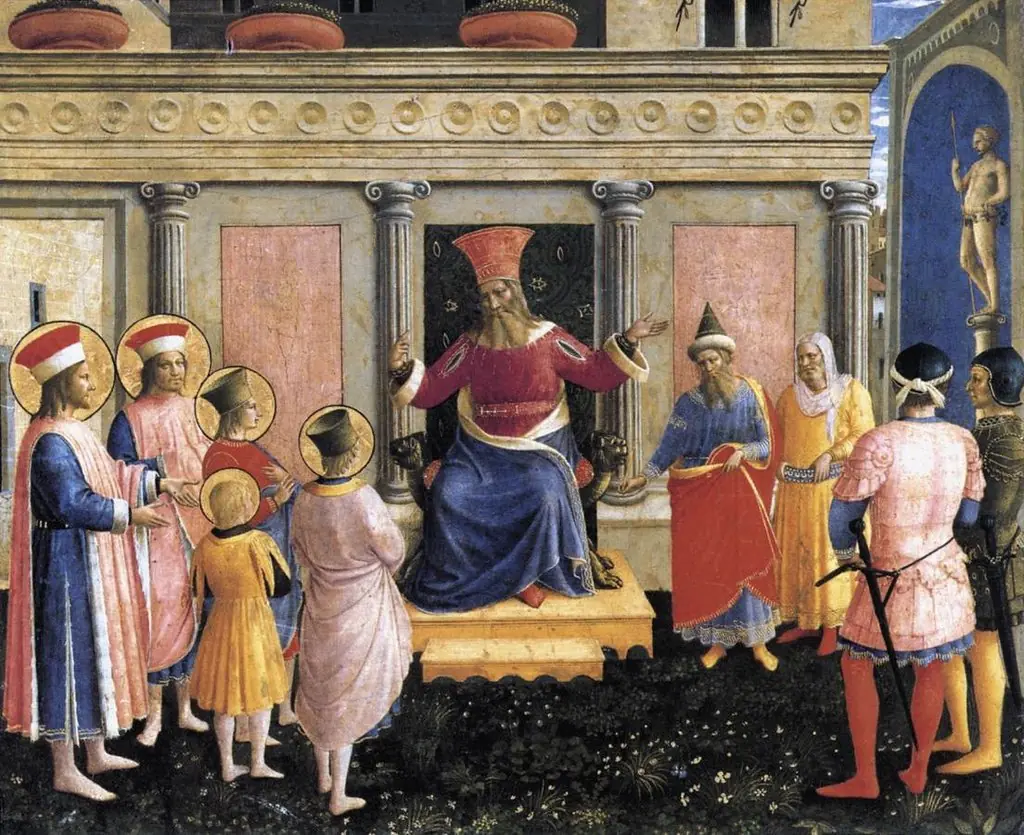 The Saints Cosmas and Damian with their Brothers before the Proconsul Lysias
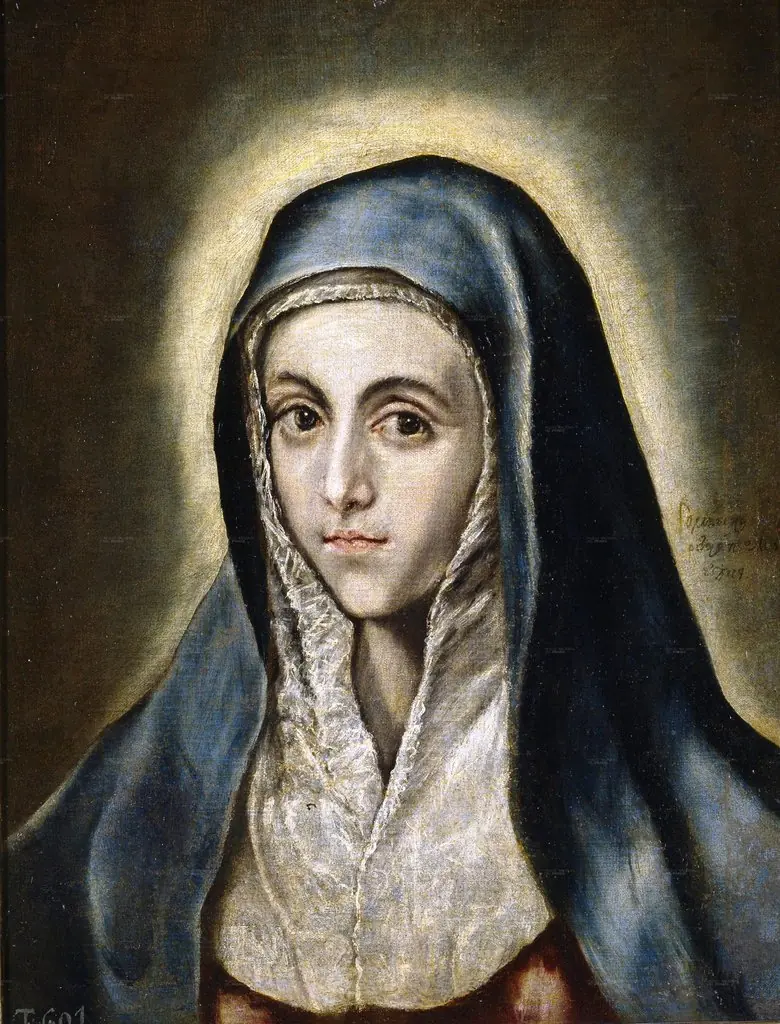 Mater dolorosa
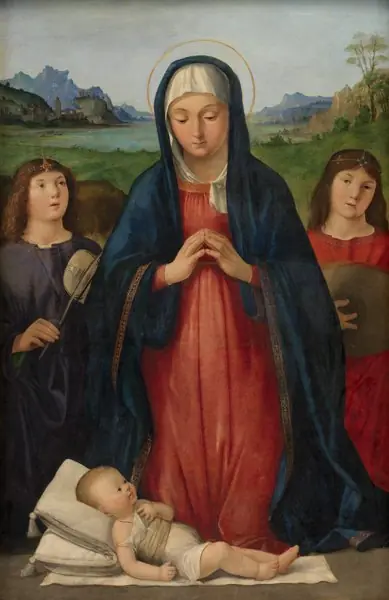 The Christ Child Worshipped by Mary
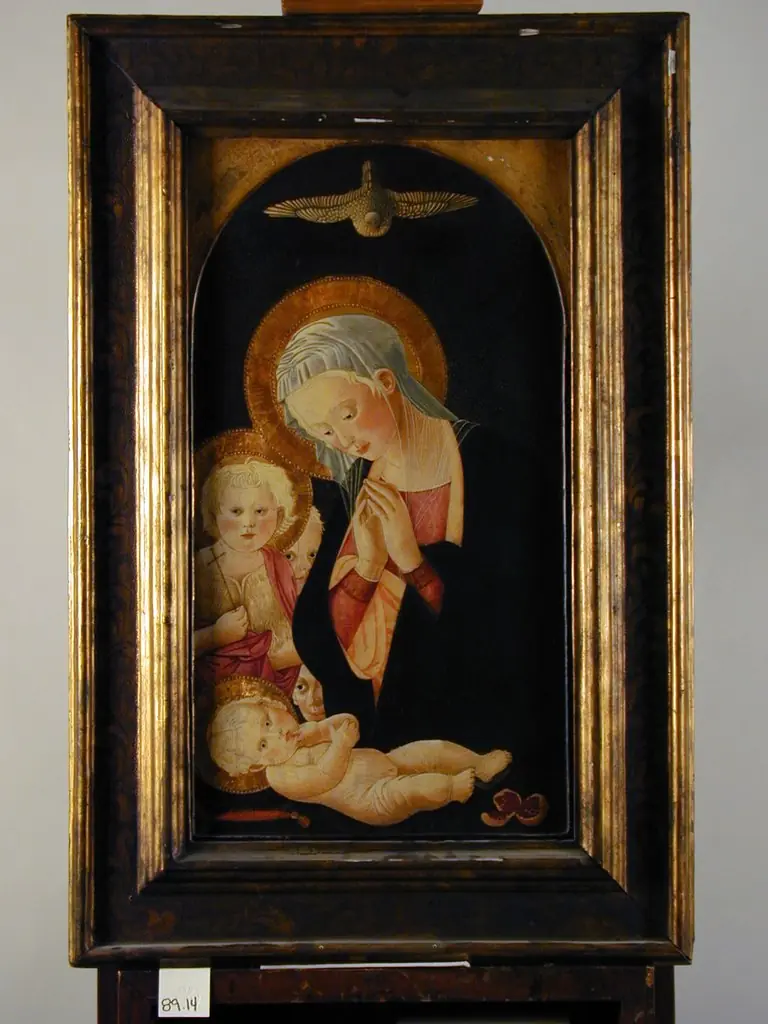 Madonna and Child with the Infant St. John the Baptist and Angels
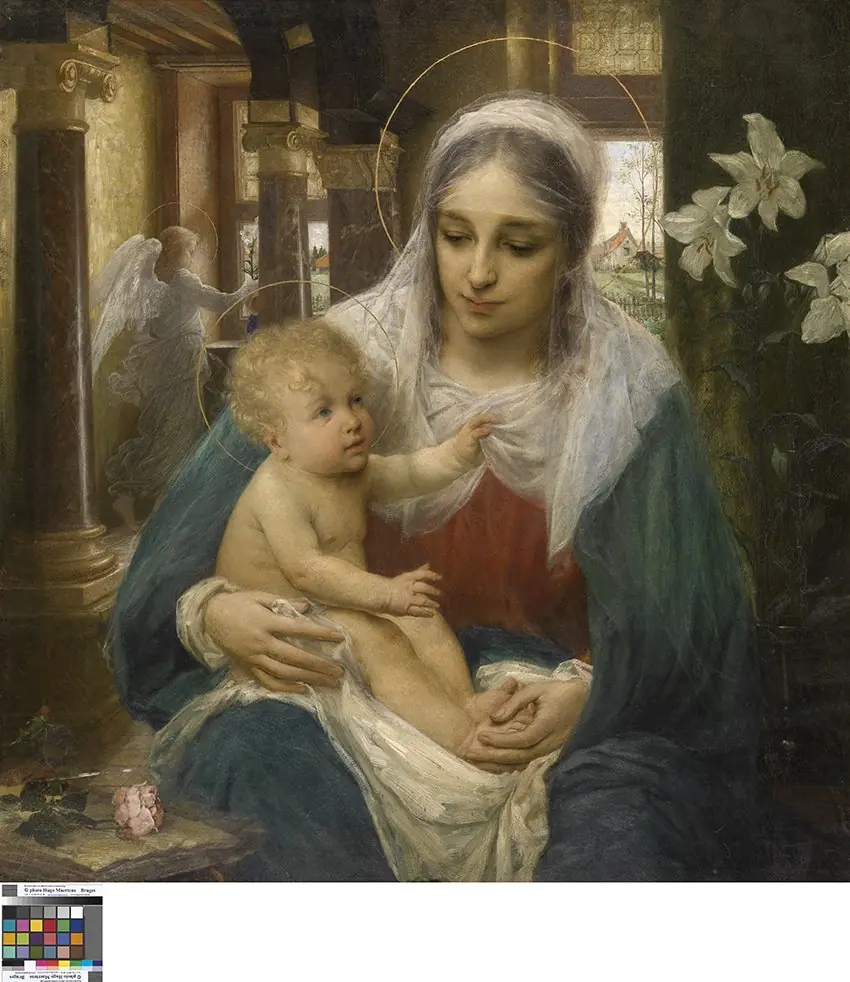 Mater Purissima
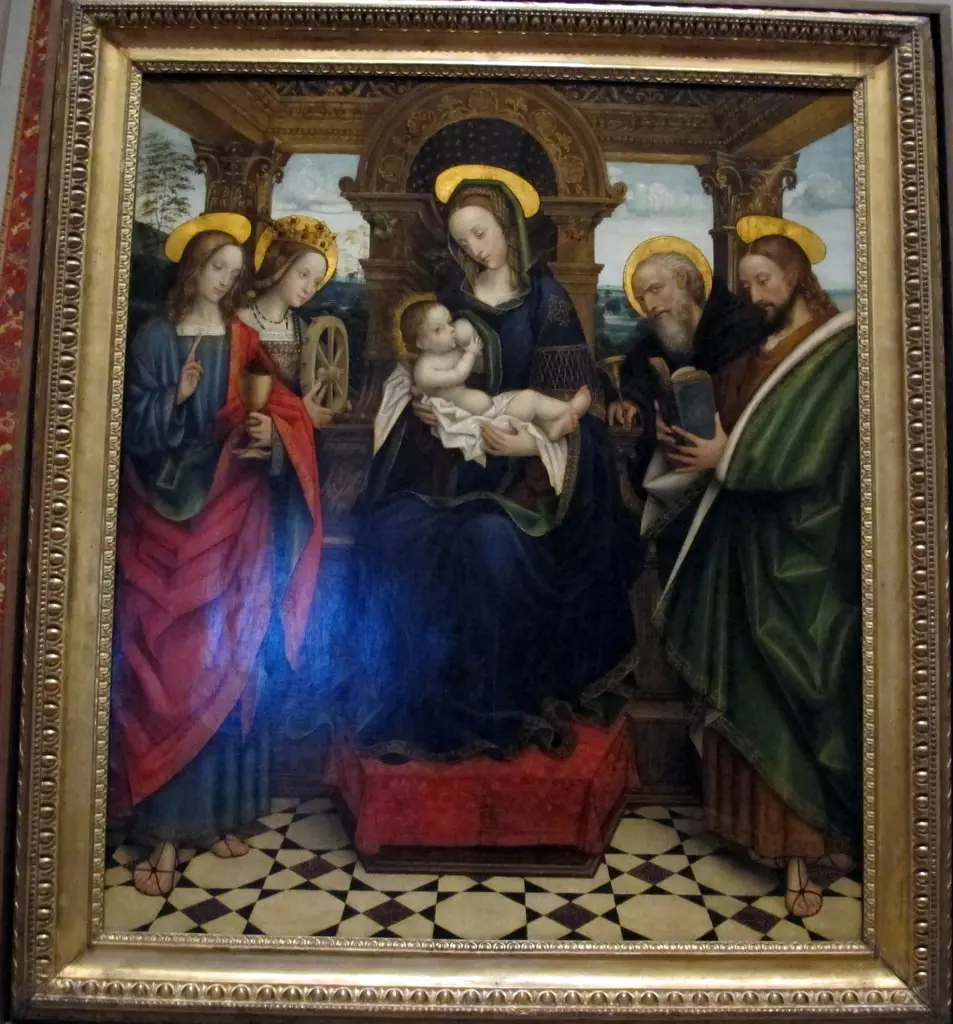 Enthroned Virgin and Child, with Saints John the Evangelist, Catherine of Alexandria, and Anthony Abbot, and a Saint Reading a Book
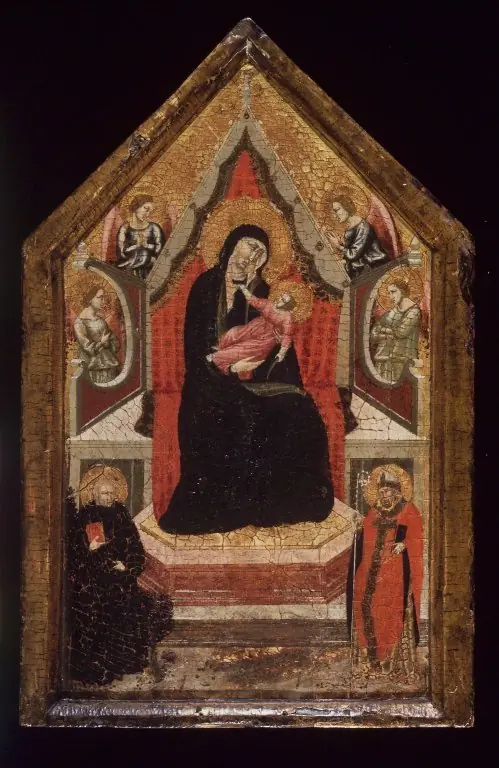 Virgin and Child Enthroned with Saints Benedict and Donato (?) and Four Angels
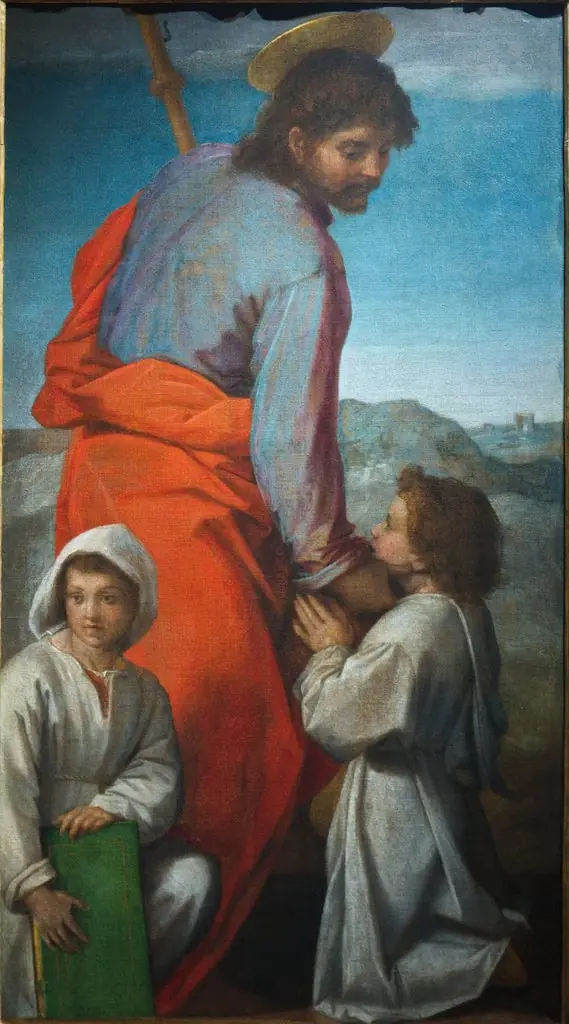 Saint James
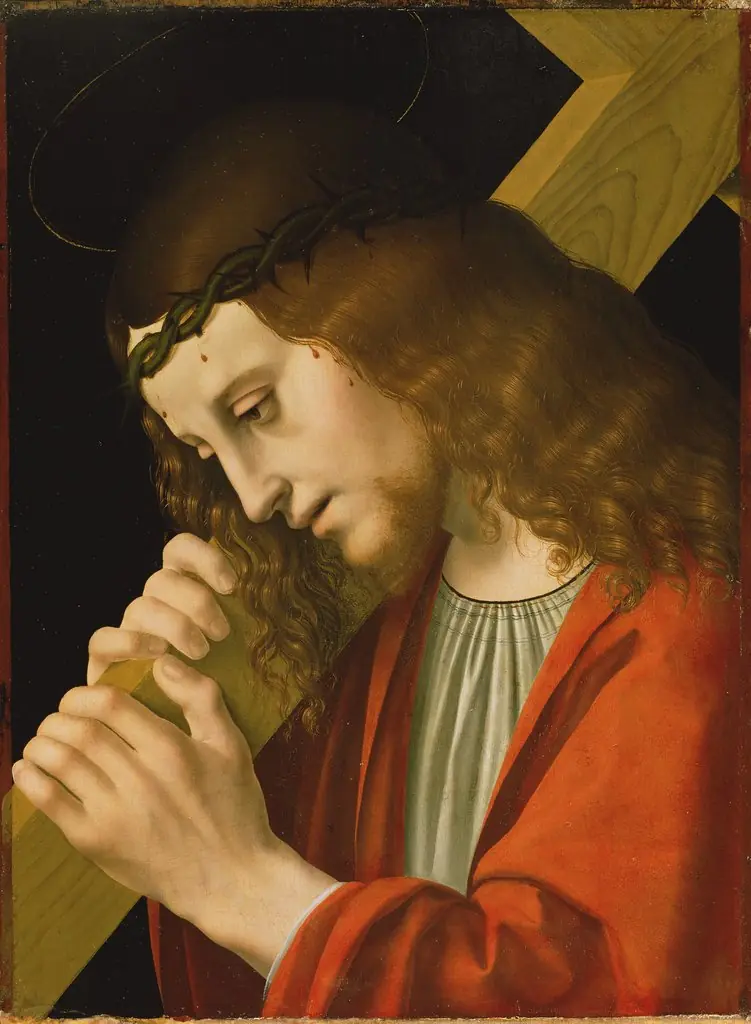 Christ Carrying the Cross
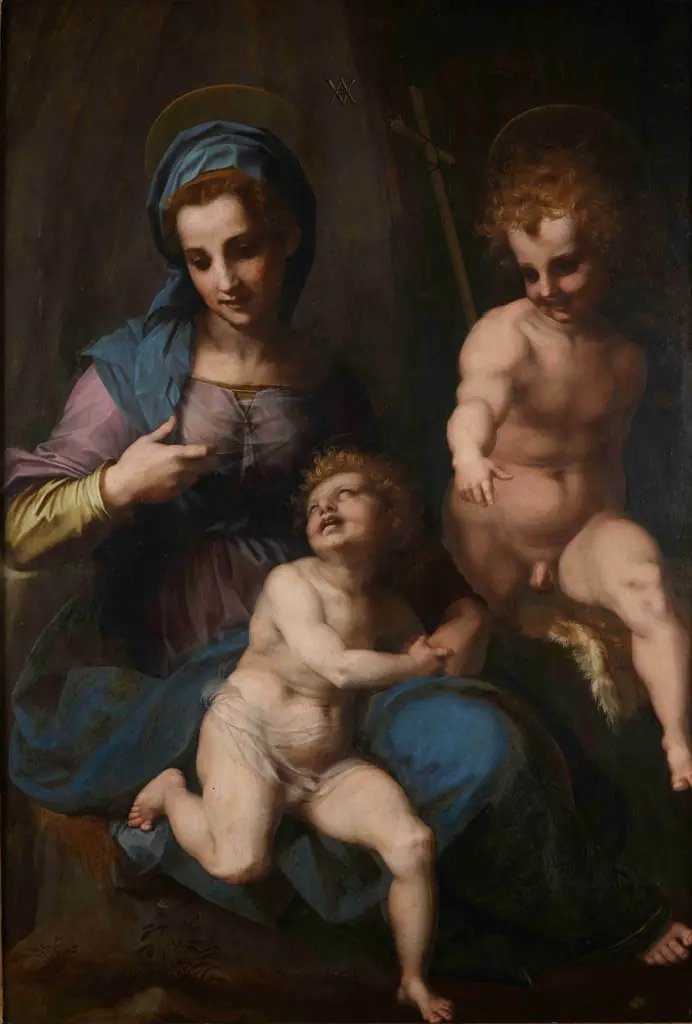 Madonna and Child with Young St John
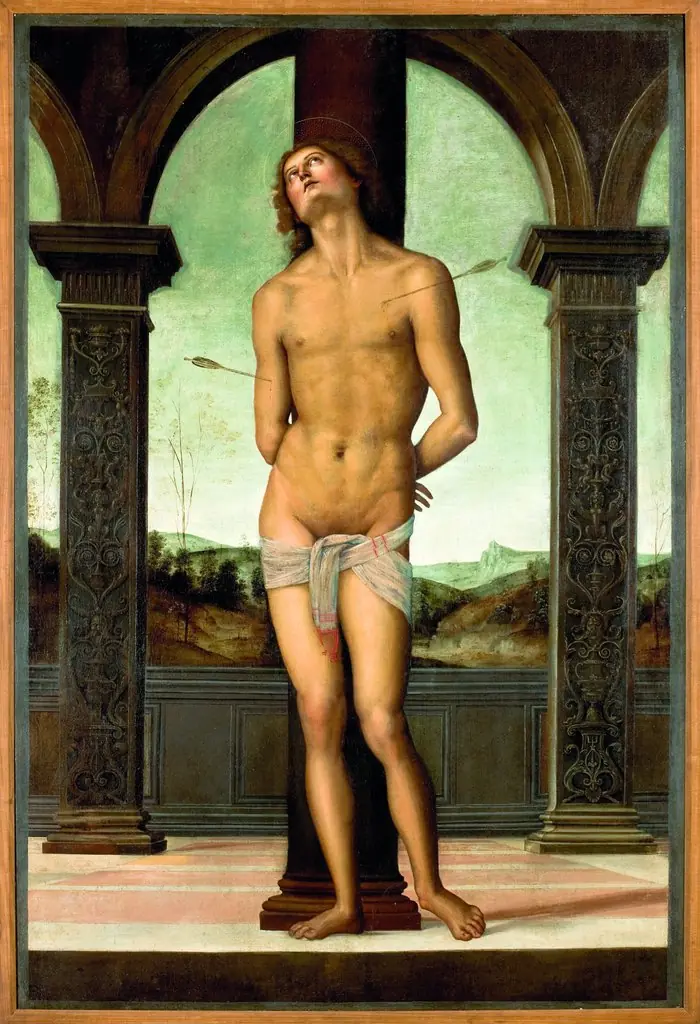 Saint Sebastian
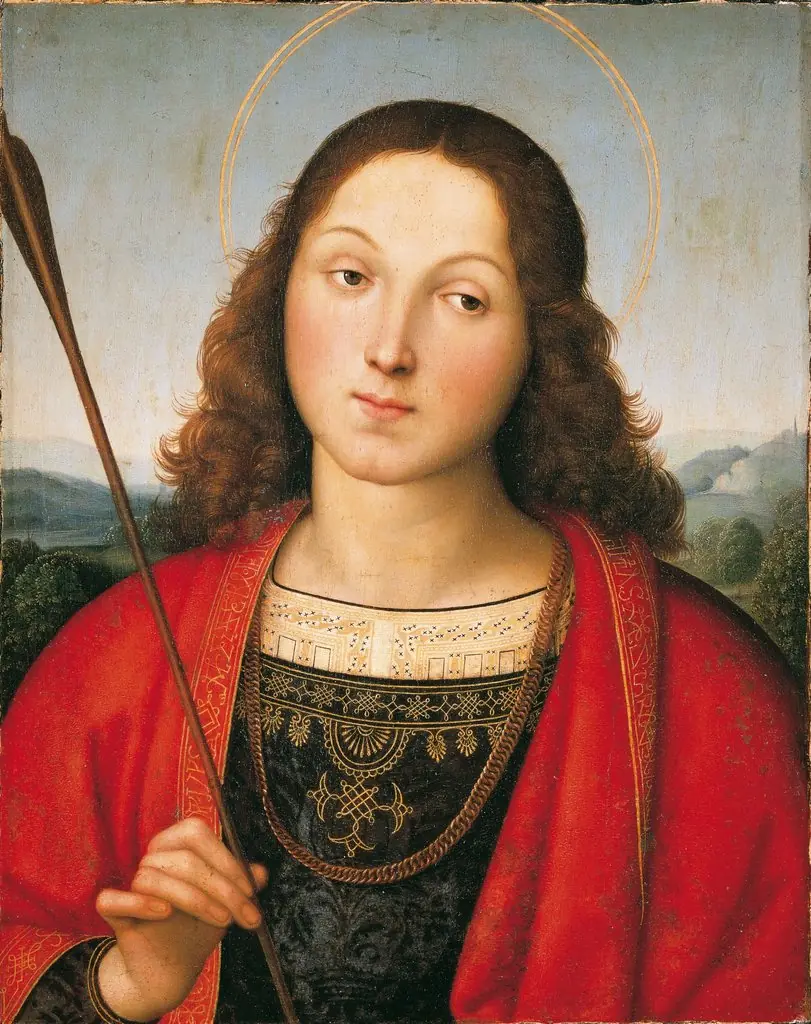 Saint Sebastian
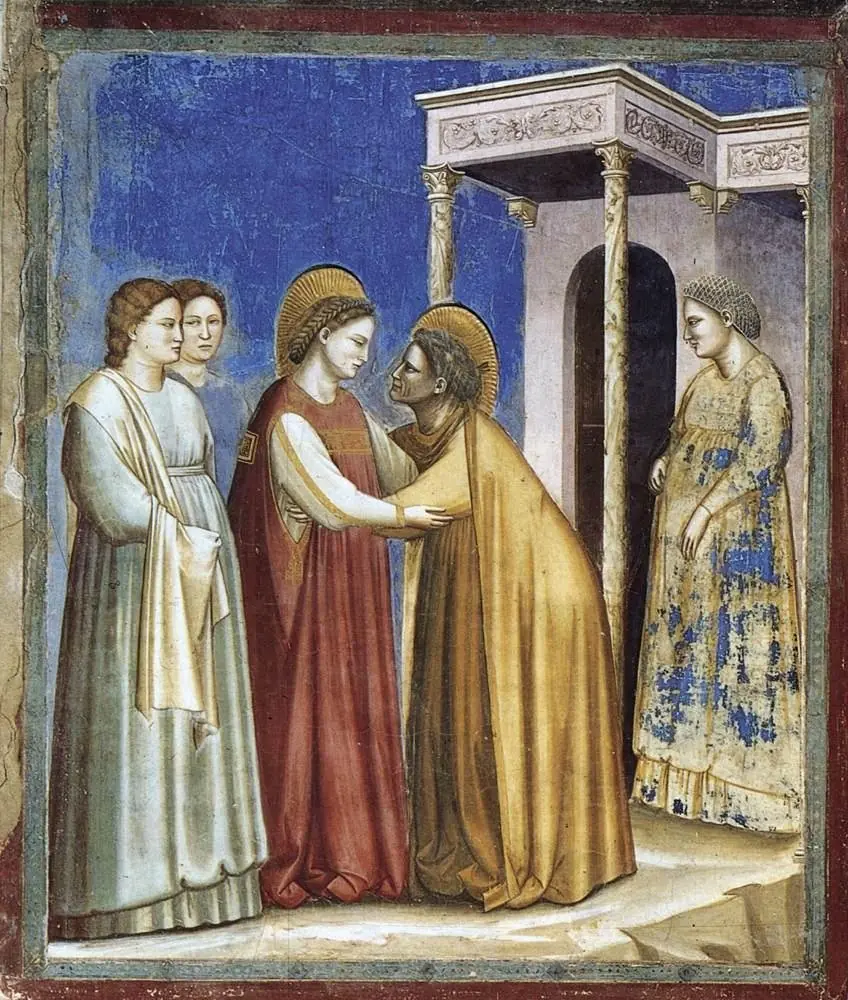 Visitation
 Erou necunoscut (Noul Crist)
 Zugrăvița a combinat cu inocență două teme iconografice (cea a Bunei Vestiri cu cea a Botezului), fenomen frecvent în icoanele Anei Deji.În prim plan, în picioare, un sfânt cu o ramură verde în mâna dreaptă înălțată binecuvintează un înger. Sfântul tânăr, cu părul lung, negru, barbă scută, mustăți. După poziție și trăsături ar putea fi asimilat Sf. Ioan din scena Botezului. Poartă un chiton roșu, asemănător blănii de cămilă și un himation verde.În jurul capului are o aureolă cu limbi de foc asemănător acelora din Pogorârea Sfântului Duh. Îngerul privește către sfânt, ținînd pe brațul stâng un ștergar cu vrâste verzi și roșii, iarăși asemănare cu scena Botezului. Îngerul are trăsături feminine, ochii mari, negri, aripi strânse, tunică roșie cu poale cafenii.Nu poate fi vorba de Botez deoarece lipsește Isus dintre cele două personaje iar decorul arhitectural din planul doi(o construcție cu mai multe caturi, cu intrări largi, cu portal semicircular, 4 ferestre la ultimul cat și acoperiș rotund de olane) nu se regăsește în scena Botezului. De sus coboară sfântul Duh, sub formă de porumbel roșu cu aripi cafenii, pe un fond verde într-un oval de nori alburii marcați cu linii roșii. În partea de jos,relief ușor vălurit, realizat din benzi late cu margini ondulate de culoare verde, roșie și cafenie.Restul câmpului- albastru ultramarin, decorat cu steluțe albe și roșii. Pe trei laturi este pictat un chenar din semicercuri suprapuse, primul cu roșu alternînd cu verde, al doilea ocru. Icoana ar putea fi asimilată Buneivestiri, dar în acest caz în locul sfântului ar trebui să fie un înger iar în locul îngerului Fecioara Maria. Rama este alcătuită din patru șipci drepte, îmbinate oblic la colțuri. Dosul este realizat din scândurele subțiri de brad, dispuse vertical și fixate în cuie.
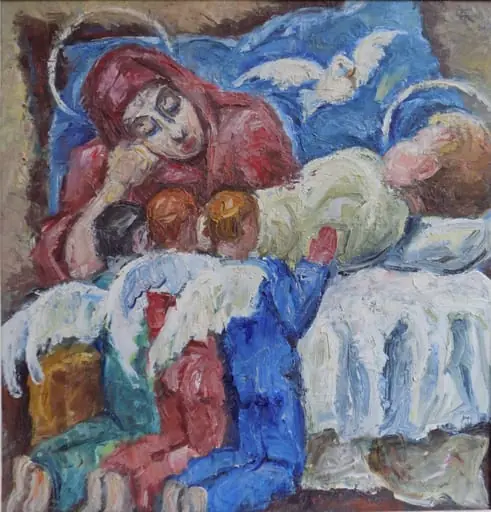 Trei ingeri
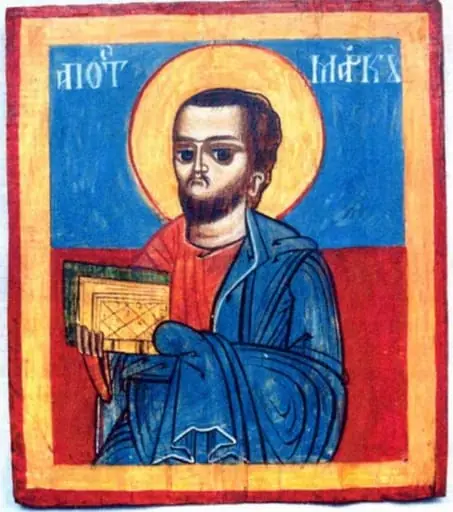 Apostolul Marcu
 Icoale c
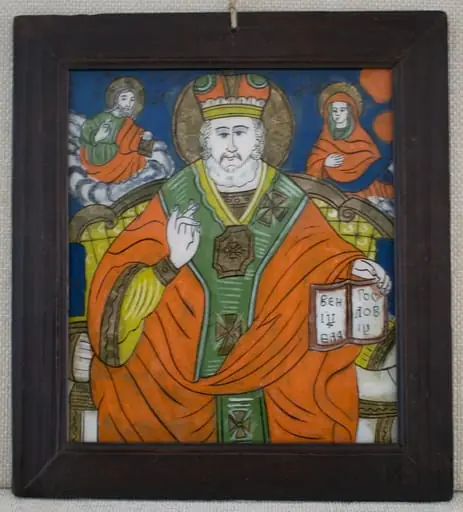
 Icoana este pictată pe dosul unei bucăți de glajă de formă dreptunghiulară în ax vertical. Sfântul Nicolae este redat în prim plan, așezat pe un tron, ținînd Evanghelia închisă în mâna stângă în timp ce cu dreapta binecuvintează. Sfântul Nicolae este înveșmântat ca Mare Arhiereu, cu mitră înaltă, bipartită, omofor mare, verde, decorat cu cruci "patee", sacos roșu cărămiziu cu galon auriu cu motiv spiralat, stihar roșu. De mâna dreaptă îi atârnă bedernița, percepută ca decor al veșmântului. Chipul este sobru, barba albă,scurtă,la fel părul scurt, ondulat. Ochii sunt negri, bine definiți, arcadele evidențiate. Nimb auriu. Tronul, cu spătarul înalt, are marginea aurită realizată în trepte(surmontatea de câte o cruce) și decorată cu motiv spiralat. Spătarul este alb, decorat cu o rețea de linii negre dublate cu bleu, întretăiate. În colțurile de sus câte un serafim pe nori. Câmpul verde intens în partea de jos, până la nivelul jilțului, albastru de Prusia în registrul superior. Desenul este îngrijit, compoziția aglomerată, paleta cromatică variată, culorile tari, Inscripția cu negru în partea de sus, greu vizibilă. Rama, din lemn de brad băițuit, este alcătuită din patru șipci profilate pe o porțiune mică spre interior, îmbinate oblic la colțuri, decorată cu un motiv ușor ondulat, imitînd fibra lemnului, dispus oblic. Dos din scândurele subțiri de brad, dispuse orizonal și fixate în cuie.
 Exclușii
 Icoaceil
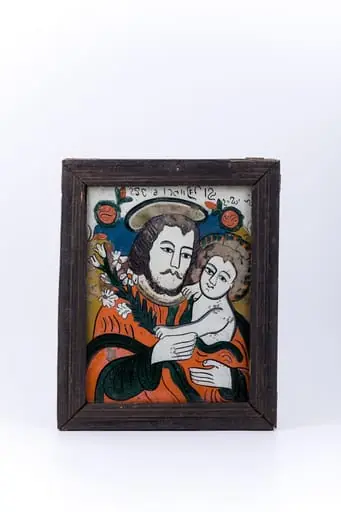 Icoana îi reprezintă pe Sfântul și Dreptul Iosif, Logodnicul PreaCuratei Fecioarei Maria, cu Pruncul Iisus Hristos în brațe. Icoana este mai rară, din punctul de vedere al tematicii compoziționale abordate. Sfântul Iosif este înveșmântat cu un hiton - tunică roșie vermillon, cu mânecile și bordura verde mușchi-de-pădure sau nuanță de China. Pruncul Iisus este dezbrăcat, dar acoperit de veșmântului protector al Sfântului Iosif. În mâna dreaptă Dreptul Iosif Logodnicul ține o ramură de crin, simbolul Fecioriei și a BuneiVestiri. Crinul este ținut împreună cu mânuța Pruncului Sfânt. Aureola Sfântului Iosif este mai aparte, asemenea sfinților catolici. Fondul icoanei este cerul albastru regal, în registrul superior, un câmp luminos de galben-bronziu, în registrele inferior și mediu, pe laterale și un chenar decorativ geometrizant alb-ivoriu. În registrul superior, asemenea unei arcade de boltă, este o ghirlandă de ruje roz - 2 elemente florale. Inscripția din româno-chirilică se traduce Sf Iosif și Iisus. Cromatica este armonioasă și luminos-pastelată: roșu vermillon, verde mușchi-de-pădure, albastru regal, alb-ivoriu, crem, bej, nisipiu, galben-ocru, bronziu, alb, negru. Icoana este din Nordul Transilvaniei, Nicula.
 Temaapul
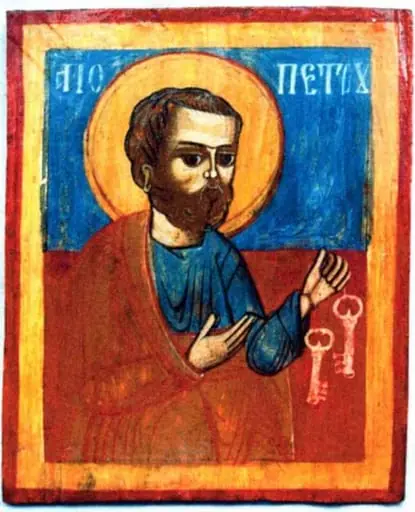 Apostolul Petru
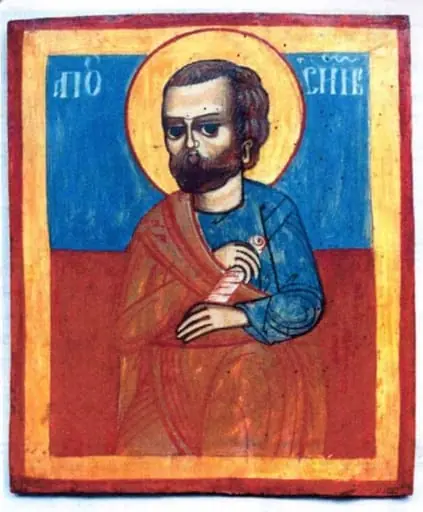 Apostolul Simion
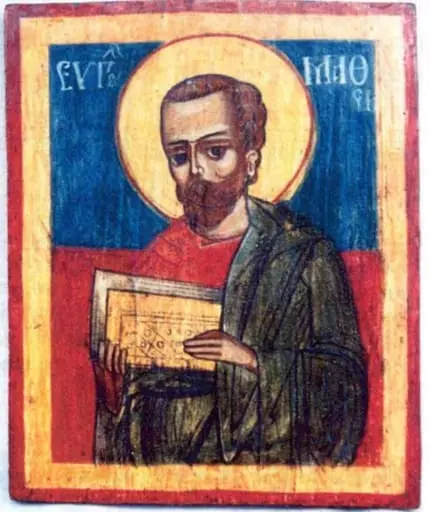 Apostolul Matei
 Icoaastr
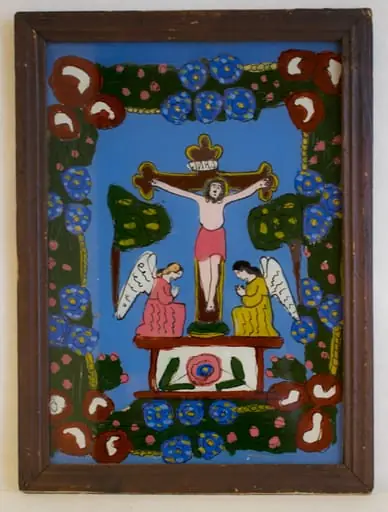 Icoana redă tema Răstignirii combinată cu Plângerea de influență apuseană, catolică. Desenul este executat probabil fără tipar, cu un instrument de scris cu cerneala sau tuș. Isus răstignit pe cruce plasată deasupra pietrei mormântului, plâns de doi îngeri cu profiluri diforme, este încadat de un chenar greoi compus din ramuri groase și elemente florale divers colorate(roz, roșu, albastru, galben). De o parte și de alta a lui Isus doi copaci cu coroane globulare, diforme..Desenul este foarte naiv. Isus are ochii deschiși, părul este bogat, mânile și picioarele diforme.Aureola se "scurge" pe lângă capul lui Isus. În jurul mijlocului veșmânt roz. Crucea treflată, pictată cu brun, chenar ocru galben și inscripția INRI pe fond alb. Îngerii au părul ondulat,(unul blond, unul brunet) sunt înveșmântați în roz și galben, veșminte de inspirație catolică.. Mormântul decorat cu o floare roz. Câmul icoanei bleu închis. Pe spate a avut lipită o hârtie mai groasă care servea drept dos. Rama este profilată, lăcuită, de culoare cafeniu închis.
 Icoacrip
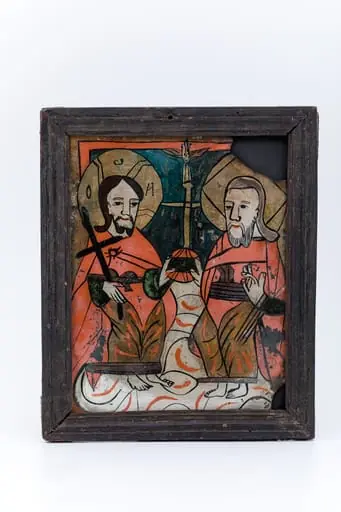 Icoana reprezintă Sfânta Treime. Dumnezeu-Tatăl și Dumnezeu-Fiul susțin împreună globul pământesc cu o cruce mare deasupra, apărând ca un sfânt chivot, ca pe o Biserică țin Pământul. Dumnezeu-Fiul, fiind alături, ține Crucea pe umărul drept. Dumnezeu-Tatăl are aureola în formă de triunghi echilateral, simbolizând Sfânta Treime. Dumnezeu-Tatăl și Dumnezeu-Fiul sunt îmbrăcați în veșminte în combinație de roz-corai, brun-bronziu, negru. Sfântul Duh se pogoară prin deschiderea Cerurilor. Fondul icoanei este cerul albastru ultramarin, cu influențe ușoare de indigo. În registrul inferior sunt nori albi, cu striații corai. Cromatica este armonioasă: roz-corai, albastru ultramarin bleu-marin, alb, gri-antracit, brun-bronziu, kaki, ocru-muștar, alb, negru. Alăturarea cromatică: roz corai, albastru ultramarin și brun-bronziu este excepțională. Inscripția din româno-chirilică se traduce Sfânta Treime. Icoana este din Nordul Transilvaniei, Nicula.
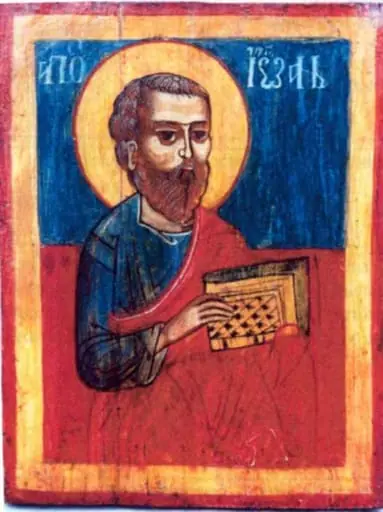 Apostolul Ioan
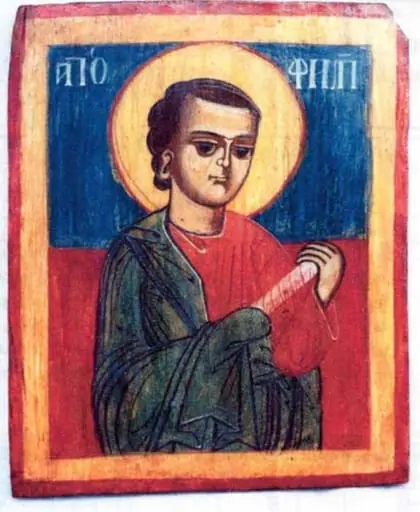 Apostolul Filip
 Icoana este pictată "în oglindă", pe suport de sticlă de formă dreptunghiulară în ax vertical. Sfânta Cuvioasă Paraschiva(care se prăznuiește pe 14 octombrie) este redată așezată pe tron, cu coroană împărătească pe cap. Plasată central, cu doi îngeri în spatele tronului, sfânta este înveșmântată cu un maforion roșu cu intadosul albastru și galon galben. Cămașă multicoloră, albastru, verde, roșu, galben, cafeniu, la mijloc cu o cingătoare galbenă) Pe cap poartă o coroană mare, deschisă. În mâna dreaptă ține o cruce, iar cu stânga binecuvintează cu un gest stângaci.Chipul este ușor diform, arcadele ochilor umbrite, nasul mare, bărbia accentuată, ochii înguști, asimetrici. Tronul, de factură barocă, are spătarul în formă de aripă, cu brațele masive, cu un chenar îngust, aurit, cu volute în partea de jos și câte o cruce pe laturile de sus. Sfânta este așezată pe o pernuță lungă. În spatele tronului doi îngeri cu chipuri copilărești, veșminte lungi, nimburi aurite. os este completată cu linii orizontale pe fond bej. Câmpul este albastru(1/2 superior) cu inscripția cu negru, 1/3 inferior - cafeniu deschis, benzi orizontale. Desen încărcat, paleta cromatică petriță, culorile intense. Stratul pictural este exfoliat pe unele locuri. Rama închisă la culoare, este realizată din lemn de brad, profilată pe o porțiune mică la interior, Porțiunea mai lată este decorată cu "pieptenele", transversal. Dosul este realizat din scânduri subțiri de brad, dispuse orizonal și fixate în cuie. Țăranii considerau că sfânta Paraschiva apără de grindină și de dureri de cap.
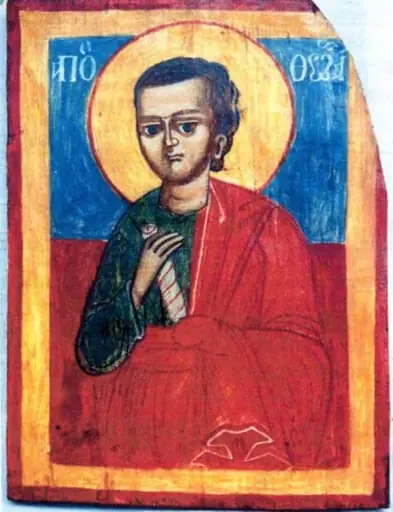 Apostolul Toma
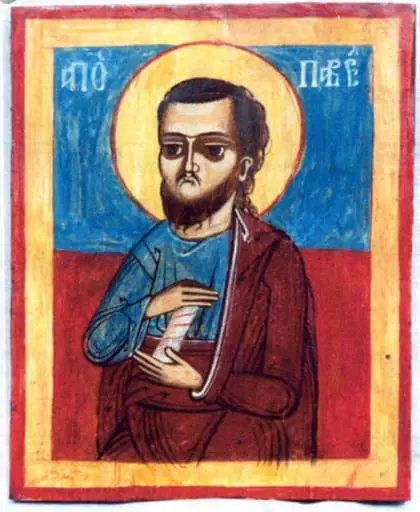 Apostolul Pavel
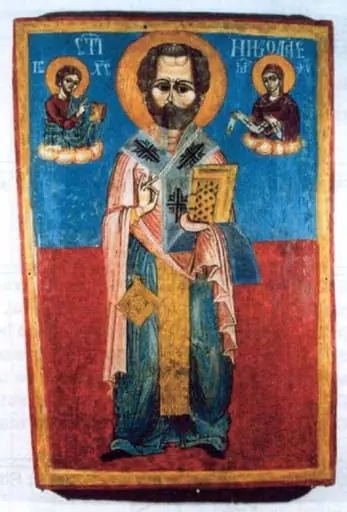 Sfântul Nicolae-Episcop
 Icoana este pictată "în oglindă", pe un suport de sticlă de formă dreptunghiulară în ax vertical. Cuvioasa Parascheva, 3/4, redată din ușor semiprofil, ține în mâna dreaptă o ramura verde, sinuoasă, în stânga o cruce. Fața butucănoasă, ochii căprui, sprâncenele arcuite, gura marcată cu roșu, bărbia pătrată, părul castaniu, lung, revărsat pe umeri. Pe cap poartă o tocă înaltă tripartită. Este înveșmîntată cu o mantie roșie și cămașă albastră. În jurul capului, aureolă realizată cu bronz auriu. Câmp bicolor(1/2 superior -bleu, 1/2 inferior ocru) două ramuri de trandafiri dispuși pe laturile verticale, întâlnindu-se deasupra capului sfintei. Desenul stângaci, dar destul de îngrijit, corola de flori, predominanța culorii roșii, abundența detaliului, fondul bicolor, utilizarea bronzului auriu, sunt caracteristici ale fazei târzie a picturii din centrele Nicula și Gherla. Rama subțire din lemn de brad, de culoare închisă, este completată cu un "dos" nou din scândură de brad.. Țăranii considerau că sfânta Parascheva păzește de grindină și de dureri de cap.
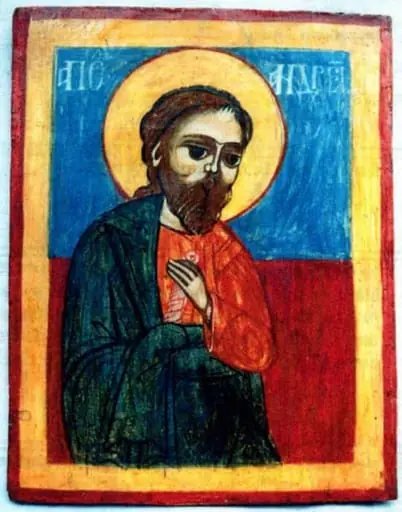 Apostolul Andrei
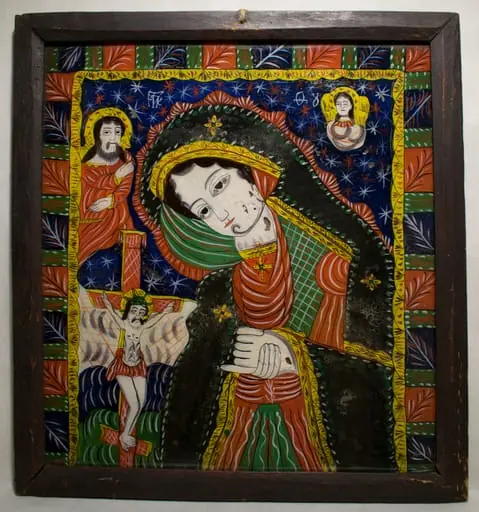 Icoaa și
 Icoaior,
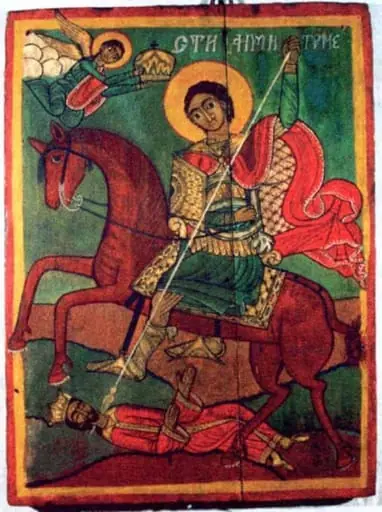 Sfântul Dimitrie
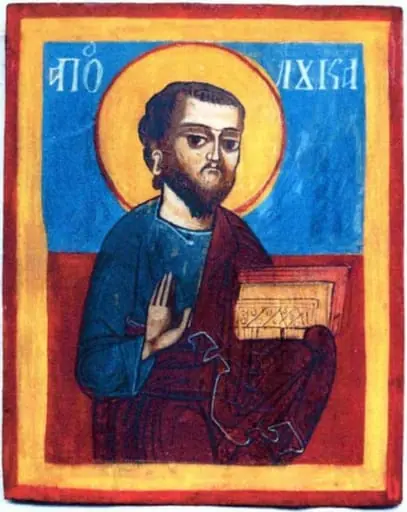 Apostolul Luca
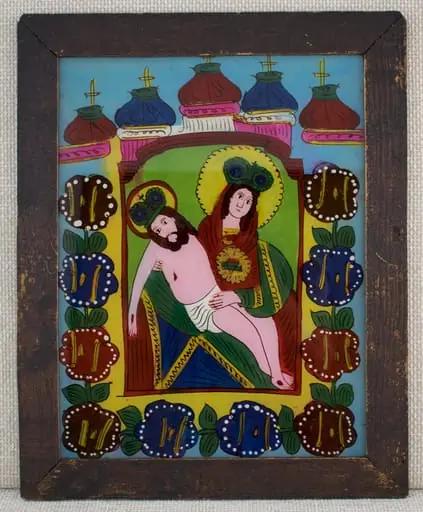 Temă de insiprație catolică foarte rar întâlnită în pictura pe sticlă din Transilvania, corespondentul scenei plângerii, a prohodului. Desenul este executat probabil fără tipar, într-un stil naiv, cu un instrument de scris cu cerneala.Culorile sunt stridente, dar se observă o oarecare măiestrie.Pietà este o pictură care o reprezintă pe Madona ținându-și fiul mort pe genunchi sau în brațe. Există numeroase reprezentări plastice ale scenei „Pietà”.Central, pe un fond verde deschis, este redată Fecioara Maria ținând pe brațe trupul lui Isus după ce a fost coborât de pe cruce. Amândoi au coroane mari împărătești, bipartite, de culoare verde, proiectate ă fondul nimbului galben mărginit de o linie roșie la Isus, dantelat la Maică. Ochii mari, deschiși. Fecioara are părul creț, castaniu, Este înveșmântată cu un veșmât policrom/roșu, verde și albastru)pe pe piept fiind redată sfânta inimă(a lui Isus) într-un cerc incandescent galben. Isus are corpul diform, poartă un veșmânt alb în jurul mijlocului. Pe membre și coastă se văd urmele supliciului. Carnația este roz.Scena este încadrată de o zonă galbenă, urmată de chenarul lat, specific: laturile inferioare - flori mari pe fond albastru, în partea de sus de 5 turle de biserici inspirate din pictura rusească.Florile chenarului sunt rotunde, de culoare bleumarin, grena, roșie, cu șirururi de puncte albe și lini galbene, frunzele mici, verzi, câmpul chenarului albastru bleu. Paleta cromatică variată, culorile stridente. Pe spate a avut lipită o hârtie mai groasă care servea drept dos. Rama este simplă, din lemn de brad prelucrat rudimentar, de culoare cafenie.
 Icoaenel
 Icoa, sp
 Repr
Repr Icoateri
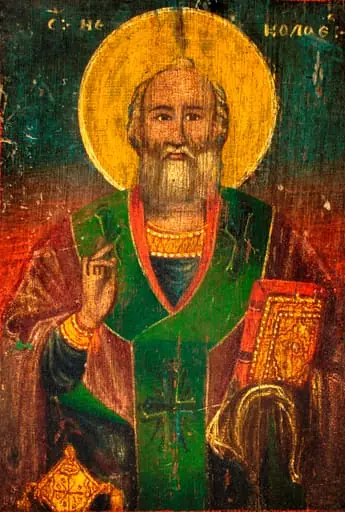 Icoana îl reprezintă pe sfântul Nicolae 3/4, frontal, în ipostaza de mare ierarh, binecuvântînd cu mâna dreaptă, în stânga ținînd Cartea Sfântă. Sfântul este redat cu capul descoperit, barba de lungime medie, fruntea înaltă, ochii căprui. În jurul capului aureolă de culoare deschisă, gălbuie, aplicată peste un strat de bronz auriu, mărginită cu o linie albă. Înveșmântat cu sacos roșu cărămiziu, cu intradosul verde, epitrahil verde, cu o linie subțire pe margine și cruci negre conturate cu alb și raze negre. Stihar bleumarin cu mânecuțe aurii decorate cu perle albe și motiv geometric, la fel galonul de la gât. Mâna cu care ține cartea este acoperită de omofor, în semn de smerenie. De mâna cu care binecuvintează atârnă bedernița de culoare galben aurie, cu franjuri și motive geometrice. Coperta cărții legate în piele bogat decorată. Chenar din linii ondulate de culoare galbenă, dispuse longitudinal, mărginit la interior de o linie subțire roșie și una închisă la exterior. Proporțiile în general respectate, capul este ușor mai mic în comparație cu corpul masiv, ceea ce creează un efect de depărtare, accentuat și de fondul luminat roșiatic în partea de jos, albastru în cea de sus. Maniera picturală, indică un pictor școlit, influențat de pictura academistă. Icoana prezintă un strat de murdărie și mici crăpături.
 Icoacum
 Icoasemn
 Icoana este pictată pe dosul unei bucăți de sticlă de formă dreptunghiulară în ax vertical. Sfântul mare Ierarh Nicoale, 3/4, în veșminte de arhierești, redat frontal, cu mitră înaltă, bipartită pe cap, ține Evanghelia în stângă iar cu mâna dreaptă binecuvintează.Barba căruntă, ondulată, scurtă, părul lung, negru, lăsat pe umeri. Ochii, negri, înguști, asimetrici, gura roșie.În jurul capului aureolă galbenă cu motiv fitomorf. Înveșmântat cu un sacos roșu cu linii de fald albe, galon aurit decorat cu motiv fitomorf, stihar alb cu albastru și linii de fald albe, roșii, bleu. Epitrahilul, veșmântul liturgic cel mai important este verde, lung, chenar auriu punctat pe margini, steluțe negre. Relieful - succesiune de benzi late de culoare roșie, bleumarin și verde, brăzdate de linii subțiri, roșii și albe. Sfântul este încadrat de un portal semicircular, cu marginea ondulată, fond bleumarin, jos elemente arhitecturale schematizate. Lateral și superior un chenar dublu din semicercuri în culori alternante roșu, ocru, verde, bleumarin. Restul câmpului este de culoare verde deschis cu elemente fitomorfe. Desenul este îngrijit, dar prezintă asimetrii, stângăcii, disproporții. Paleta cromatică bogată, culorile intense. Țăranii îl țineau pe sfântul Nicolae "aducător de noroc, apărător de boli, apărător de vărsat și de lovituri" Rama îngustă, realizată din patru șipci îmbinate oblic, decorată cu un motiv vălurit, dispus longitudinal. Dos-scânduri de brad, dispuse vertical și fixate în cuie metalice.
 Icoaesiv
 Icoagmen
 Temadisp
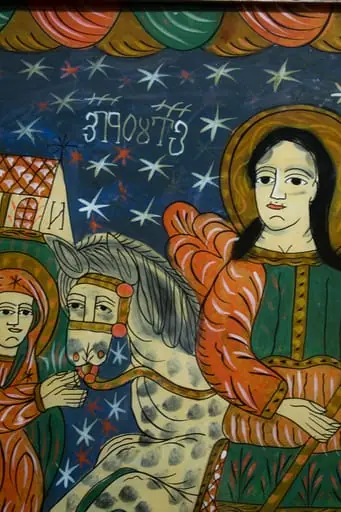
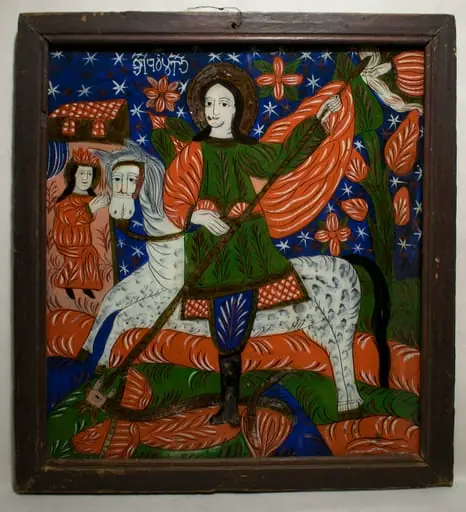 Sfântul, în centrul compoziției, călare pe un cal alb cu pete gri, înfige o suliță lungă(ce marchează diagonala compoziției)în gura balaurului. Veșminte asemănătoare celor ale soldaților austrieci, cizme înalte, negre, pantaloni bufanți, tunică scurtă, de culoare verde, cu motive fitomorfe dispuse longitudinal, deasupra tunicii, mantie roșu-cărămiziu .Chipul este redat din semiprofil; trăsăturile sunt butucănoase, ochii mari, negri, părul lung, negru lăsat pe umeri.Partea de sus a corpului e prezentată din față, de la mijloc în jos dintr-o parte. Calul este la rândul lui diform, cu capul întors astfel încât ă se văd ambii ochi, umani. Balaurul, plasat în registrul inferior, căzut pe spate, fliform, cu două aripi rudimentare în zona gâtului și creastă, are deasemenea un ochi uman. În planul doi fata de împărat, redată cu aureolă în jurul capului. Are părul lung, negru, corpul diform, coroană împărătească roșie ca și veșmântul. În plan îndepărtat, pe o colină în spatele fetei, o construcție cu un cat, două ferestre mari roșii, semicirculare și acoperiș în două ape, din olane roșii. Relieful foarte variat, coline și porțiuni diferit colorate. În spatele calului, o floare uriașă. Câmp albastru ultramarin cu numeroase steluțe albe și roșii și câteva flori roșii. Inscripția ,în partea stângă, sus, este incorectă și scrisă invers, cu litere albe. Compoziția este extrem de încărcată, proporțiile nu sunt respectate, chipurile diforme. Icoana are un farmec dat de elementele etnografice locale și .Paleta cromatică variată, echilibrată, dominată de roșu, albastru și verde. Rama este din lemn de brad baițuiță, decorată longitudinal cu un motiv vălurit.
 Icoaii.
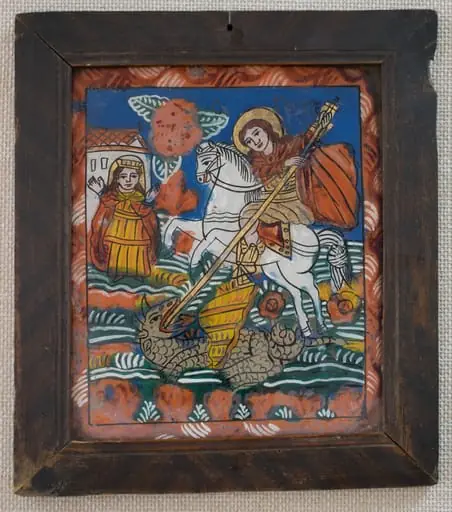 Icoana îl reprezintă pe sfântul Gheorghe omorând balaurul. Sfântul, călare pe cal alb, plasat central. Veșmintele sunt asemănătoare celor ale soldaților chezaro-crăiești, cizme înalte, tunică scurtă, zale, mantie roșie fluturând în vânt. Are capul descoperit, plete lungi, castanii, ochi mari, gura roșie, trăsăturile bine definite, expresive. În mână ține o suliță lungă, cruciformormă,aurită, cu care omoară balaurul înaripat, căzut la pământ, scoțînd limbi ascuțite. Calul este alb, capul mic, coada înnodată. Relieful este realizat prin linii albe) și vrâste de culoare(verde, galben,roșu), marcate cu motive fitomorfe. Câmp albastru închis, înviorat de o floare roșie cu frunze delimitate de nervuri albe. În partea stângă, în plan îndepărtat, în fața palatului sugerat printr-o clădire simplă,albă, înaltă, cu acoperiș de olane roșii, se află fata de împărat pe care o salvează sfântul conform legendei. Întreaga compoziție este încadrată de un chenar rectangular de culoare roșie, traversat longitudinal de o linie spiralată ale cărei meandre sunt însoțite de blicuri albe și verzui. Desenul complicat, tușa groasă, culorile intense, asemănător vitraliilor. Umplerea cu culoare neglijentă indică o producție de serie. Rama din lemn de brad este vopsită în cafeniu închis și decorată cu u motiv în formă de V Dosul este realizat din două scândurele de brad dispuse orizontal.
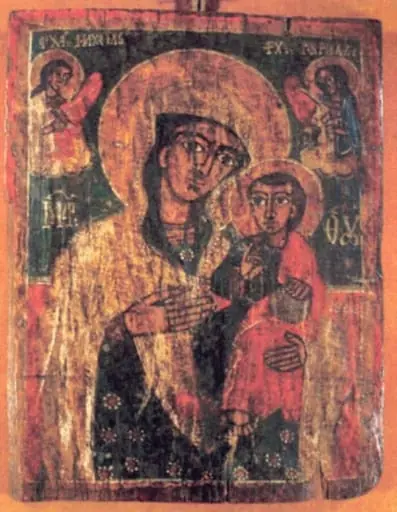 Maica cu Pruncul
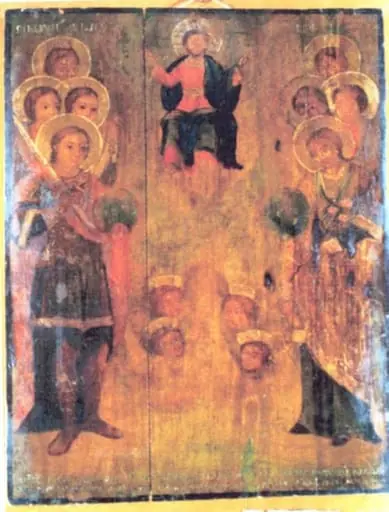 Soborul Sfinților Mucenici
 Icoae mi
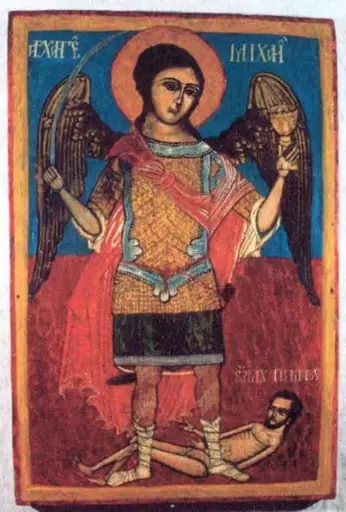 Arhanghelul Mihail
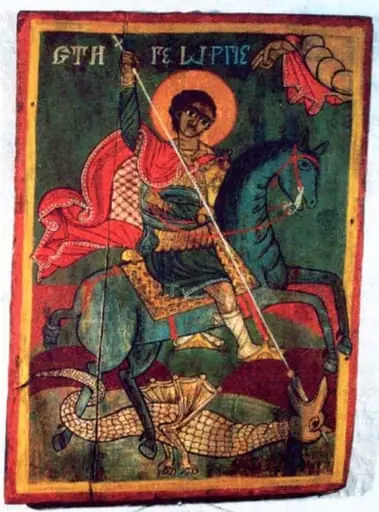 Sfântul Gheorghe
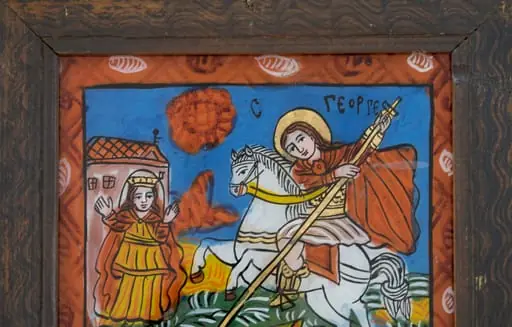 Icoana îl reprezintă pe sfântul Gheorghe omorând balaurul, în varianta mai elaborată, în care apare și fata de împărat și elemente etnografice locale. Sfântul, călare pe cal alb, plasat central. Veșmintele sunt asemănătoare celor ale soldaților chezaro-crăiești, cizme înalte, tunică scurtă, zale, mantie roșie fluturând în vânt. Are capul descoperit, plete lungi, castanii, ochi mari, gura roșie, trăsăturile bine definite, expresive. În mână ține o suliță lungă, cruciformormă,aurită, cu care omoară balaurul înaripat, căzut la pământ, scoțînd limbi ascuțite. Calul este alb, capul mic, coada înnodată. Relieful este realizat prin linii albe) și vrâste de culoare(verde, galben,roșu), marcate cu motive fitomorfe. Câmp albastru închis, înviorat de o floare roșie. În partea stângă, în plan îndepărtat, în fața palatului sugerat printr-o clădire simplă,albă, înaltă, cu acoperiș de olane roșii, se află fata de împărat pe care o salvează sfântul conform legendei. Întreaga compoziție este încadrată de un chenar rectangular de culoare roșie, decorat cu o spirală de nuanță asemănătoare și mici ovale hașurate cu alb. Desenul complicat, tușa groasă, culorile intense, asemănător vitraliilor. Umplerea cu culoare neglijentă indică o producție de serie. Rama din lemn de brad, cafeniu închis, decorată unda apei. Dosul este realizat din două scândurele de brad dispuse orizontal.
 Icoana este pictată în oglindă pe spatele unei bucăți de sticlă de proveniență industrială, în ax orizontal. Scena și realizarea sunt specifice spațiului catolic. Simetric față de un ax reprezentat de un grup de flori, sunt redați Sfânta Ana cu Fecioara Maria și Sfântul Iosif cu Isus copil. Sfânta Ana este reprezentată cu părul negru, acoperit cu o năframă albă. Este înveșmântată cu o rochie sobră, de culoare verde crom, peste umeri având prinsă o mantie roșie bogată.În mâna dreaptă ține o carte, cu stânga o ține de umeri pe Fecioara Maria, către care Sf. Ana este ușor aplecată. Maria este redată din profil, cu mâinile împreunate în rugăciune. În pandant, Sfântul Iosif, așezat, ușor aplecat îl ține în brațe pe Isus reprezentat ca un prunc dolofan, cu părul scurt și creț, picioarele și mâinile descoperite.În mâna dreaptă ține o ramură cu flori.Iosif are părul lung, este tânăr, cu fruntea înaltă, barba scurtă, veșminte în aceleași culori ca ale Sf. Ana. Chipurile sunt grave, triste, cu sprâncene foarte groase, contururile realizate cu o linie subțire, roșie. Toate personajele au aureole albe cu o bandă difuză, bleu pe lângă lina de contur neagră. Între cele două grupuri , pe linia mediană este plasat un aranjament floral compus dintr-un crin în partea superioară și încă trei flori(două înflorite și un boboc sau trandafir)roșii, unite într-un singur buchet printr-o fundă roșie. În colțurile de sus, câte o ramură cu flori roșii și frunze lanceolate așezate oblic. Fondul este în întregime alb. Pe o bandă lată în partea de jos, inscripția , caractere îngroșate. Desenul este extrem de îngrijit, liniile folosite sunt de diverse dimensiuni, compoziția, echilibrată, cromatica dominată de roșu și verde. Rama este fixată în cuie de fier.
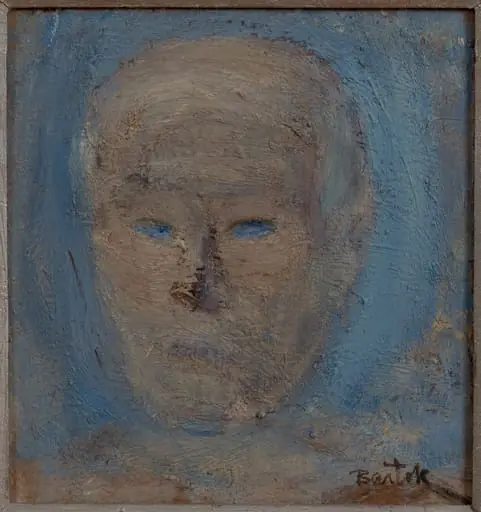 Portretul lui Gheorghe Lesnea
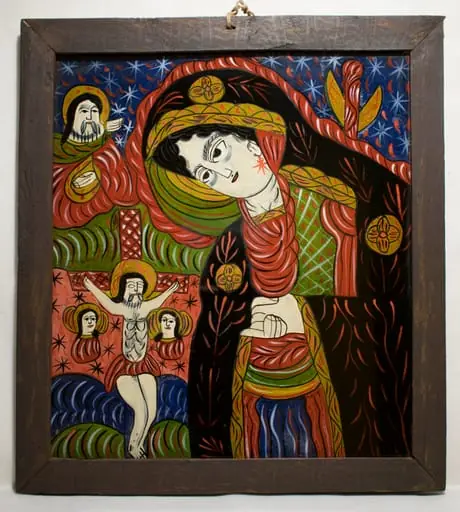 Icoa
Icoa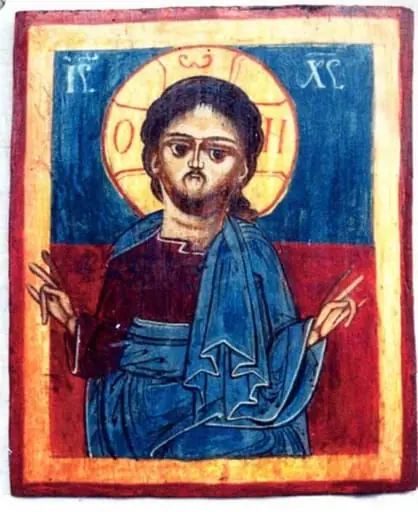 Iisus Hristos binecuvântând
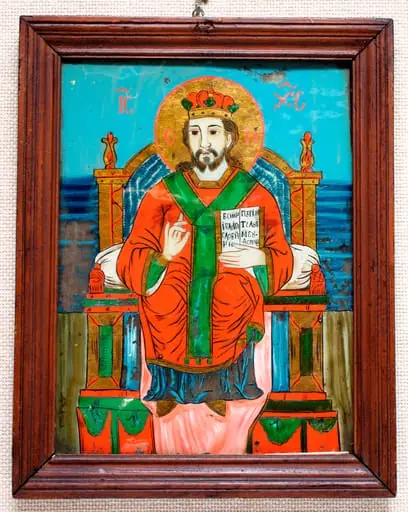 Icoa
Icoa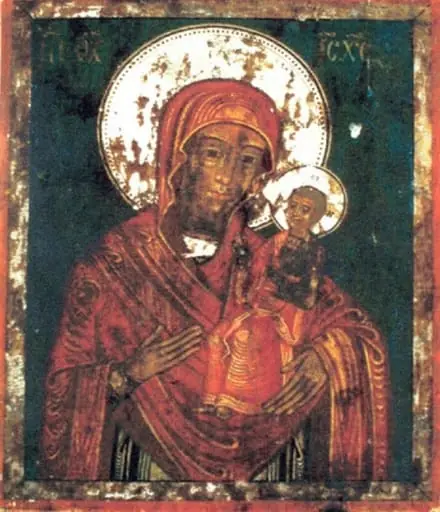 Maica cu Pruncul
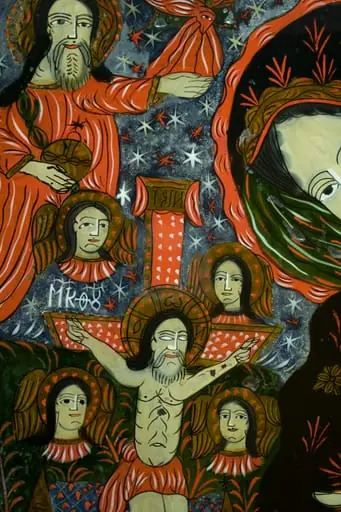 Temaobri
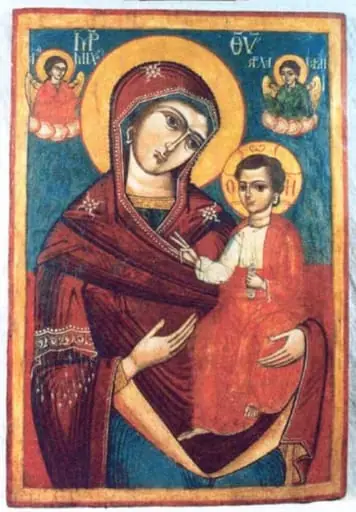 Maica cu Pruncul-Axionița
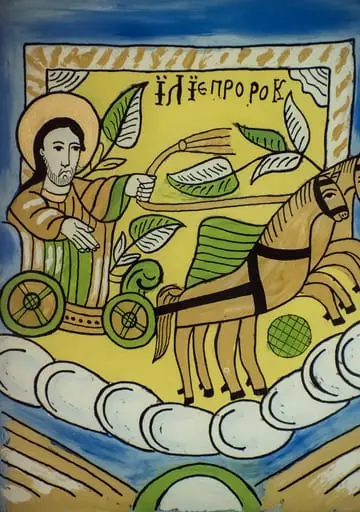 Icoana se bazează pe tradițiile picturii niculene, însă linia desenului trasat cu mare precizie cu un instrument de scris cu tuș, precum și paleta cromatică și degradeul chenarului marginal, indică o pictură de dată recentă, imitând vechile icoane de la Nicula. Reproducea inexactă a chenarului specific Niculei(brâul decorat cu s.uri), coloritul, rama(kitsch) arată că autorul nu era instruit în această direcție, așa cum vor încerca meșterii contemporani. Tiparul este specific perioadei de înflorire a picturii pe sticlă de la Nicula. Sf Ilie într-un car tip faeton roman, tras de doi cai înaripați, deasupra unui lanț de nori.Sfântul este așezat, cu o mână ține hățurile întoarse ca bici, Corpul este disproporționat, mare în comparație cu carul.Fața prelungă, cu barba schițată, părul negru, ochii mari, negri, aureola realizată cu bronz auriu. Chenar(alb cu linii oblice galbene) reproducându-l inexact pe cel specific centrului Nicula, delimitează, împreună cu lanțul de nori, o zonă de câmp galben -lămâi). Colțurile inferioare sunt completate cu două zone triunghiulare de aceeași culoare, unite central printr-o semisferă cu chenar verde.Restul câmpului - bleu în degrade. Pe zona de câmp galben sunt inserate motive fitomorfe(preluate din vechile tipare) și geometrice(cerc verde hașurat, utilizat pentru a sugera altădată un interior. Culorile nespecifice centrului de la Nicula. Rama este lată, marmorată, în relief, prin folosirea unui gips modelat, apoi pictat cu bej și brun, lăcuit.Pe spate este fixat un carton.
Frequently asked questions
What is Halo?
Halo is a military science fiction video game series and media franchise, originally developed by Bungie and currently managed and developed by Halo Studios (previously 343 Industries), part of Microsoft's Xbox Game Studios.
How many Halo works does Artifact World Gallery have?
Artifact World Gallery holds 81 public-domain Halo works, all free to view and download.
Who are the key Halo artists?
Key Halo artists in the collection include Raphael, El Greco and Peter Paul Rubens.
Where can I see Halo works?
Halo works in the collection are held by "Dimitrie Gusti" National Village Museum, National Gallery of Art and Metropolitan Museum of Art.