Artwork
Orpheus and Eurydice
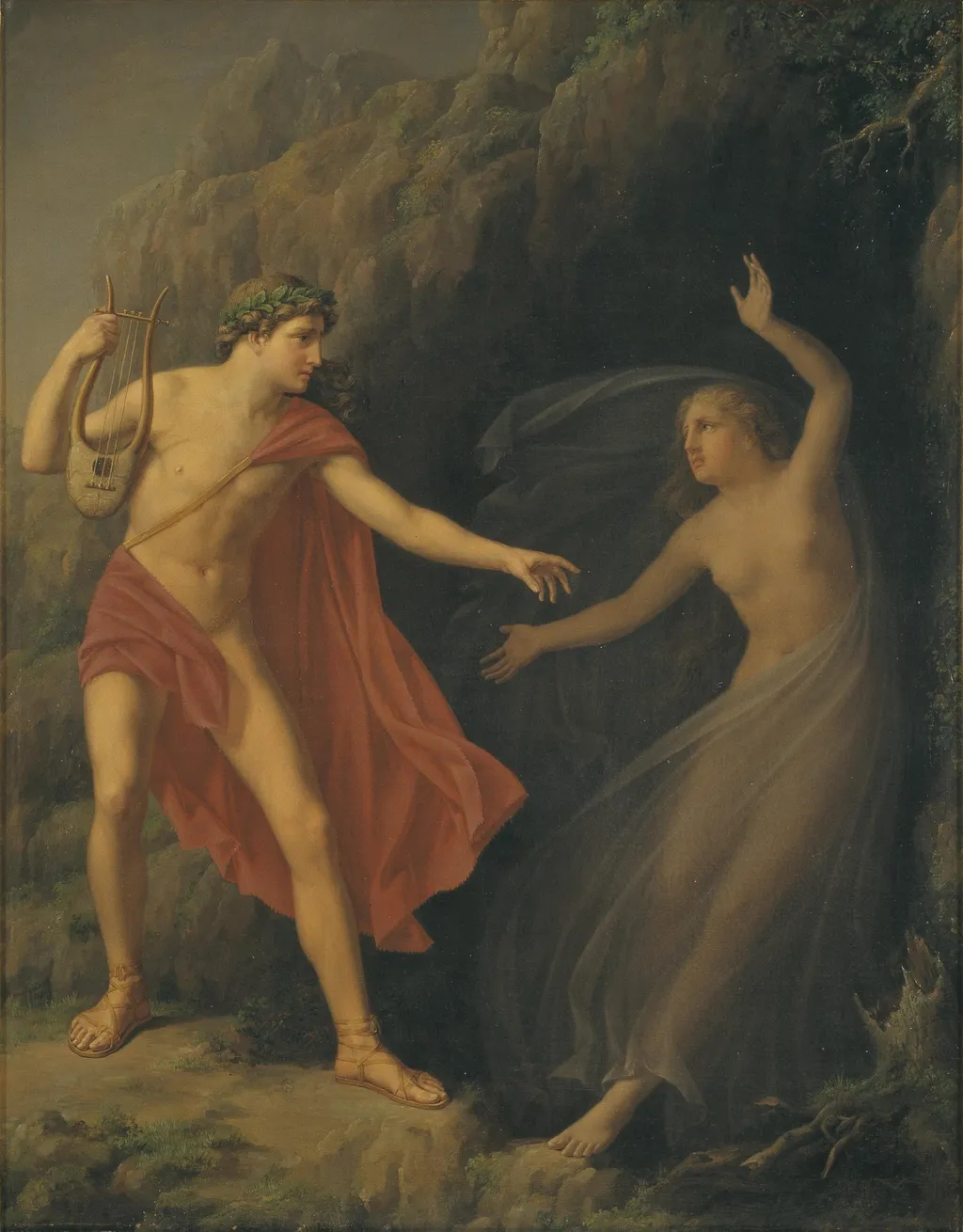
Orpheus and Eurydice is an oil painting by the German Romanticist artist Carl Andreas August Goos. It dates from 1830 and is held in the collection of the Statens Museum for Kunst.
About this work
Subject & Meaning
Carl Andreas August Goos's 1830 oil painting depicts the mythological figures Orpheus and Eurydice, drawing directly from classical mythology.
Carl Andreas August Goos's 1830 oil painting depicts the mythological figures Orpheus and Eurydice, drawing directly from classical mythology. As a work in the mythological genre, the piece illustrates the tragic narrative of the musician Orpheus and his wife Eurydice. The composition centers on these two main subjects, capturing a specific moment from their legendary story.
By focusing on this ancient tale, the artwork explores themes of love, loss, and the supernatural realm associated with the Orpheus myth.
Technique & Style
Orpheus and Eurydice is an oil painting executed on canvas, a standard support for nineteenth-century academic history painting. The work measures 102.5 cm in height by 85 cm in width, an upright format suited to a two-figure mythological composition.
Stylistically, the painting belongs to the mythological genre tradition associated with Carl Andreas August Goos, who produced it in 1830. The choice of oil paint on canvas allowed for the layered, polished handling typical of the period, supporting the smooth tonal transitions and detailed figural rendering expected of mythological subjects of this scale. The work is held by the Statens Museum for Kunst.
History & Provenance
The work is held by the Statens Museum for Kunst in Copenhagen, where it is recorded with inventory number KMS3390.
It has been exhibited in Copenhagen under the title “Orfeus og Eurydike” as part of the museum’s permanent display of 19th‑century Danish paintings.
Overview
Created in 1830 by Carl Andreas August Goos, this oil on canvas presents a moment from the ancient myth of Orpheus and Eurydata. The composition centers on a grieving musician clutching a lyre while his beloved, rendered semi‑transparent, slips away. The stark cliff and sparse vegetation amplify the emotional tension, conveying a scene of loss and yearning.
Context
Goos worked within the German Romantic movement, which favored dramatic narratives drawn from literature and myth. The choice of the Orpheus myth aligns with contemporary interests in exploring the limits of human emotion, the power of music, and the tragic consequences of human frailty, themes recurrent in the period’s visual arts.
Own this work as a print
Artist & collection
Artist
Carl Andreas August Goos (6 August 1797, Schleswig – 12 July 1855, Schleswig) was a German-Danish painter working in history painting, genre painting and portrait painting.

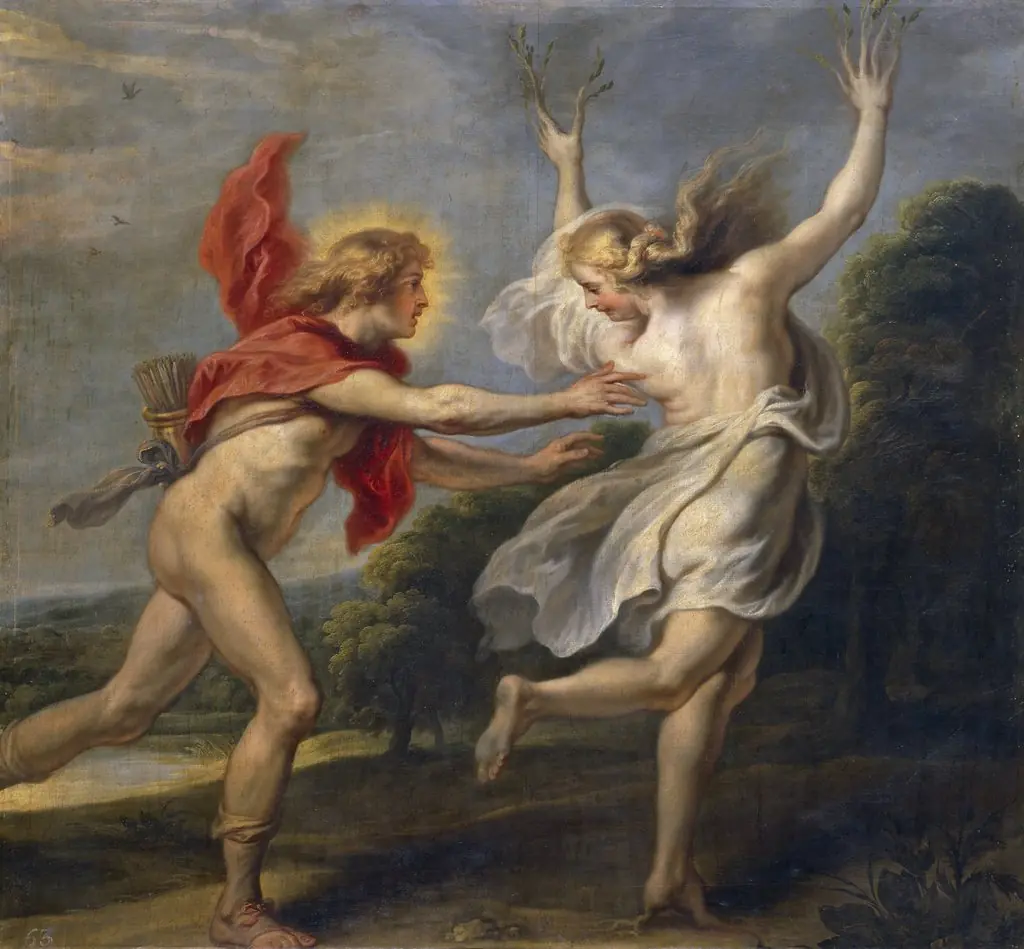 Apollo and Daphne
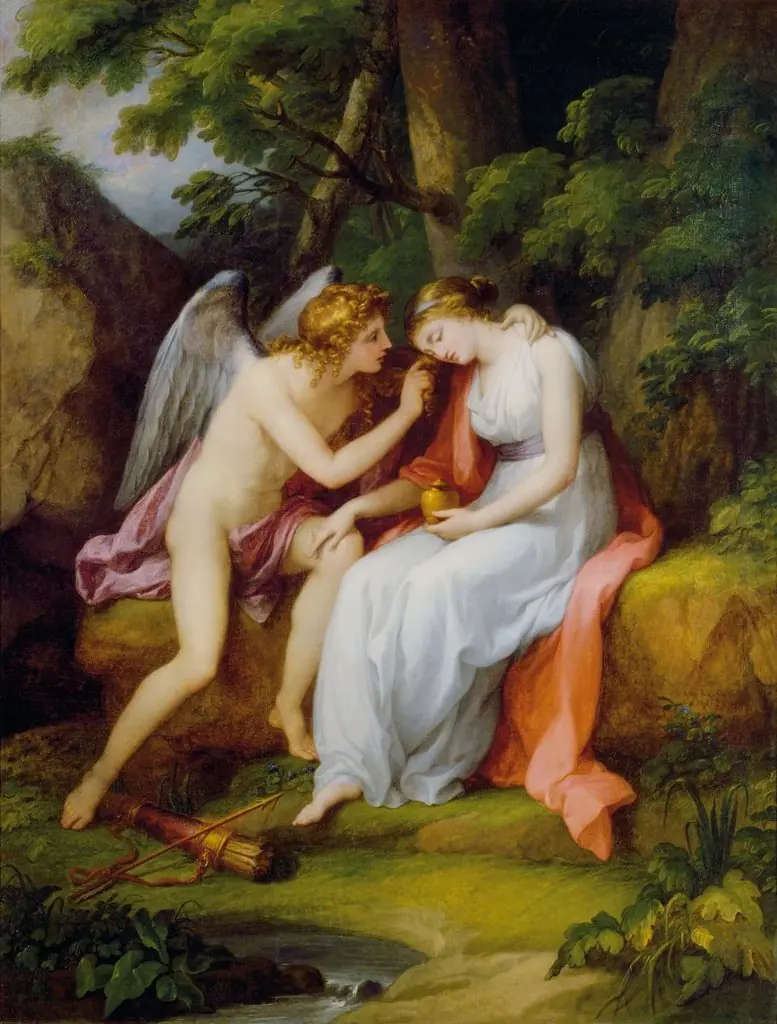 Amor und Psyche
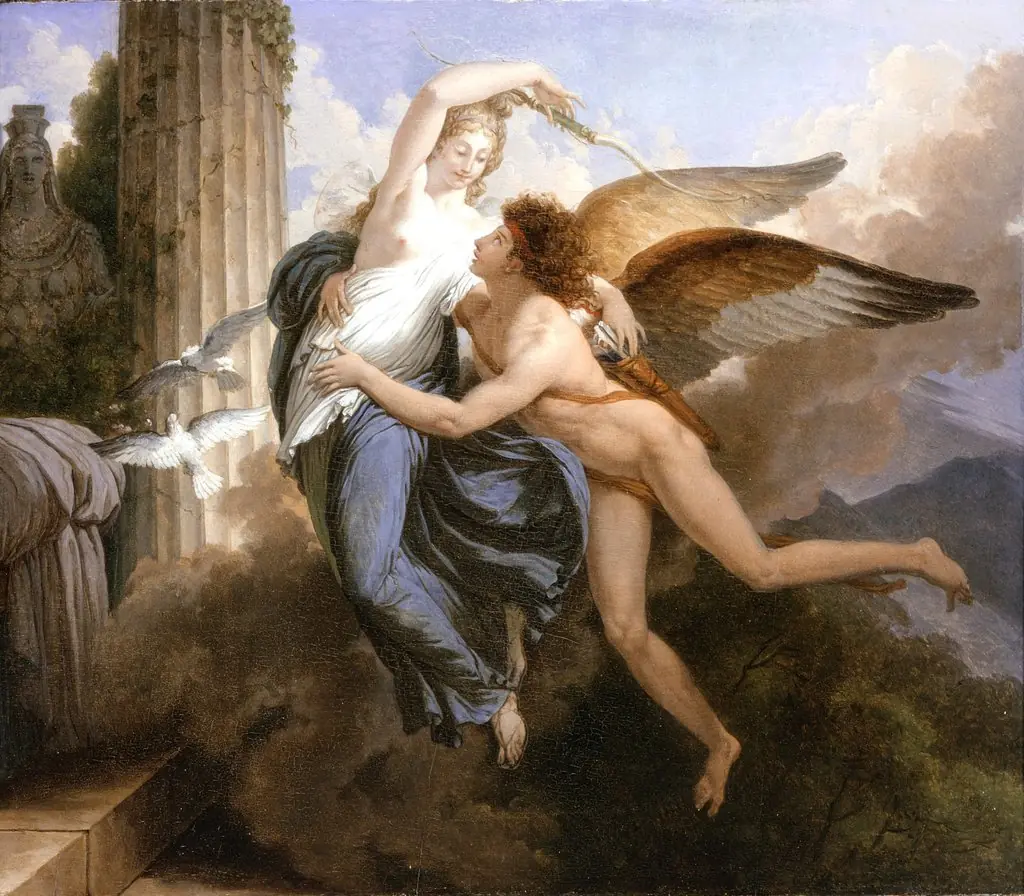 The Reunion of Cupid and Psyche
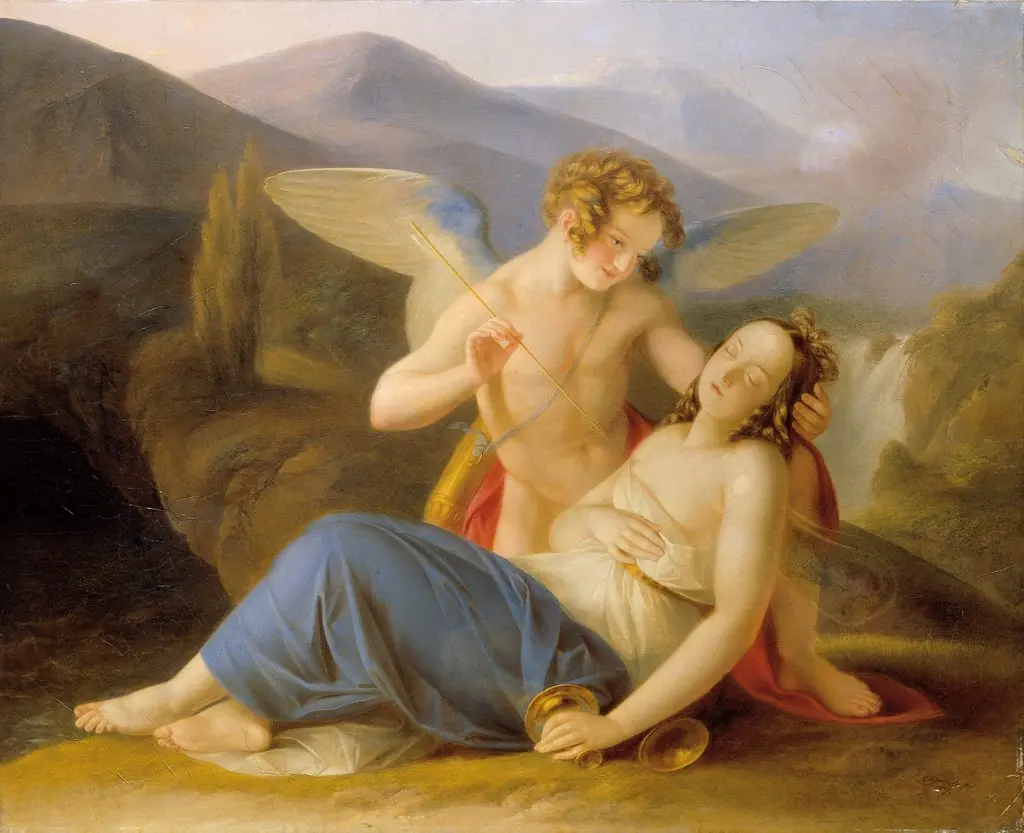 Psyche is awakened from fainting by Cupid's arrow
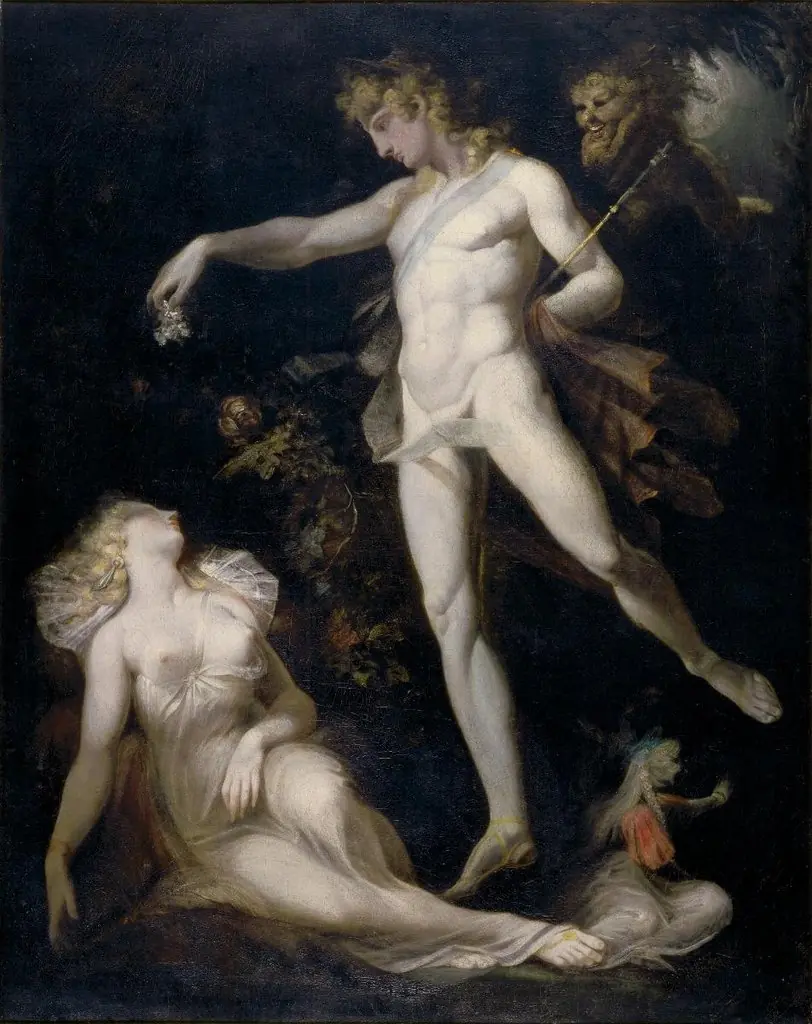 Oberon träufelt Blumensaft auf die Augen der schlafenden Titania
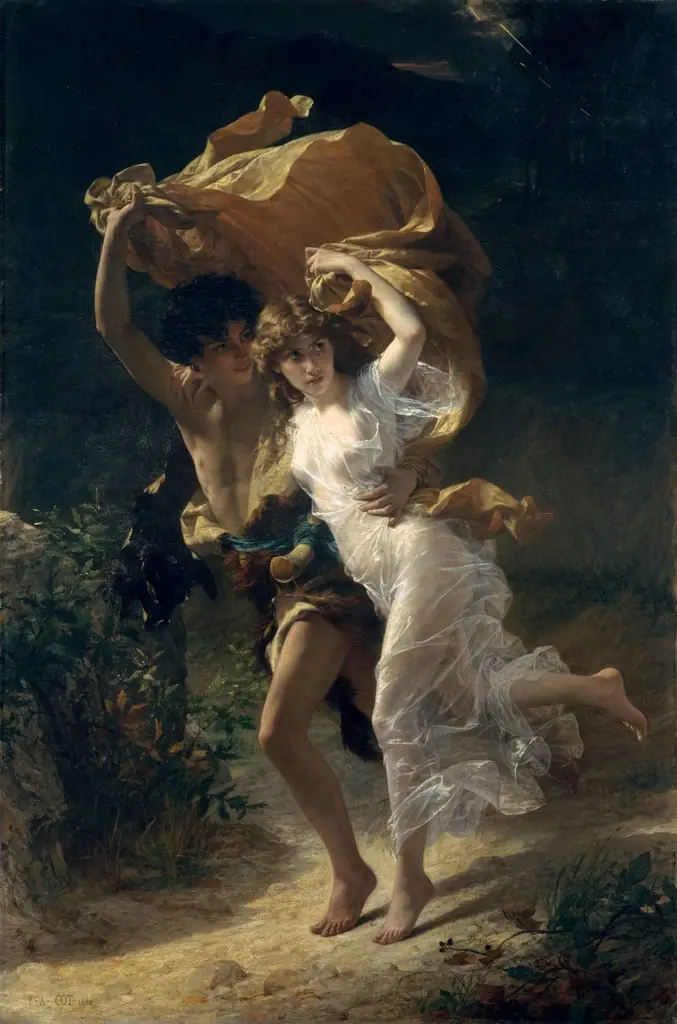 The Storm
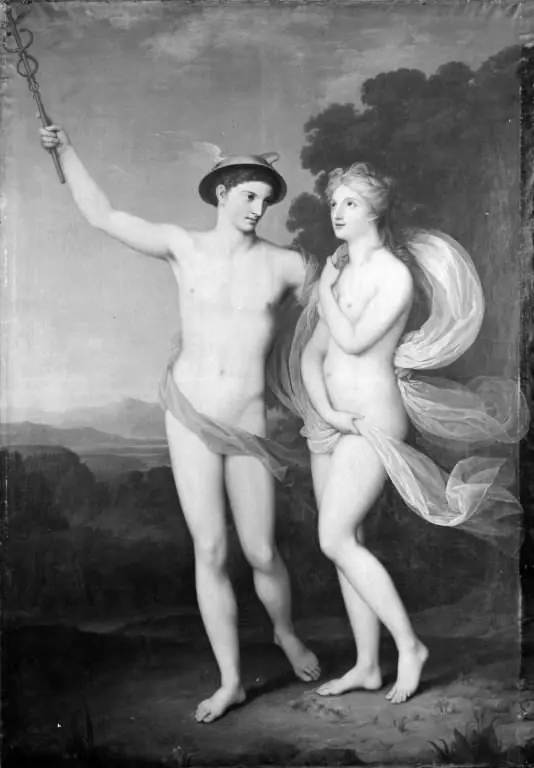 Merkur overtaler Psyke til at følge ham til guderne
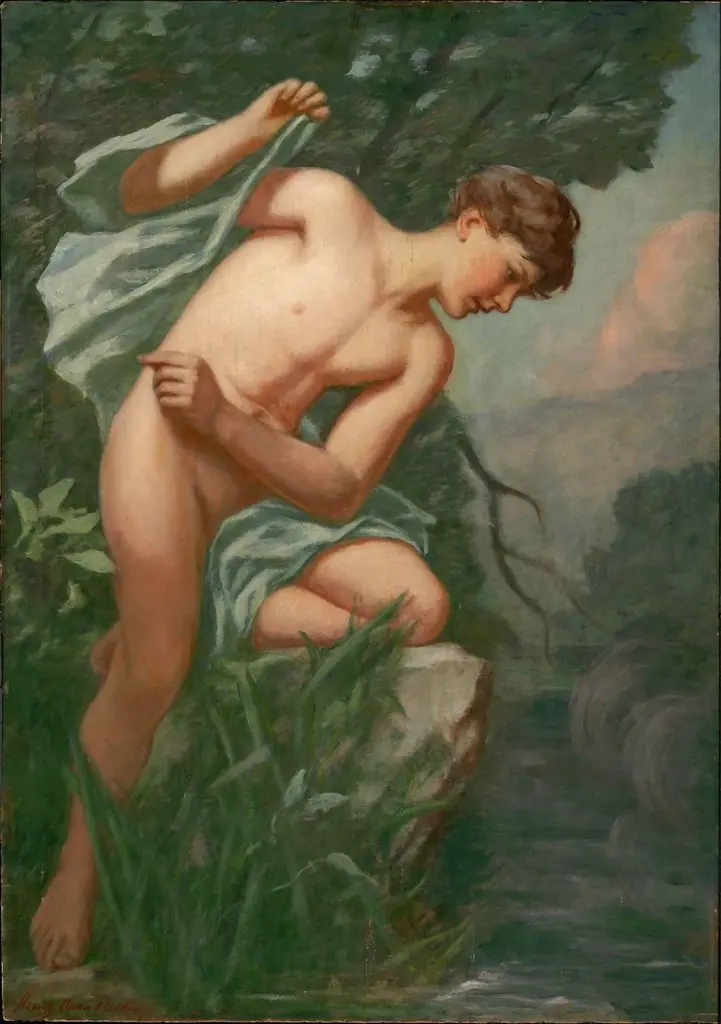 Narcissus
 Merkur overtaler Psyke til at følge ham til guderne
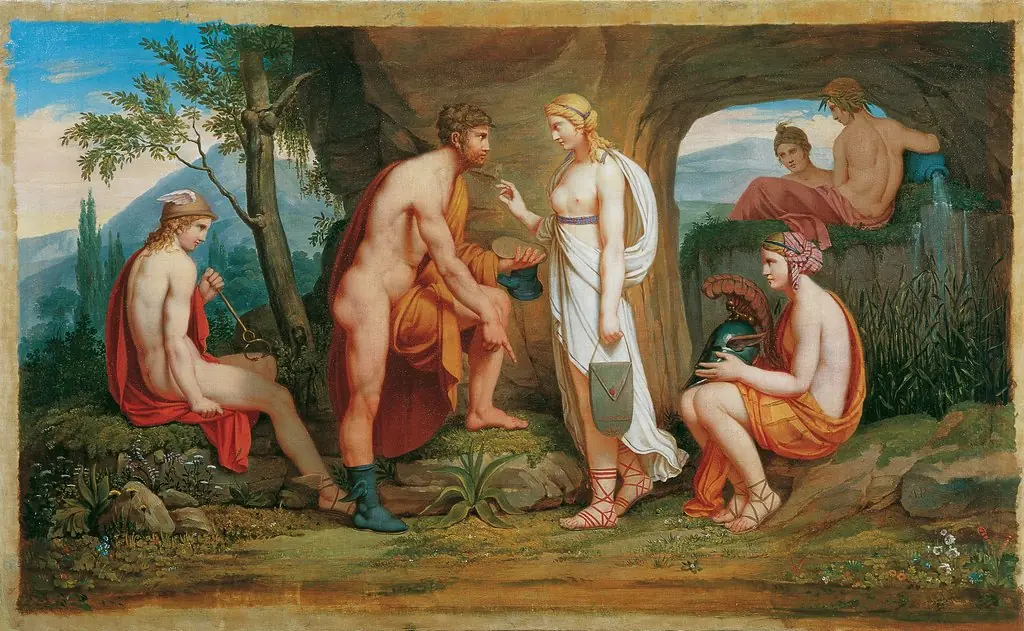 Perseus and the Nymphs