Artwork
Apollo and Daphne
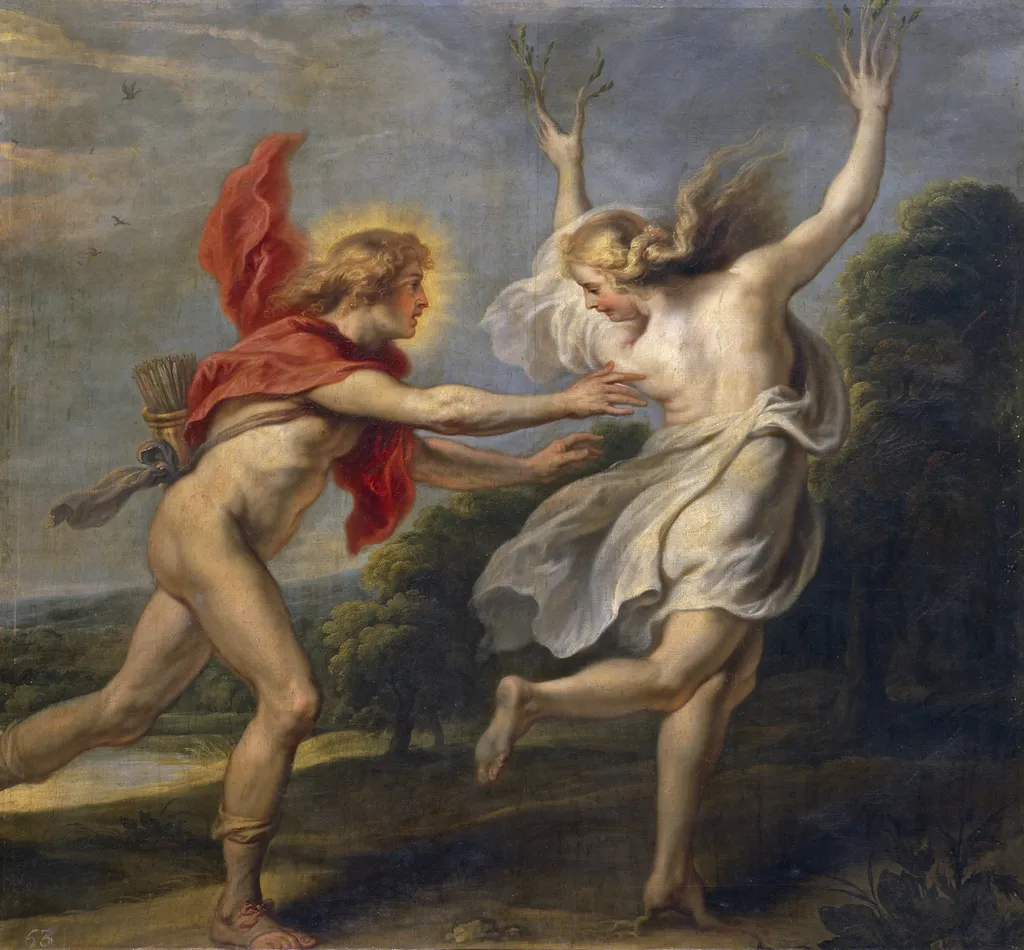
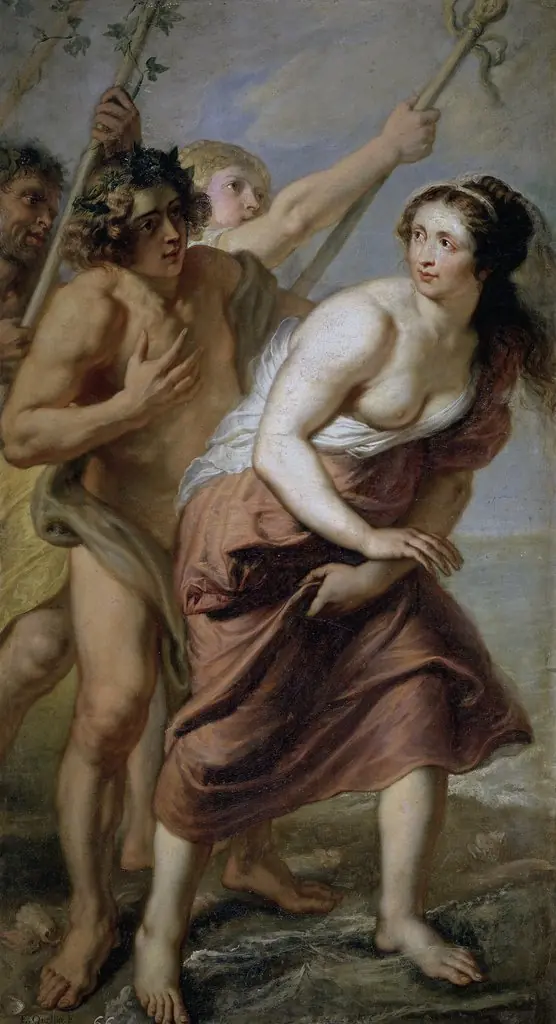
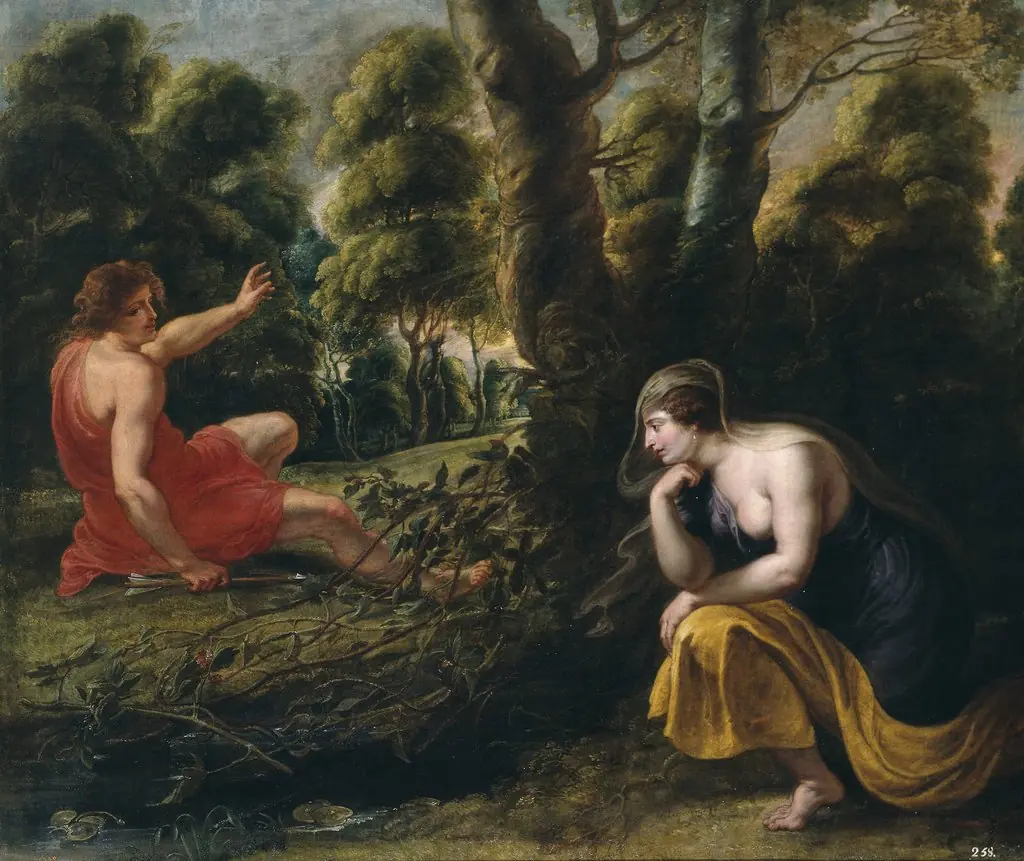
Apollo and Daphne is an oil painting by the Flemish Baroque painting artist Peter Paul Rubens. It dates from 1636 and is held in the collection of the Museo del Prado.
About this work
Subject & Meaning
Rubens renders the moment when Daphne’s fingers sprout bark and her toes take root, while Apollo’s outstretched hand grasps only branches.
The painting depicts the Ovidian myth of Apollo’s pursuit of Daphne, who transforms into a laurel tree to escape his advances. Rubens renders the moment when Daphne’s fingers sprout bark and her toes take root, while Apollo’s outstretched hand grasps only branches. The scene emphasizes the tension between desire and irreversible loss, a theme central to Ovid’s Metamorphoses.
The laurel’s presence also signals victory and poetic immortality, foreshadowing the god’s adoption of the laurel as his emblem.
The composition contrasts the dynamic, muscular energy of Apollo with the emergent stillness of Daphne’s metamorphosis, underscoring the futility of earthly pursuit against divine will.
Technique & Style
Apollo and Daphne is an oil painting executed on canvas, a medium consistent with Peter Paul Rubens's mythological subjects of the period. The work was produced in 1636 and is held in the Museo del Prado. Its canvas support measures 193 cm in height by 207 cm in width, giving the composition a substantial, nearly square format suited to the dynamic figural interaction between Apollo and Daphne.
Stylistically, the piece belongs to the mythological genre tradition, depicting the pursuit of Daphne by Apollo as its main subject. The large scale and oil-on-canvas handling are characteristic of Rubens's late mythological compositions, allowing for the broad, fluid brushwork and rich coloration associated with his Baroque approach to narrative subjects drawn from classical mythology.
History & Provenance
Apollo and Daphne by Peter Paul Rubens, dated 1636, is held in the Museo del Prado. The painting is part of the museum's collection, as recorded in its Wikidata entry, which lists the Museo del Prado as both the collection and the location of the work.
The sources do not provide a specific inventory or accession number for the painting, nor do they document any exhibition history beyond its presence in the Prado's holdings.
Legacy
The mythological scene of Apollo and Daphne, originally rendered by Titian and later interpreted by artists such as Cornelis de Vos, became a reference point for Baroque treatment of classical narratives. Rubens' 1636 oil painting amplified the dramatic tension of the chase, influencing subsequent depictions of pursuit and transformation in European art. Its presence in the Museo del Prado has kept the composition in public view, reinforcing its reputation as a benchmark for mythological painting.
Scholars cite the work when discussing the evolution of narrative intensity in 17th-century art, noting how Rubens' compositional choices were echoed in later mythological scenes across the Netherlands and Italy.
Overview
Apollo and Daphne is a 1636 oil painting by Peter Paul Rubens, a Flemish artist associated with the Baroque movement.
Own this work as a print
Artist & collection
Artist
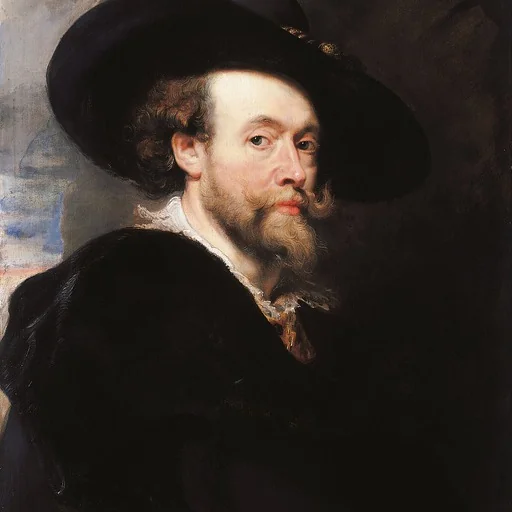
Sir Peter Paul Rubens ( ROO-bənz; Dutch:; 28 June 1577 – 30 May 1640) was a Flemish artist and diplomat.