Artwork
Gothic Windows in the Ruins of the Monastery at Oybin
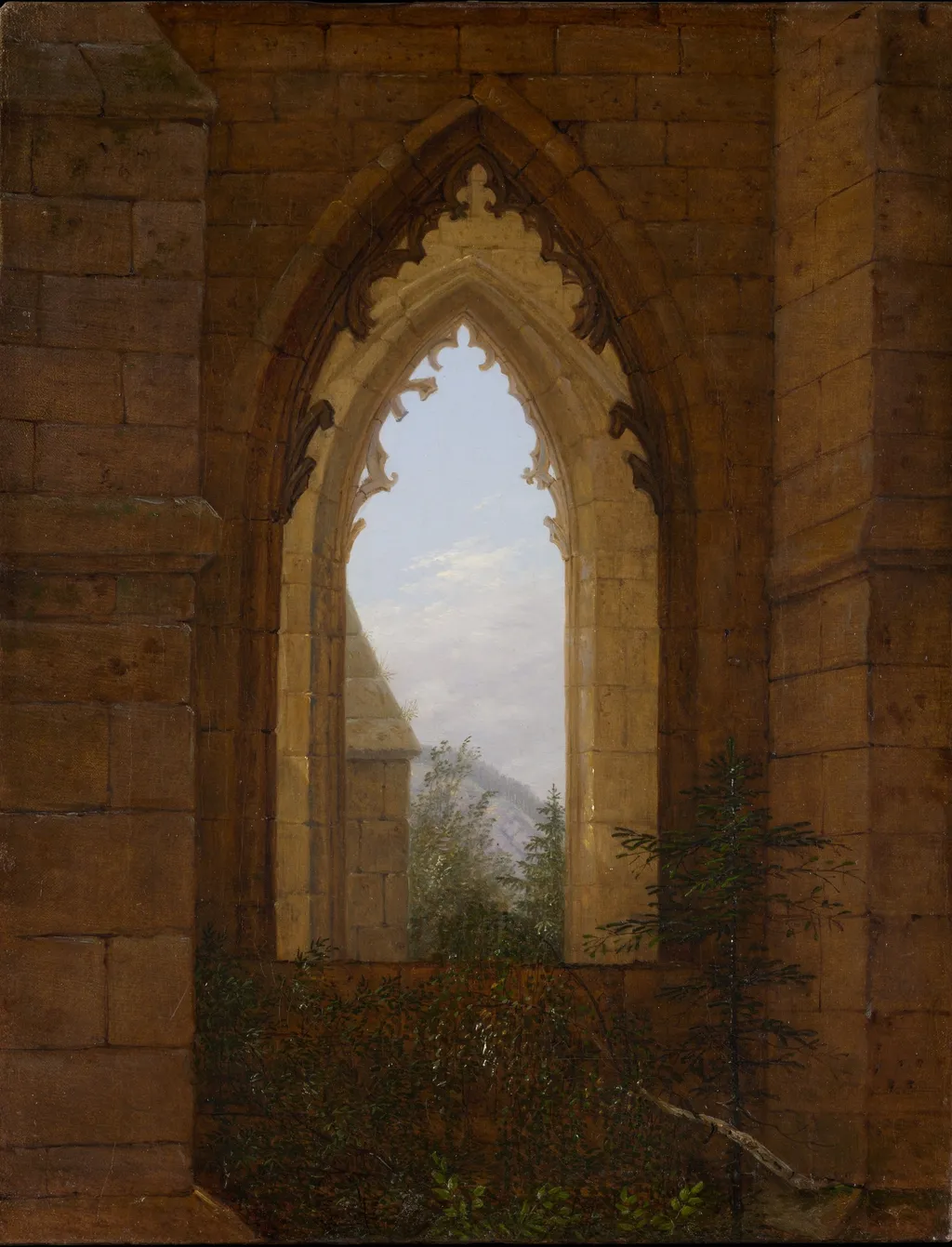
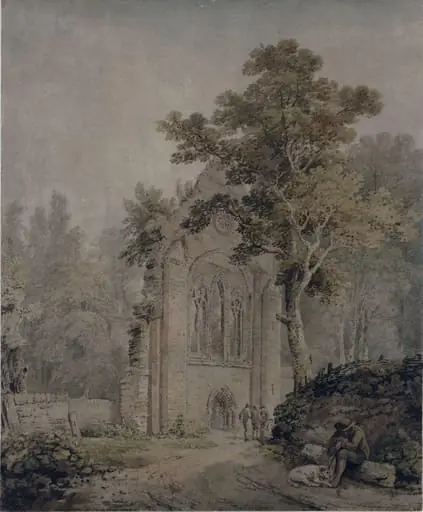
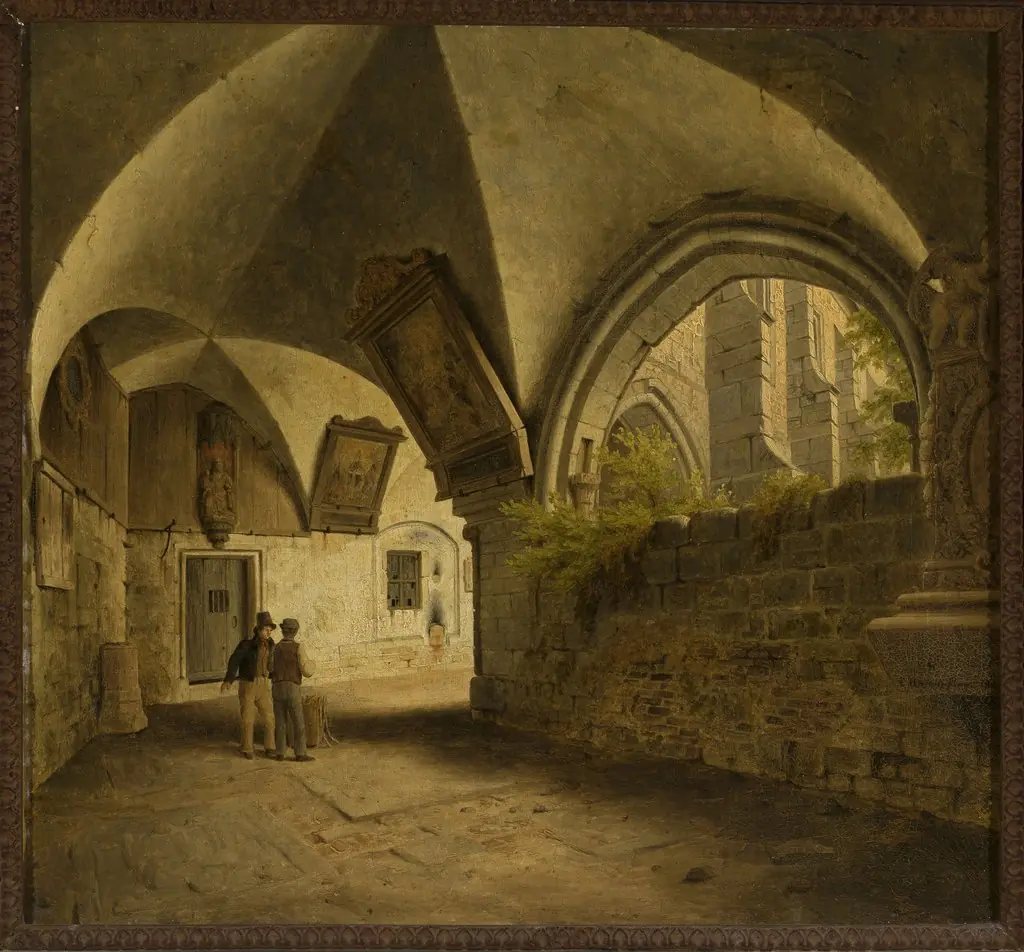
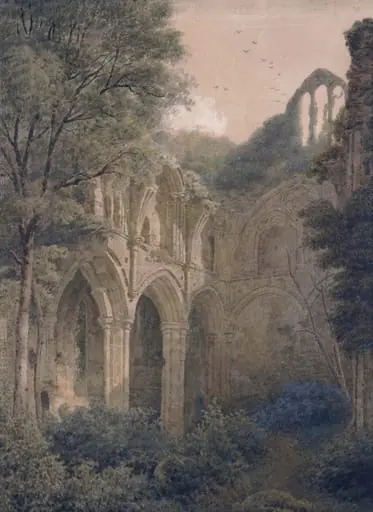
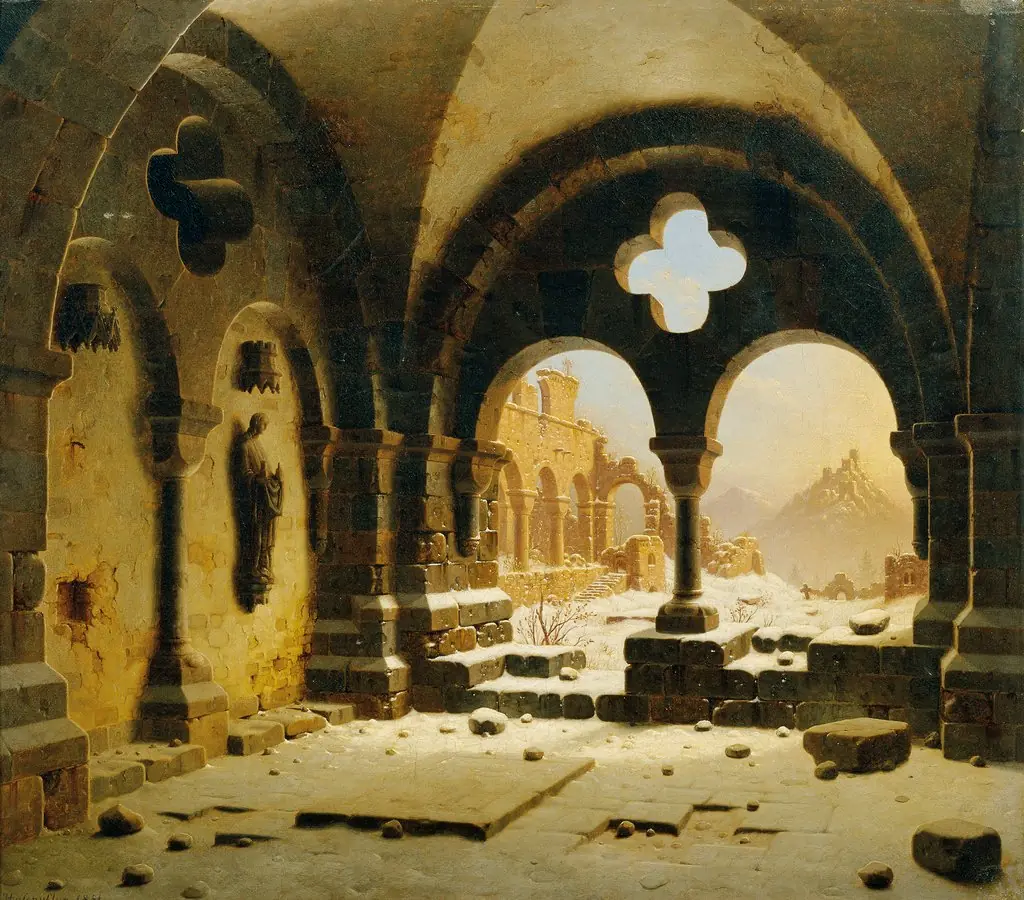
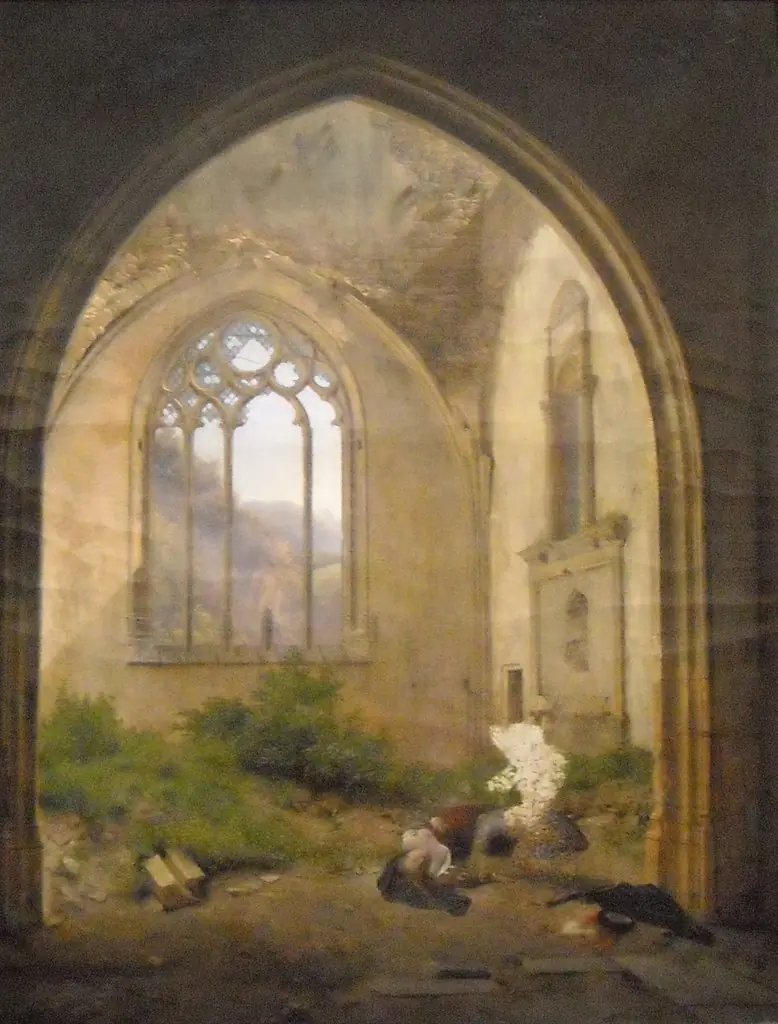
Gothic Windows in the Ruins of the Monastery at Oybin is an oil painting by the German Romanticist artist Carl Gustav Carus. It dates from 1828 and is held in the collection of the Metropolitan Museum of Art. Created in 1828, this oil painting presents a solitary Gothic window set within the crumbling walls of the former monastery at Oybin.
About this work
Subject & Meaning
The work depicts the architectural remains of the Monastery at Oybin, specifically focusing on a window within the ruins. As a landscape painting created in 1828, the subject centers on the structural fragment of the window set against the backdrop of the decaying monastery. The composition isolates this Gothic element, presenting the ruin as a solitary subject of observation.
Technique & Style
Carl Gustav Carus executed Gothic Windows in the Ruins of the Monastery at Oybin in 1828 using oil paint on canvas.
Carl Gustav Carus executed Gothic Windows in the Ruins of the Monastery at Oybin in 1828 using oil paint on canvas. The work measures 43.2 cm in height and 33.7 cm in width. As an oil painting, the medium allows for the nuanced rendering of light and texture characteristic of the artist's approach to landscape and architectural ruins.
The composition focuses on the depiction of a window within the ruined monastery structure, emphasizing the interplay between the built environment and the surrounding decay.
History & Provenance
Carl Gustav Carus painted Gothic Windows in the Ruins of the Monastery at Oybin in 1828, an oil on canvas work now held by the Metropolitan Museum of Art. The painting entered the museum's collection shortly after its creation, becoming part of its permanent holdings. Its dimensions measure 43.2 cm in height by 33.7 cm in width.
Carl Gustav Carus's 1828 oil painting, Gothic Windows in the Ruins of the Monastery at Oybin, is held in the collection of the Metropolitan Museum of Art. The work is executed on canvas and measures 43.2 cm in height by 33.7 cm in width. While the sources confirm the painting's current location and physical dimensions, they do not provide a specific inventory or accession number, nor do they list any exhibition history for the piece.
Overview
Created in 1828, this oil painting presents a solitary Gothic window set within the crumbling walls of the former monastery at Oybin. The arch, framed by weathered stone tracery, opens onto a distant landscape of gentle hills and scattered trees. Light filters through the opening, casting a soft glow on the stone while the sky beyond is rendered in cool blues, establishing a calm, reflective atmosphere.
Context
Carus painted the scene during a period when German artists, inspired by figures such as Caspar David Friedrich, turned to medieval ruins as symbols of national identity and spiritual yearning. The monastery at Oybin, a historic site in Saxony, offered a tangible link to the Gothic past, making it an apt subject for the era’s fascination with history, nature, and emotional depth.
Own this work as a print
Artist & collection
Artist
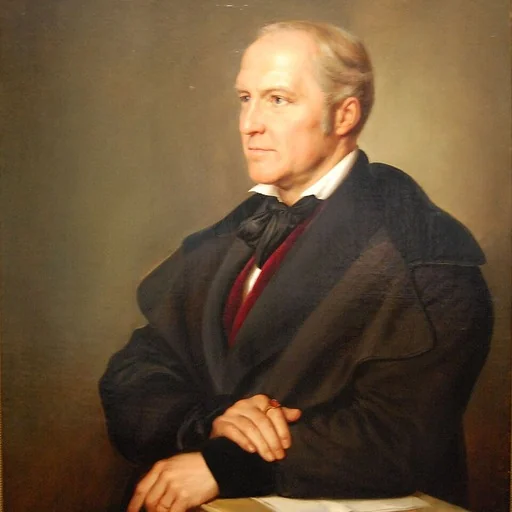
Carl Gustav Carus (3 January 1789 – 28 July 1869) was a German physiologist and painter, born in Leipzig, who played various roles during the Romantic era.