Artwork
An Overgrown Mineshaft
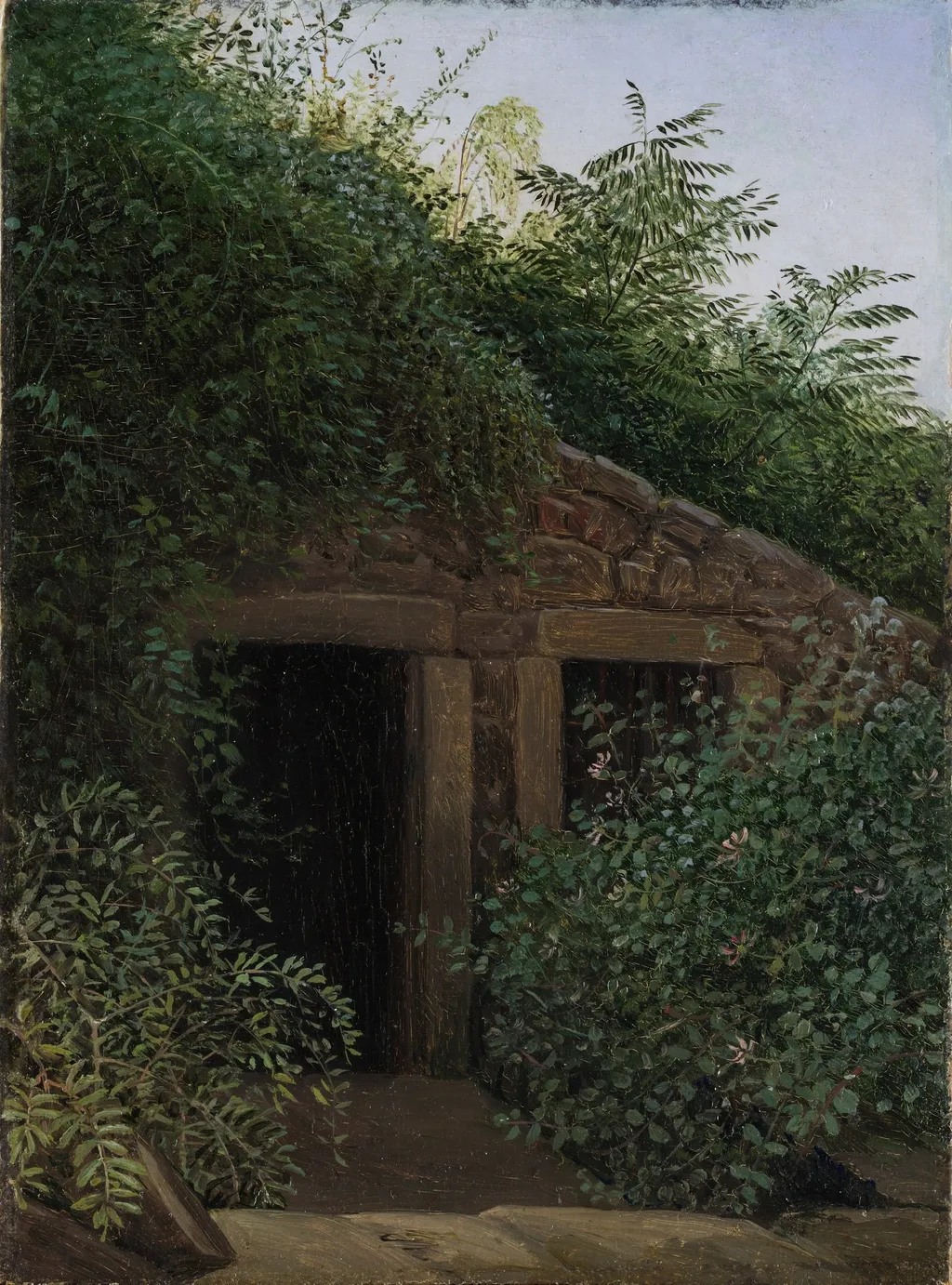
An Overgrown Mineshaft is an unspecified painting by Carl Gustav Carus. It dates from 1824 and is held in the collection of the Metropolitan Museum of Art.
About this work
Subject & Meaning
6 cm by 21 cm and dated 1824, the piece is housed in the Metropolitan Museum of Art, where it remains part of the collection of Georg Schäfer.
The painting shows a leaf, a doorway and ruins, elements that together evoke the encroachment of nature upon human architecture and suggest themes of decay and transience. These iconographic details align with Romantic-era concerns about the passage of time and the sublime in ruin, reflecting Carus’s interest in the interplay between civilization and the natural world. Measured at 28.6 cm by 21 cm and dated 1824, the piece is housed in the Metropolitan Museum of Art, where it remains part of the collection of Georg Schäfer.
Technique & Style
Created in 1824, An Overgrown Mineshaft is an oil painting executed on a rectangular support measuring 28.6 cm in height and 21 cm in width. The work depicts a scene containing ruins, a doorway, and foliage, specifically leaves, which are integrated into the composition. The handling of the medium emphasizes the formal interplay between the architectural elements of the mineshaft and the encroaching natural growth.
Stylistically, the piece reflects the artist's approach to landscape painting during this period, focusing on the atmospheric and structural details of the depicted setting.
History & Provenance
An Overgrown Mineshaft is a painting by Carl Gustav Carus dated to 1824. The work, classified as a painting, depicts a leaf, a doorway, and ruins. Its inception is recorded as 1824-00-00, and it is held in the collection of the Metropolitan Museum of Art.
Provenance information indicates that the painting has been owned by Georg Schäfer; no additional details about its commission or earlier ownership are provided in the sources.
An Overgrown Mineshaft, painted by Carl Gustav Carus in 1824, is held in the collection of the Metropolitan Museum of Art. The painting was previously owned by Georg Schäfer before entering the museum's holdings. The work measures 28.6 cm in height by 21 cm in width.
No specific exhibition history is recorded in the available sources.
Overview
Carl Gustav Carus, a German painter, created An Overgrown Mineshaft in 1824. This oil painting exemplifies the Romantic era's interest in the natural world and its interaction with human endeavors. Carus, also a physician and naturalist, often imbued his landscapes with a sense of quiet contemplation and symbolic depth.
The work depicts a forgotten entrance, where nature has begun to reclaim a man-made structure, inviting viewers to reflect on themes of time and transience.
Context
Carl Gustav Carus was a prominent figure in German Romanticism, influenced by his mentor Caspar David Friedrich and a contemporary of Johann Wolfgang Goethe. His work often bridged scientific observation with artistic expression, a hallmark of the era that sought deeper meaning in the natural world. An Overgrown Mineshaft aligns with this intellectual current, exploring themes of decay, renewal, and humanity's place within the grander scheme of nature's cycles.
Own this work as a print
Artist & collection

Artist
Carl Gustav Carus (3 January 1789 – 28 July 1869) was a German physiologist and painter, born in Leipzig, who played various roles during the Romantic era.

- A Pergola, Italy
 Monastery Interior
 Study from Nature
 The Garden Steps Leading to the Artist's Studio on Blegdammen
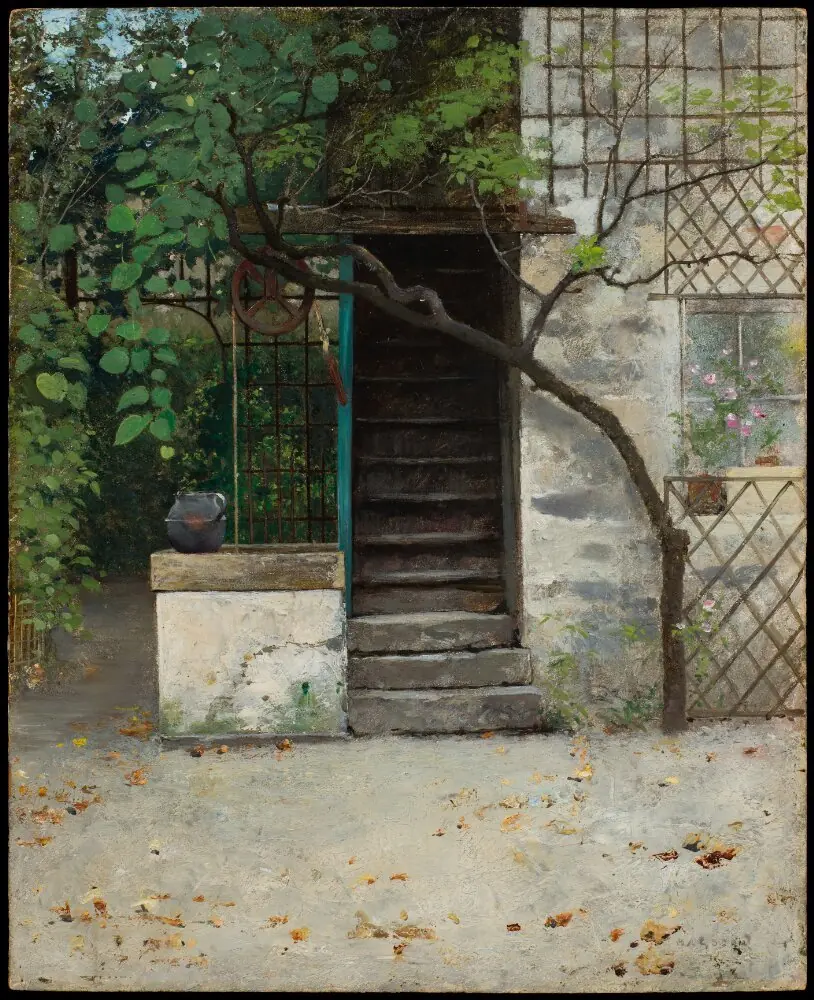 Outside Hugo Birger’s Studio in Paris
 Landscape with a Wayside Shrine
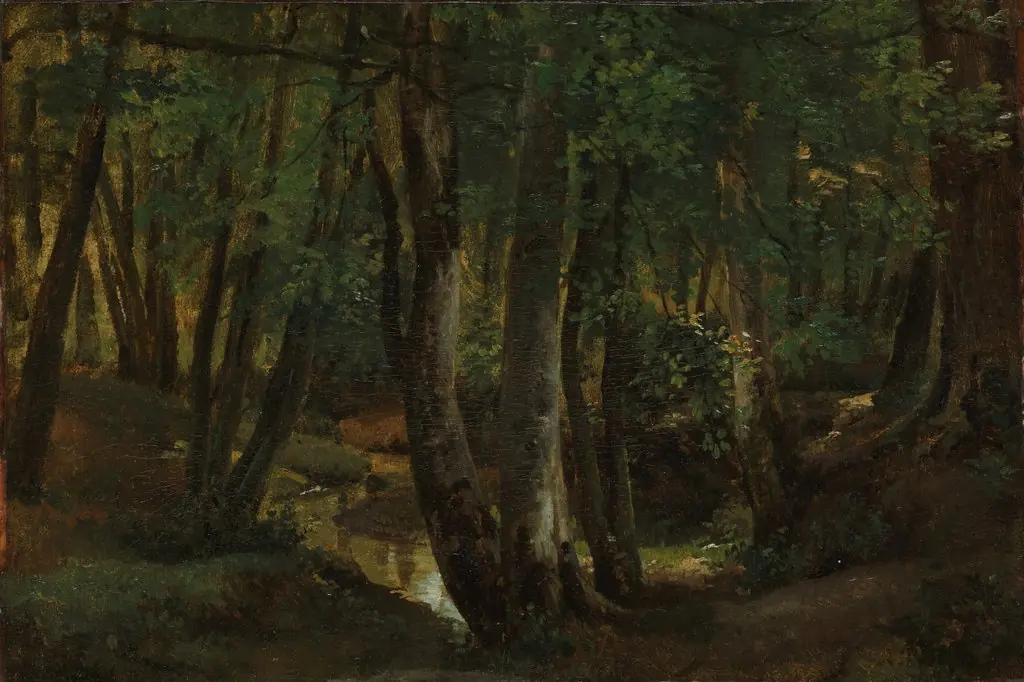 Interior of a Wood at Pierrefitte
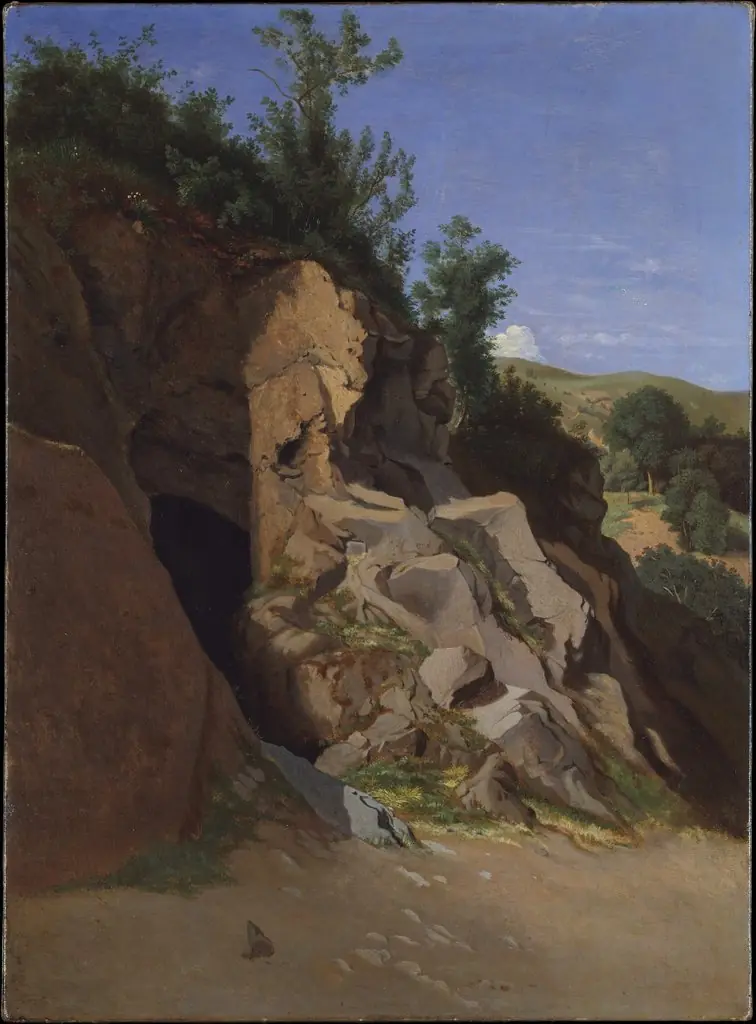 Landscape with a Cave
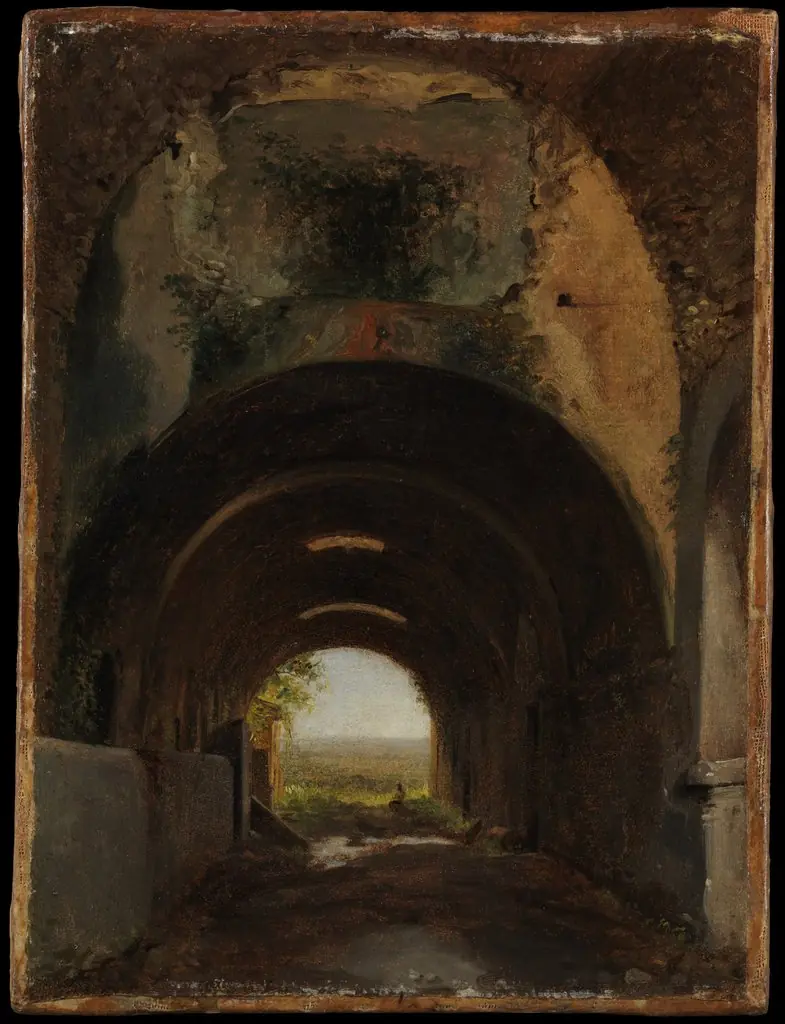 View in the Stables of the Villa of Maecenas, Tivoli
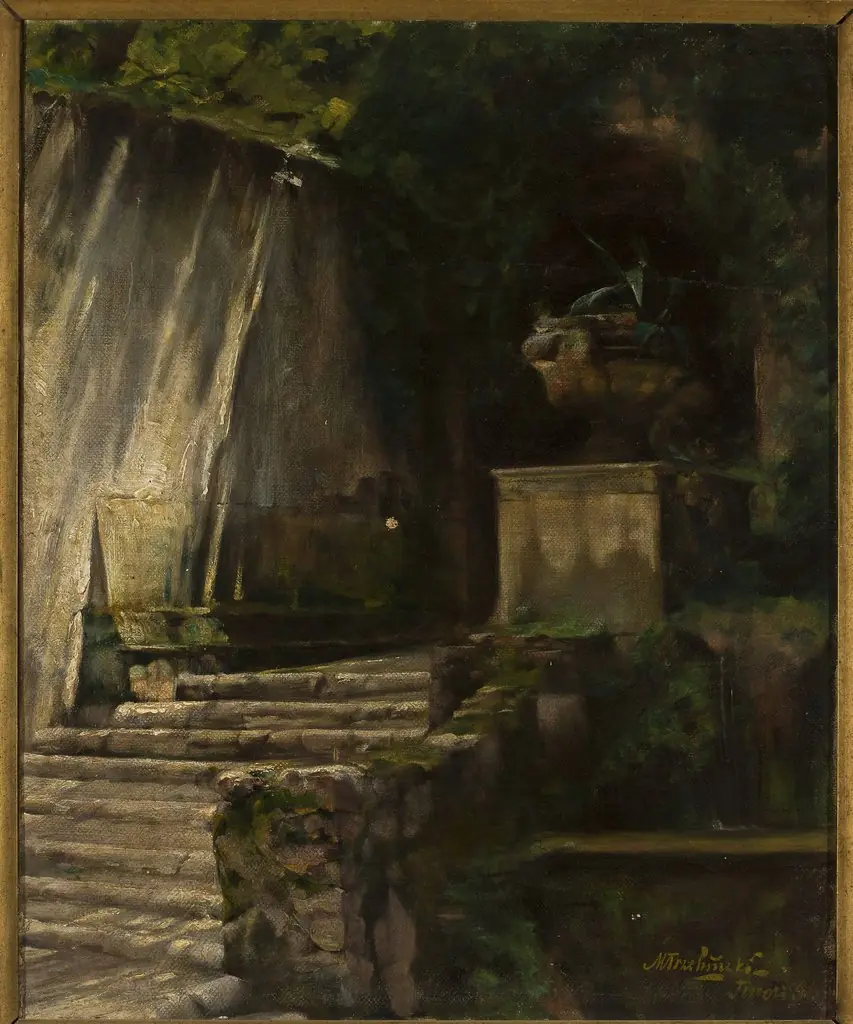 Fragment of the park in Tivoli
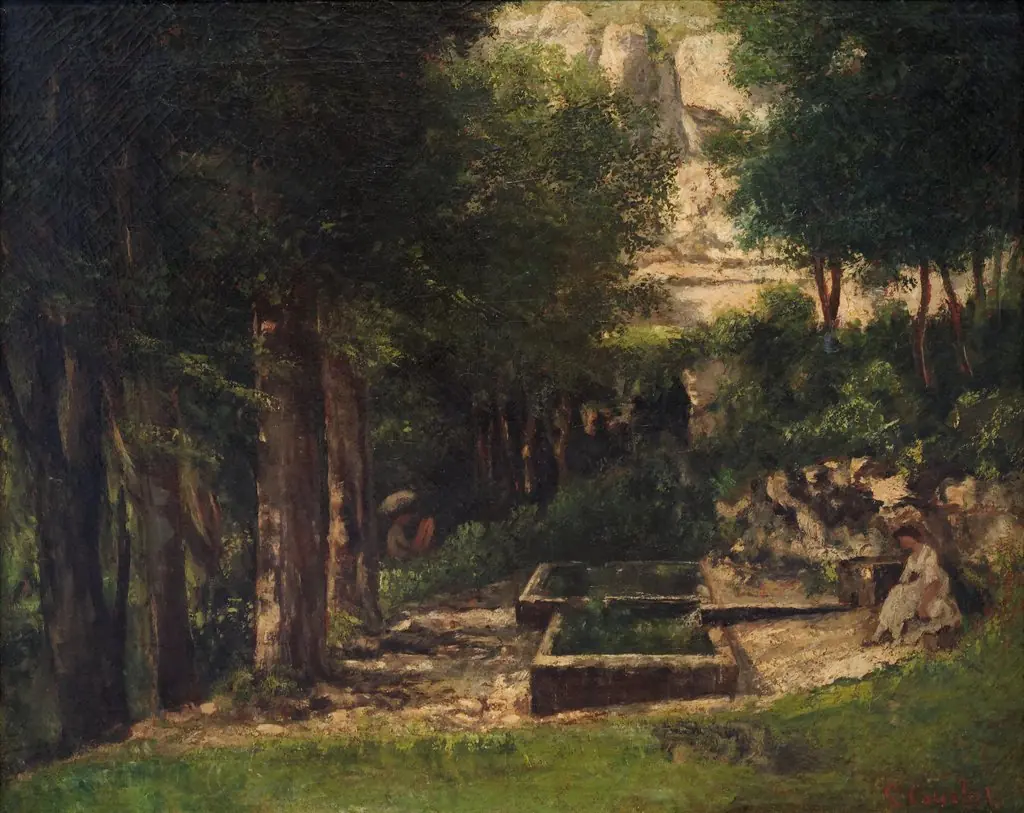 The Spring of léri in Chassagne
 A Building near Tor di Quinto outside Rome