Artwork
Liseron
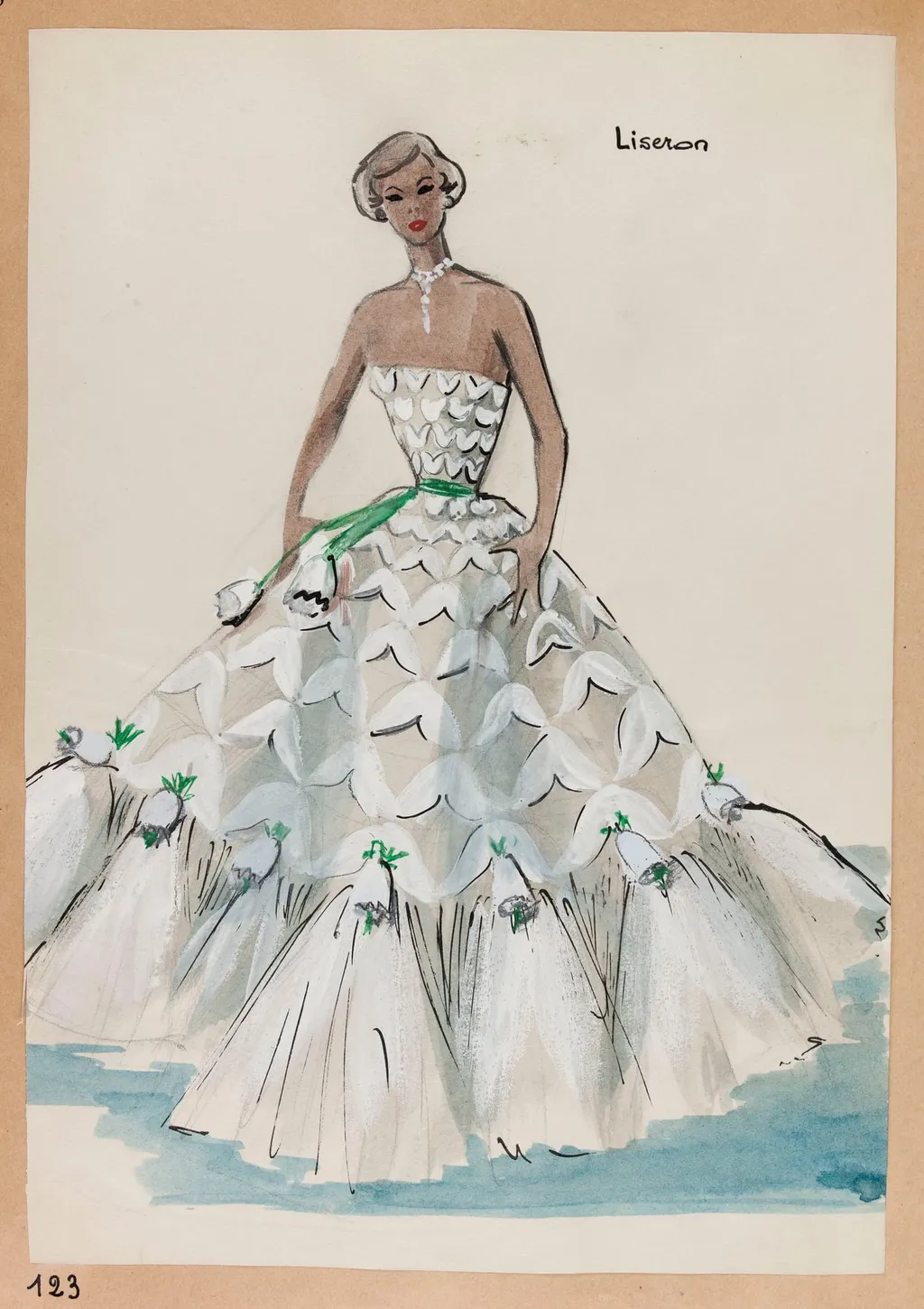
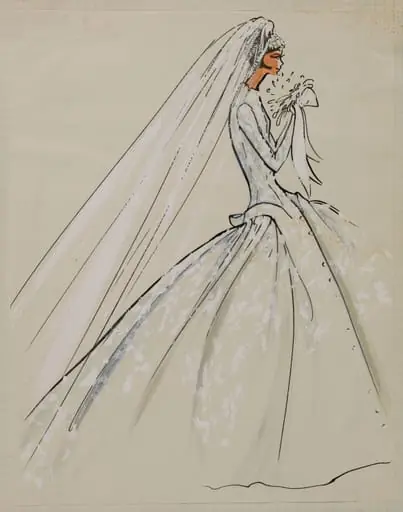
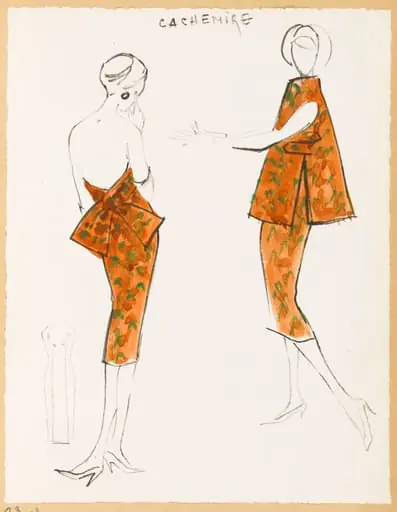
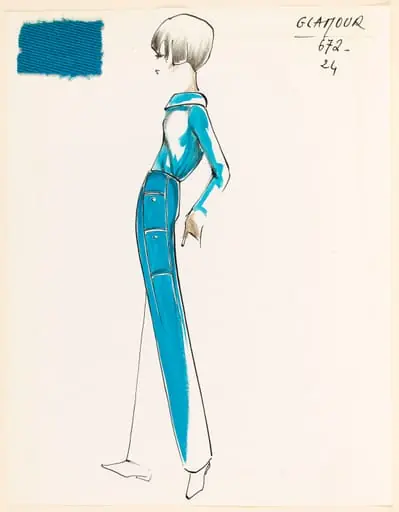
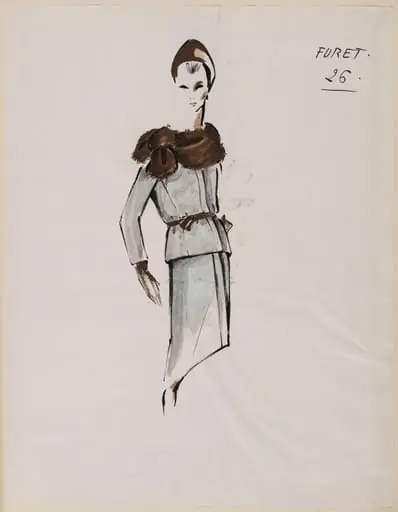
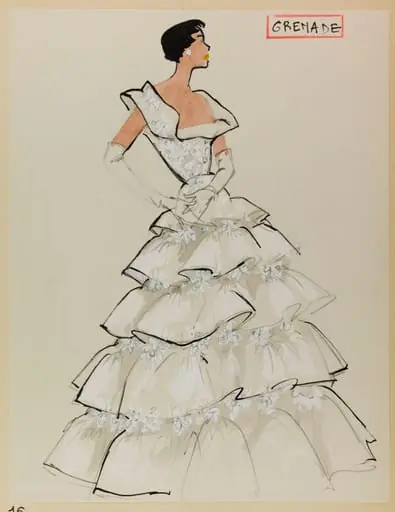
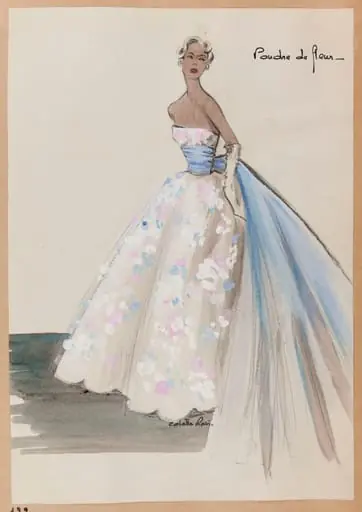
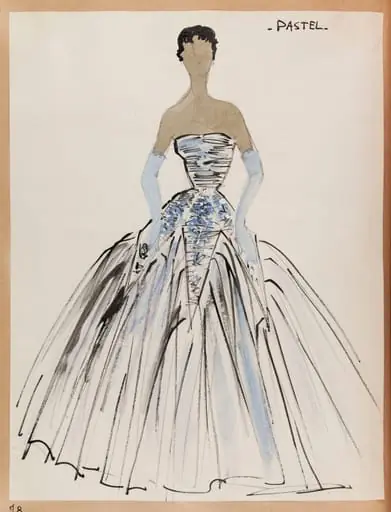
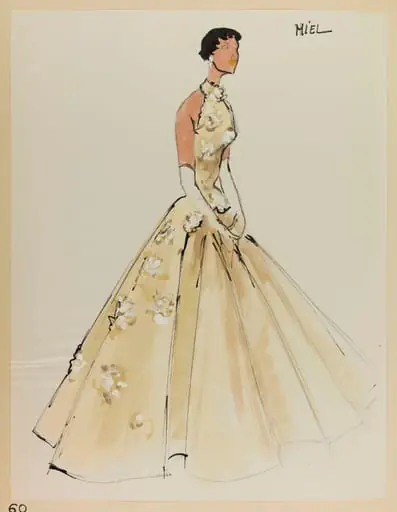
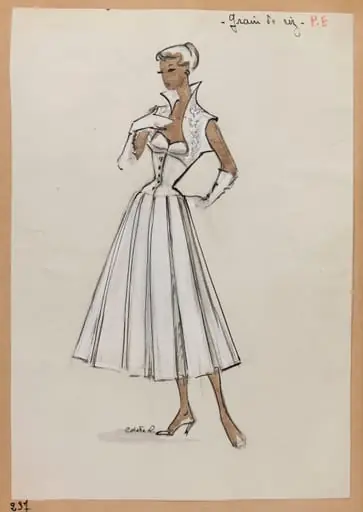
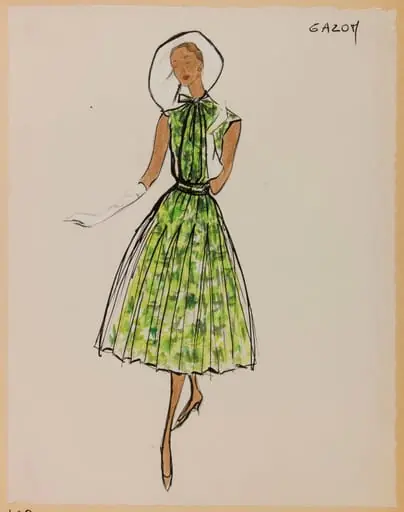
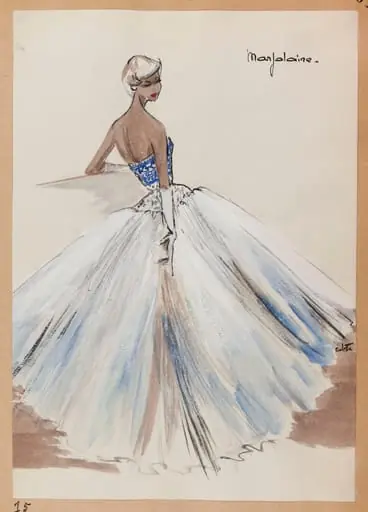
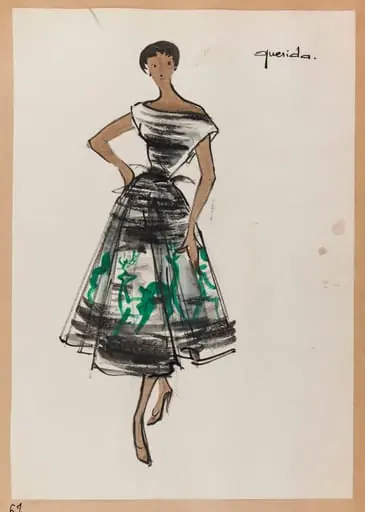
Liseron is a drawing by Carven. It dates from 1951 and is held in the collection of the Palais Galliera - Musée de la Mode de la Ville de Paris.
About this work
Overview
The work is signed with the title, which also names a climbing plant known as the bindweed, suggesting a deliberate link between the garment and natural motifs.
Created around 1951, Liseron is a sketch by French designer Carven, now held in the Museum of Ethnography’s collection. It depicts a female figure adorned in an elaborate dress composed entirely of floral and vegetal forms. The work is signed with the title, which also names a climbing plant known as the bindweed, suggesting a deliberate link between the garment and natural motifs. The piece functions as both fashion design and visual poetry, blending textile imagination with botanical reference.
Subject & Meaning
The figure wears a strapless bodice formed from layered petals, with a skirt that extends into a trailing train of leaves and blossoms. Her hair is neatly gathered, and a minimal necklace completes the look. The dress does not mimic fabric but rather resembles a living bouquet, as if the woman has become an embodiment of wild flora.
This fusion of human form and plant life evokes themes of transience, beauty rooted in nature, and the blurring of identity between wearer and environment.
Technique & Style
Rendered in ink or pencil, the sketch employs fluid, continuous lines to suggest movement and softness. The floral elements are repeated with rhythmic precision, creating texture without shading or color. The absence of facial detail focuses attention on the garment’s structure, while the flowing contours of the dress imply motion.
The style is minimalist yet rich in symbolic detail, characteristic of Carven’s approach to translating botanical forms into wearable art.
History & Provenance
The sketch entered the Museum of Ethnography’s collection in the mid-20th century, likely acquired as part of a broader effort to document fashion as cultural expression. Though Carven’s fashion house was known for ready-to-wear designs, this piece appears to be a conceptual study rather than a production pattern. Its preservation suggests recognition of its artistic value beyond commercial use, positioning it as a document of mid-century design thinking.
Context
In postwar Europe, designers increasingly turned to nature for inspiration, seeking renewal and simplicity after years of austerity. Carven’s work aligned with this trend, drawing from gardens and wild plants to create garments that felt organic and poetic. Liseron reflects a broader cultural moment in which fashion was reimagined not merely as utility but as a medium for expressing harmony with the natural world.
Legacy
Liseron remains a quiet testament to Carven’s ability to elevate fashion into symbolic art. While not widely reproduced or exhibited, it has influenced later designers who explore botanical themes in textile design. Its presence in an ethnographic museum underscores its role as a cultural artifact, capturing a moment when clothing became a canvas for natural imagery, bridging craft, aesthetics, and environmental reverence.
Artist & collection
Artist
These delicate ink-on-paper drawings capture the quiet poetry of everyday things: pinecones, reeds, apples.
Museum
Palais Galliera - Musée de la Mode de la Ville de Paris
Continue through works from the same source collection.