Artwork
'Gillon'
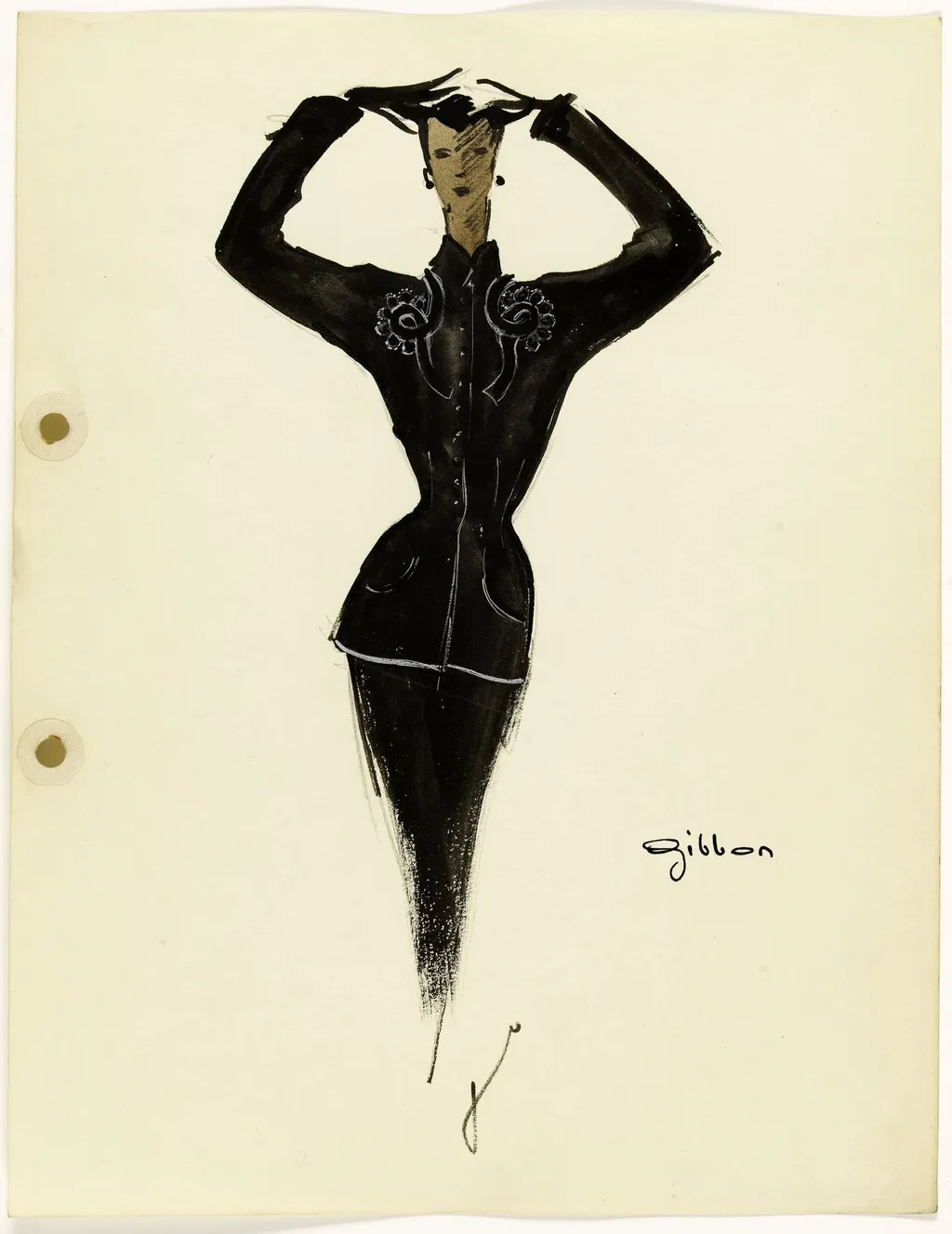
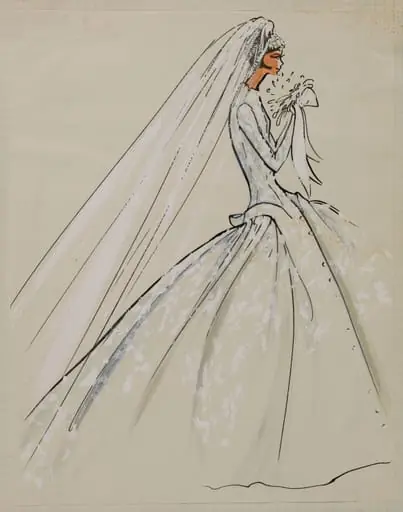
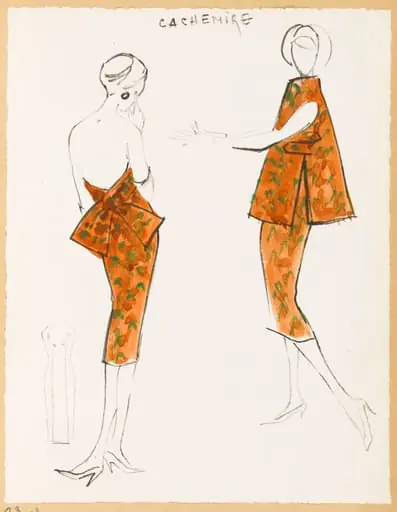
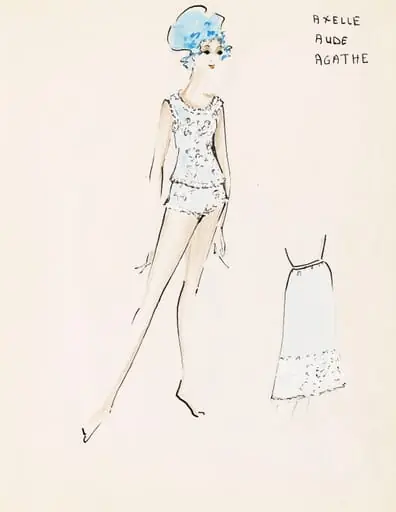
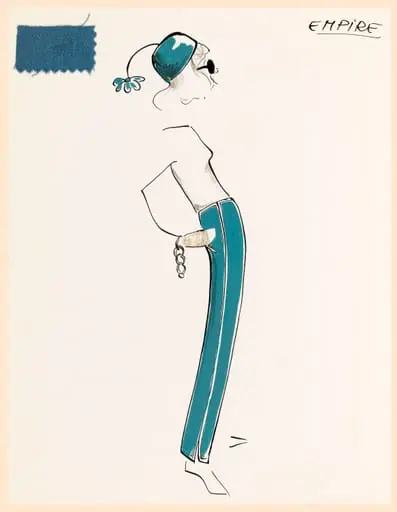
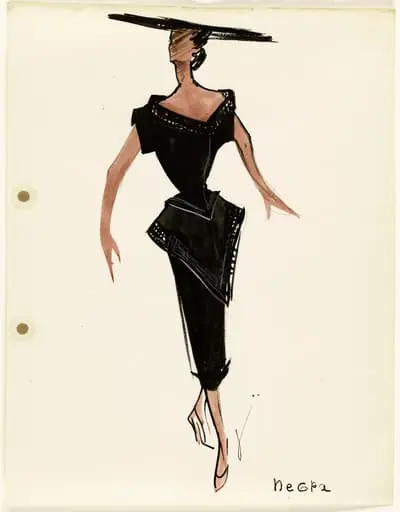
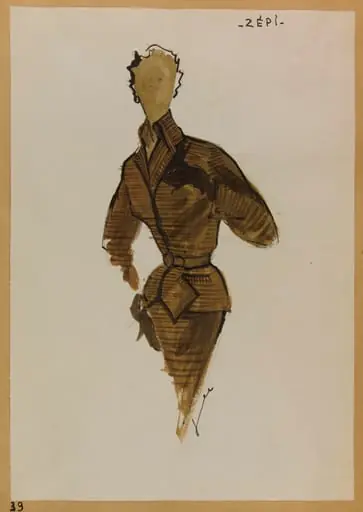
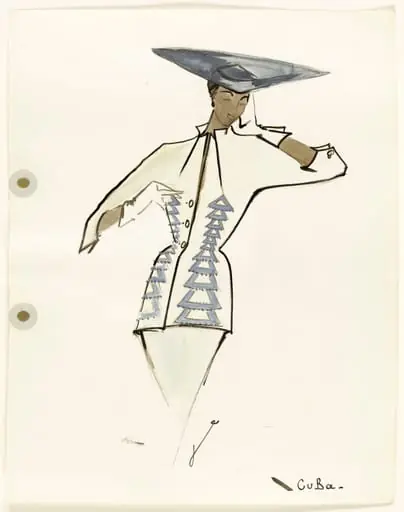
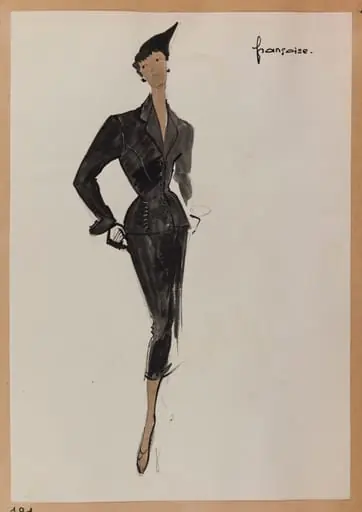
'Gillon' is a drawing by Carven. It dates from 1951 and is held in the collection of the Palais Galliera - Musée de la Mode de la Ville de Paris.
About this work
Overview
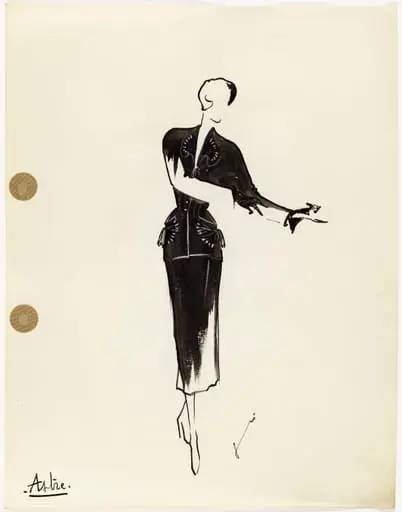
Created around 1951 by the artist Carven, this ink drawing depicts a solitary female figure viewed from behind.
Created around 1951 by the artist Carven, this ink drawing depicts a solitary female figure viewed from behind. Executed with swift, assured strokes, the work is part of the Museum of Ethnography’s collection. Its minimal background and focused composition emphasize the posture and attire of the subject, reflecting Carven’s preference for streamlined forms and expressive line work over detailed environments.
Subject & Meaning
The figure, shown with arms raised behind her head, suggests a moment of quiet motion, perhaps stretching, adjusting, or pausing. Her attire, a dark dress with white edging and two small floral motifs, hints at a stylized everyday garment. The lack of facial features or contextual clues invites interpretation rooted in gesture rather than narrative, aligning with Carven’s interest in universal bodily expression.
Technique & Style
Carven employed a fluid, economical line to define the figure, avoiding shading or texture in favor of contour and rhythm. The dress’s trim and floral details are rendered with precision, contrasting the loose flow of the hair. The plain background eliminates distraction, reinforcing the drawing’s focus on form and movement. This approach reflects a modernist tendency toward reduction and clarity.
History & Provenance
The drawing entered the Museum of Ethnography’s holdings in the mid-20th century, likely acquired as part of a broader collection of Carven’s graphic works. Its provenance remains tied to the artist’s personal archive, with no record of prior public exhibition. It has been consistently cataloged as a study in figure and posture, representative of his mid-century output.
Context
Carven’s work from this period often explored the human form through simplified, almost abstracted lines, influenced by postwar European drawing traditions. While not tied to a specific movement, his approach resonated with contemporaries who valued immediacy and emotional economy. 'Gillon' fits within a body of work that prioritized gesture over realism, aligning with broader trends in mid-century graphic art.
Legacy
Though Carven did not achieve widespread fame, his drawings, including 'Gillon,' are recognized for their quiet precision and emotional restraint. The work continues to be referenced in studies of 20th-century figure drawing, particularly for its ability to convey presence through minimal means. It remains a quiet example of how simplicity can sustain visual interest over time.
Artist & collection
Artist
These delicate ink-on-paper drawings capture the quiet poetry of everyday things: pinecones, reeds, apples.
Museum
Palais Galliera - Musée de la Mode de la Ville de Paris
Continue through works from the same source collection.