Artwork
Loup de mer
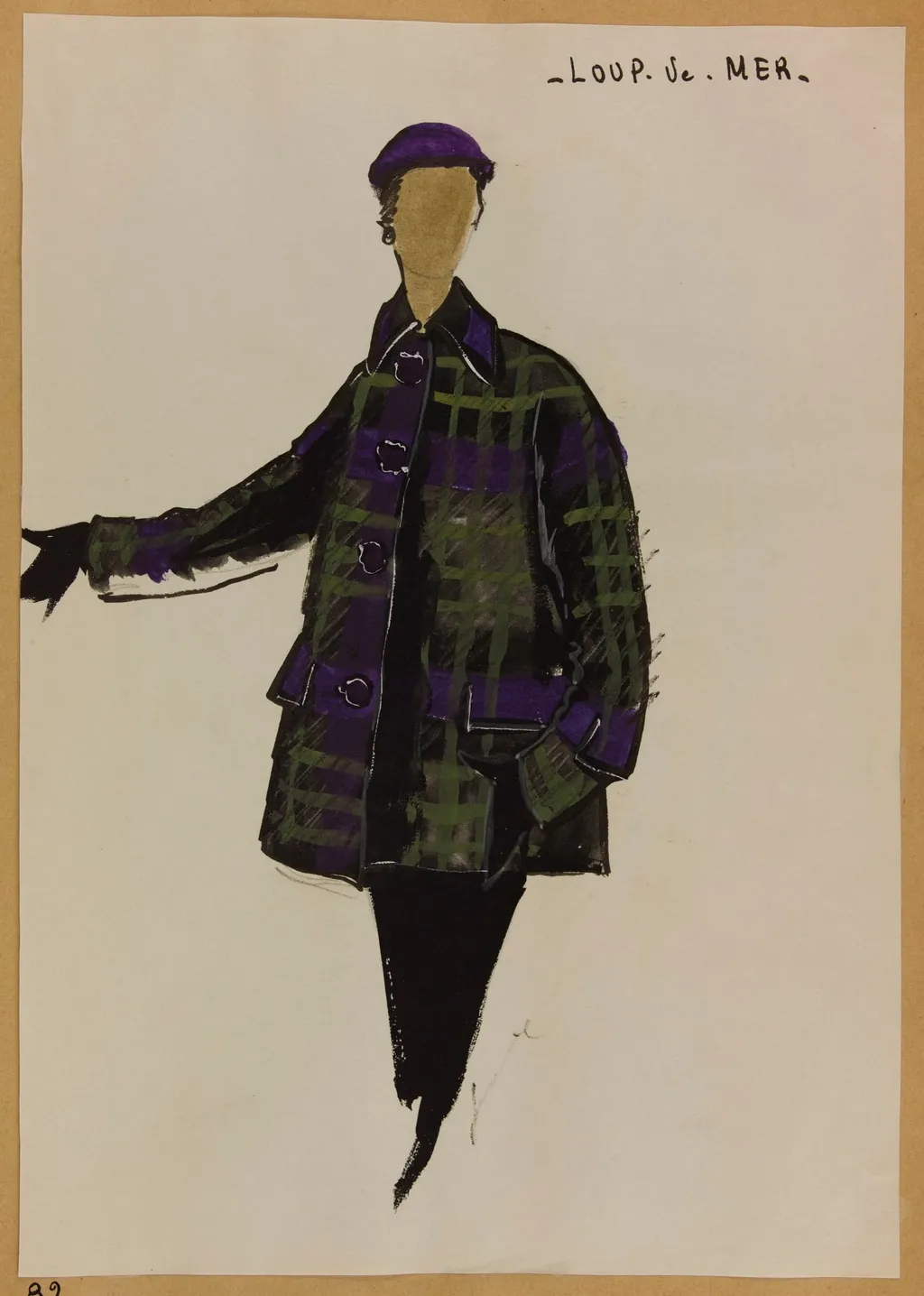
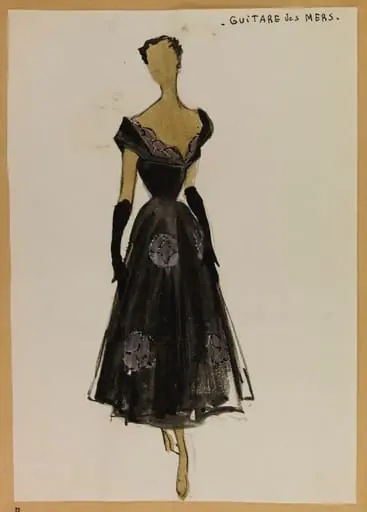
Loup de mer is a drawing by Carven. It dates from 1952 and is held in the collection of the Palais Galliera - Musée de la Mode de la Ville de Paris.
About this work
Overview
The work reflects Carven’s interest in everyday attire and its cultural resonance, blending fashion documentation with spontaneous artistic expression.
Loup de mer is a 1952 ink sketch by French designer Carven, held in the collection of the Museum of Ethnography. Executed with rapid, fluid lines, the drawing captures a figure in a distinctive coat, suggesting a moment of informal observation rather than a formal portrait. The work reflects Carven’s interest in everyday attire and its cultural resonance, blending fashion documentation with spontaneous artistic expression.
Subject & Meaning
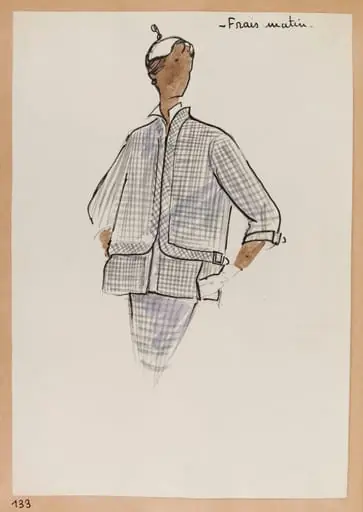
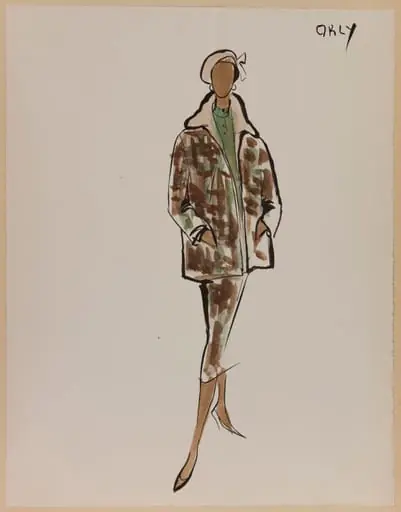
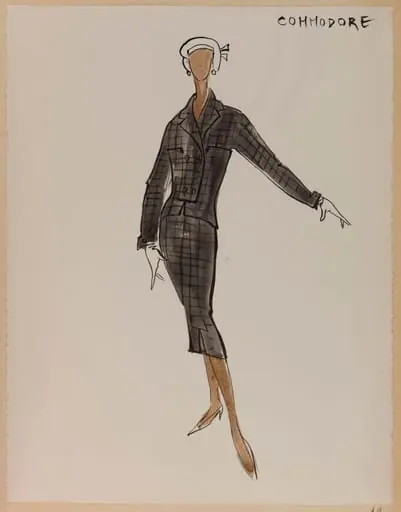
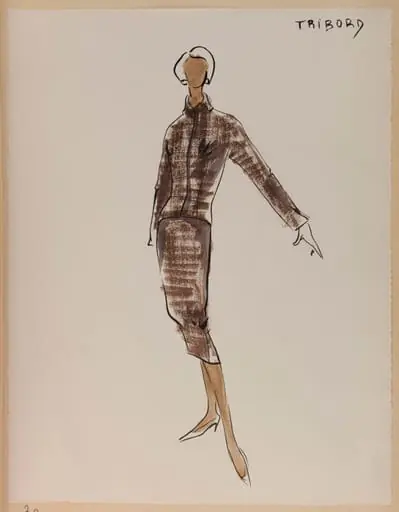
The figure wears a long, dark coat with a checkered purple-and-green pattern, a high collar, and matching hat, details evoking maritime or working-class dress. The title, 'Loup de mer' (sea wolf), hints at a connection to sailors or coastal laborers, though the figure’s identity remains ambiguous. The outstretched left arm suggests motion or gesture, possibly indicating a pose caught mid-stride, reinforcing the sketch’s sense of immediacy and lived experience.
Technique & Style
Carven rendered the figure with loose, economical brushwork, emphasizing form through suggestion rather than detail. Ink lines flow freely, capturing texture and silhouette without refinement. The lack of shading and minimal background focus directs attention to the garment’s pattern and the figure’s posture.
This approach aligns with fashion sketching traditions that prioritize quick recording of silhouette and detail over finished composition.
History & Provenance
Created in 1952, the sketch entered the Museum of Ethnography’s collection as part of a broader acquisition of fashion-related materials documenting mid-20th-century dress. Its inclusion reflects the museum’s interest in clothing as cultural artifact. No record of prior ownership or exhibition history is publicly documented, suggesting it was likely donated or acquired directly from Carven’s personal archive.
Context
In postwar France, fashion designers increasingly turned to everyday life for inspiration, blurring lines between haute couture and utilitarian wear. Carven, known for practical yet elegant designs, often drew from street observations. Loup de mer fits within this trend, capturing a garment that may have been worn by laborers or fishermen, elevating ordinary attire to the realm of artistic study.
Legacy
The sketch endures as a quiet testament to Carven’s habit of observing clothing in context. While not widely exhibited, it contributes to scholarly understanding of how designers engaged with vernacular dress. Its presence in an ethnographic museum underscores the value placed on fashion as a marker of social identity, beyond the runway or elite circles.
Artist & collection
Artist
These delicate ink-on-paper drawings capture the quiet poetry of everyday things: pinecones, reeds, apples.
Museum
Palais Galliera - Musée de la Mode de la Ville de Paris
Continue through works from the same source collection.