Artwork
Roseraie
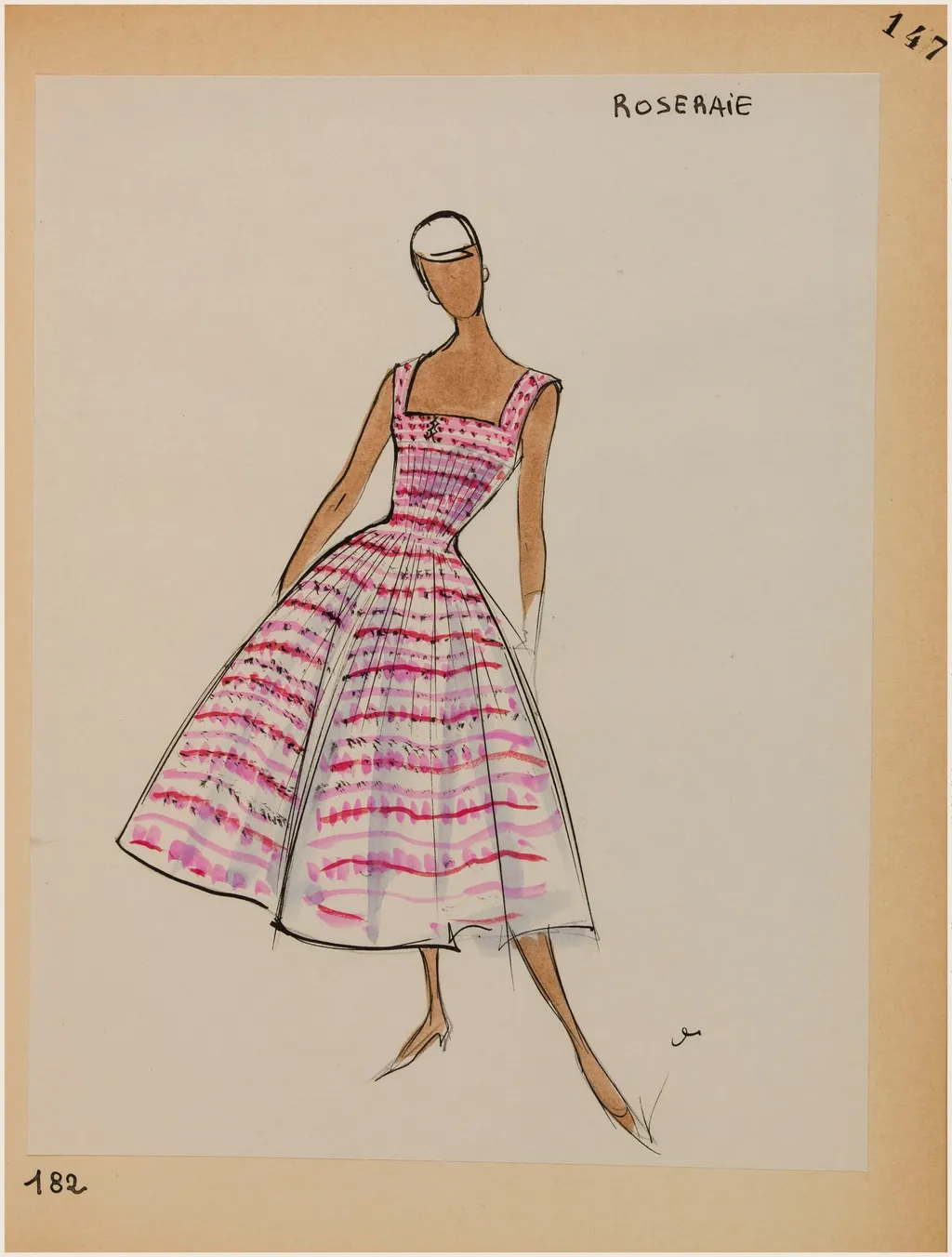
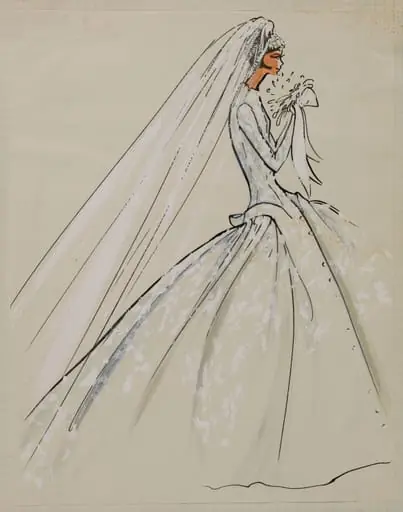
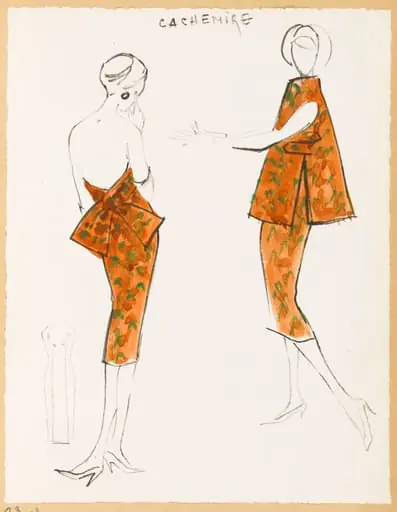
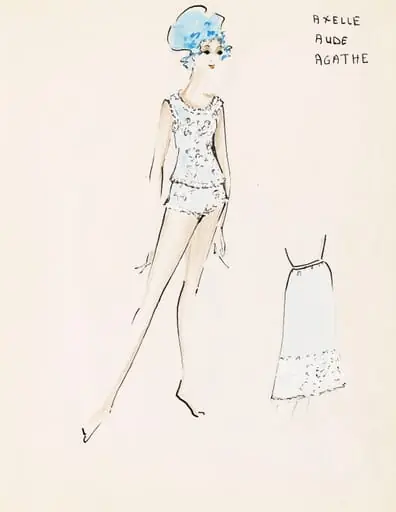
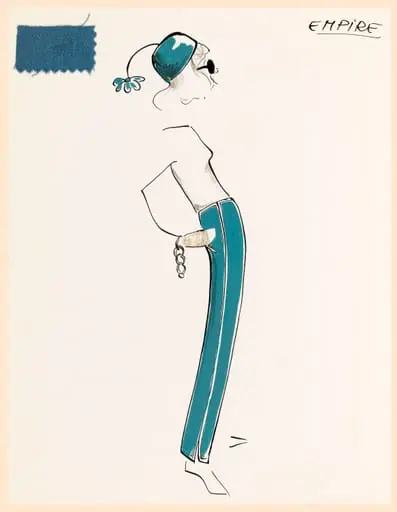
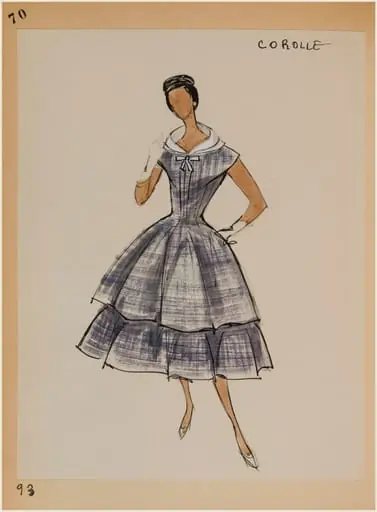
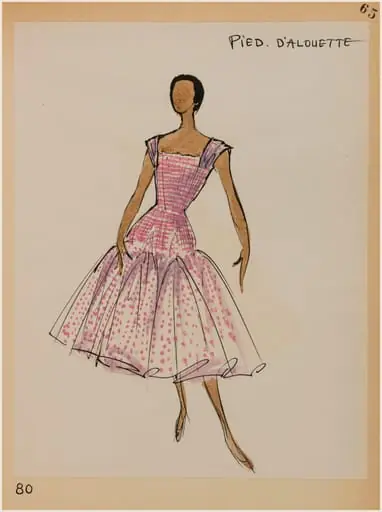
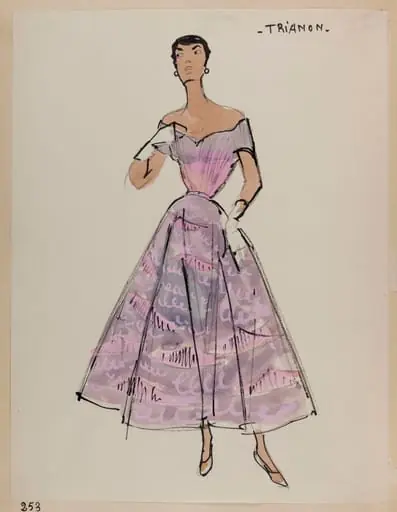
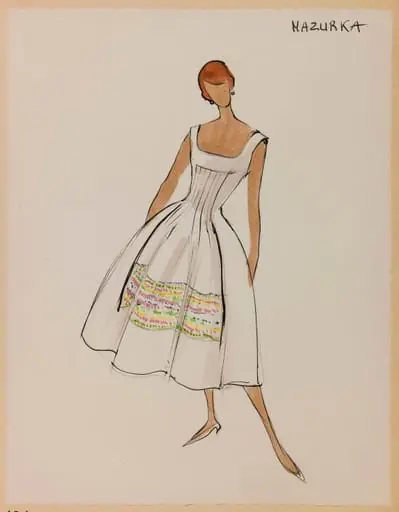
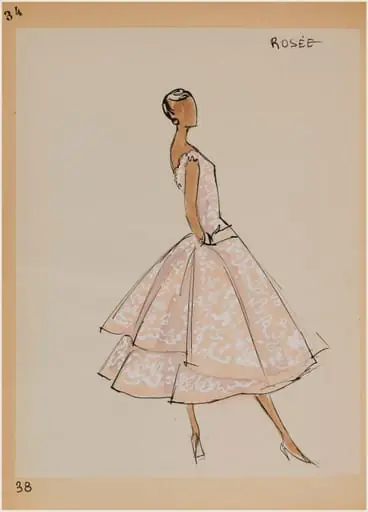
Roseraie is a drawing by Carven. It dates from 1956 and is held in the collection of the Palais Galliera - Musée de la Mode de la Ville de Paris.
About this work
Overview
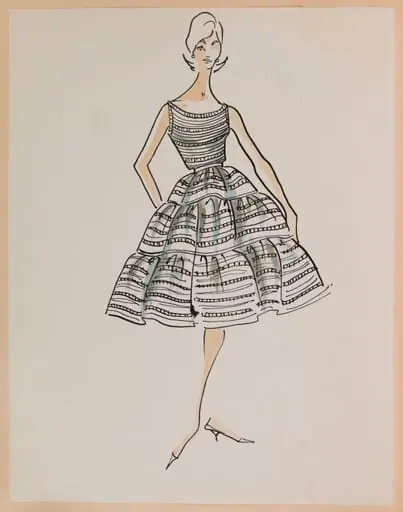
Executed with rapid, fluid brushwork, the piece captures a single figure in motion, suggesting a moment observed rather than formally composed.
Roseraie is a 1956 ink and watercolor sketch by French designer Carven, currently held in the Museum of Ethnography’s collection. Executed with rapid, fluid brushwork, the piece captures a single figure in motion, suggesting a moment observed rather than formally composed. Its informal quality and limited palette reflect an artist’s working study, possibly made during a design process or as a personal record.
Subject & Meaning
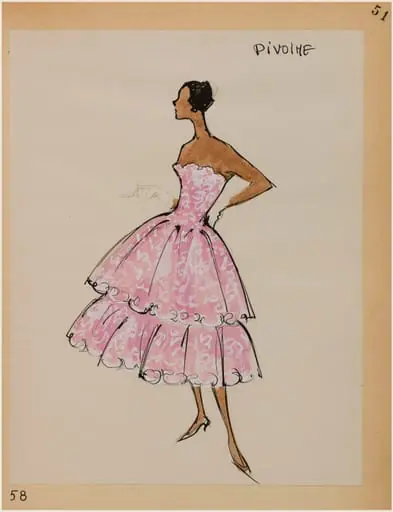
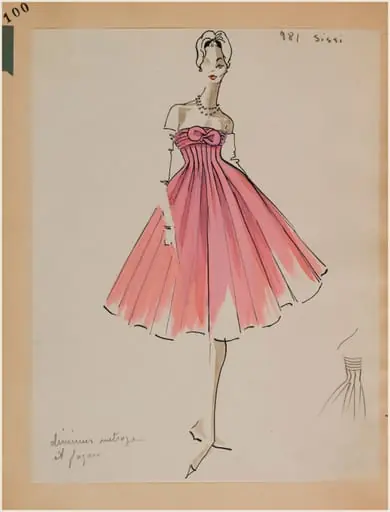
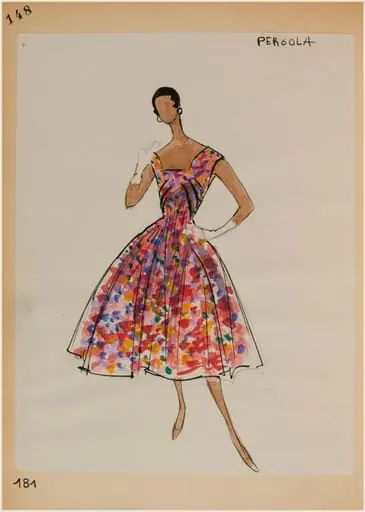
The subject is a woman dressed in a striped pink-and-black gown with a square neckline and a flared skirt ending above the ankles. Her hair is neatly pinned back, and she wears modest heels, suggesting a stylized yet everyday elegance. The title, Roseraie, French for 'rose garden', hints at a floral inspiration, possibly linking the dress’s pattern to the natural world, though no literal roses appear in the image.
Technique & Style
Carven employed loose, gestural brushstrokes and minimal color, predominantly pink, black, and white, to define form and movement. The dress’s stripes are rendered with deliberate contrast, while the figure’s contours rely on swift, confident lines. Subtle cross-hatching adds shadow and volume without heavy modeling, emphasizing the sketch’s spontaneity and the artist’s familiarity with textile design principles.
History & Provenance
Created in 1956, Roseraie entered the Museum of Ethnography’s holdings as part of a broader collection of fashion-related materials documenting mid-century French design. Its preservation suggests recognition of its value as a record of Carven’s creative process, though its exact origin, whether a personal sketch or a design submission, remains undocumented in public records.
Context
In the mid-1950s, French fashion houses emphasized refined silhouettes and textile innovation. Carven, known for blending simplicity with elegance, often drew inspiration from nature and everyday life. Roseraie reflects this ethos, aligning with postwar trends favoring wearable artistry over overt ornamentation, while retaining a distinctly personal, hand-drawn sensibility.
Legacy
Though not widely exhibited, Roseraie contributes to understanding Carven’s design methodology and the role of sketching in fashion development. Its presence in an ethnographic museum underscores the cultural significance of fashion as material culture. The work remains a quiet example of how design ideas were translated from intuition to garment in mid-century Paris.
Artist & collection
Artist
These delicate ink-on-paper drawings capture the quiet poetry of everyday things: pinecones, reeds, apples.
Museum
Palais Galliera - Musée de la Mode de la Ville de Paris
Continue through works from the same source collection.