Artwork
Ruins of the Oybin
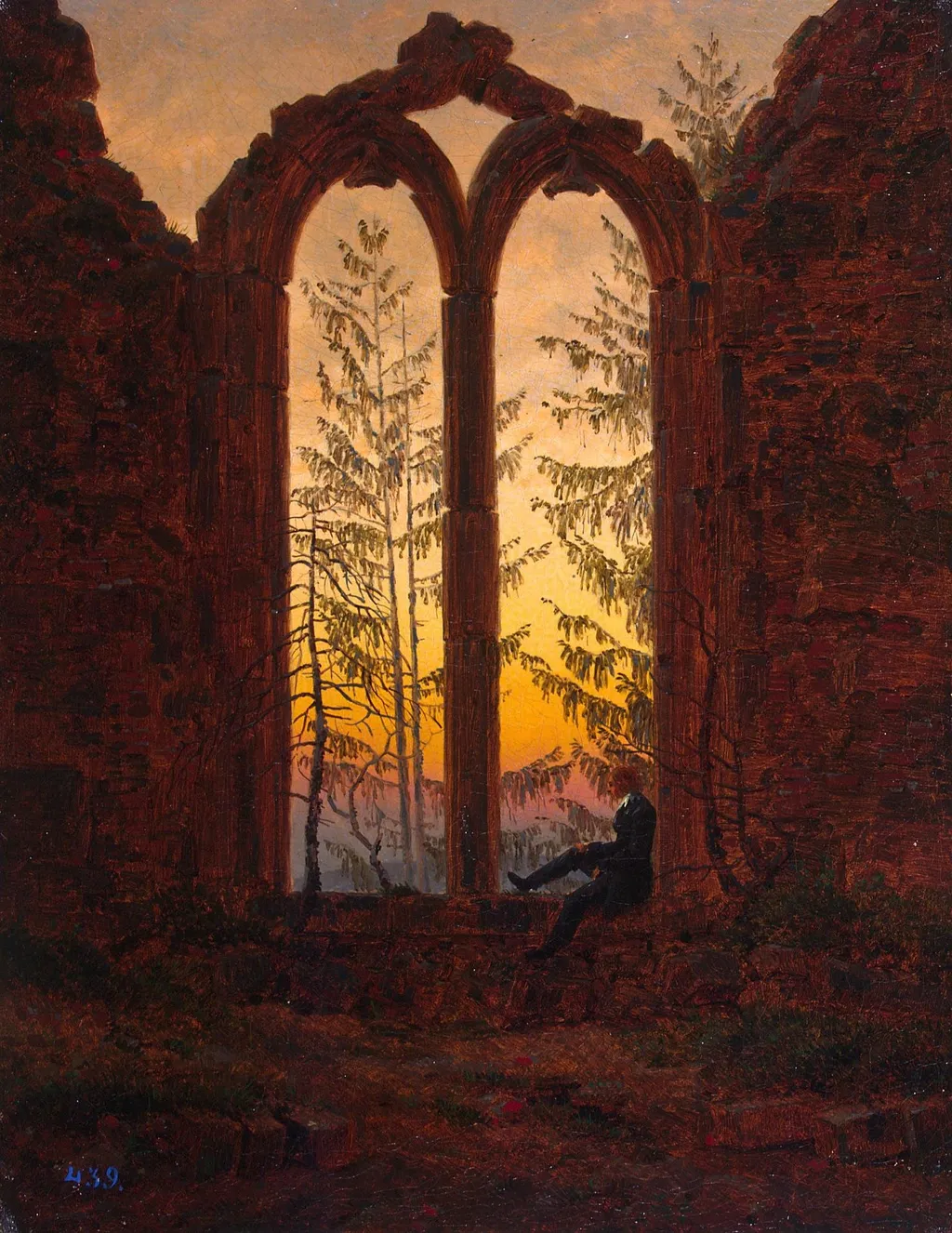
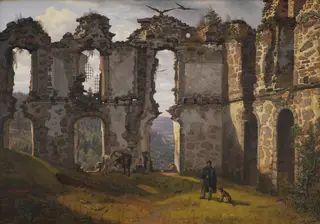
Ruins of the Oybin is an oil painting by the German Romanticist artist Caspar David Friedrich. It dates from 1835 and is held in the collection of the Hermitage Museum.
About this work
Subject & Meaning
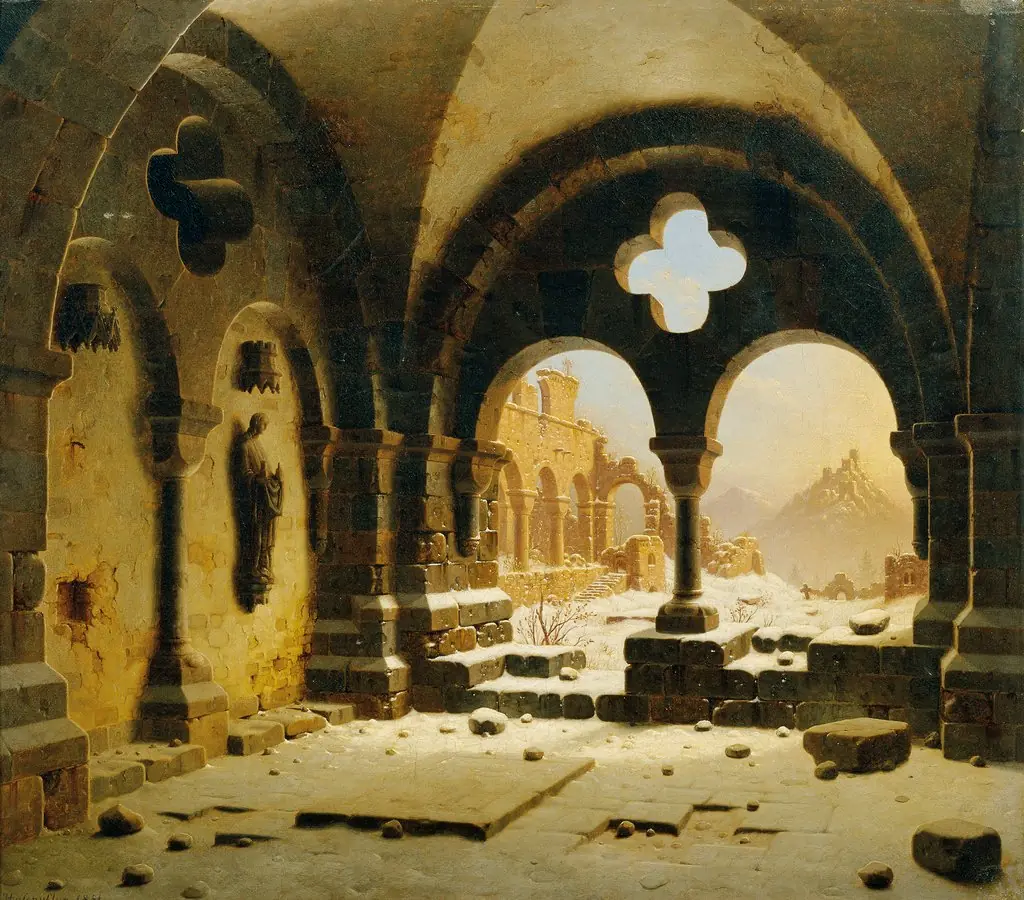
The composition shows twin arches in shadow that open onto a luminous background, a motif interpreted as a portal to the dream or the sublime.
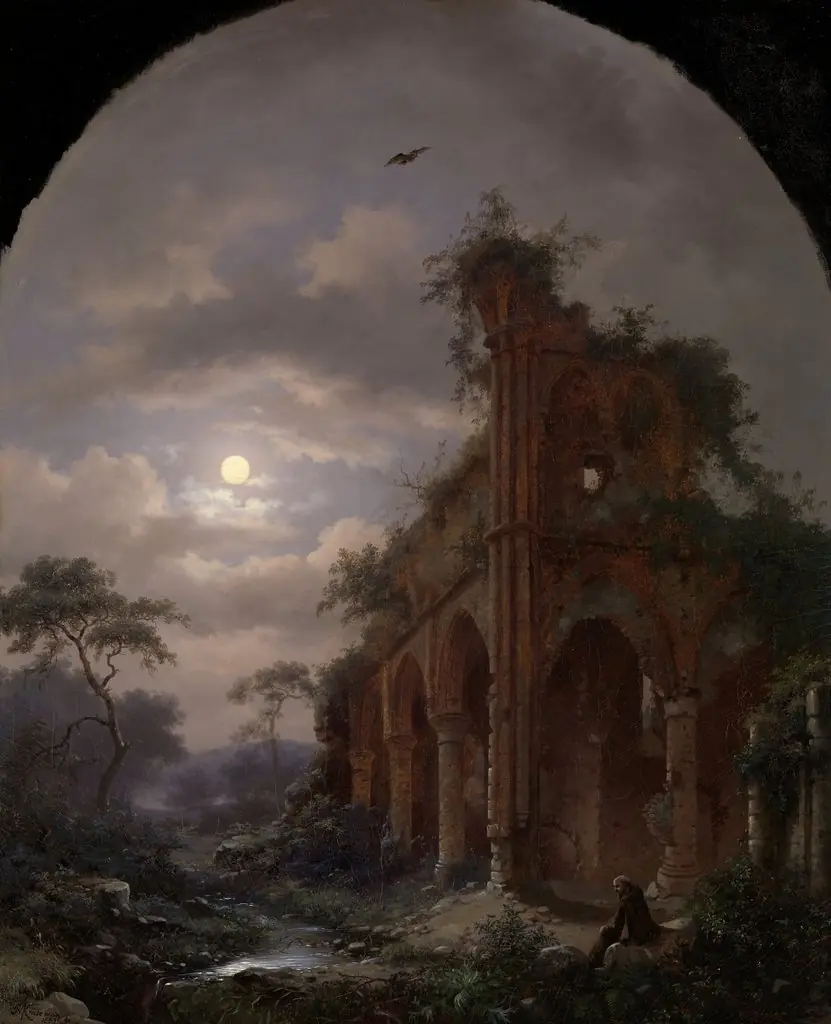
The painting portrays the ruined Oybin monastery with a solitary figure seated against a pillar, a window opening onto a twilight landscape of trees, wall, and sunset sky. The composition shows twin arches in shadow that open onto a luminous background, a motif interpreted as a portal to the dream or the sublime. Symbolically, the ruins embody the transitory nature of faith, while the lone contemplative figure conveys melancholy and introspection; the encroaching natural light suggests nature's triumph over former religious authority. Together these elements express Romantic concerns with impermanence, the sublime, and the inner spiritual quest.
Technique & Style
Executed in 1835, this work is an oil painting on canvas measuring 27 by 21 centimeters. Stylistically, it exemplifies German Romanticism through its evocation of solitude and melancholy, utilizing a twilight illumination that permeates the composition to create a mystical atmosphere. The artist employs strong chiaroscuro contrasts, leaving the architectural foreground in shadow while revealing a luminous, unknown world beyond the twin bays of the ruined monastery.
This interplay between the dark, decaying Gothic structure and the vital light of the setting sun serves as an allegory for the transience of human institutions against the enduring force of nature. The indistinct horizon and the solitary figure leaning against a pillar invite contemplation, reinforcing the painting's function as a meditation on mortality and the inner spiritual life.
History & Provenance
The painting Ruins of the Oybin (also titled The Dreamer) was created by Caspar David Friedrich in 1835. The work is an oil on canvas measuring 27 × 21 cm and depicts the ruins of the Oybin Monastery in Germany, a subject emblematic of Friedrich’s Romantic themes of transience and the sublime. The composition contrasts the decaying Gothic architecture with the encroaching vitality of nature, framed by a twilight or sunset light that permeates the scene.
By 1835, the painting had entered the collection of the Hermitage Museum in Saint Petersburg, where it remains housed today. The work’s creation coincides with the final decade of Friedrich’s life, a period marked by introspection and melancholy, themes that critics associate with the painting’s contemplative mood.
The painting is held in the collection of the Hermitage Museum in Saint Petersburg, Russia. Its inventory or accession number is not provided in the available sources. The work is currently on display at the Hermitage, though no specific exhibition history beyond its present location is documented in the given materials.
Context
Painted in 1835, five years before Friedrich's death, Ruins of the Oybin is considered a late, contemplative work within German Romanticism. Scholars situate it among Friedrich's "twilight paintings," works distinguished by their spiritual and melancholic atmosphere. The painting shares thematic ground with earlier works such as Abbey in the Oakwood (1810), where Gothic architecture similarly confronts nature.
In this tradition, the monastery ruins serve as an allegory for the transience of religious institutions and human endeavor, while encroaching trees and luminous twilight suggest nature's ultimate victory, a memento mori on vanity. The solitary figure embodies the Romantic ideal of inward contemplation, with the viewer positioned as observer of an observer, reinforcing the work's meditation on solitude and mortality. The painting's resonance with Friedrich's own approaching death has been noted as intensifying its melancholic, mystical quality.
Overview
Caspar David Friedrich completed Ruins of the Oybin in 1835, an oil painting that exemplifies his approach to landscape. The work depicts the remnants of a monastery at Oybin bathed in evening light, featuring a lone individual observing the scene. This composition reflects Friedrich's recurring interest in the relationship between human experience and the grandeur of nature, often inviting viewers to a state of quiet reflection.
Own this work as a print
Artist & collection
Artist
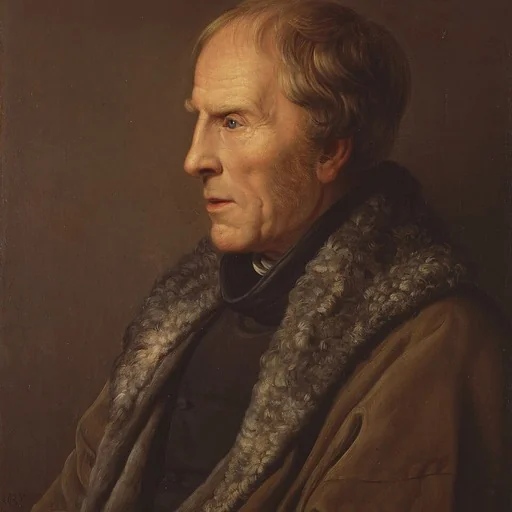
Caspar David Friedrich (German:; 5 September 1774 – 7 May 1840) was a German Romantic landscape painter, generally considered the most important German artist of his generation, whose often symbolic, and anti-classical…