Artwork
The Hooping Crane (Ardea Americana)
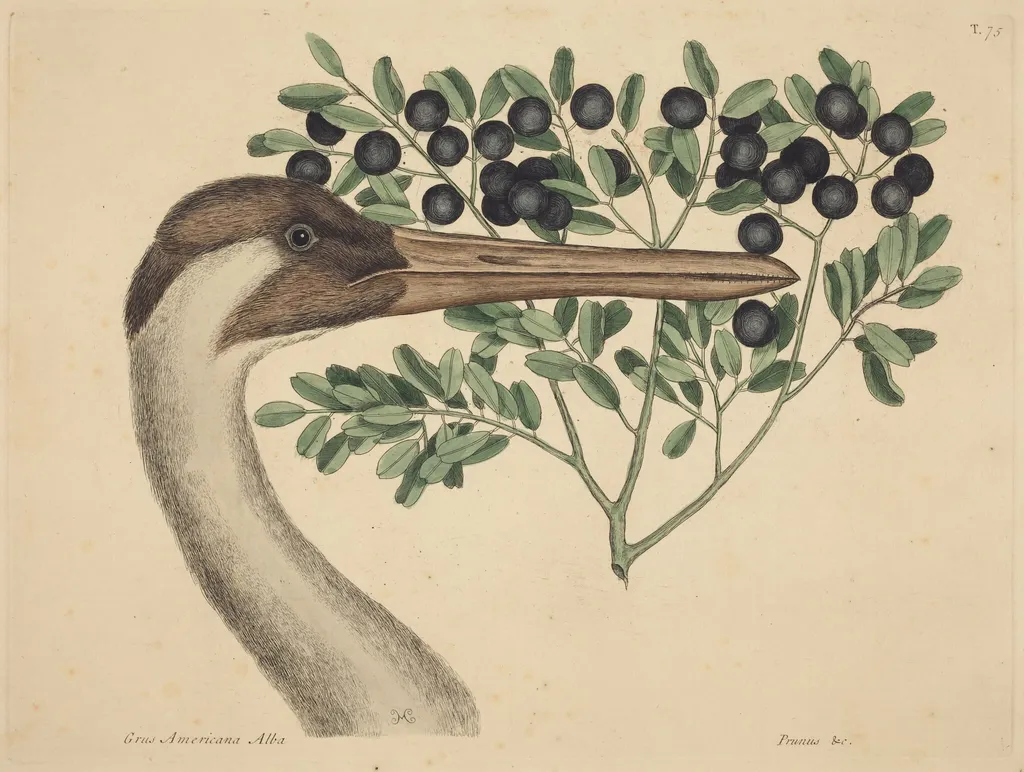
The Hooping Crane (Ardea Americana) is an ink print by the Baroque artist Mark Catesby. It dates from 1737 and is held in the collection of the National Gallery of Art.
- Inscription
- Inscribed:lower left in plate: Grus Americana Alba; lower center in plate: MC; lower right in plate: Prunus &c.; upper right in plate: T.75
About this work
Overview
This hand-colored print depicts the whooping crane, a North American bird species, rendered through a combination of etching and engraving on laid paper.
This hand-colored print depicts the whooping crane, a North American bird species, rendered through a combination of etching and engraving on laid paper. Created in 1737, it forms part of Mark Catesby’s extensive visual survey of regional wildlife, published in his multi-volume Natural History of Carolina, Florida and the Bahama Islands. The work reflects early Enlightenment efforts to document and classify natural specimens with precision.
Subject & Meaning
The image presents Grus americana, commonly known as the whooping crane, shown in a calm, introspective pose with its head tucked beneath a wing. The bird grasps a branch bearing green foliage and dark berries, suggesting its habitat and diet. Catesby’s depiction aimed to provide an accurate record of the species, emphasizing its physical traits and natural environment for scientific study.
Technique & Style
The print was produced using etching and engraving, techniques that allowed for fine, controlled lines to define the crane’s anatomy and surrounding details. Hand-applied watercolor enhances the image, lending subtle tonal variations to the bird’s plumage and the vegetation. The restrained palette and meticulous draftsmanship align with the period’s emphasis on clarity and observational accuracy in natural history illustration.
History & Provenance
Executed in 1737, The Hooping Crane appeared in Catesby’s Natural History of Carolina, Florida and the Bahama Islands, published between 1729 and 1747. The work emerged from Catesby’s travels in the American colonies, where he collected specimens and made field sketches. As one of the earliest systematic depictions of North American wildlife, the print circulated among naturalists and collectors in Europe.
Context
Catesby’s print reflects the broader 18th-century pursuit of cataloging the natural world, driven by colonial expansion and Enlightenment curiosity. His work predates formal taxonomic systems like Linnaean classification but contributed to the growing body of knowledge about New World species. The crane’s inclusion underscores the era’s interest in documenting both familiar and exotic organisms, often for audiences unfamiliar with them.
Legacy
As part of Catesby’s Natural History, this print holds significance in the development of scientific illustration. It provided a visual reference for later naturalists and artists, influencing subsequent studies of North American fauna. The work remains a key example of early modern efforts to combine artistic skill with empirical observation, bridging art and natural science.
Own this work as a print
Artist & collection

Artist
Mark Catesby (24 March 1683 – 23 December 1749) was an English naturalist who studied the flora and fauna of the New World.

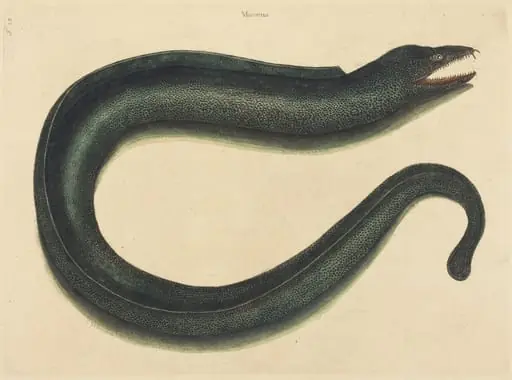
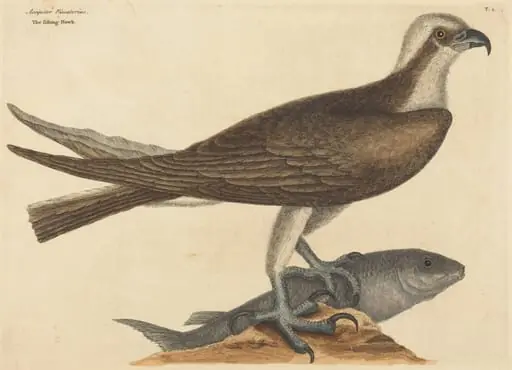
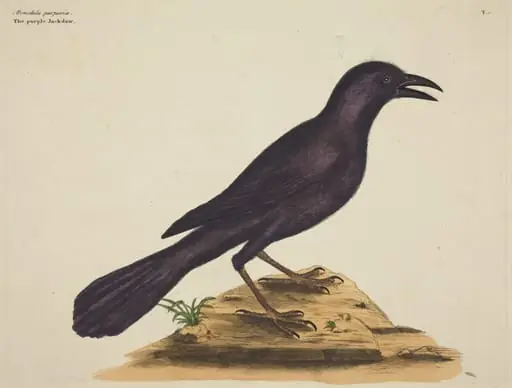
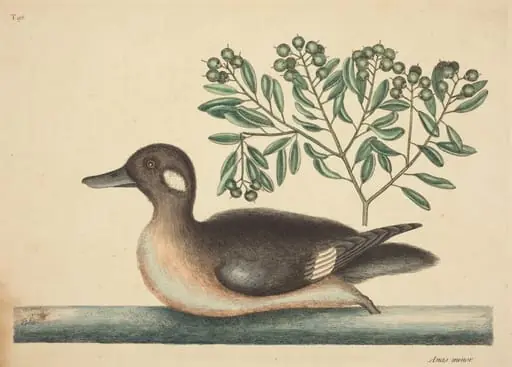
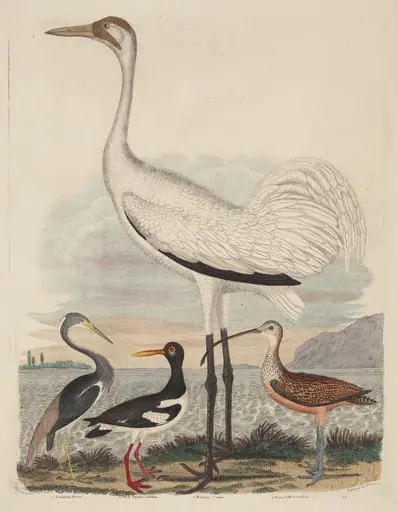 Louisiana Heron, Pied Oyster-catcher, Hooping Crane, and Long-billed Curlew
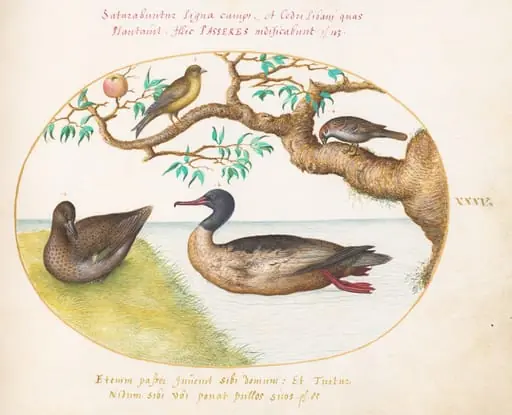 Plate 35: Female Green-Winged Teal, Red-Breasted Merganser(?), Sparrow, and a Greenfinch(?)
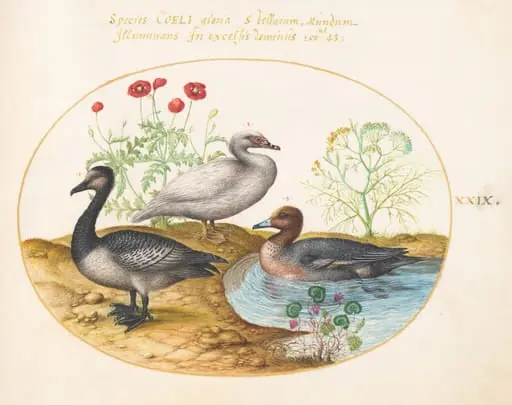 Plate 29: Geese with Poppies and a Cyclamen
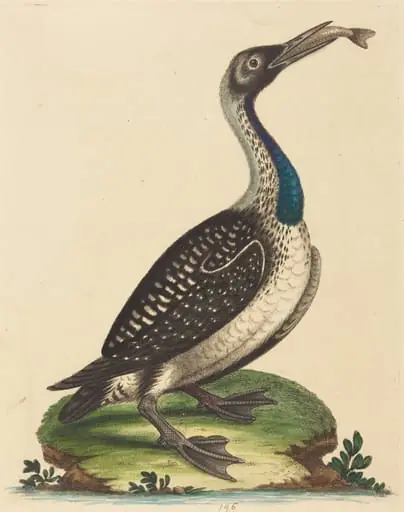 Black and White Water-Fowl with Blue Throat
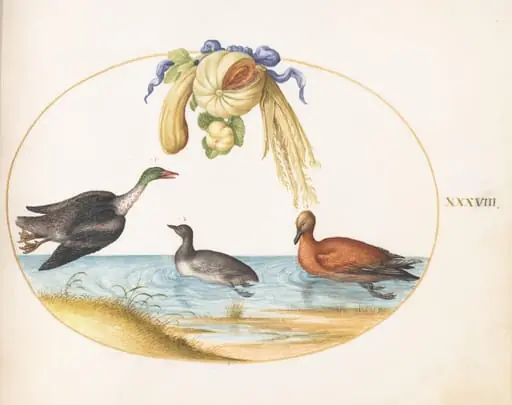 Plate 38: Merganser with Two Other Waterfowl and a Garland of Melons and Gourds
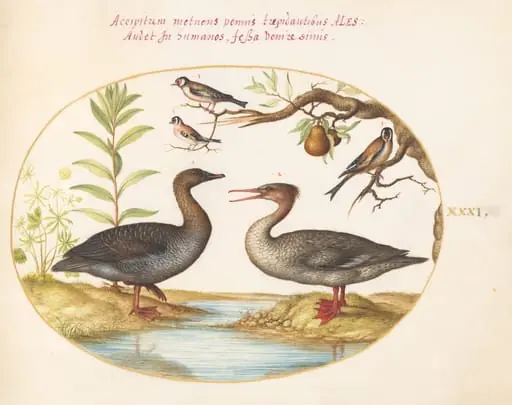 Plate 31: Duck, Merganser, and Three Goldfinches
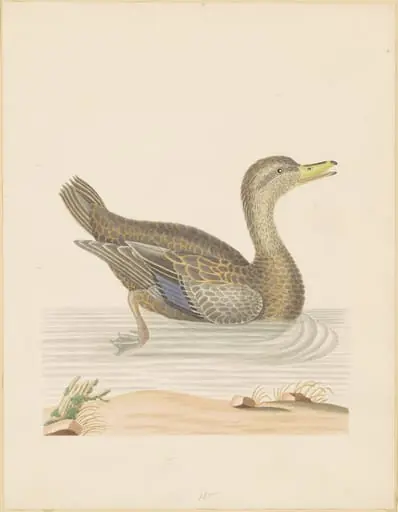 Roan Duck
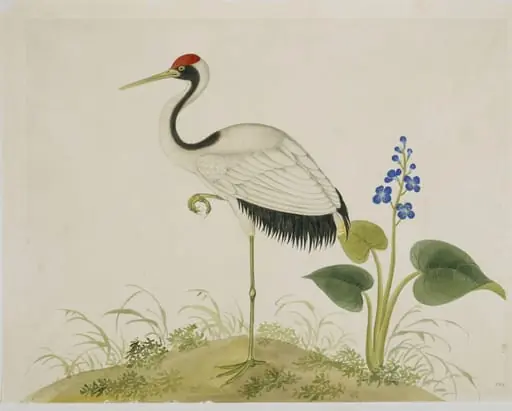 Red-Crowned Crane