Artwork
The Great Windmill and the Rainbow
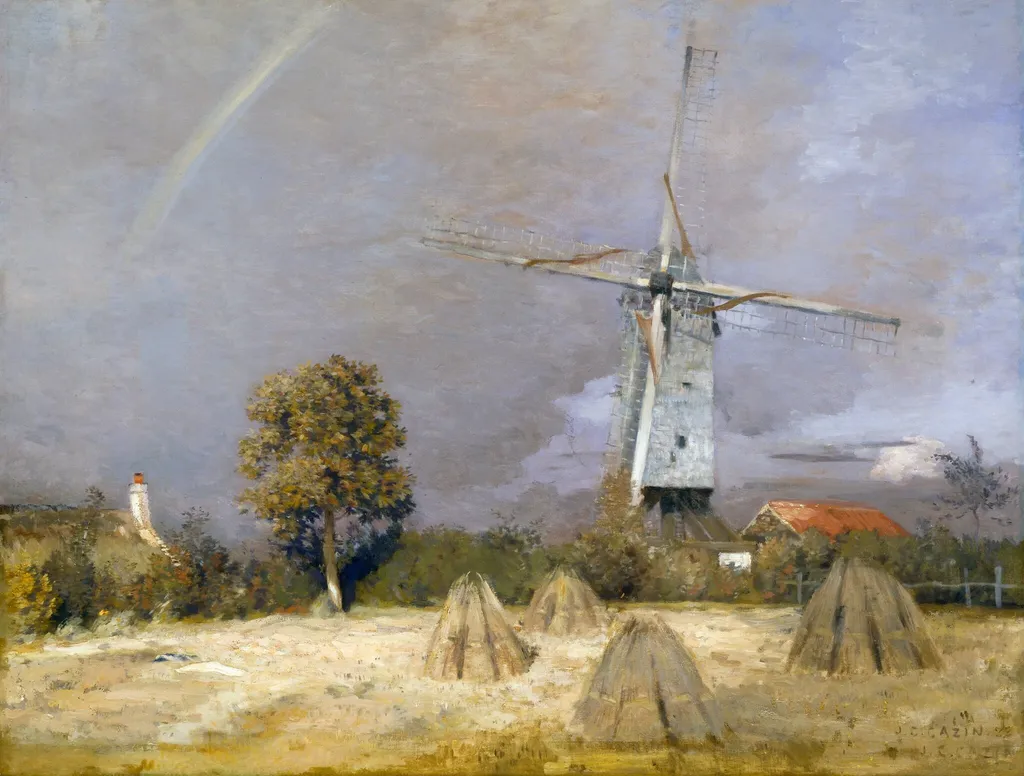
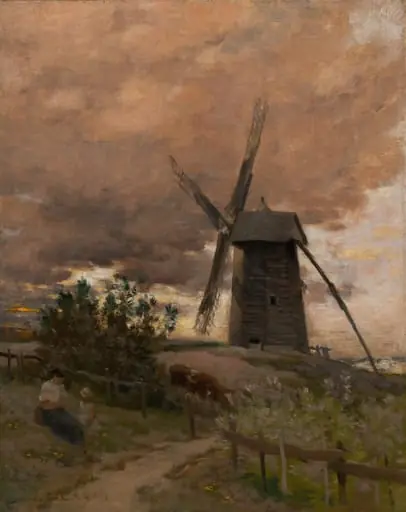
The Great Windmill and the Rainbow is an oil painting by the Impressionist artist Jean Charles Cazin. It dates from 1888 and is held in the collection of the National Gallery of Art. Jean-Charles Cazin’s oil on canvas, dated 1888, presents a tranquil rural scene dominated by a prominent windmill.
- Inscription
- Inscribed:lower right, twice: J. C. Cazin, 1888
About this work
Technique & Style
Jean-Charles Cazin's The Great Windmill and the Rainbow is an oil painting executed on a canvas support in 1888. The work measures 88.9 cm in height and 116.84 cm in width. Classified as a painting, it utilizes oil paint as its primary medium.
The piece is currently held in the collection of the National Gallery of Art in Washington, D.C., having been acquired from the Corcoran Gallery of Art.
History & Provenance
In 2015 the painting was acquired by the National Gallery of Art, where it remains in the collection today.
The work titled The Great Windmill and the Rainbow was painted by Jean-Charles Cazin in 1888. It entered the collection of William A. Clark [1839-1925] in New York and was bequeathed to the Corcoran Gallery of Art in Washington in 1926. In 2015 the painting was acquired by the National Gallery of Art, where it remains in the collection today.
The painting measures 88.9 centimeters in height and 116.84 centimeters in width, as recorded in the National Gallery of Art’s cataloging data.
The work is held by the National Gallery of Art, Washington, D.C., where it entered as accession 2015.1.1 following the 2014 dissolution of the Corcoran Gallery of Art. It had previously been in the collection of William A. Clark, New York, who bequeathed it to the Corcoran Gallery of Art in 1926.
The painting was shown at the Corcoran Gallery of Art in Washington, D.C. prior to the 2014 closure of that institution.
Overview
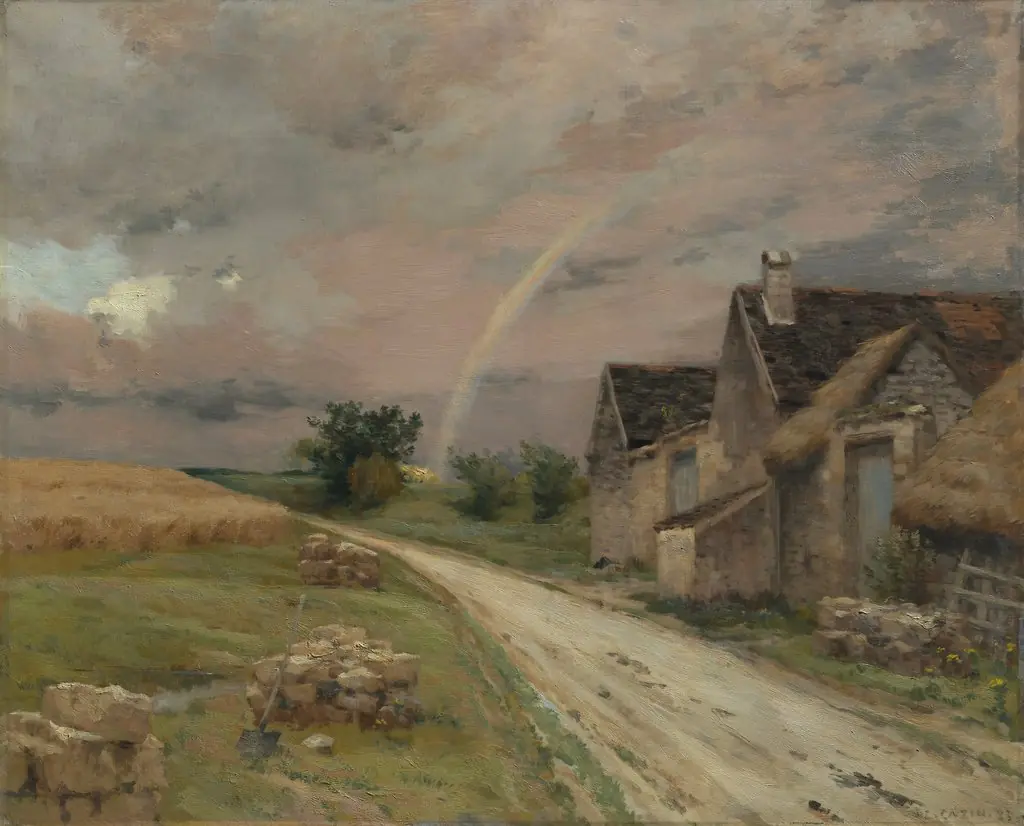
Jean-Charles Cazin’s oil on canvas, dated 1888, presents a tranquil rural scene dominated by a prominent windmill. A rainbow arches across the sky behind the structure, while surrounding trees and modest buildings complete the landscape.
Subject & Meaning
The composition centers on the windmill, suggesting its role as a landmark within the countryside. The inclusion of the rainbow introduces a subtle atmospheric element, often interpreted as a symbol of calm after rain, reinforcing the work’s serene atmosphere.
Context
Created in the late nineteenth century, the work reflects the period’s interest in rural idylls and the interplay of light and color. Its emphasis on natural harmony aligns with contemporary French landscape traditions that valued atmospheric effects.
Own this work as a print
Artist & collection
Artist
Jean-Charles Cazin was a French landscapist, museum curator and ceramicist.