Artwork
‘Sunny Day’: a windmill on a watercourse
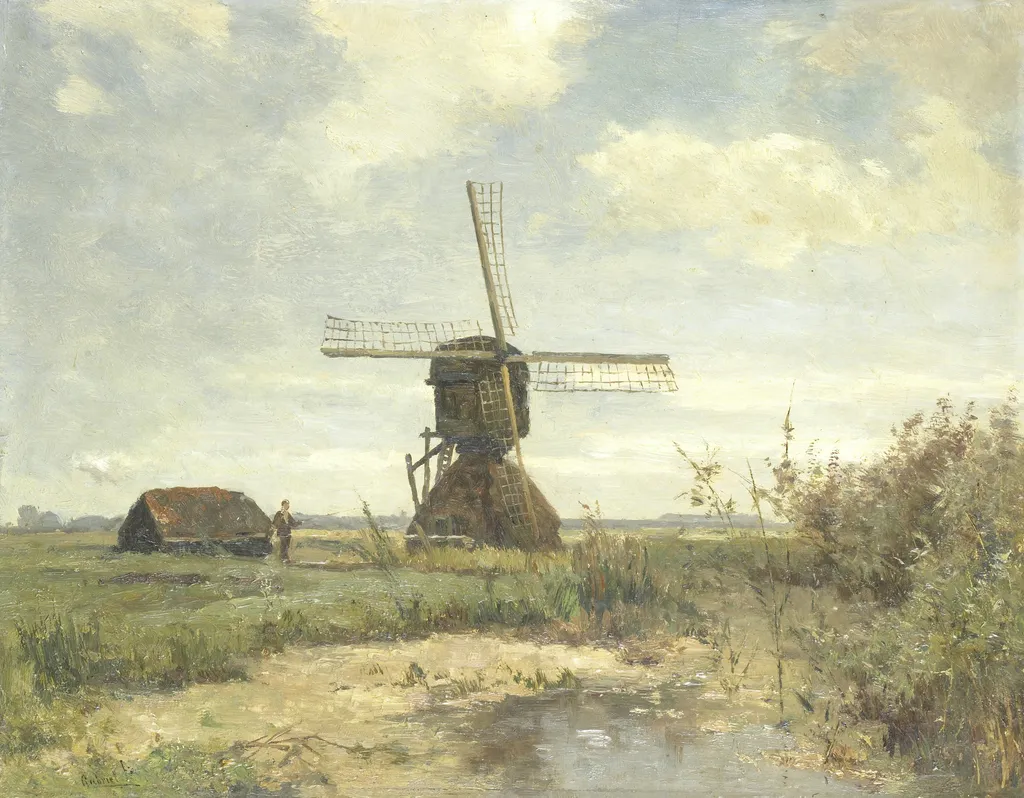
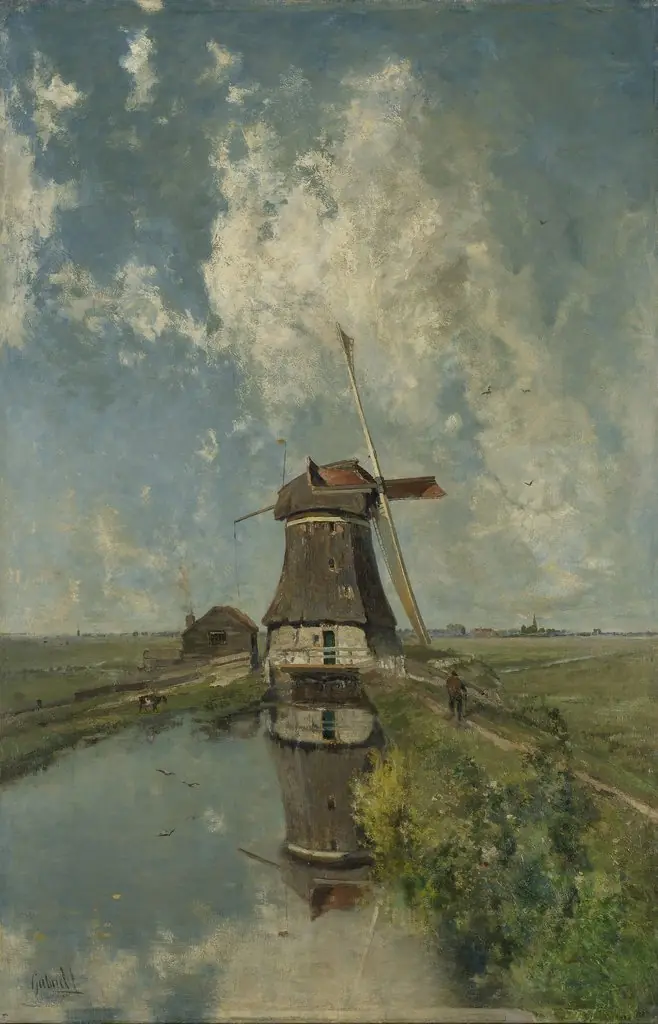
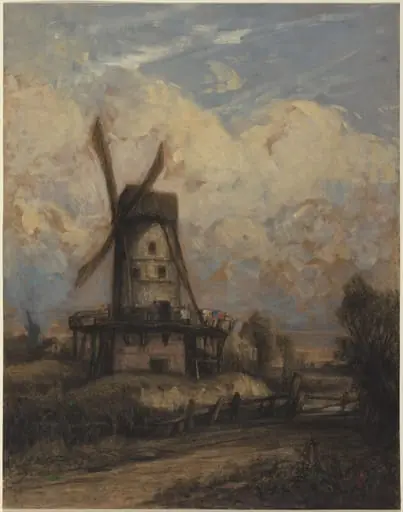
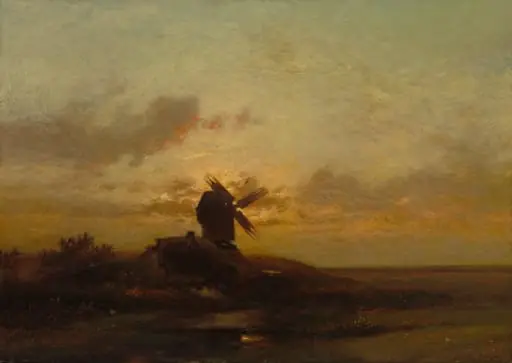
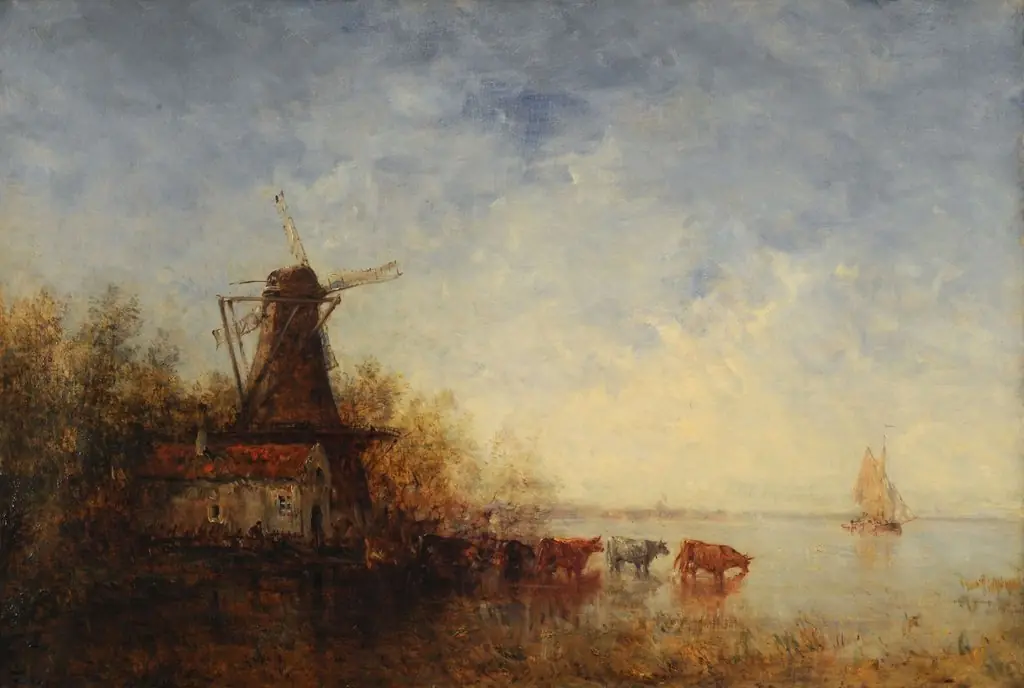
‘Sunny Day’: a windmill on a watercourse is an oil painting by the Impressionist artist Paul Joseph Constantin Gabriël. It dates from 1891 and is held in the collection of the Rijksmuseum. Painted in 1891 by Paul Gabriël, Sunny Day presents a Dutch landscape in oil on canvas.
About this work
Technique & Style
Paul Joseph Constantin Gabriël created the landscape painting 'Sunny Day': a windmill on a watercourse in 1881 using oil paint applied to a panel support.
Paul Joseph Constantin Gabriël created the landscape painting 'Sunny Day': a windmill on a watercourse in 1881 using oil paint applied to a panel support. The work measures 29 cm in height and 37.5 cm in width. As a landscape genre piece, the painting depicts a windmill situated on a watercourse, consistent with the artist's focus on Dutch scenery.
The medium and support combination of oil on panel is characteristic of the period's small-scale landscape works held in the Rijksmuseum collection.
History & Provenance
The work was painted in 1881 by Paul Joseph Constantin Gabriël, as indicated by the artist’s date on the canvas and the Rijksmuseum record.
It entered the Rijksmuseum collection, where it remains today. The museum’s records list the painting as oil on panel, measuring 29 cm by 37.5 cm, and attribute its creation to the year 1881.
Paul Joseph Constantin Gabriël's 1881 oil painting 'Sunny Day': a windmill on a watercourse is held in the collection of the Rijksmuseum in the Netherlands. The work is executed in oil paint on panel and measures 29 cm in height by 37.5 cm in width. No specific inventory or accession number is provided in the available records, nor is there any documented exhibition history for this piece within the provided sources.
Overview
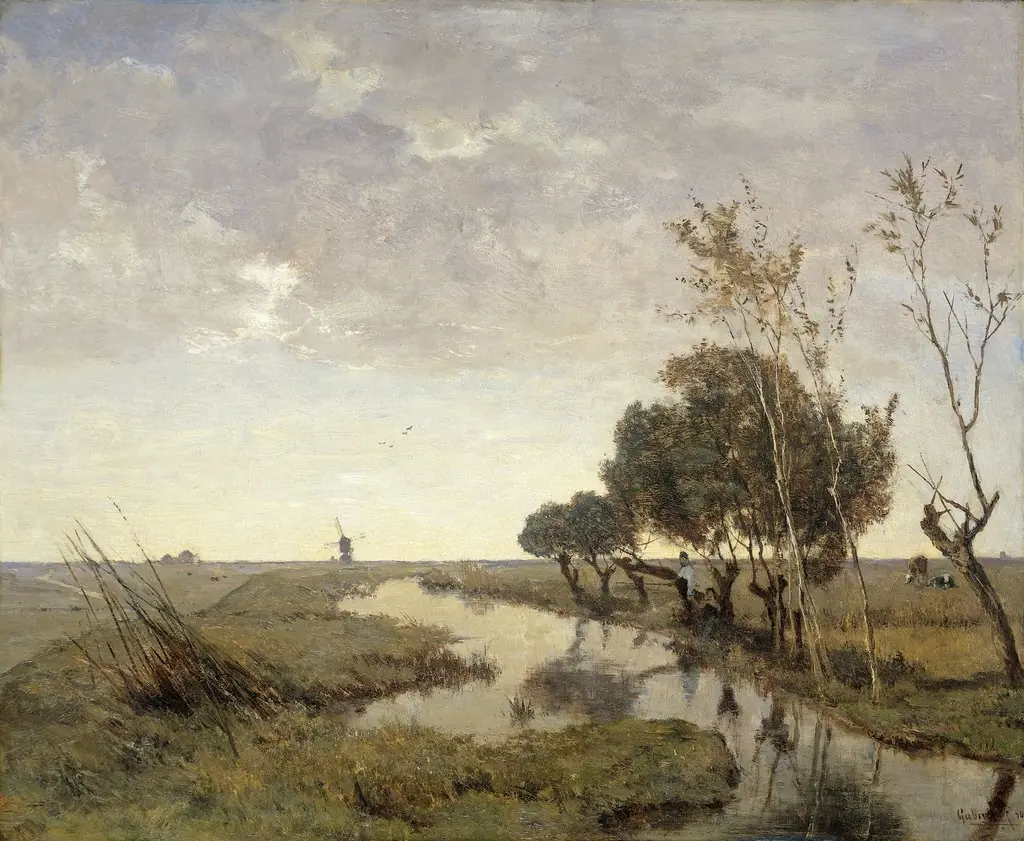
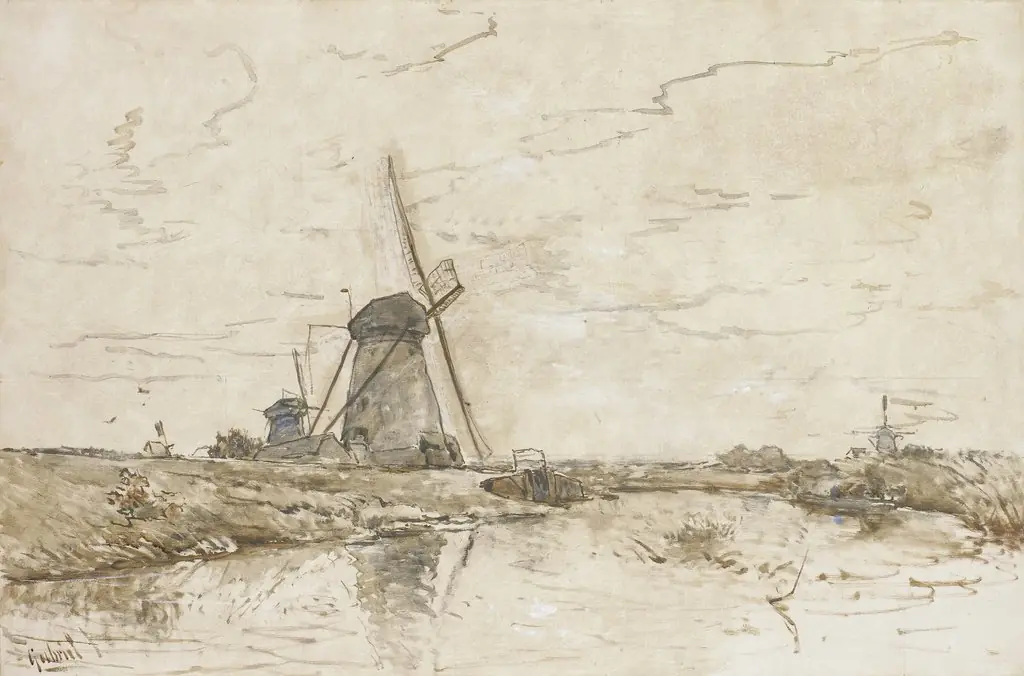
Painted in 1891 by Paul Gabriël, Sunny Day presents a Dutch landscape in oil on canvas. The composition centers on a solitary windmill adjacent to a waterway, framed by open fields and a muted sky. Gabriël, aligned with the Hague School, employed a naturalistic approach to evoke the tranquility of rural scenes, distinguishing his work within late nineteenth-century Dutch art.
Subject & Meaning
The painting captures a moment of rural stillness, with a windmill, modest hut, and distant figure arranged along a winding path. The absence of motion in the sails and the soft light suggest a pause in daily labor, emphasizing the harmony between human structures and the surrounding landscape. Gabriël’s focus on unadorned, everyday scenery reflects a broader Hague School interest in depicting the quiet poetry of ordinary life.
Context
The Hague School emerged in the late nineteenth century as a response to industrialization, prioritizing landscapes that evoked the Netherlands’ rural traditions. Gabriël’s work, including Sunny Day, reflects this ethos, blending plein-air painting with a muted, atmospheric style. His scenes often excluded modern intrusions, instead offering timeless views of windmills, waterways, and open fields as symbols of national identity.
Own this work as a print
Artist & collection
Artist
Paul Joseph Constantin Gabriël
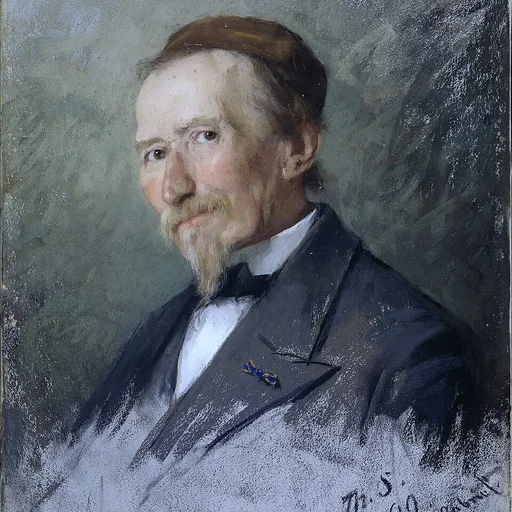
Paul Joseph Constantin Gabriël or Paul Gabriël (5 July 1828 – 23 August 1903) was a painter, draftsman, watercolorist, and etcher who belonged to the Hague School.