Artwork
The Windmill
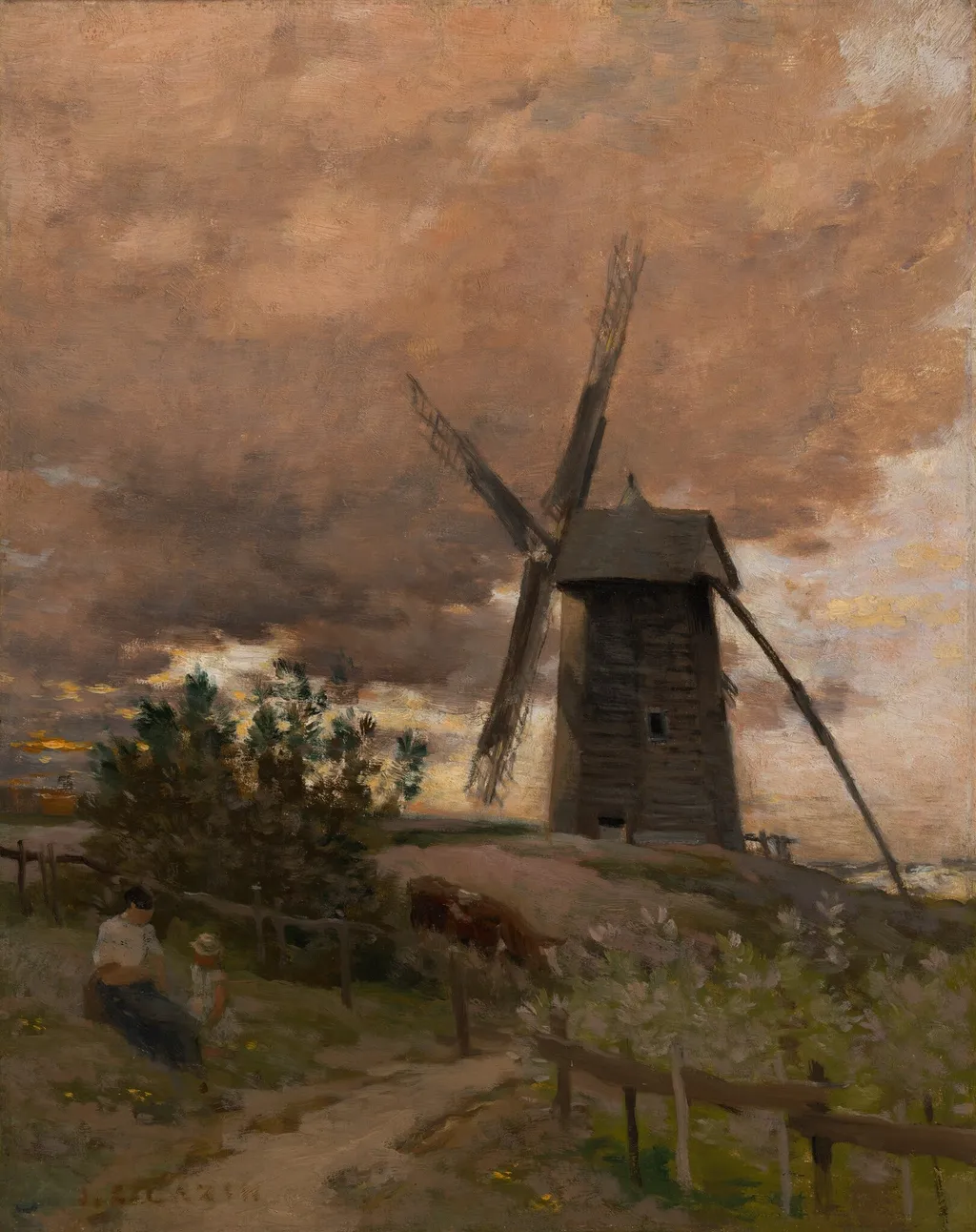
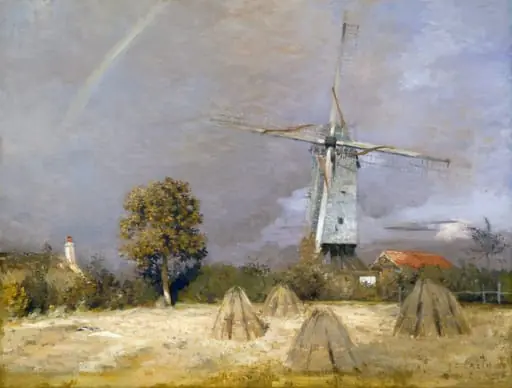
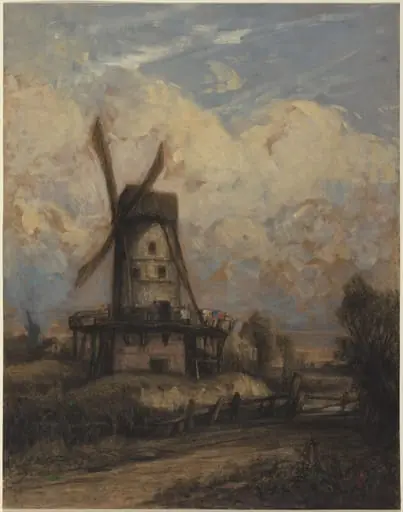
The Windmill is an oil painting by the Impressionist artist Jean Charles Cazin. It dates from 1884 and is held in the collection of the National Gallery of Art.
- Inscription
- Inscribed:lower left: J.C.Cazin
About this work
History & Provenance
According to Knoedler's stock book, the painting was likely the same work returned to the gallery by Andrew Watrous Smith in December 1908.
Jean-Charles Cazin created the oil-on-panel painting The Windmill in 1884. The work's earliest documented owner was John W. Simpson of New York (1850–1920). On 6 January 1909, M. Knoedler & Co. sold the painting to R. Horace Gallatin of New York.
Gallatin's acquisition notebooks and the Knoedler Stock Book suggest the painting may have been briefly held by Andrew Watrous Smith, who returned it to the gallery in December 1908 prior to Gallatin's purchase. Upon Gallatin's death in 1949, the painting was bequeathed to the National Gallery of Art in Washington, D.C., where it remains part of the permanent collection.
The Windmill is held by the National Gallery of Art, Washington, D.C. It entered the collection in 1949 as a bequest from R. Horace Gallatin, who had purchased the painting from M. Knoedler & Co. in New York on 6 January 1909 after it had been owned by John W. Simpson. According to Knoedler's stock book, the painting was likely the same work returned to the gallery by Andrew Watrous Smith in December 1908. The sources do not record an accession number for the work, nor do they note any exhibition history.
Overview
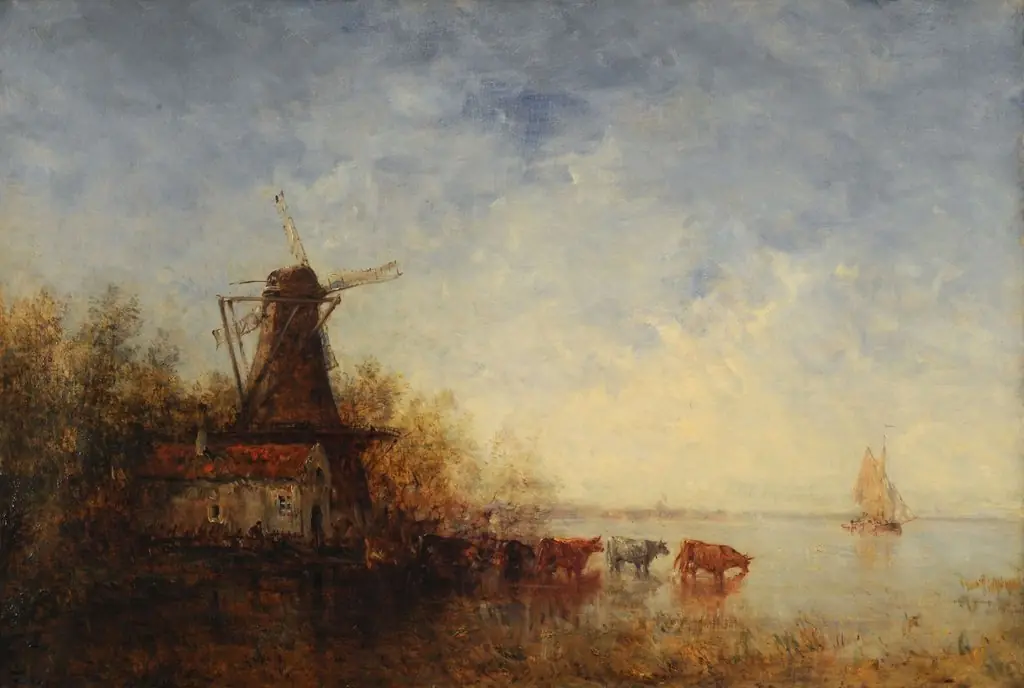
Jean-Charles Cazin's painting, The Windmill, executed around 1884, is an oil on wood panel. This work presents a rural landscape centered on a prominent windmill. The composition captures a specific atmospheric moment, emphasizing natural elements and the structure's integration within its environment.
Subject & Meaning
The painting features a large windmill, its sails extended, set against a dynamic, cloudy sky. Surrounding trees appear to sway, conveying a sense of movement and the presence of wind across the landscape. The scene, while straightforward in its depiction of a common rural structure, evokes a transient moment, akin to a spontaneous observation of nature.
The color palette primarily employs muted grays and greens, punctuated by a subtle red accent on the mill itself.
Technique & Style
Cazin's approach to The Windmill is characterized by a direct and somewhat vigorous application of paint. The brushwork, particularly in areas like the foliage, exhibits a degree of looseness, suggesting a rapid execution intended to capture fleeting light and atmospheric conditions. This technique contributes to the painting's immediate quality, lending it the immediacy of a captured impression rather than a meticulously rendered study.
Context
The understated naturalism and focus on rural life evident in The Windmill align with certain artistic currents of the late 19th century. Cazin's depiction of a humble subject, imbued with a quiet dignity and an emphasis on atmospheric effects, resonates with the sensibility found in the work of artists such as Jean-François Millet, who similarly explored the everyday landscapes and lives of the French countryside.
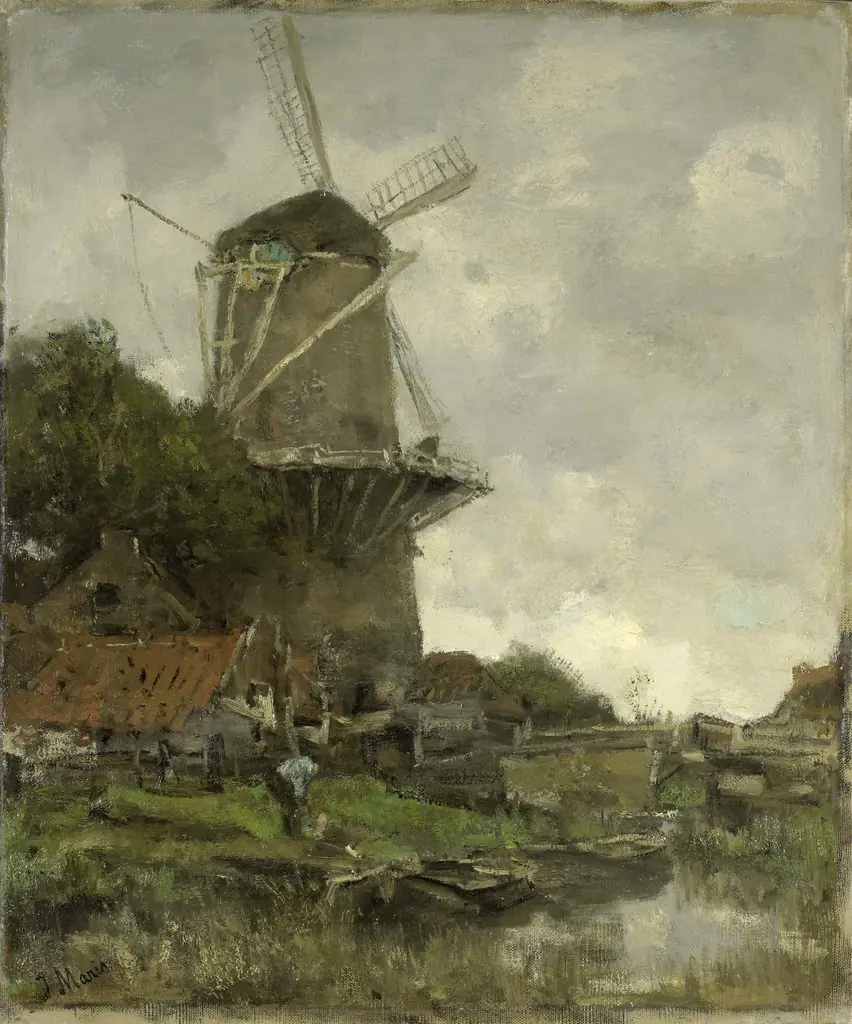
Own this work as a print
Artist & collection
Artist
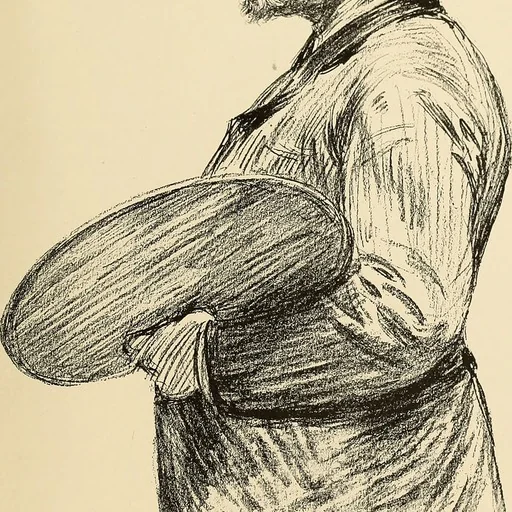
Jean-Charles Cazin was a French landscapist, museum curator and ceramicist.