Artwork
The Haystack and the Moon
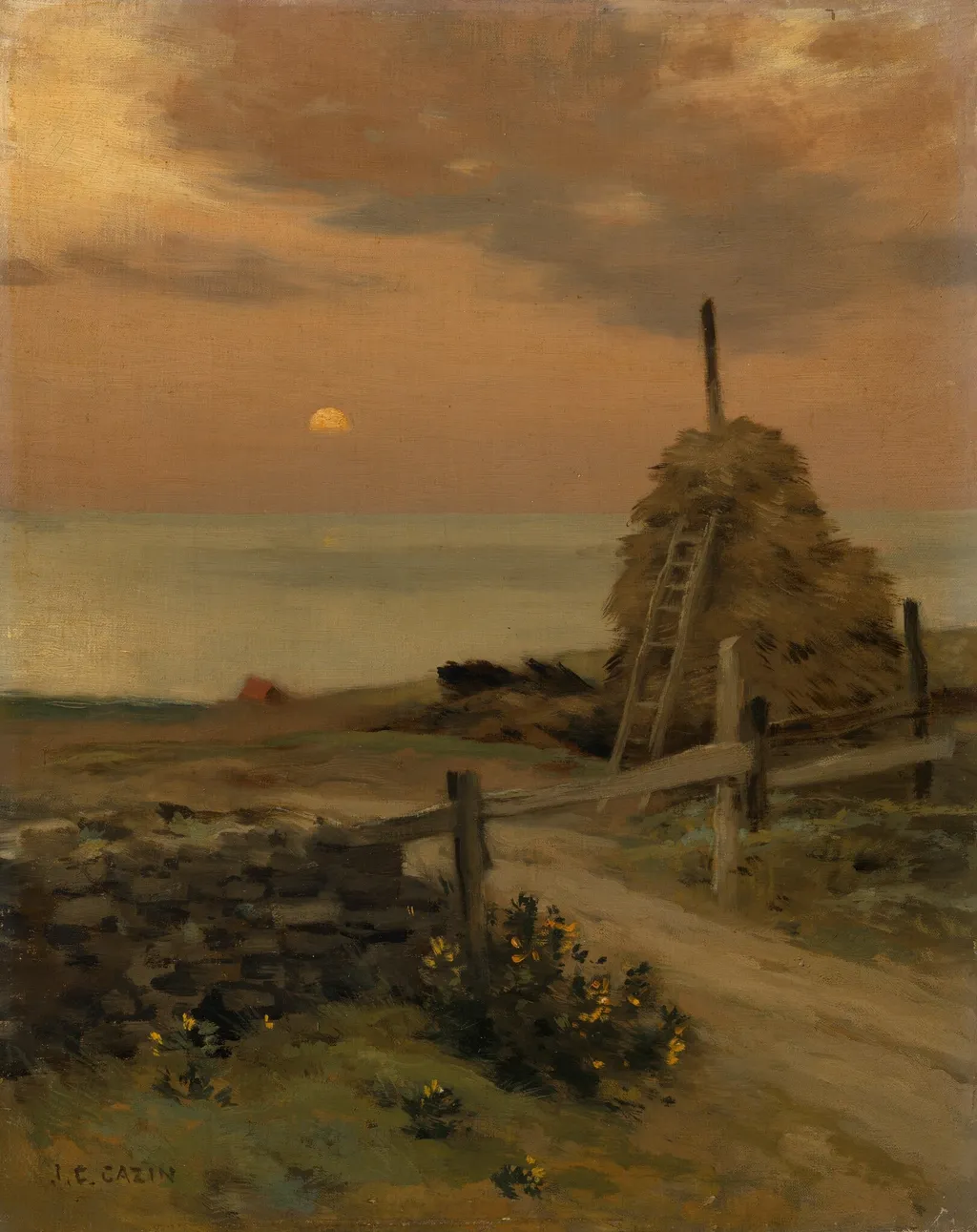
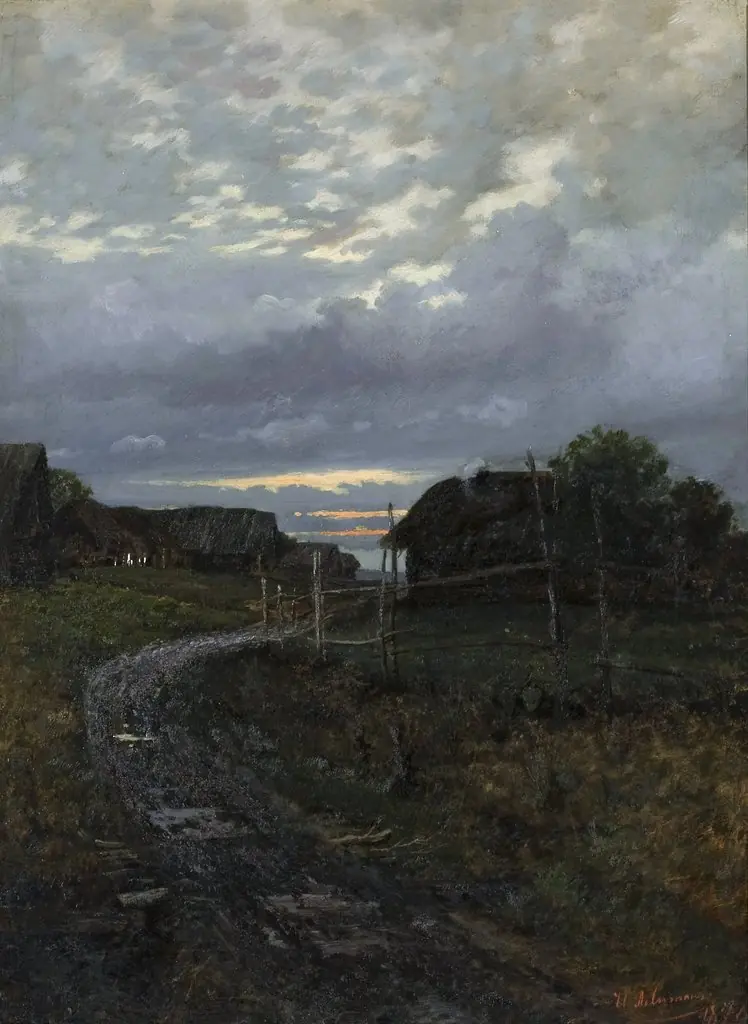
The Haystack and the Moon is an oil painting by the Impressionist artist Jean Charles Cazin. It dates from 1876 and is held in the collection of the National Gallery of Art.
- Inscription
- Inscribed:lower left: J. C. Cazin
About this work
Technique & Style
The painting is rendered in oil paint, a medium Cazin favored for its capacity to register atmospheric and tonal nuance.
The Haystack and the Moon is an oil painting on canvas executed by Jean-Charles Cazin in 1876. The work is classified as a painting and measures approximately 41.28 cm in height by 33.02 cm in width, indicating a modest, intimately scaled support rather than a large-format canvas.
The painting is rendered in oil paint, a medium Cazin favored for its capacity to register atmospheric and tonal nuance. The small dimensions combined with the oil-on-canvas technique suggest a closely handled surface, consistent with the kind of refined, contemplative landscape treatment associated with the artist's late career.
History & Provenance
Created by Jean-Charles Cazin in 1876, this oil on canvas painting entered the collection of William A. Clark in New York. Upon Clark's death in 1925, the work was included in his bequest to the Corcoran Gallery of Art in Washington, D.C., which officially acquired the piece in April 1926. The painting remained with the Corcoran until 2015, when it was transferred to the National Gallery of Art in Washington, D.C., where it is currently housed.
The painting is held by the National Gallery of Art, Washington, D.C., as part of the former Corcoran Gallery of Art holdings. It entered the Corcoran via the bequest of William A. Clark in April 1926 and was transferred to the National Gallery of Art in 2015.
Its inventory/accession is not specified in the cited sources.
Context
Jean-Charles Cazin's 1876 painting The Haystack and the Moon entered the National Gallery of Art in Washington, D.C., through the bequest of William A. Clark, a New York industrialist who donated his collection to the Corcoran Gallery of Art in 1926, with the work later acquired by the National Gallery of Art in 2015. The painting, an oil on canvas measuring 41.28 cm by 33.02 cm, is held in the collection of the National Gallery of Art and was previously part of the Corcoran Gallery of Art's holdings. Cazin was a French painter known for his quiet, atmospheric landscapes, and this nocturnal scene reflects his characteristic interest in subdued light and tonal effect.
Overview
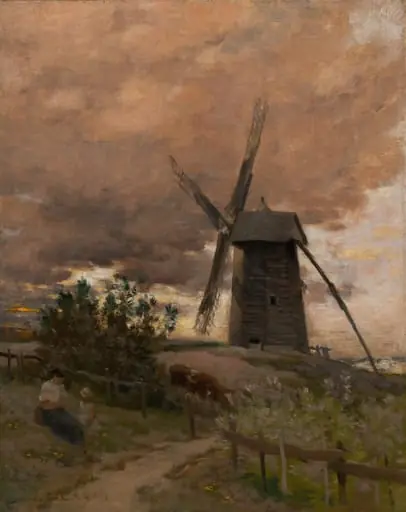
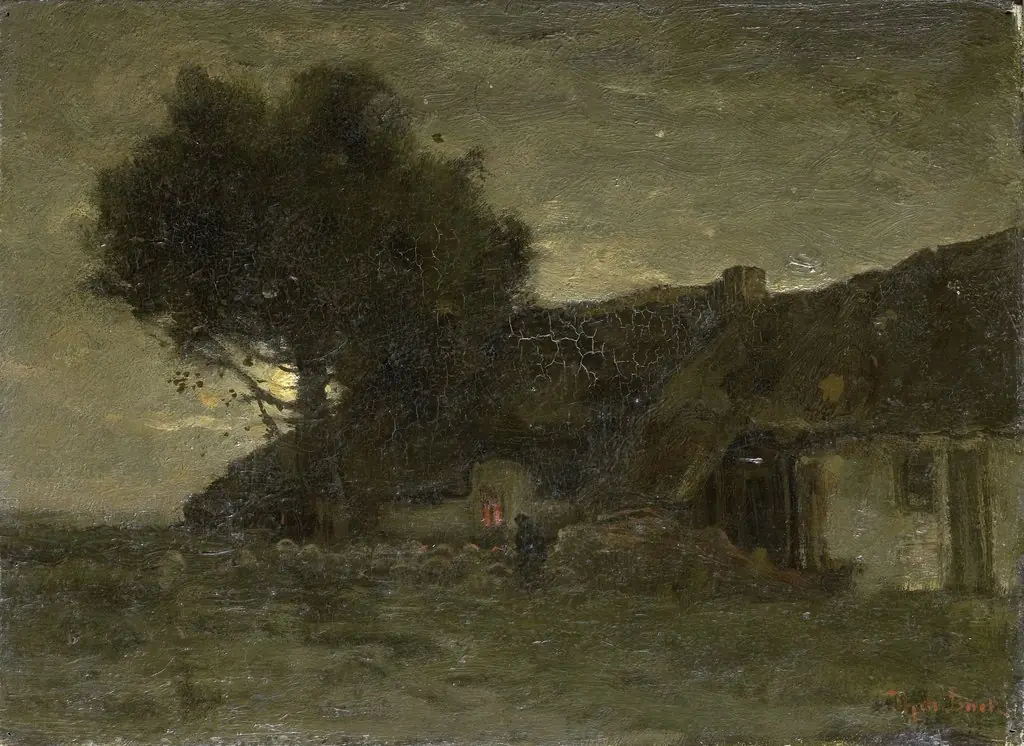
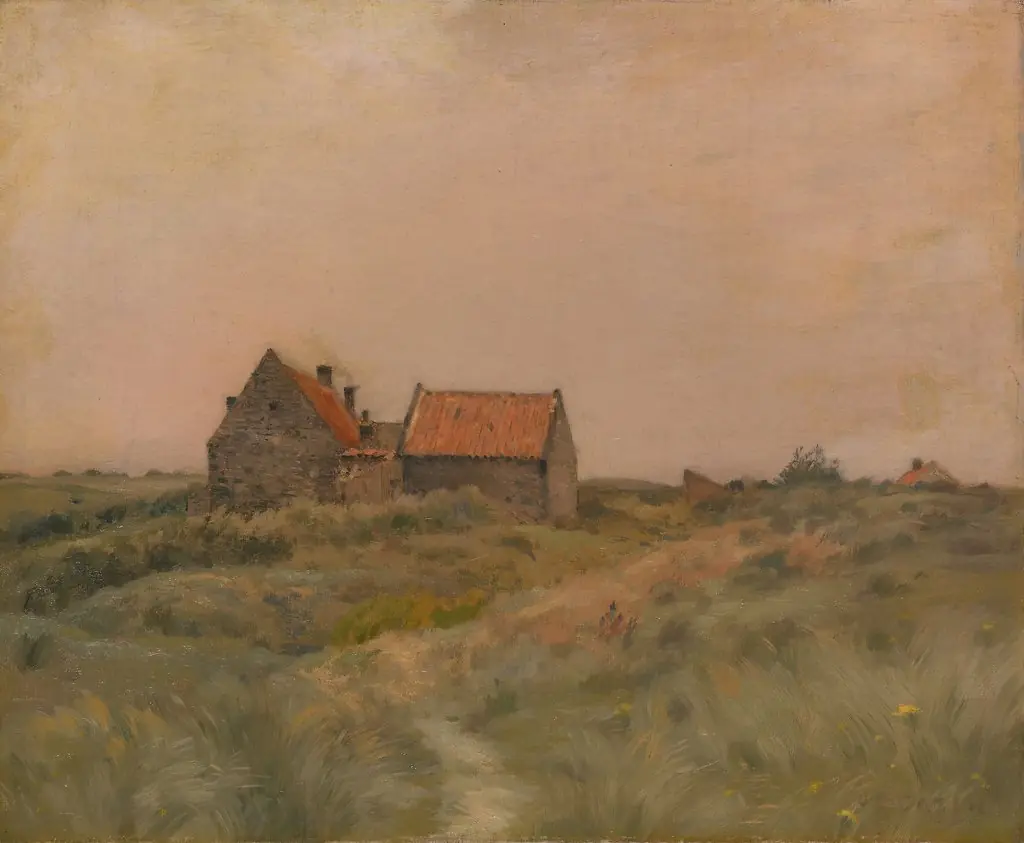
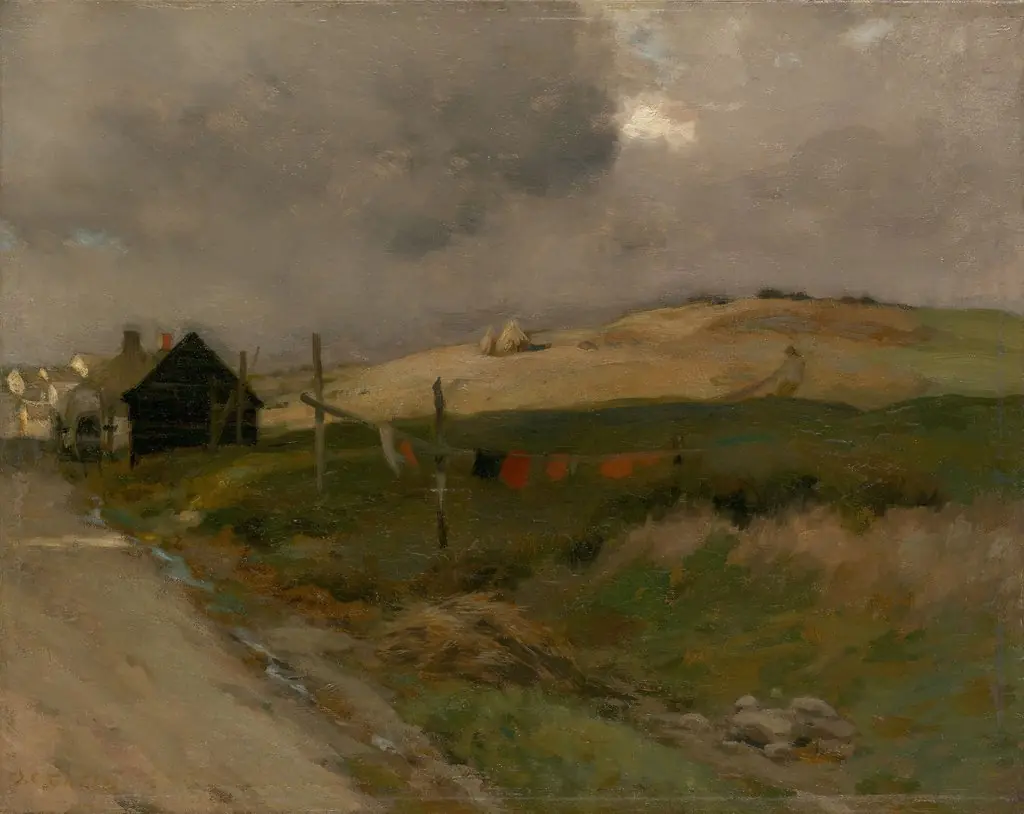
Jean-Charles Cazin’s oil on canvas, The Haystack and the Moon, dates from 1876. The composition presents a tranquil rural scene at twilight, dominated by a solitary haystack beneath a low, luminous moon. A modest red‑roofed structure emerges on the horizon, while a wooden fence and scattered wildflowers frame the foreground, establishing a calm, atmospheric landscape.
Subject & Meaning
The work captures a moment of evening stillness, emphasizing the relationship between human labor, represented by the haystack, and the natural cycle symbolized by the moon. The modest dwelling hints at habitation within the landscape, suggesting a quiet coexistence of agrarian life and the broader celestial rhythm.

Own this work as a print
Artist & collection

Artist
Jean-Charles Cazin was a French landscapist, museum curator and ceramicist.